How to Choose the Perfect Necklace Stand Holder for Your Collection
Discover how to choose the best necklace stand holder for your collection. Learn about materials, weight limits, and anti-tarnish features.

The Hidden Dangers of Drawer Storage
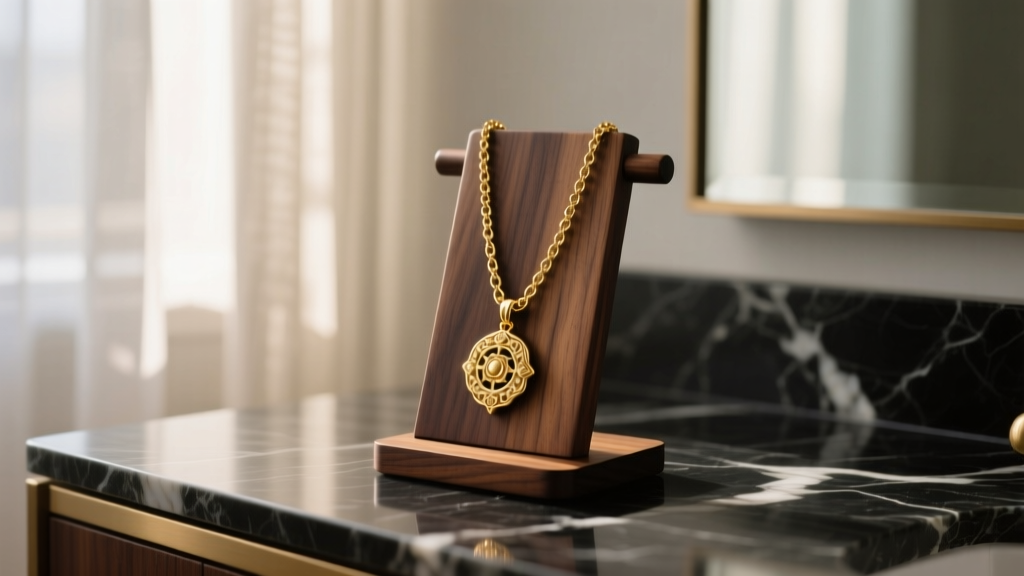
For serious jewelry collectors, the traditional velvet-lined drawer is a liability. When necklaces are stored flat and clustered together, the inevitable friction causes micro-abrasions on softer metals like 24k gold and high-polish sterling silver. Worse, the interlocking links of rope, figaro, and box chains act as microscopic nets, tangling within hours. A dedicated necklace stand holder is not merely an aesthetic display choice; it is a critical preservation tool. By suspending chains vertically, you eliminate link-on-link friction, allow gravity to naturally straighten the metal, and expose the jewelry to air circulation, which prevents the trapped moisture that accelerates oxidation. However, not all display stands are created equal. Choosing the wrong materials or structural dimensions can inadvertently accelerate tarnishing or result in catastrophic tipping. This guide breaks down the exact material science, dimensional engineering, and anti-tarnish technologies you must evaluate before investing in a display ecosystem.
Material Science: What Touches Your Chains Matters
The primary point of contact between your jewelry and the stand dictates the long-term chemical stability of your metals. Many mass-produced stands utilize materials that actively off-gas corrosive compounds.
Wood and MDF Composites
Solid woods like black walnut and cherry are excellent choices due to their natural density and low acidity. Conversely, oak contains high levels of tannic acid, which can emit volatile organic compounds (VOCs) that corrode silver and copper alloys over time. Avoid stands made from raw, unsealed Medium-Density Fiberboard (MDF). MDF relies on urea-formaldehyde resins that continuously off-gas formaldehyde and sulfur compounds, rapidly accelerating the formation of silver sulfide (the black tarnish on sterling silver). If you prefer the look of wood, ensure the stand is sealed with a fully cured, water-based polyurethane finish to trap any acidic off-gassing.
Metals and Acrylics
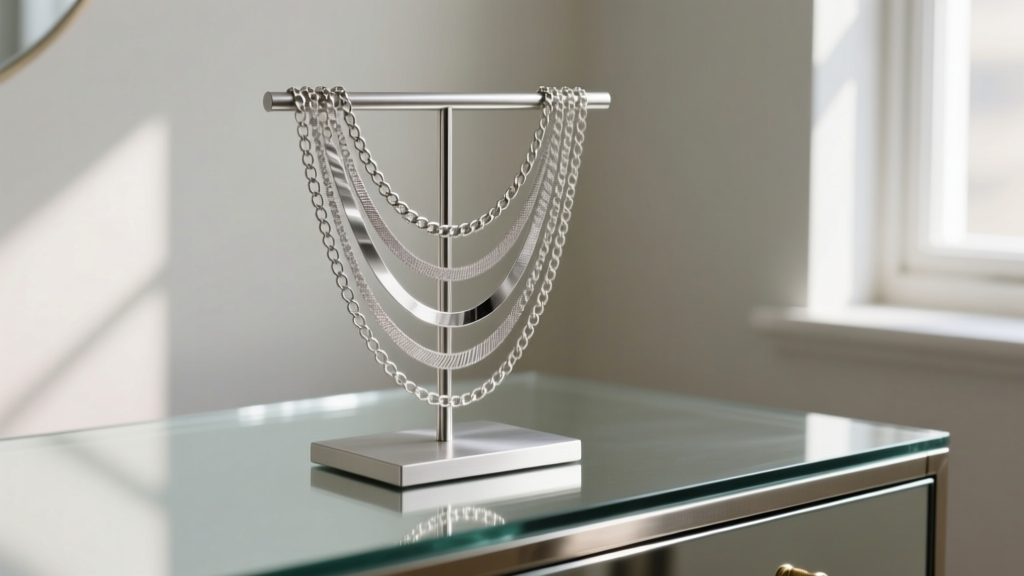
Metal T-bar stands are incredibly durable but must be powder-coated or electroplated. Raw brass or copper stands will undergo galvanic corrosion if they come into contact with moisture and dissimilar metals in your chains. For acrylic stands, always verify that the manufacturer uses cast polymethyl methacrylate (PMMA) rather than extruded acrylic or cheap PVC. Cast PMMA is optically clear, highly scratch-resistant, and UV-stable, whereas extruded plastics will yellow and become brittle when exposed to ambient sunlight.
Dimensional Engineering & Weight Distribution
A necklace stand holder must be engineered to handle the specific kinetic load of your collection. A heavy gemstone pendant on a thick 18k gold chain exerts a vastly different center of gravity than a delicate 14k gold lariat. The most common structural failure in display stands is the "pendulum effect," where the lateral swing of a heavy pendant during placement causes a top-heavy stand to tip over, potentially snapping the chain or damaging the gemstone.
To prevent this, apply the 40% Base Rule: the width of the stand's base footprint must be at least 40% of its total vertical height. For a 16-inch tall bust form, the base must be a minimum of 6.5 inches wide. Furthermore, weighted bases (often filled with steel shot or cast iron) are vastly superior to hollow plastic bases filled with sand, which can leak and degrade over time.
| Stand Architecture | Height Range | Ideal Necklace Type | Weight Capacity Limit |
|---|---|---|---|
| Slim T-Bar (Single Post) | 12" - 14" | Delicate chains, lariats, pendants under 15g | ~50g total lateral load |
| Wide-Base Bust Form | 14" - 18" | Heavy gemstone pendants, multi-strand pearls | 200g+ (with weighted base) |
| Tiered A-Frame / Ladder | 16" - 24" | Layered chains, chokers, graduated lengths | Distributed 500g+ capacity |
| Rotating Carousel Tower | 18" - 30" | High-volume fashion jewelry, lightweight alloys | Evenly distributed 1kg+ |
Anti-Tarnish Technologies & Lining Standards
Where the chain rests on the top bar or bust, the lining material is your first line of defense against environmental tarnishing. According to the Canadian Conservation Institute (CCI), storing silver in environments with high sulfur or humidity leads to rapid silver sulfide formation. Standard synthetic velvets are often dyed with sulfur-based reactive dyes that actively trigger tarnishing.
Instead, look for a necklace stand holder lined with acid-free flannel, untreated microsuede, or Pacific Silvercloth. Pacific Silvercloth is a specialized cotton flannel embedded with microscopic silver particles that act as a sacrificial anode, absorbing hydrogen sulfide from the air before it can reach your jewelry. The Gemological Institute of America (GIA) also emphasizes avoiding harsh chemical cleaners on display surfaces, as residual polishing agents on the stand can degrade delicate pearl nacre or porous opals resting against the bar.
Common Failure Modes to Avoid
Even aesthetically pleasing stands can suffer from severe functional degradation. When evaluating a necklace stand holder, inspect it for these three common failure modes:
- Flocking Shedding: Cheap stands use electrostatic flocking (glued synthetic fibers) over plastic. Over time, the adhesive dries out, and the fibers shed, lodging themselves inside the microscopic gaps of box and omega chains. Removing embedded flocking requires ultrasonic cleaning, which can damage soft gemstones.
- Acrylic Stress Fractures: If the horizontal T-bar is fused to the vertical post using standard cyanoacrylate (superglue) rather than solvent welding, the joint will develop micro-fractures. A heavy pendant will eventually snap the bar at the seam.
- Felt Pad Oxidation: Many wooden stands feature felt pads on the bottom to protect furniture. However, some industrial felts contain sulfur compounds. Always ensure the bottom pads are made of inert silicone or cork to prevent off-gassing from traveling upward through the wood grain.
Expert Verdict: Building Your Display Ecosystem
Selecting the right necklace stand holder requires looking past the visual design and scrutinizing the material integrity and structural physics. For heavy, investment-grade pendants, prioritize a wide-base bust form wrapped in acid-free microsuede. For high-volume, lightweight daily wear chains, a cast acrylic A-frame or powder-coated steel T-bar offers the best blend of durability and visibility. By matching the stand's weight capacity and lining material to your specific chain profiles, you transform your jewelry display from a mere decorative accessory into a professional-grade preservation system that keeps your collection tangle-free, structurally secure, and brilliantly polished for years to come.


