The Best Necklace to Wear With a Strapless Dress: A Buyer's Guide
Discover how to choose the perfect necklace to wear with a strapless dress. Expert tips on lengths, materials, and layering for flawless neckline styling.

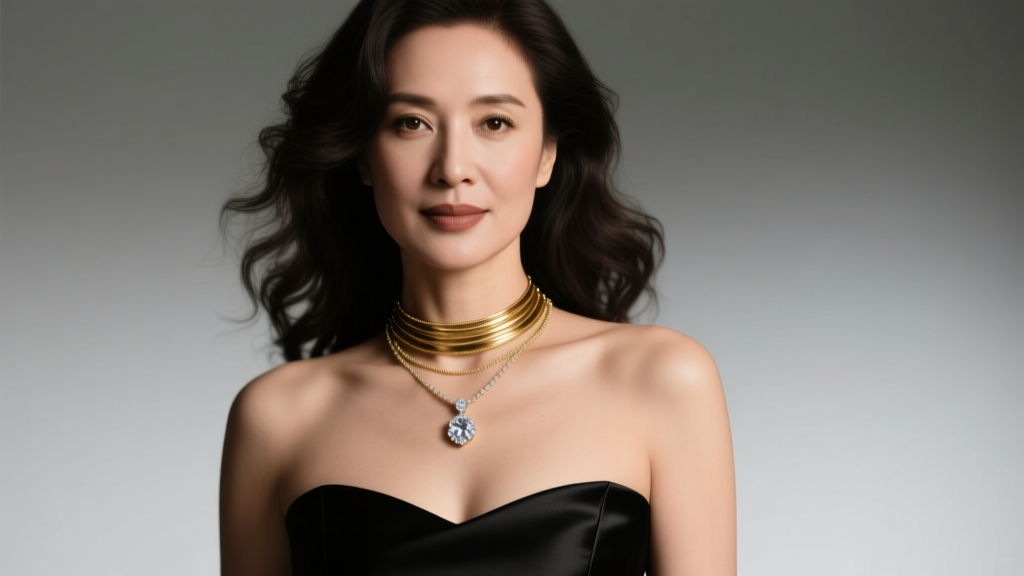
A strapless dress offers a vast, uninterrupted canvas of skin from the collarbone to the bodice. While this silhouette is inherently elegant, it presents a unique styling challenge: leave the neck bare, and the look can feel unfinished; over-accessorize, and you risk visual clutter that competes with the dress itself. Finding the perfect necklace to wear with a strapless dress requires a strategic approach to proportion, metal grade, and clasp mechanics. This comprehensive buying guide will walk you through the exact specifications, material grades, and structural frameworks needed to elevate your strapless neckline flawlessly.
The Canvas: Analyzing Strapless Necklines
Before selecting a necklace, you must analyze the specific architecture of your dress's bodice. Not all strapless dresses are created equal, and the neckline dictates the geometry of your jewelry.
- Sweetheart Neckline: Features a dip in the center resembling the top of a heart. This creates a natural focal point. Strategy: Opt for a Y-necklace or a lariat that mimics the V-shape, or a simple 16-inch princess chain that sits just above the dip to avoid tangling with the fabric's edge.
- Straight-Across (Bandeau): A horizontal line across the chest. Strategy: This neckline begs for contrast. A multi-strand choker or a bold, curved bib necklace introduces necessary organic shapes to balance the harsh horizontal line.
- Scoop or U-Shape: Dips lower in the center but lacks the sharp angles of a sweetheart. Strategy: A graduated pearl necklace or a layered chain set that follows the curve of the neckline provides a harmonious, framed effect.
The Length Matrix: Where Should the Necklace Fall?
The most critical decision when buying a necklace for bare shoulders is the drop length. According to jewelry educators at Blue Nile, the placement of the chain fundamentally alters the perceived proportions of the upper body. Below is a decision matrix to help you choose the right length based on your specific styling goals.
| Length Category | Measurement | Visual Effect | Best Dress Style | Est. Price Range |
|---|---|---|---|---|
| Choker | 14 - 15 inches | Sits snugly at the base of the neck; elongates the torso. | Straight-across, high-waisted bodices | $150 - $3,000+ |
| Princess | 16 - 18 inches | Rests on the collarbone; the most universally flattering length. | Sweetheart, Scoop | $200 - $5,000+ |
| Matinee | 20 - 24 inches | Falls at the top of the bust; draws the eye downward. | Simple, unembellished A-line bodices | $300 - $8,000+ |
| Opera | 28 - 36 inches | Dramatic plunge; requires a minimalist dress to avoid overwhelming. | Column gowns, sleek satin slip dresses | $400 - $10,000+ |
Pro-Tip: For 90% of strapless formalwear, the 16-inch Princess length is the safest and most elegant investment. It frames the face and highlights the collarbone without dipping into the cleavage, which can cause the pendant to flip or get lost against the skin.
Material Science: Metals and Bare Skin
When wearing a strapless dress, your necklace will be in constant, direct contact with the bare skin of your chest and neck. This makes material selection a matter of both aesthetics and dermatological safety.
Karat Gold vs. Plated Alternatives
Sweat, perfumes, and body oils can rapidly degrade lower-quality metals. If you are investing in a piece for a long evening, opt for solid 14k or 18k gold. 18k gold (75% pure gold) offers a richer, warmer yellow hue that contrasts beautifully against sun-kissed or olive skin tones, while 14k gold provides superior scratch resistance due to its higher alloy content. Avoid gold-plated brass or copper bases; the friction against bare skin will accelerate the wearing away of the micro-thin gold layer, potentially leaving a green oxidized residue on your chest.
The Nickel Allergy Factor
The skin on the décolletage is thinner and more sensitive than the skin on your earlobes or fingers. According to the Gemological Institute of America (GIA), nickel is the most common contact allergen in jewelry. Many white gold alloys and cheaper sterling silver mixtures use nickel as a hardening agent. If you have sensitive skin, strictly purchase platinum, palladium, or nickel-free 18k yellow gold to prevent contact dermatitis from ruining your evening.
Clasp Mechanics and Failure Modes
A necklace is only as good as its weakest link—literally. When styling a strapless dress, the clasp is often exposed at the nape of the neck or rests against bare skin. Here is what to look for when inspecting the hardware:
- Lobster Claw: The industry standard for security. However, the tiny lever can catch on delicate updos or bare skin if the edges are not polished. Look for 'snag-free' or 'rounded' lobster clasps.
- Toggle Clasp: Consists of a T-bar that slips through an O-ring. These are excellent for heavier chokers and bib necklaces worn with straight-across strapless dresses. Failure Mode: If the chain is too long or the pendant is too light, the toggle can slip out. Ensure the T-bar is at least 20% wider than the O-ring's inner diameter.
- Magnetic Clasps: Highly convenient for self-dressing, but generally unsuitable for heavy statement pieces. The sheer weight of a gemstone pendant pulling against a strapless bodice can easily overcome the neodymium magnets, leading to a catastrophic drop.
The Layering Protocol: The 1-2-3 Framework
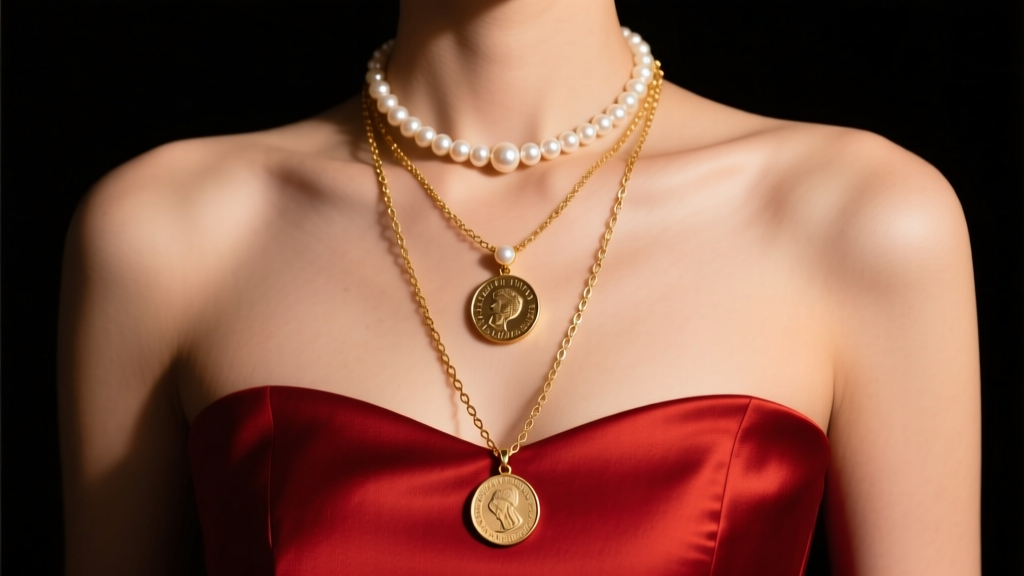
Layering is a dominant trend, but doing it over a strapless dress requires mathematical precision to avoid a tangled, chaotic mess. Utilize the 1-2-3 framework to ensure distinct visual separation between chains.
- The Anchor (14-15 inches): Start with a lightweight, textured choker. A 2mm snake chain or a delicate bead necklace sits tight against the neck, establishing the top boundary.
- The Core (16-18 inches): This is your focal point. A pendant necklace featuring a 5mm to 8mm gemstone (such as a sapphire or diamond solitaire) provides weight and draws the eye. Ensure the bail (the loop connecting the pendant to the chain) is soldered securely to prevent flipping.
- The Elongator (20+ inches): Finish with a lariat or a simple, unadorned cable chain that falls toward the bodice. This creates a vertical line that elongates the torso, balancing the horizontal expanse of the strapless dress.
When layering, always ensure a minimum 2-inch gap between the lengths of your chains. Anything less will result in the chains twisting around one another, requiring constant, distracting adjustments throughout your event.
Troubleshooting Common Strapless Styling Errors
Even experienced stylists make mistakes when pairing jewelry with bare shoulders. Here are the most common failure modes and how to engineer your way out of them:
The 'Flipping' Pendant
The Problem: A lightweight pendant on a thin chain constantly flips backward, hiding the gemstone against your skin.
The Fix: The center of gravity is off. You need a heavier chain (like a 1.5mm box chain or Franco chain) to anchor the front, or you must use a 'fixed bail' pendant where the loop is soldered directly to the stone's setting, preventing it from spinning freely on the wire.
Competing with an Embellished Bodice
The Problem: Your strapless dress features heavy beading, sequins, or a corset structure, and your necklace makes the overall look feel heavy and dated.
The Fix: Abandon the necklace entirely. Instead, redirect your jewelry budget to high-impact ear cuffs or chandelier earrings. If a neckpiece is absolutely mandatory, opt for a sheer, invisible-fishing-line style 'floating' diamond collar that provides sparkle without adding visual weight.
The Clasp Migration
The Problem: The clasp of your choker keeps sliding from the back of your neck to the front, ruining the aesthetic.
The Fix: This happens when the necklace is too light in the front and too heavy in the back (common with large, decorative clasps). Purchase a necklace with a counter-weighted design, or have a jeweler add a small, discreet gold bead to the front interior of the chain to shift the center of gravity forward.
Final Verdict: What to Buy Based on Your Occasion
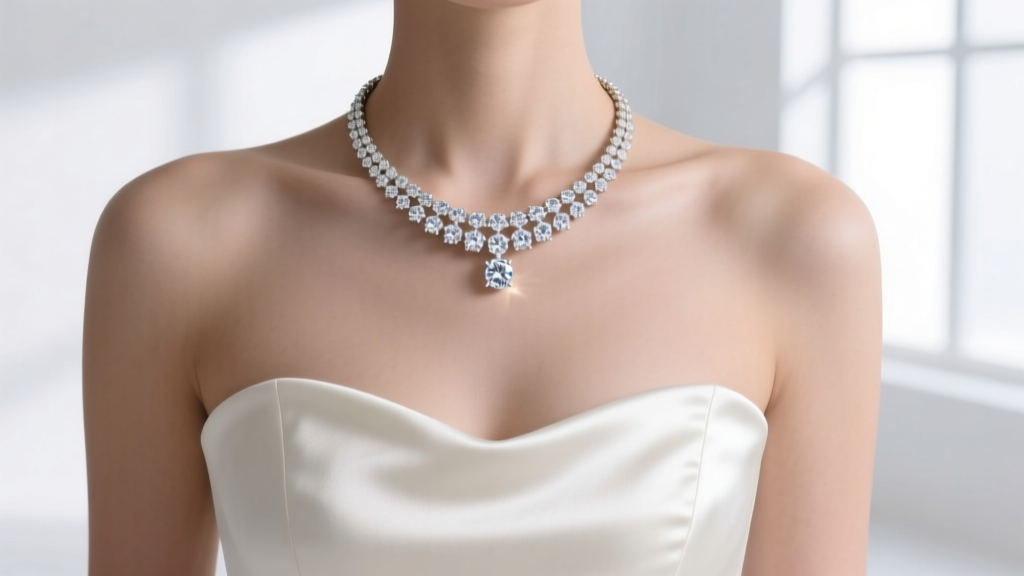
Choosing the right necklace to wear with a strapless dress ultimately depends on the formality and setting of your event. For bridal and black-tie galas, invest in a 16-inch solid platinum or 18k white gold diamond tennis necklace; the continuous line of stones provides unmatched luminosity against the skin. For cocktail parties and evening dinners, a layered set of 14k yellow gold chains with mixed textures (e.g., a rope chain paired with a satellite chain) offers a modern, effortless vibe. Finally, for summer weddings and garden parties, a 15-inch freshwater pearl choker with a single diamond accent provides a classic, breathable elegance that perfectly complements the strapless silhouette.
By prioritizing precise lengths, skin-safe metallurgy, and secure clasp mechanics, you ensure your jewelry enhances your garment rather than fighting against it.


