What Does the Bible Say About Wearing a Cross Necklace? A Style Guide
Explore what the Bible says about wearing a cross necklace and learn how to choose, style, and layer faith-based pendants with our expert jewelry guide.

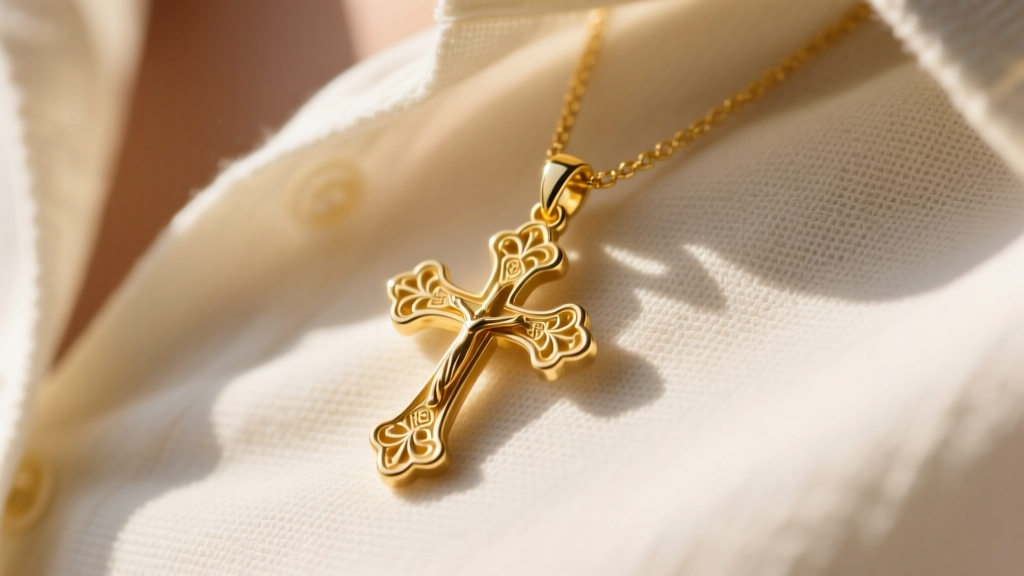
The Theological Context: What Does the Bible Say About Wearing a Cross Necklace?
When selecting faith-based jewelry, many buyers ask a fundamental question: what does the bible say about wearing a cross necklace? From a strictly historical and scriptural perspective, the Bible does not explicitly mention cross necklaces. In the first century, the cross was an instrument of Roman execution and a symbol of profound shame, not an item of decorative adornment. Early Christians instead used discreet symbols like the Ichthys (the Jesus fish) or the Chi-Rho to identify one another safely.
It wasn't until the 4th century, following Emperor Constantine's legalization of Christianity, that the cross transitioned into a public symbol of victory and faith, eventually making its way into jewelry design. However, the Bible provides clear principles regarding outward adornment and the condition of the heart. In 1 Peter 3:3-4, scripture emphasizes that true beauty should not merely come from outward adornment, such as wearing gold jewelry, but from the "unfading beauty of a gentle and quiet spirit."
Therefore, wearing a cross necklace is not a biblical mandate, nor is it a sin. The spiritual weight of the pendant depends entirely on the wearer's intent. If worn as a superstitious talisman or a mere fashion accessory devoid of meaning, it misses the point of the Gospel. If worn as a personal reminder of Christ's sacrifice and a quiet testimony to others, it serves as a beautiful, meaningful accessory. As you explore theological resources on Christian liberty, you will find that the focus remains on modesty, avoiding idolatry, and letting your inward faith dictate your outward style.
Step 1: Choosing the Right Cross Silhouette for Your Faith and Style
Cross pendants come in numerous silhouettes, each carrying distinct historical, denominational, and aesthetic weight. Selecting the right shape is the first step in curating a piece that aligns with both your theology and your personal style.
- The Latin Cross: The most universal and recognizable silhouette, featuring a longer descending arm. It is the standard for Protestant and general Christian jewelry, symbolizing the resurrection and the empty tomb.
- The Crucifix: A cross that includes the corpus (the body of Christ). Predominantly worn by Catholics and some Anglicans, it serves as a direct reminder of the Passion and sacrifice. From a jewelry standpoint, crucifixes are often heavier and feature intricate detailing that requires a sturdier chain.
- The Celtic Cross: Characterized by a circle intersecting the crossbars, this design represents eternity and the intersection of the divine and the earthly. Due to its wider surface area, Celtic crosses are typically cast in thicker gauges of metal and work best as statement pieces.
- The Orthodox Cross: Features three horizontal bars, including the slanted footrest. It is deeply rooted in Eastern Orthodox tradition and offers a highly intricate, geometric aesthetic for jewelry lovers.
Step 2: Selecting Hypoallergenic and Durable Metals
A cross necklace is often worn daily, meaning it will be exposed to sweat, water, and friction. Choosing the right metal grade is critical for longevity and skin health. According to metal durability standards outlined by the Gemological Institute of America (GIA), different alloys react differently to daily wear.
| Metal Type | Purity / Grade | Durability & Tarnish | Best For | Avg. Price Range (Pendant Only) |
|---|---|---|---|---|
| Sterling Silver | 925 (92.5% Silver) | Soft; prone to sulfide tarnishing. Requires polishing. | Budget-friendly, occasional wear. | $30 - $120 |
| 14k Yellow/White Gold | 58.5% Pure Gold | Excellent durability; highly resistant to tarnish and scratching. | Everyday wear, showering, active lifestyles. | $150 - $450 |
| 18k Gold | 75% Pure Gold | Softer than 14k; richer color but more prone to micro-scratches. | Special occasions, luxury heirlooms. | $300 - $800+ |
| Platinum | 95% Pure Platinum | Extremely dense, hypoallergenic, develops a natural patina over time. | Sensitive skin, heavy pendants, lifetime wear. | $500 - $1,500+ |
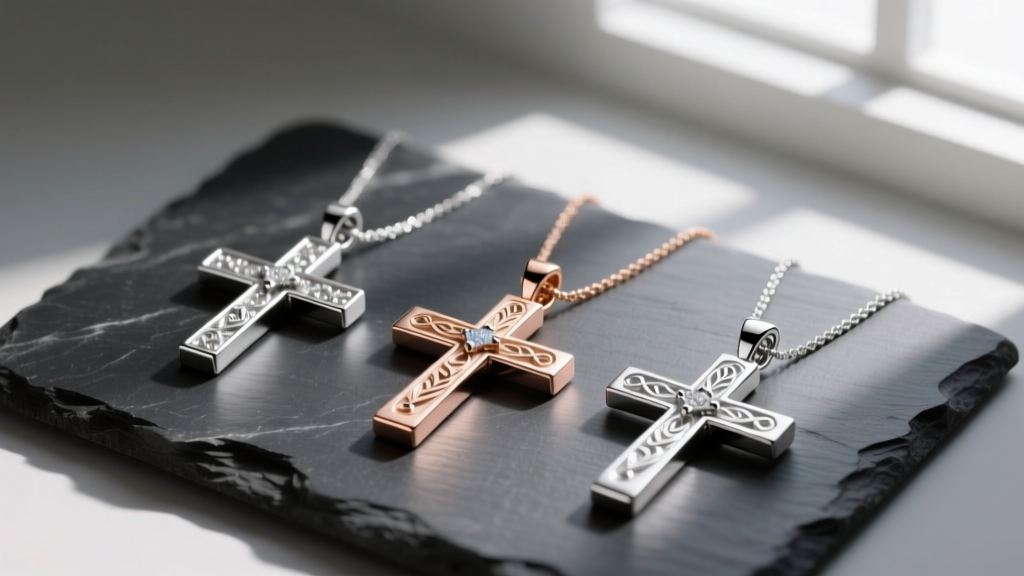
Step 3: Matching Chain Lengths, Gauges, and Bails
The most common failure point in faith-based jewelry is a chain that is too thin for the pendant's weight, leading to a snapped clasp ring. To ensure your cross necklace lasts a lifetime, you must match the chain gauge to the pendant's mass.
The Weight-to-Gauge Rule
If your cross pendant weighs under 3 grams, a delicate 0.8mm to 1.0mm cable or box chain (typically 20-gauge wire) is sufficient. However, if you are wearing a solid 14k gold Celtic cross or a detailed crucifix weighing 5 to 10 grams, you must upgrade to a 1.5mm to 2.5mm rope or Figaro chain (18-gauge or 16-gauge wire). Thicker chains distribute the kinetic energy of a swinging pendant, preventing stress fractures at the jump ring.
Understanding Bail Sizing
The bail is the loop at the top of the pendant that slides onto the chain. A frequent mistake is purchasing a thick rope chain that cannot fit through a standard bail. Always measure the inner diameter of the bail. A standard 1.2mm box chain requires a bail with at least a 1.5mm inner opening. If you prefer thicker chains, look for pendants with "tube bails" or "hidden bails" that accommodate wider links.
Step 4: Layering Your Cross Pendant Without Overcrowding
Layering necklaces is a dominant trend in 2026, but integrating a meaningful cross pendant into a stack requires deliberate spacing to ensure the cross remains the focal point rather than getting lost in a tangle of metal.
- The Anchor Piece: Place your cross pendant on an 18-inch chain so it rests precisely on the collarbone or upper chest. This acts as the visual anchor of your stack.
- The 2-Inch Rule: Add complementary chains above and below the cross, ensuring there is a minimum 2-inch difference in length between each strand. For example, pair your 18-inch cross with a 16-inch choker and a 20-inch plain chain.
- Texture Contrast: Avoid using the same chain style for every layer. If your cross is on a smooth box chain, pair it with a textured paperclip chain or a beaded chain to create visual depth and prevent the chains from knotting together.

Troubleshooting Common Pendant Issues
Even high-quality cross necklaces can present minor annoyances during daily wear. Here is how to solve them like a professional jeweler:
- The Flipping Pendant: If your cross constantly flips upside down, the bail is likely too loose, or the chain is too thick, causing the pendant to ride up the links. Switch to a flatter chain (like a box chain) which provides a stable track, or have a jeweler solder a small metal bead inside the bail to add friction.
- Chain Tangling: If your cross necklace constantly tangles with your other layers, the clasp is likely too lightweight. Upgrading to a lobster clasp or adding a small silicone necklace spacer near the nape of the neck will keep your strands perfectly aligned.
- Cloudy Gemstones: If your cross features diamond or moissanite accents, daily exposure to lotions and sebum will dull the sparkle. Clean it weekly using a soft baby toothbrush and a few drops of mild dish soap in warm water. Avoid ultrasonic cleaners if your cross features fracture-filled diamonds or porous stones like turquoise or opal.
Final Thoughts on Faith and Fashion
Ultimately, when asking what the Bible says about wearing a cross necklace, the answer points back to the posture of your heart. A cross necklace is a beautiful, deeply personal way to carry a reminder of your faith into your daily life. By investing in high-quality metals, respecting proper chain-to-pendant weight ratios, and styling your piece with intention, you ensure that your jewelry is as enduring and resilient as the faith it represents.


