The Ultimate Big Z Necklace Material Guide: Gold vs Steel
Discover the best materials for a big Z necklace. We compare solid gold, stainless steel, and plated brass for weight, durability, and skin safety.

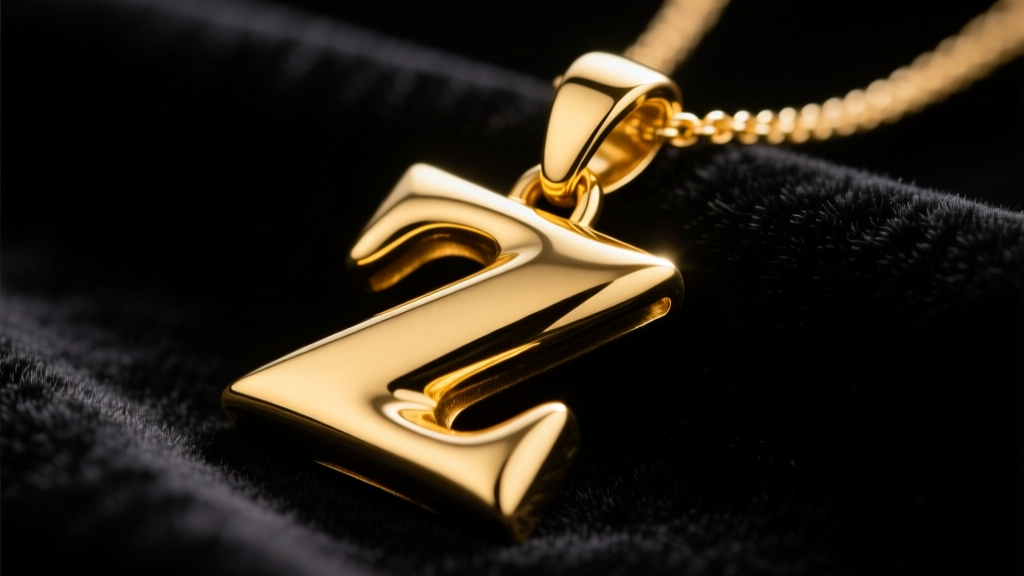
The resurgence of Y2K and hip-hop-inspired jewelry has cemented the big Z necklace as a staple in modern streetwear and personalized fashion. Whether you are rep'ing your own initial, a brand, or a significant other's name, an oversized letter pendant makes an undeniable statement. However, when scaling up an initial pendant to two or three inches, you are no longer just buying a design; you are engineering a wearable weight. The material you choose dictates the pendant's drape, its longevity against skin acids, and the structural integrity of the chain it hangs from.
In this comprehensive metallurgical guide, we break down the exact properties of solid gold, surgical steel, and plated brass to help you choose the right material for your oversized initial jewelry.
The Physics of a Chunky Initial Pendant
A standard one-inch gold initial weighs roughly 4 to 7 grams. A big Z necklace pendant, typically spanning 2.5 inches with a chunky, three-dimensional profile, can easily weigh between 25 and 60 grams depending on the metal's density. This mass creates a pendulum effect. Every time you walk, bend, or move, the bail—the loop connecting the pendant to the chain—absorbs kinetic friction.
If the metal is too soft, the bail will warp, thin out, and eventually snap. If the chain is too weak, the clasp will fail under the dynamic load. Therefore, understanding the Vickers Hardness (HV) and tensile strength of your chosen metal is not just academic; it is essential for preventing the loss of an expensive piece of jewelry.
Solid Gold: Karats, Hardness, and Hollow Cores
When investing in a heavy piece like a large Z pendant, solid gold is the premier choice for longevity and skin safety. However, not all gold is created equal. Pure 24k gold is far too soft for jewelry, which is why it is alloyed with metals like copper, silver, and zinc. According to the Gemological Institute of America (GIA), these alloys directly impact the metal's durability.
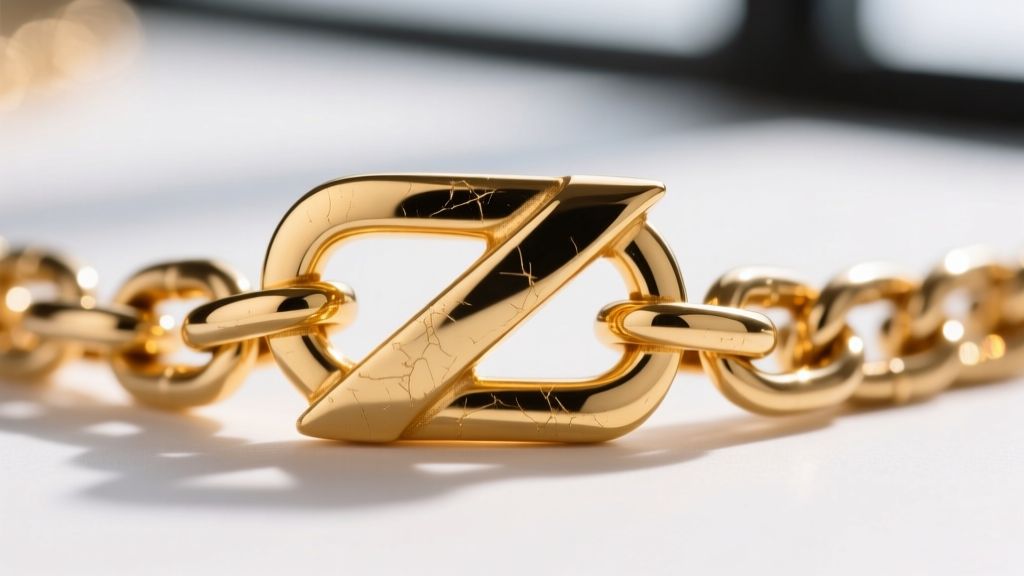
- 18k Gold (75% Pure): With a Vickers Hardness of roughly 125 HV, 18k gold is rich in color but relatively soft. For a lightweight pendant, it is fine. For a 50-gram big Z necklace, the bail will experience severe friction wear against a steel or gold chain, potentially wearing through in a few years of daily use.
- 14k Gold (58.3% Pure): This is the sweet spot for heavy streetwear pendants. Boasting a hardness of 140 to 150 HV, 14k gold offers the perfect balance of a warm, luxurious color and the structural rigidity required to support a heavy bail without warping.
- 10k Gold (41.7% Pure): The hardest of the standard gold alloys (approx. 160 HV). It is highly scratch-resistant and durable, but it possesses a noticeably paler, less yellow hue and a higher copper content, which can cause green skin discoloration for those with acidic sweat.
The Hollow Core Trap
To keep prices down, many jewelers manufacture large initial pendants using a hollow-core technique, stamping two thin sheets of gold and soldering them together. While this reduces the weight and cost, it creates a catastrophic failure point. If a hollow 14k gold Z pendant is dropped onto a tile floor or bumped hard against a doorframe, it will dent irreparably. For a piece meant to be worn daily in active environments, always opt for a solid cast or solid die-struck pendant.
316L Stainless Steel: The Streetwear Workhorse
If solid gold is out of your budget, 316L surgical stainless steel is the undisputed champion of alternative metals. Unlike cheaper base metals, 316L contains molybdenum, an element that drastically increases resistance to chloride corrosion—meaning it will not rust or pit when exposed to heavy sweat or saltwater.
For a big Z necklace, steel offers incredible tensile strength. The bail will never warp, and the pendant will not dent if dropped. The primary drawback is the weight; steel is dense, and a large solid steel pendant can feel uncomfortably heavy on the cervical spine after a full day of wear. Furthermore, if the bail does eventually snap, most local jewelers refuse to laser-weld stainless steel due to the high melting point and risk of discoloration, rendering the piece difficult to repair.
PVD Coating vs. Electroplating on Steel
If you want the look of gold on a steel Z pendant, ensure the manufacturer uses PVD (Physical Vapor Deposition) rather than traditional electroplating. PVD bonds gold molecules to the steel at a subatomic level in a vacuum chamber, creating a finish that can withstand years of friction without flaking.
The Vermeil and Gold-Plated Brass Trap
The market is flooded with oversized brass pendants coated in a microscopic layer of gold. While they look identical to solid gold in product photos, their material properties make them a poor long-term investment for large surface-area jewelry.
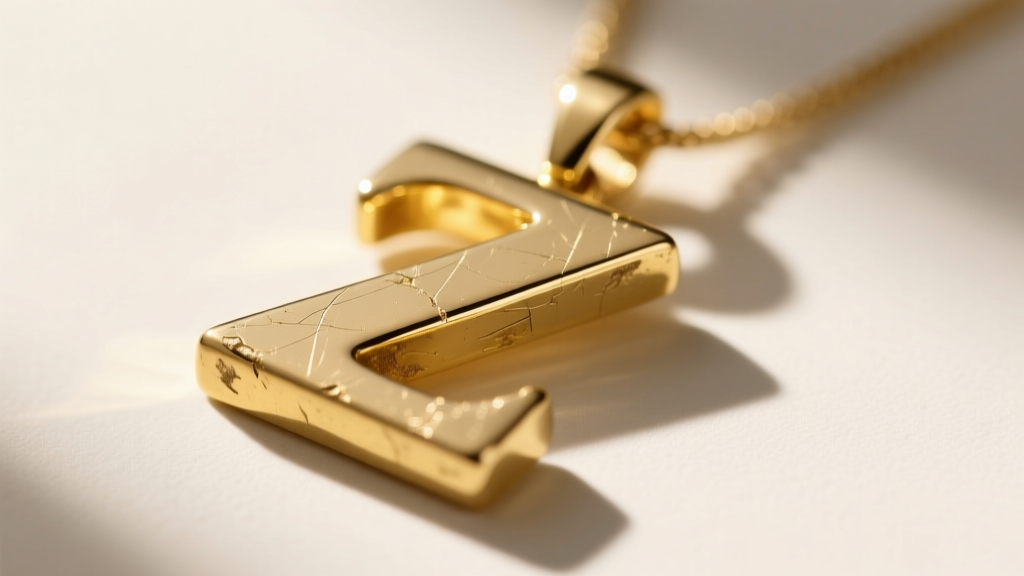
The Federal Trade Commission (FTC) Jewelry Guides strictly regulate how plating is marketed. 'Flash plating' involves a gold layer of less than 0.5 microns. On a small ring, this might last a year. On a massive Z pendant that constantly rubs against cotton t-shirts, seatbelts, and skin acids (which typically sit at a pH of 4.5 to 5.5), flash plating will wear through to the raw brass in a matter of weeks. Once the brass is exposed, it oxidizes rapidly, turning your skin green and ruining the aesthetic of the piece.
Gold Vermeil (a heavy 2.5-micron gold layer over sterling silver) is a safer alternative to brass, but the sheer friction generated by a heavy, swinging pendant will still wear down the gold layer on the high-contact bevel edges much faster than it would on a stationary pair of earrings.
Material Comparison Matrix
| Material | Avg. Weight (2.5' Z) | Durability (HV) | Skin Safety | Price Range |
|---|---|---|---|---|
| 14k Solid Gold | 35 - 50g | 140 - 150 | Excellent (Hypoallergenic) | $1,200 - $2,500+ |
| 316L Steel (PVD) | 45 - 65g | 220 - 250 | Excellent (Nickel-free) | $60 - $150 |
| Brass (Vermeil) | 30 - 45g | 100 - 110 | Poor (Copper/Zinc reacts) | $80 - $200 |
| 10k Solid Gold | 35 - 50g | 160+ | Good (Higher copper content) | $800 - $1,500 |
Chain and Clasp Engineering for Heavy Pendants
Selecting the right metal for your big Z necklace pendant is only half the battle; the chain and clasp must be engineered to handle the dynamic load. According to Jewelers of America, mismatched chain weights are the leading cause of jewelry loss.
The Right Chain Profile
Never hang a 40-gram pendant on a thin cable or box chain. The concentrated weight will cause the chain links to stretch and snap. Instead, opt for a 4mm to 6mm Cuban Link or Rope Chain. These profiles distribute the weight evenly across multiple interlocking links and provide a wide, smooth surface for the pendant's bail to glide upon, reducing friction wear.
Clasp Mechanics: Lobster vs. Spring Ring
A standard spring-ring clasp relies on a tiny, weak internal spring that will easily pop open under the pendulum swing of a heavy Z pendant. You must upgrade to a heavy-duty Lobster Clasp or a Box Clasp with a Safety Latch. Lobster clasps feature a solid, spring-loaded lever that locks securely into place, capable of holding upwards of 100 grams of dynamic weight without failing.
Final Verdict: Choosing Your Metal
If you view your jewelry as a permanent fixture of your personal style and have the budget, a solid 14k gold big Z necklace is the ultimate choice. It offers the perfect intersection of luxurious color, structural hardness, and generational longevity. If you are building a streetwear rotation on a budget, a 316L stainless steel pendant with PVD gold coating provides unmatched durability and skin safety at a fraction of the cost. Avoid large plated brass pendants at all costs; the rapid wear on the bevel edges will quickly turn a statement piece into a tarnished disappointment.


