Ultimate Care Guide for Your Vintage Black Cameo Necklace
Learn expert cleaning and maintenance tips for your black cameo necklace. Discover how to safely polish onyx, glass, and resin cameos without damage.

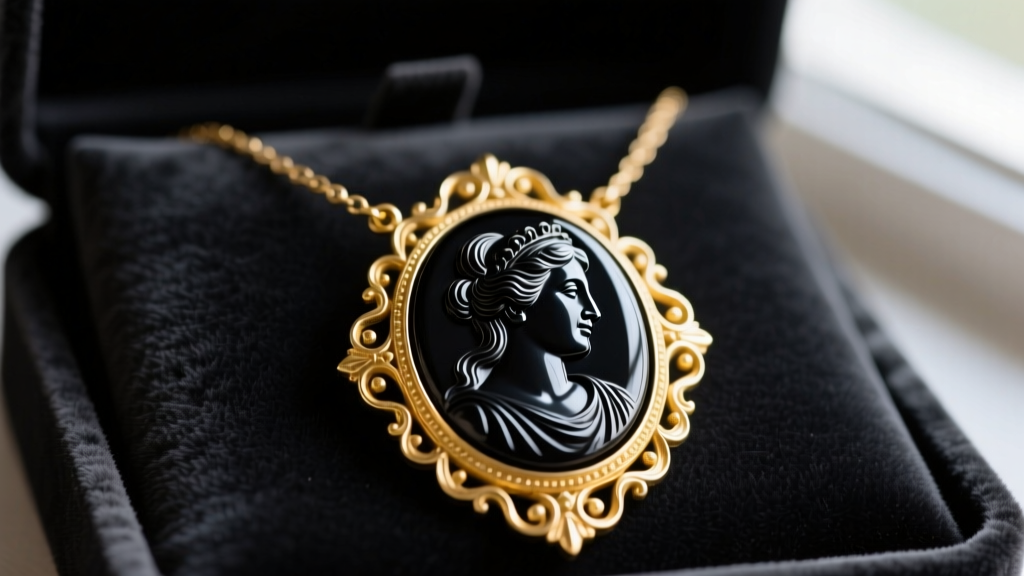
Understanding Your Black Cameo's Material
The striking contrast of a black cameo necklace makes it a timeless staple in both vintage and contemporary jewelry collections. However, the term 'black cameo' refers to the visual style rather than a single specific material. Before you apply any cleaning solution or polishing cloth, you must accurately identify what your cameo is actually made from. Misidentifying the material is the leading cause of irreversible damage in antique jewelry care.
Natural black onyx and black agate are the most premium materials, carved from chalcedony quartz. These stones rank between 6.5 and 7 on the Mohs hardness scale, making them relatively durable but still susceptible to scratching from harder gems. According to the Gemological Institute of America (GIA), while onyx is durable, it is often dyed to achieve its deep, uniform black color. Harsh chemicals can strip this dye, leaving the stone looking patchy or gray.
Conversely, many Victorian-era black cameos are actually 'French Jet,' which is a historical term for black glass. Glass ranks lower on the Mohs scale (around 5.5) and is highly sensitive to thermal shock and alkaline cleaners. Finally, some pieces are crafted from Vulcanite (hardened rubber) or early resins. These organic and synthetic materials are incredibly soft (Mohs 2-3), highly porous, and can be completely ruined by water immersion or alcohol-based cleaners.
The Golden Rules of Black Cameo Maintenance
Regardless of the specific material, every black cameo necklace shares a few vulnerabilities. The carved relief of the cameo creates deep crevices where skin oils, lotions, and environmental dust accumulate. Over time, this buildup dulls the sharp contrast between the black background and the carved figure.
'Never subject a cameo necklace to ultrasonic cleaning. The high-frequency vibrations can easily shatter glass cameos, fracture natural onyx along invisible internal fault lines, or shake loose the historic adhesives used to secure the stone in its collet setting.' - Senior Jewelry Conservator Guidelines.
Furthermore, you must always consider the metal setting. A black cameo necklace is frequently set in silver, gold, or pinchbeck (a brass alloy). Cleaning agents that are safe for the stone might aggressively tarnish or corrode the metal bezel, while silver polishes can permanently stain the porous edges of a carved gemstone.
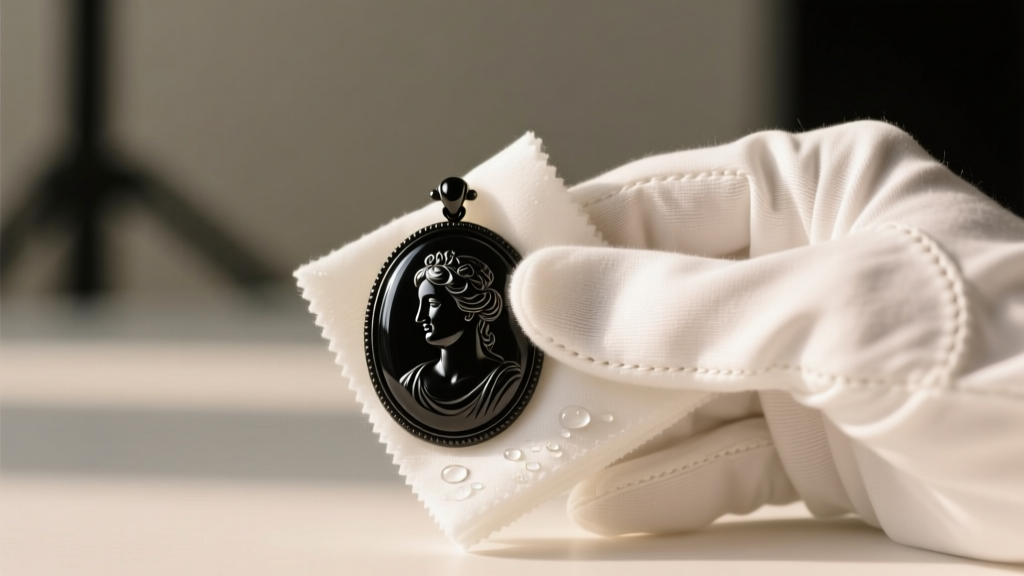
Step-by-Step Cleaning Guide by Material
Cleaning Natural Onyx and Agate Cameos
For verified natural stone cameos, a gentle aqueous cleaning is the safest method. Begin by mixing a few drops of pH-neutral liquid Castile soap into a bowl of distilled water. Tap water contains minerals and chlorine that can leave microscopic hard water spots on the polished surface of the onyx. Dip a soft-bristled baby toothbrush into the solution and gently agitate the bristles over the carved crevices. Do not scrub aggressively; let the mild surfactant lift the oils. Rinse briefly under a slow stream of distilled water, and immediately pat dry with a lint-free microfiber cloth. Ensure no moisture is trapped beneath the metal bezel, as this can lead to hidden corrosion.
Cleaning French Jet (Glass) and Dyed Shell
Glass and dyed shell cameos require a much drier approach. Never submerge these materials, as water can seep into the backing and degrade the foil or adhesive used in antique settings. Instead, lightly dampen a cotton swab with distilled water and carefully trace the carved lines of the cameo. Follow up immediately with a dry swab to absorb the moisture. For stubborn grime, a tiny amount of mineral oil applied with a soft cloth can lift dirt while restoring a subtle luster to the glass, but avoid getting oil on the metal setting.
Cleaning Resin and Vulcanite
Vulcanite and resin cameos must never be exposed to liquids. Water can cause Vulcanite to leach sulfur, resulting in a foul odor and structural degradation. To clean these pieces, use a clean, dry, soft-bristled makeup brush to dust out the carved crevices. If the surface is sticky or heavily soiled, lightly wipe it with a dry microfiber cloth. For deep restoration of faded Vulcanite, consult a professional conservator rather than attempting DIY chemical treatments.
Metal Setting Care: Polishing Without Staining
The metal framework of your black cameo necklace requires separate attention. When polishing silver or gold settings, the primary risk is getting polishing compound embedded in the porous edges of the cameo or trapped under the bezel. To prevent this, never apply polish directly to the jewelry. Instead, apply a small amount of specialized jewelry polish (like Goddard's Silver Polish or Wright's Silver Cream) to a cotton swab. Carefully trace the metal bezel, keeping the swab exactly one millimeter away from the stone's edge. Use a wooden toothpick to gently scrape away any hardened polish that accidentally dries in the crevices where the metal meets the stone.
Cleaning Agents: What to Use and What to Avoid
Using the wrong chemical agent is the fastest way to destroy the value and beauty of your jewelry. Refer to the table below to ensure you are using the correct compounds for your specific piece.
| Material Type | Safe Cleaning Agents | Dangerous Agents to Avoid |
|---|---|---|
| Natural Onyx / Agate | Distilled water, pH-neutral Castile soap, mineral oil | Ammonia, bleach, ultrasonic cleaners, steam |
| French Jet (Glass) | Dry microfiber, slightly damp cotton swab, mineral oil | Alkaline glass cleaners (Windex), hot water, abrasives |
| Vulcanite / Resin | Dry soft brush, dry microfiber cloth | All liquids, alcohol, acetone, commercial polishes |
| Silver Settings | Impregnated silver polishing cloths, specialized silver cream | Toothpaste, baking soda paste, harsh dip solutions |
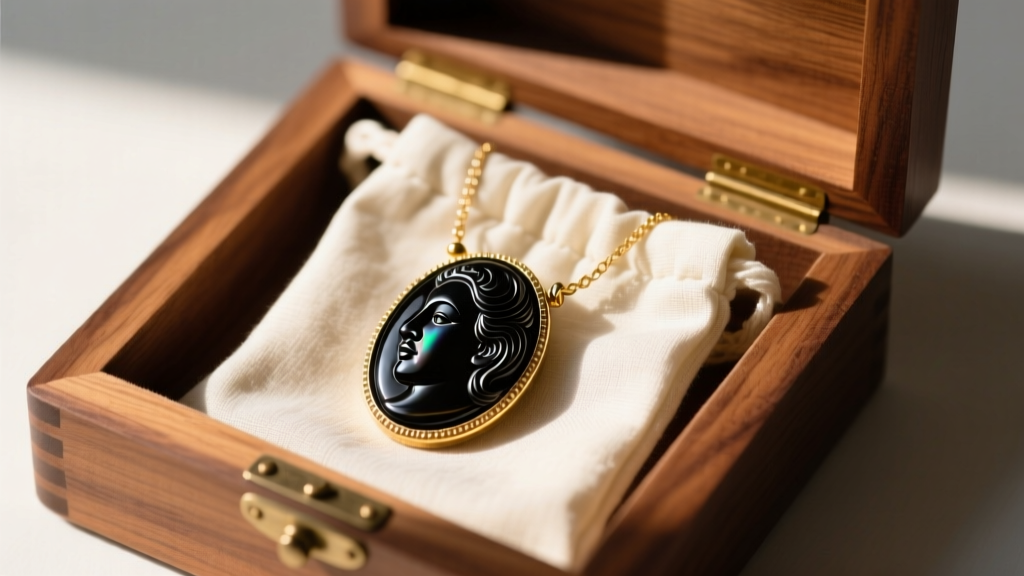
Proper Storage to Prevent Micro-Scratches and Fading
How you store your black cameo necklace is just as critical as how you clean it. The Victoria and Albert Museum (V&A) emphasizes in their jewelry conservation guidelines that proper storage prevents both physical abrasion and chemical degradation. Onyx and agate are hard enough to scratch softer gemstones, but they can be easily scratched by diamonds, sapphires, or even the metal clasps of other necklaces.
Always store your black cameo necklace individually in a soft, lint-free pouch or a dedicated compartment in a fabric-lined jewelry box. If the metal setting is silver, wrap the piece in an anti-tarnish treated cloth (such as Pacific Silvercloth) to slow the oxidation process. Keep the jewelry box in a cool, dark place with stable humidity. Prolonged exposure to direct UV sunlight can cause dyed black stones to fade to a dull brown or gray, and can cause resin and Vulcanite to become brittle and crack over time.
When to Seek Professional Restoration
While routine maintenance can be safely performed at home, certain issues require the expertise of a professional lapidary or jewelry conservator. If your black cameo necklace features a cracked stone, a loose bezel, or missing enamel details on the metalwork, do not attempt to glue or repair it yourself. Cyanoacrylate (super glue) can permanently cloud the surface of glass and onyx, and improper clamping can shatter the carved relief. Furthermore, if an antique piece is heavily tarnished and you are unsure of the underlying metal alloy, a professional can safely use electrolysis or specialized micro-abrasion techniques to restore the piece without stripping its historical patina or damaging the delicate carving.


