How Can You Tell If Silver Necklace Is Real: Expert Testing Guide
Learn how can you tell if silver necklace is real using hallmark checks, magnet tests, and acid kits. Avoid fakes with our expert buying guide.

The Rise of Sophisticated Silver Imitations
As jewelry manufacturing techniques have advanced, so has the quality of counterfeit silver. In 2026, buyers are no longer just dealing with cheap plastic beads; they are facing highly deceptive silver-plated brass, 3D-printed molds coated in micron-thin layers of real silver, and misleading alloy names. Knowing how can you tell if silver necklace is real is no longer just about looking for a stamp—it requires a systematic approach to metallurgical verification. Whether you are sourcing vintage estate pieces or buying modern minimalist chains, this guide provides actionable, expert-level testing methods to verify authenticity.
Understanding Silver Purity Standards
Before testing, you must understand what you are actually looking for. Pure silver is too soft for functional necklace chains, which is why it is alloyed with other metals for durability.
- Fine Silver (999): 99.9% pure silver. Rarely used for chains due to extreme malleability; mostly reserved for bezel wire or specific cast pendants.
- Sterling Silver (925): The global standard. Composed of 92.5% silver and 7.5% copper (or sometimes germanium in Argentium silver). This offers the perfect balance of luster, tarnish resistance, and tensile strength for chain links.
- Coin Silver (900): 90% silver, 10% copper. Common in antique American jewelry and vintage watch fobs, but rare in modern necklace production.
- Silver-Plated: A base metal (usually brass or copper) coated with a microscopic layer of silver. This is the most common counterfeit passed off as solid sterling.
Visual Inspections: Hallmarks and Stamps
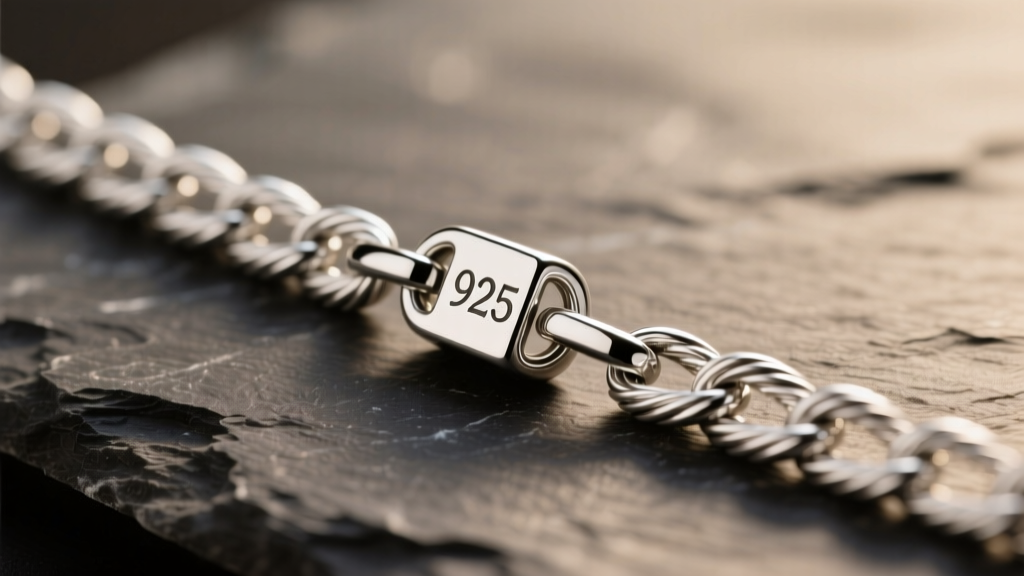
The first step in authentication is a visual inspection of the hallmark. According to the Federal Trade Commission (FTC) Jewelry Guides, any item stamped with a silver quality mark must be accompanied by a registered trademark stamp, though this is frequently ignored by overseas manufacturers.
Where to Look
Use a 10x jeweler's loupe to inspect the clasp, the jump ring connecting the clasp, or the bail of a pendant. Authentic stamps are deeply and cleanly engraved. Counterfeit stamps often look shallow, blurry, or stamped slightly off-center.
Red Flag Terminology
Never assume the word "silver" guarantees precious metal content. Avoid pieces marked with the following:
- Tibetan Silver: Contains 0% silver. It is typically a copper-zinc-nickel alloy that can cause severe contact dermatitis.
- Alpaca / Nickel Silver: Contains 0% silver. Composed of copper, nickel, and zinc.
- EPNS (Electroplated Nickel Silver): A base metal with a thin silver wash.
Expert Insight: If a necklace is marked "925" but the clasp is magnetic, the stamp is forged. Counterfeiters frequently stamp 925 onto brass or steel chains to deceive casual buyers.
At-Home Physical Tests for Silver Necklaces
If the hallmark is missing or suspicious, you can rely on the unique physical properties of silver to verify its authenticity without damaging the piece.
The Magnet Test (Paramagnetism)
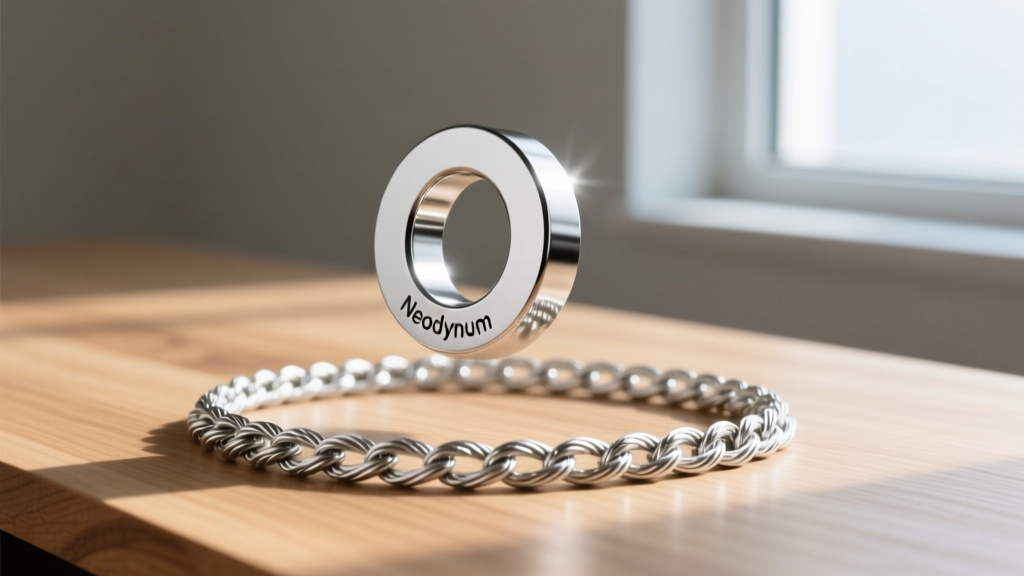
Silver is paramagnetic, meaning it does not attract to magnets. In fact, it exhibits a very weak repulsive effect. Take a strong N52-grade neodymium magnet and hold it near the chain. If the clasp or the chain links jump toward the magnet or stick to it, the necklace contains ferromagnetic metals like iron, steel, or nickel. Note: The internal spring of a lobster clasp is usually made of steel and will attract the magnet, so test the chain links and the outer clasp body only.
The Ice Test (Thermal Conductivity)
Silver possesses the highest thermal conductivity of any common metal, measuring exactly 429 W/(m·K). To perform this test, place an ice cube on a room-temperature silver pendant or a thick chain link. Authentic silver will transfer heat so rapidly that the ice will begin to melt almost instantly, as if placed on a hot stove. Silver-plated brass will melt the ice significantly slower.
The Odor Test
Pure silver and sterling silver are completely odorless. Rub the necklace chain vigorously between your fingers to generate friction and heat, then smell it. If you detect a metallic, coppery, or sulfur-like odor, the piece is heavily alloyed with copper or brass, indicating it is either heavily plated or a lower-grade imitation.
Chemical and Advanced Testing Methods
For absolute certainty, especially when dealing with high-value estate necklaces or bulk wholesale purchases, chemical testing is required.
Acid Testing Kits (Schwerter's Solution)
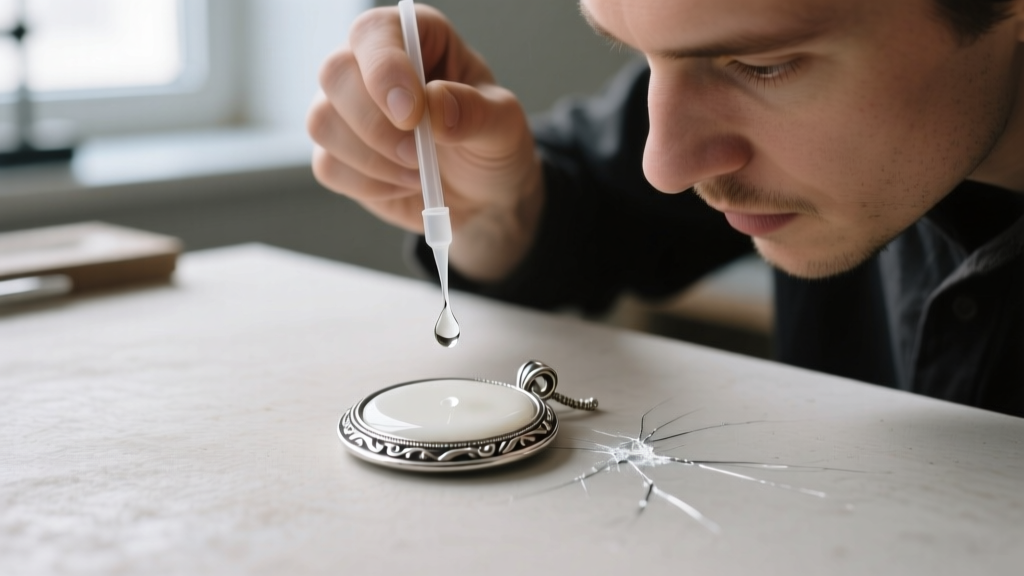
Acid testing involves applying a drop of nitric acid or Schwerter's solution to a discreet, unpolished area of the necklace (or a filed scratch mark to bypass plating). The Silver Institute notes that the chemical reaction with the copper alloy in sterling silver produces specific color changes:
- Creamy White: Authentic 925 Sterling Silver.
- Bright Red: Fine 999 Silver.
- Dark Brown / Black: 800 Silver (lower purity).
- Green: Base metal, brass, or copper (indicates silver-plated or fake).
Warning: Acid testing is destructive. Always perform this on an inconspicuous area, such as the inside of a clasp or the back of a pendant bail, and neutralize the acid with water and baking soda immediately after observing the color.
X-Ray Fluorescence (XRF) Spectrometry
If you are buying a high-end designer silver necklace and want a non-destructive, laboratory-grade verification, a local jeweler or appraiser can use an XRF analyzer. This device shoots X-rays into the metal and reads the fluorescent energy emitted, providing an exact elemental breakdown (e.g., 92.6% Ag, 7.4% Cu) in seconds without scratching the piece.
Comparison Table: Real Silver vs. Silver-Plated Fakes
| Diagnostic Feature | Authentic Sterling Silver (925) | Silver-Plated / Base Metal Fake |
|---|---|---|
| Hallmark Stamps | 925, STER, STG, SS (often with maker's mark) | EPNS, Alpaca, Tibetan, Unmarked, or forged 925 |
| Magnetic Reaction | Paramagnetic (No pull, slight repulsion) | Ferromagnetic (Strong pull if steel/nickel core) |
| Thermal Conductivity | Melts ice instantly upon contact | Slow melting, acts as an insulator |
| Friction Odor | Completely odorless | Strong metallic, coppery, or 'penny' smell |
| Acid Test (on file mark) | Turns creamy white | Turns green or dark brown |
| Tarnish Pattern | Even, dark yellow/black sulfur tarnish | Flaking, peeling, or green oxidation spots |
Buying Advice: Sourcing Authentic Silver Chains
When shopping for silver necklaces, the retailer's transparency is your first line of defense. Reputable jewelers will explicitly state the metal purity and provide a return policy that allows you time to perform an acid or XRF test. Be highly skeptical of marketplace vendors selling heavy sterling silver Cuban link chains at prices below the spot melt value of silver. In 2026, with silver spot prices fluctuating, a 50-gram solid sterling chain has a baseline scrap value; any retail price significantly below that mathematical floor guarantees the piece is either hollow, heavily plated, or entirely counterfeit. Always demand a detailed receipt specifying "Solid 925 Sterling Silver" rather than just "Silver Jewelry" to ensure you are protected by consumer protection laws regarding precious metal misrepresentation.


