Black Diamond Necklaces: 2026 Value & Budget Guide
Discover the true value of black diamond necklaces in 2026. We break down pricing for natural, treated, and lab-grown stones to protect your budget.

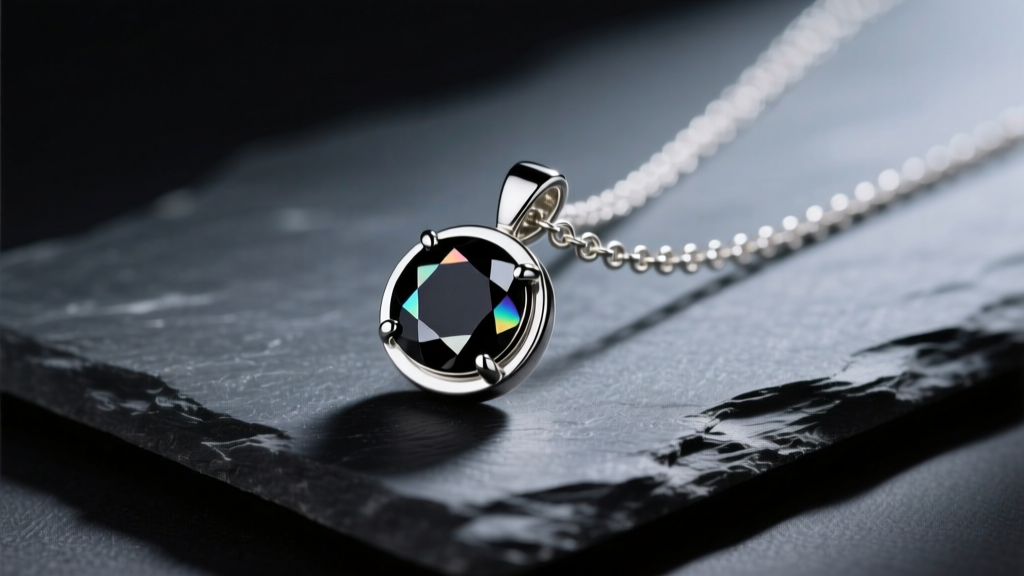
The allure of black diamond necklaces lies in their striking, opaque contrast and modern edge. However, navigating the market in 2026 requires a sharp understanding of gemology and retail markups. Unlike traditional white diamonds, where value is dictated by the 4Cs (Cut, Color, Clarity, Carat), black diamonds operate under an entirely different set of valuation rules. A 1-carat natural black diamond pendant can cost anywhere from $800 to over $3,500, while a visually identical lab-grown or treated alternative might retail for under $300. For budget-conscious buyers and value seekers, understanding the origin, treatment, and structural vulnerabilities of these stones is the only way to avoid overpaying. This comprehensive value assessment breaks down exactly what you should pay for black diamond necklaces this year, and how to ensure your investment is protected.
The Origin Matrix: Natural vs. Treated vs. Lab-Grown
To accurately assess value, you must first identify what you are actually buying. The term 'black diamond' is used loosely in the jewelry industry to describe three fundamentally different materials. Each has distinct price ceilings and resale realities.
1. Natural Fancy Black Diamonds (Carbonado)
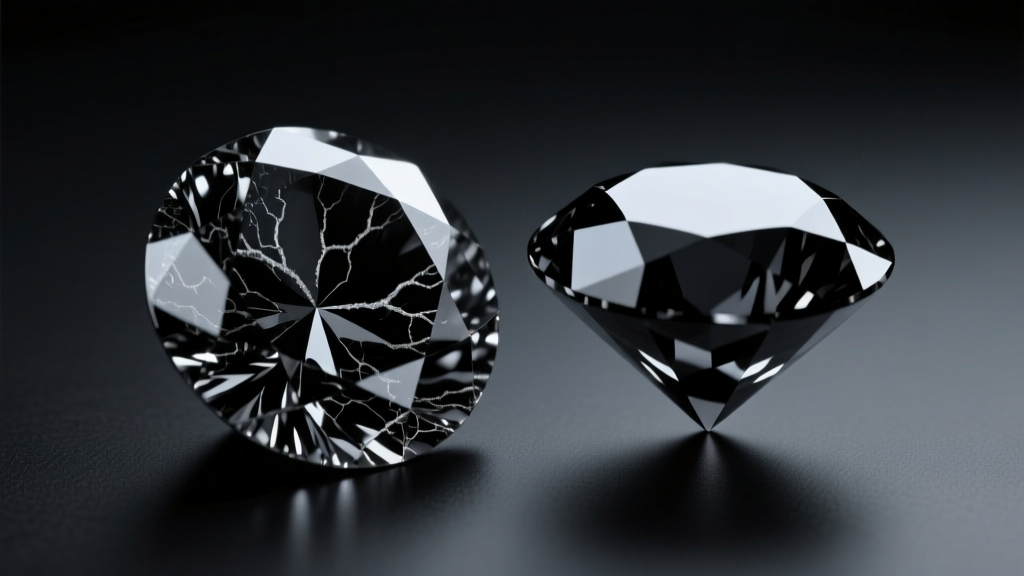
Natural black diamonds owe their color to dense, microscopic inclusions of graphite, pyrite, and hematite. They are polycrystalline, meaning they are composed of millions of tiny diamond crystals fused together. Because they are completely opaque, they do not refract light like white diamonds; instead, they absorb it. True natural black diamonds are rare, primarily sourced from Brazil and the Central African Republic. Their value is driven by rarity and carat weight, not brilliance.
2. Irradiated (Treated) Natural Diamonds
The vast majority of black diamond necklaces sold in commercial jewelry stores are treated. These start as low-clarity, heavily included white diamonds (typically I1 to I3 grades) that are virtually unsellable in the traditional market. They are subjected to neutron irradiation, which alters their crystal lattice and turns them a uniform, opaque greenish-black (which appears black to the naked eye). While they are technically 'real' diamonds, their base material is of very low quality.
3. Lab-Grown Black Diamonds
Created via Chemical Vapor Deposition (CVD) or High Pressure High Temperature (HPHT) methods, lab-grown black diamonds share the exact physical and chemical properties of mined diamonds. Their dark color is achieved by introducing boron or graphite during the growth process. They offer the most uniform color and structural integrity, making them the ultimate budget-friendly choice for everyday wear.
2026 Pricing Tiers: What Should You Actually Pay?
Retail markups on black diamond jewelry can exceed 300% if you are shopping at legacy mall jewelers. Below is the 2026 fair-market value matrix for a standard 1.00-carat solitaire pendant, excluding heavy designer brand premiums.
| Origin Type | 1.00 CT Fair Price Range | Ideal Metal Pairing | Value Retention | Best Use Case |
|---|---|---|---|---|
| Natural (GIA Certified) | $1,500 - $3,500 | 18k White Gold / Platinum | Moderate (Niche Collector) | Investment, Heirloom |
| Treated / Irradiated | $350 - $750 | 14k White Gold / Sterling | Low (Near Zero Resale) | Fashion, Everyday Wear |
| Lab-Grown (CVD/HPHT) | $200 - $500 | 14k Gold / Platinum | Low (Commodity Pricing) | Budget-Conscious, Travel |
The Budget Verdict: If your goal is pure aesthetics and daily wear, lab-grown black diamonds offer the best structural value. Irradiated diamonds are acceptable if priced under $500, but you are essentially paying for a heavily flawed white diamond that has been cosmetically altered. Only pay the premium for natural black diamonds if you are a collector who values geological rarity over optical brilliance.
Hidden Costs: Settings, Metals, and Structural Integrity
When budgeting for a black diamond necklace, the setting is just as critical as the stone. Because black diamonds do not rely on light return (sparkle) for their beauty, traditional prong settings are often a poor choice—and a waste of your budget.
- The Bezel Mandate: Natural black diamonds have complex cleavage planes and are riddled with inclusions, making their girdles highly susceptible to chipping. A full bezel setting (where a rim of metal completely encircles the stone) is highly recommended. It protects the edges and provides a sleek, modern frame that enhances the stone's geometry.
- Metal Contrast Economics: Black diamonds pop best against high-contrast, bright white metals. 14k white gold (rhodium-plated) or platinum is ideal. Paying extra for 18k or 22k yellow gold often muddies the visual contrast, reducing the visual impact of the pendant while inflating your budget by 20-40%.
- Chain Weight Ratios: A 1-carat black diamond is dense. Pairing it with a flimsy 0.8mm cable chain will result in the chain snapping or the pendant constantly flipping upside down. Budget for a 1.2mm to 1.5mm rolo or wheat chain to properly counterbalance the stone's weight.

Certification and Avoiding Misrepresentation
The most common budget trap in 2026 is paying natural diamond prices for an irradiated stone. The Federal Trade Commission (FTC) strictly requires jewelers to disclose any gemstone treatments. According to the FTC Jewelry Guides, failing to disclose that a black diamond has been irradiated or dyed is a deceptive trade practice.
Furthermore, the Gemological Institute of America (GIA) does not issue standard 4C grading reports for natural black diamonds because the standard color and clarity scales do not apply to opaque stones. Instead, the GIA issues an Identification and Origin Report for natural black diamonds, confirming whether the color is natural or treated. If a retailer attempts to sell you a 'high clarity' or 'excellent cut' natural black diamond with a standard GIA dossier, you are likely being misled. Always demand the specific Identification Report for natural stones, or an IGI report for lab-grown alternatives.
Final Assessment: Are Black Diamond Necklaces a Good Investment?
From a strict financial investment perspective, black diamond necklaces are not liquid assets. The secondary market for treated and lab-grown stones is virtually non-existent, and natural black diamonds appeal only to a niche subset of collectors. However, from a value-for-wear perspective, they are exceptional. A lab-grown or properly priced treated black diamond pendant in a secure 14k white gold bezel setting offers unparalleled versatility, pairing as easily with a leather jacket as it does with formal evening wear. By prioritizing structural security (bezel settings), demanding proper FTC and GIA disclosures, and capping your budget at the $500 mark for non-natural stones, you can acquire a stunning piece of jewelry without falling victim to the industry's most common pricing traps.


