Black and Gold Beaded Necklace: 2026 Value & Budget Guide
Discover the true value of a black and gold beaded necklace. Our 2026 budget guide breaks down materials, pricing tiers, and stringing quality.

The Anatomy of Value: Decoding the Black and Gold Beaded Necklace
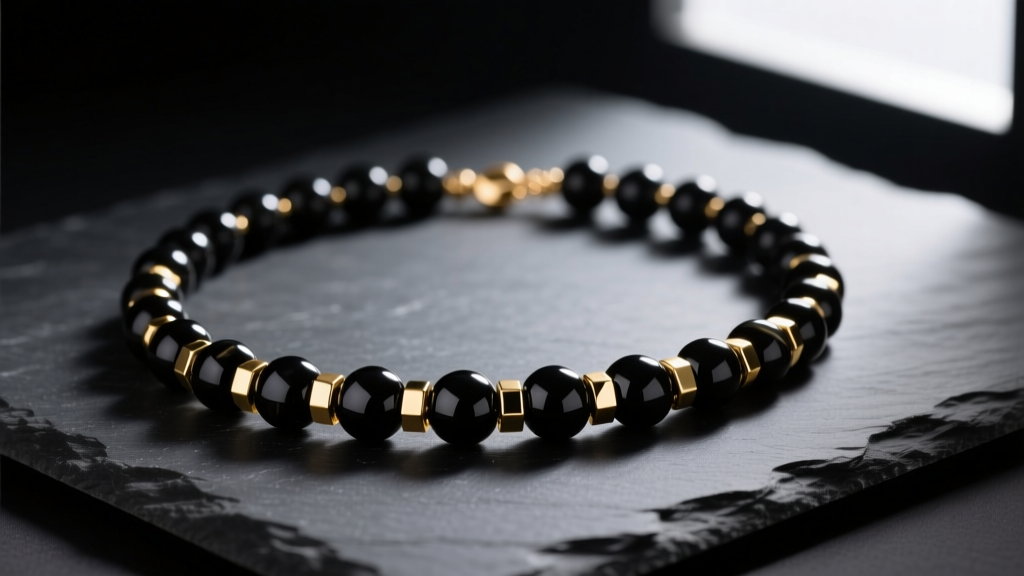
The black and gold beaded necklace is a staple of modern jewelry, offering a striking contrast that bridges the gap between everyday elegance and evening sophistication. However, as we navigate the 2026 jewelry market, the price disparity for this specific style is staggering. You can find a black and gold beaded necklace on fast-fashion racks for $18, while a seemingly identical piece from a boutique jeweler might command $450. As a consumer, understanding where your money is actually going is critical. This budget and value assessment breaks down the exact material grades, stringing mechanics, and hardware standards that separate disposable costume jewelry from enduring, investment-grade accessories.
The Core Components: Evaluating the Black Beads
The foundation of any black and gold beaded necklace lies in the black beads themselves. The market is flooded with opaque black spheres, but their geological and chemical origins dictate their baseline value, durability, and optical properties. According to the Gemological Institute of America (GIA), identifying the exact stone or substitute is the first step in assessing a piece's worth.
Genuine Gemstones vs. Glass vs. Synthetics
- Black Onyx (Chalcedony): The industry standard for high-end black beadwork. Genuine onyx has a Mohs hardness of 7, making it highly resistant to scratching. It possesses a waxy to vitreous luster and feels distinctly cool to the touch. Expect to pay a premium for perfectly matched, 8mm onyx strands.
- Black Spinel: A rarer and more expensive alternative to onyx. Black spinel boasts a Mohs hardness of 8 and a higher refractive index, giving it a sharper, more mirror-like reflection. It is rarely used in mass-market beaded necklaces and is a hallmark of luxury tier pieces.
- Obsidian: Volcanic glass with a Mohs hardness of 5 to 5.5. While beautifully glossy, obsidian is prone to conchoidal fracturing (chipping) if the beads knock against each other or hard surfaces. It holds moderate value but requires careful wear.
- Matte Glass and Polymer: Often sold as 'onyx' in budget tiers. Glass beads are heavier and warmer than plastic but lack the crystalline structure of stone. Polymer and acrylic beads are virtually worthless in the secondary market and degrade under UV exposure over time.
The Gold Elements: Plating, Filled, or Solid?
In a black and gold beaded necklace, the 'gold' typically appears as spacer beads, focal accents, or the clasp assembly. The thickness and base metal of these gold components are the primary drivers of the necklace's lifespan and price point. Rio Grande, a leading jewelry supplier, outlines strict industry distinctions that every buyer must know.
Understanding Gold Tiers in Beadwork
Flash Plated (Gold Washed): A microscopic layer of gold (usually less than 0.5 microns) electroplated over brass or copper. This is the standard for necklaces under $30. The gold will rub off within months of daily wear, leaving a brassy, tarnished green residue against the skin.
Gold Vermeil: A thick layer of gold (minimum 2.5 microns) plated over a solid sterling silver base. Vermeil spacer beads are a hallmark of mid-range, quality beadwork. They offer the rich color of solid gold at a fraction of the weight and cost, lasting years if kept away from harsh chemicals.
Gold-Filled: The gold standard for high-quality beaded jewelry without the solid gold price tag. Gold-filled beads are created by mechanically bonding a thick sheet of 14k gold to a brass core. By law, the gold must constitute at least 1/20th of the total weight. Gold-filled spacers will not flake or tarnish and can easily last a lifetime.
2026 Pricing Matrix: What Should You Actually Pay?
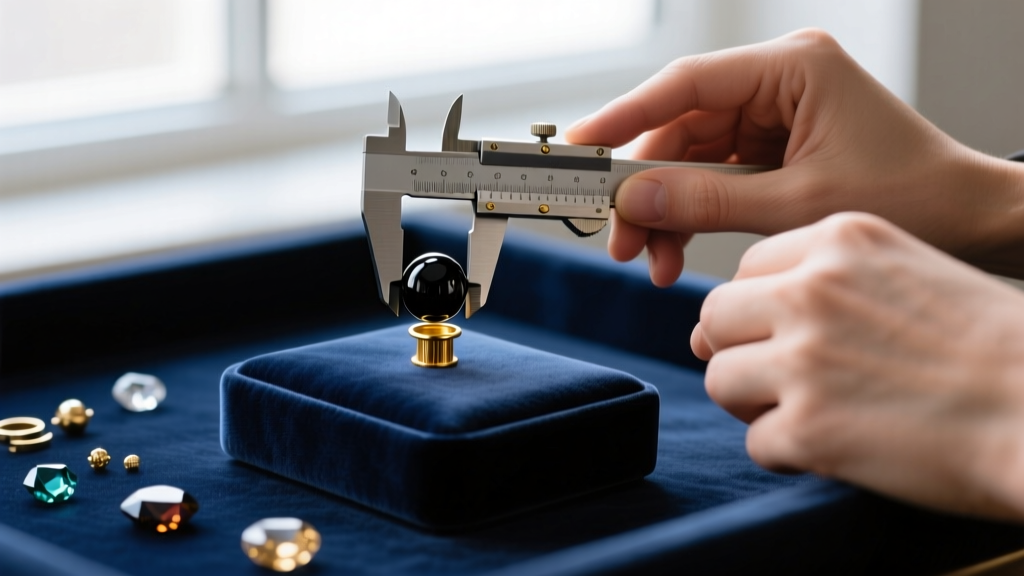
To help you assess whether a listing is fairly priced or heavily marked up, we have compiled a value matrix based on current 2026 wholesale and retail market data for a standard 18-inch, single-strand black and gold beaded necklace featuring 6mm to 8mm beads.
| Value Tier | Black Material | Gold Component | Stringing & Clasp | Fair Retail Price |
|---|---|---|---|---|
| Budget / Fast Fashion | Dyed Agate, Glass, or Acrylic | Flash-plated brass or alloy | Elastic cord or thin nylon; Lobster clasp | $15 - $45 |
| Mid-Range / Artisan | Genuine Black Onyx or Obsidian | Gold Vermeil or heavy gold plate over silver | 49-strand stainless steel wire; Sterling clasp | $85 - $180 |
| Luxury / Investment | Black Spinel or Premium Onyx | 14k Gold-Filled or Solid 14k Gold spacers | Heavy-duty Soft Flex wire; Solid gold toggle | $250 - $600+ |
The Hidden Value Driver: Stringing and Hardware
A common mistake buyers make is evaluating only the beads while ignoring the structural integrity of the necklace. A strand of $200 black spinel beads strung on cheap cotton thread is a structural liability waiting to snap. According to material experts at Fire Mountain Gems, the stringing medium must be matched to the weight and abrasiveness of the beads.
Stringing Materials and Tension
For heavy stone beads like onyx or spinel, the necklace must be strung on a multi-strand coated stainless steel wire, such as 49-strand Soft Flex (typically in a 0.019-inch diameter). This provides the necessary drape while resisting the abrasive edges of the stone's drill holes. If the necklace is strung on silk thread, it must feature French wire (gimp) at the clasp connections to prevent the silk from fraying against the metal jump rings.
Clasp Mechanics
The clasp is the most frequent point of failure on a beaded necklace. Budget pieces often use lightweight, hollow lobster clasps that bend under the weight of stone beads, causing the jump ring to slip open. High-value pieces utilize solid cast toggle clasps, magnetic safety clasps with secondary figure-eight safety catches, or heavy-duty box clasps with locking mechanisms. Always test the clasp's spring tension and inspect the solder points on the jump rings before purchasing.

Red Flags: How to Avoid Overpaying for Costume Pieces
When shopping for a black and gold beaded necklace, especially on digital marketplaces where tactile inspection is impossible, rely on these specific diagnostic questions to filter out overpriced costume jewelry:
- The Weight Discrepancy: Genuine stone beads have significant heft. If a seller claims a necklace is 'natural onyx' but the shipping weight for a 20-inch strand is under 40 grams, you are likely looking at lightweight polymer or hollow glass.
- The Drill Hole Inspection: Zoom in on the product photos. Genuine stone beads usually have slightly irregular, laser-drilled holes. If the holes are perfectly uniform, slightly melted at the edges, or show a white core beneath a black surface, the beads are dyed glass or plastic.
- The 'Gold' Terminology: Beware of vague terms like 'gold tone,' 'gold colored,' or 'gold finished.' These are industry loopholes used to describe base metals painted or dipped in a microscopic wash of yellow pigment. Demand explicit confirmation of 'vermeil,' 'gold-filled,' or 'solid karat gold.'
Final Verdict: Maximizing Your Investment
A black and gold beaded necklace is a versatile wardrobe anchor, but its value is entirely dependent on its material transparency. For everyday wear and layering, a mid-range piece featuring genuine onyx and gold vermeil spacers strung on 49-strand wire offers the best intersection of durability and aesthetic appeal, typically hovering around the $120 mark. Avoid the false economy of $20 'gold and onyx' necklaces that will inevitably snap or tarnish within a season. By scrutinizing the stringing medium, demanding precise gold plating metrics, and verifying the geological origin of the black beads, you can confidently invest in a piece that retains its structural integrity and visual brilliance for years to come.


