Black and Gold Pearl Necklace: Material & Nacre Guide
Discover how to choose a black and gold pearl necklace. Compare Tahitian vs. dyed pearls, 14k vs 18k gold settings, nacre thickness, and real pricing.

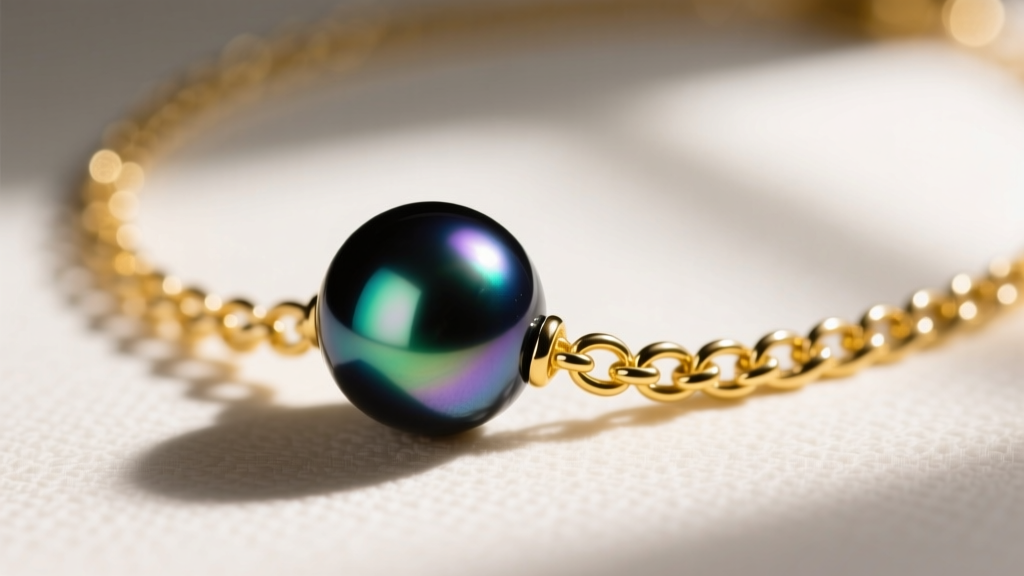
The juxtaposition of dark, iridescent nacre against warm, polished metal makes the black and gold pearl necklace a staple in high-end jewelry. However, not all dark pearls are created equal, and the longevity of your piece depends entirely on the material science behind both the gem and the setting. As of 2026, the market is flooded with treated stones masquerading as natural dark pearls. Understanding the gemological properties, nacre thickness, and metallurgical grades is essential for making an informed investment.
The Anatomy of Dark Pearls: Tahitian vs. Treated Alternatives
When shopping for a dark pearl necklace, the origin of the pearl dictates its value, durability, and visual depth. According to the Gemological Institute of America (GIA), true black pearls are produced by the Pinctada margaritifera oyster, primarily in French Polynesia. These are naturally dark and require no artificial enhancement. Conversely, many 'black' pearls on the market are actually dyed Akoya or freshwater pearls.
Tahitian Pearls: The Natural Standard
Tahitian pearls are renowned for their complex overtones—peacock, aubergine, and pistachio—which shift dynamically under different lighting conditions. The nacre thickness of a high-quality Tahitian pearl typically ranges from 0.8mm to over 2.0mm. This thick layer of aragonite platelets ensures deep luster and structural integrity, allowing the pearl to withstand decades of wear without peeling.
Dyed Akoya and Freshwater Pearls
Akoya pearls (Pinctada fucata) are naturally white or cream. To achieve a black color, they undergo a silver nitrate treatment that darkens the conchiolin (the organic protein layer beneath the nacre). While this creates a sharp, mirror-like luster, the nacre on Akoya pearls is notoriously thin, often measuring only 0.3mm to 0.5mm. Dyed freshwater pearls (Hyriopsis) offer a thicker, solid-nacre alternative, but they frequently lack the sharp luster of saltwater varieties, appearing chalky or matte if not graded carefully.
| Pearl Type | Origin & Treatment | Average Nacre Thickness | Luster Quality | Market Price Range (Strand) |
|---|---|---|---|---|
| Tahitian | French Polynesia (Natural) | 0.8mm - 2.0mm+ | High / Mirror | $800 - $5,000+ |
| Dyed Akoya | Japan/China (Silver Nitrate) | 0.3mm - 0.5mm | Very High / Sharp | $300 - $1,200 |
| Dyed Freshwater | China (Irradiated/Dyed) | 1.0mm - 2.0mm (Solid) | Medium / Soft | $50 - $250 |
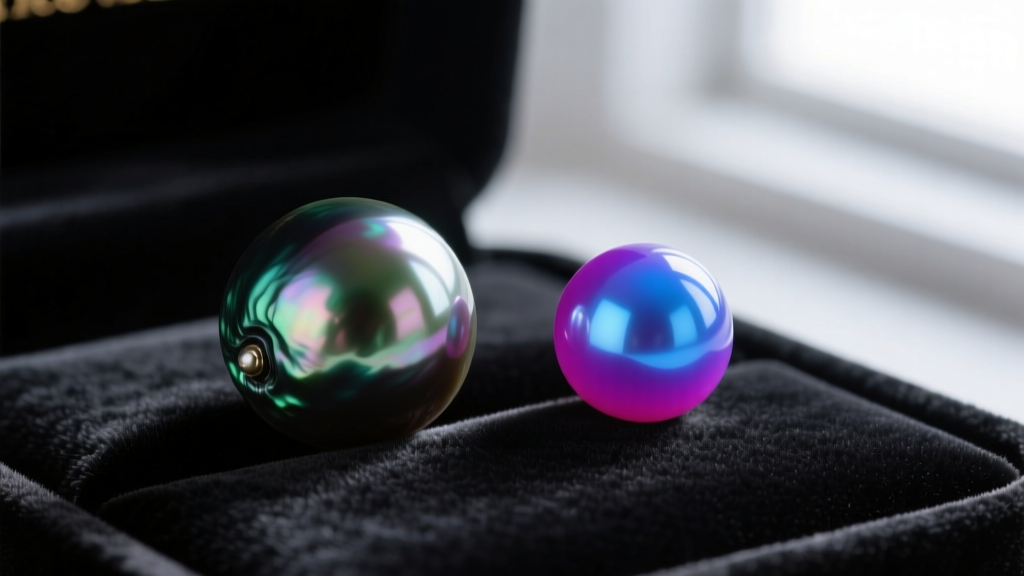
Gold Alloys: Selecting the Right Metal Setting
The 'gold' in your black and gold pearl necklace is rarely pure 24k gold, which is too soft for functional jewelry hardware. The alloy composition dramatically affects both the color contrast against the dark nacre and the physical durability of the clasps and settings.
18K vs. 14K Gold: Color Depth and Hardness
18K gold (75% pure gold, 25% alloy metals like copper and silver) offers a rich, buttery yellow hue that beautifully complements the warm peacock overtones of a Tahitian pearl. However, it is relatively soft. For necklace clasps, which endure repetitive mechanical stress, 14K gold (58.5% pure gold) is often preferred by master jewelers. The higher proportion of alloy metals increases the tensile strength and Vickers hardness, preventing the clasp's spring mechanism from warping over time.
The Vermeil and Gold-Filled Trap
Budget-friendly necklaces often feature gold vermeil (gold plated over sterling silver) or gold-filled brass. While acceptable for occasional wear, these materials present significant failure modes. Sterling silver cores can suffer from galvanic corrosion when exposed to the salts in human sweat, leading to structural weakening of the clasp. Furthermore, the thin layer of gold plating (often less than 2.5 microns in vermeil) will inevitably wear away at the friction points of the jump rings, exposing the dark oxidized silver beneath and ruining the aesthetic of the piece.
Nacre Thickness and Luster: The True Value Indicators
Luster is the most critical value factor in pearl grading, as noted by the American Gem Society. It is the result of light reflecting off the surface and refracting through the multiple layers of aragonite crystals. In a black and gold pearl necklace, high luster is what allows the gold settings to visually 'pop' against the gem.
How to Verify Nacre Quality
While the traditional 'tooth test' (rubbing the pearl against your teeth to feel for a gritty texture) can confirm you are holding real nacre rather than glass, it does not indicate thickness. To truly assess nacre quality, examine the drill holes under a 10x jeweler's loupe. A high-quality Tahitian pearl will show a distinct, sharp boundary between the white shell bead nucleus and the dark nacre layer. If the nacre appears paper-thin, or if you can see the white nucleus reflecting light through the dark surface (a 'windowing' effect), the pearl is of inferior grade and will likely peel with regular wear.
Stringing Materials and Hardware Failure Modes
The structural integrity of a pearl necklace relies entirely on its stringing material and hardware. A heavy strand of 10mm Tahitian pearls can weigh over 50 grams, placing immense stress on the thread and clasp.
- Thread Selection: Master stringers use 100% natural silk thread (such as Griffin brand) in sizes 2 or 3 for 8-10mm pearls. Silk stretches slightly, allowing the necklace to drape naturally, whereas synthetic nylon threads remain rigid and can cause the pearls to sit at unnatural angles.
- French Wire (Gimp): This is a microscopic coiled wire applied to the ends of the silk thread where it meets the gold clasp. It prevents the gold from cutting through the silk over years of friction. Never purchase a high-end pearl necklace that lacks French wire protection.
- Knotting Precision: Every pearl must be individually knotted. This not only prevents the loss of multiple pearls if the strand breaks but also prevents the pearls from rubbing against one another, which can cause micro-abrasions on the nacre surface.
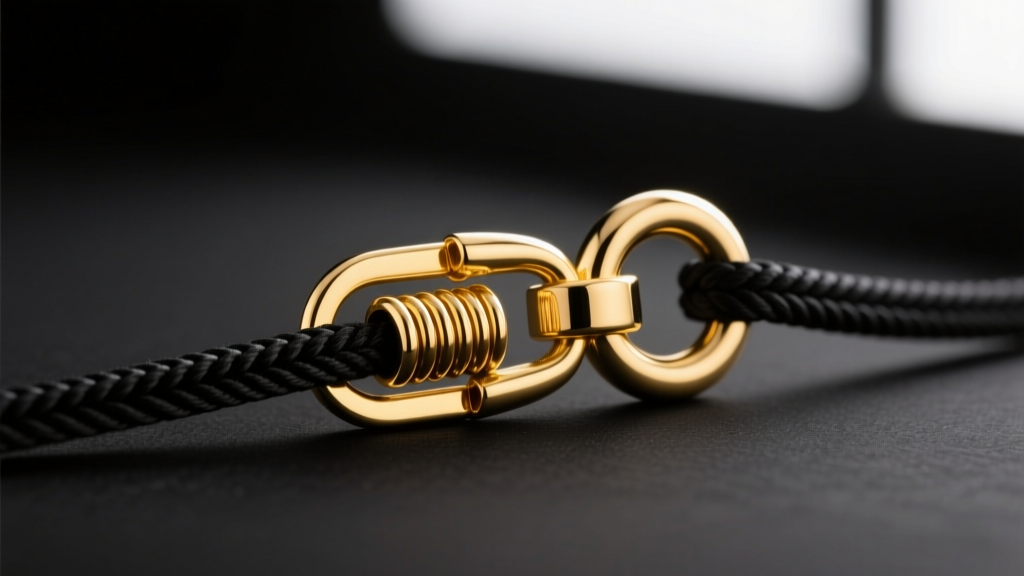
Care and Maintenance for Dark Nacre
Dark pearls, particularly those that have been dyed, require stringent care protocols to maintain their color and structural integrity. The aragonite crystals are highly susceptible to acidic degradation.
Expert Maintenance Rule: Never use ultrasonic cleaners, steam cleaners, or commercial jewelry dips on any pearl necklace. The high-frequency vibrations can shatter the nacre layers, and the harsh chemicals will strip the dyed conchiolin layer from treated Akoya pearls, reverting them to a muddy, uneven gray.
Instead, wipe your black and gold pearl necklace with a soft, lint-free microfiber cloth slightly dampened with distilled water after every wear. This removes the acidic oils and cosmetic residues that slowly etch the nacre. Store the necklace flat in a breathable cotton pouch; hanging it for long periods will cause the silk thread to stretch permanently, resulting in unsightly gaps between the pearls. By respecting the material science behind both the dark nacre and the gold alloys, your necklace will remain a striking, heirloom-quality piece for generations.


