Black and White Beaded Necklace Materials: Onyx vs. Pearl
Compare onyx, spinel, pearl, and howlite for your black and white beaded necklace. Learn hardness, porosity, and care tips for lasting wear.

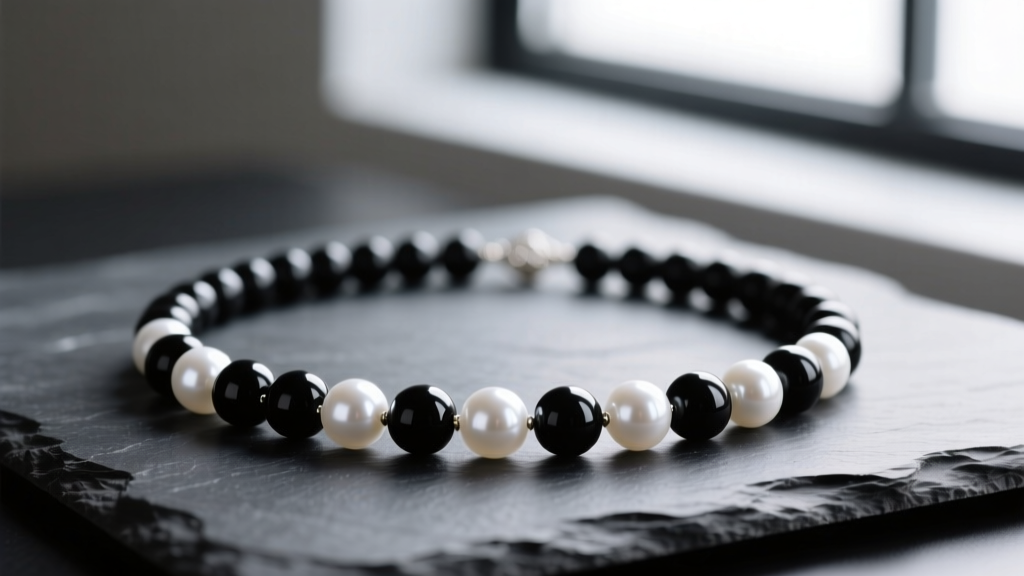
The Appeal of High-Contrast Beadwork
The striking visual impact of a black and white beaded necklace relies entirely on the interplay of light absorption and reflection. However, beneath the striking monochrome aesthetic lies a complex matrix of mineralogy, organic chemistry, and structural durability. When designing or purchasing a high-contrast piece, understanding the specific material properties of the dark and light beads is critical. A poorly matched combination can lead to uneven wear, stringing failure, or irreversible chemical damage to the more porous stones.
In this comprehensive material guide, we dissect the most common gemstones and organics used in these striking accessories, evaluating their Mohs hardness, porosity, and long-term care requirements to ensure your jewelry withstands the test of time.
Decoding the Dark Beads: Onyx, Spinel, and Agate
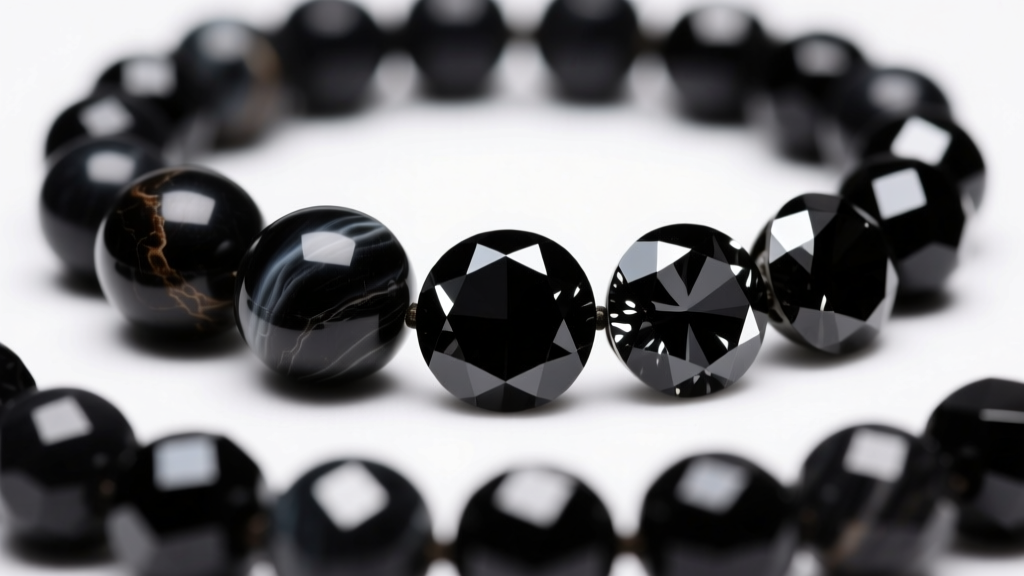
The black beads in a black and white beaded necklace are typically sourced from three distinct mineral families. While they may look identical to the untrained eye, their structural integrity and gemological origins vary wildly.
Black Onyx (Chalcedony)
True, naturally occurring black onyx is exceptionally rare. According to the Gemological Institute of America (GIA), the vast majority of commercial black onyx is actually gray or banded agate that has been treated. The agate is soaked in a sugar solution and then heated in sulfuric acid to carbonize the sugars, resulting in a permanent, deep black color. With a Mohs hardness of 6.5 to 7, treated onyx is highly durable, non-porous post-treatment, and resistant to everyday chemicals, making it an excellent anchor bead for heavy necklaces.
Black Spinel
For those seeking untreated, natural black stones, black spinel is the premium choice. Ranking at an 8 on the Mohs scale, spinel is significantly harder than quartz-based onyx. It possesses a higher refractive index, giving it a glassy, almost metallic luster that contrasts beautifully with matte white beads. According to mineralogical data from Mindat.org, spinel's lack of cleavage planes makes it highly resistant to chipping, though it commands a higher price per carat than dyed agate.
Dyed Black Agate
Lower-tier black and white beaded necklaces often utilize cheap, highly porous white agate that is surface-dyed. Unlike the carbonized onyx process, surface dyes can degrade. Prolonged exposure to UV light, acidic sweat, or harsh perfumes can cause the black dye to bleed or fade to a muddy gray, potentially staining the adjacent white beads and ruining the necklace's aesthetic.
The Light Counterparts: Pearl, Howlite, and Moonstone
The white beads introduce a different set of challenges, primarily revolving around porosity, organic vulnerability, and structural cleavage.
Freshwater vs. Saltwater Pearls
Pearls are the most classic white counterpart to black onyx. However, they are organic gems composed of calcium carbonate and conchiolin, ranking a mere 2.5 to 4.5 on the Mohs scale. Freshwater pearls are typically solid nacre, making them more durable against chipping than saltwater Akoya pearls, which have a bead nucleus and a relatively thin nacre layer (often 0.3mm to 0.8mm). Pearls are highly susceptible to acids; even the natural pH of human sweat can dissolve the conchiolin binder and dull their luster over time if not wiped clean after wear.
Howlite and Magnesite
Howlite is a porous borate mineral that naturally occurs in white with gray veining. When a pure, bright white bead is required at a low price point, howlite or magnesite is often bleached and stabilized with resin. While the stabilization improves its Mohs hardness from a brittle 3.5 to a more manageable 5, it lacks the deep, translucent luster of organic pearls or natural moonstone, often appearing flat under direct light.
White Moonstone
For a luminous, ethereal white, jewelers turn to white moonstone (a variety of orthoclase feldspar). Moonstone exhibits adularescence—a billowy light effect caused by the intergrowth of orthoclase and albite layers. However, moonstone has perfect cleavage in two directions, meaning a hard knock against a table edge can easily split the bead. It requires protective settings or careful placement in a necklace design to avoid direct impacts.
Material Comparison Matrix
When sourcing components for a black and white beaded necklace, use this matrix to balance budget, durability, and aesthetic goals.
| Material | Mohs Hardness | Porosity | Avg. Price (8mm Strand) | Primary Vulnerability |
|---|---|---|---|---|
| Black Onyx (Treated) | 6.5 - 7.0 | Very Low | $12 - $25 | Hard impacts (chipping) |
| Black Spinel | 8.0 | None | $45 - $90 | None (highly durable) |
| Freshwater Pearl | 2.5 - 4.5 | Moderate | $20 - $60 | Acids, perfumes, heat |
| White Howlite | 3.5 (Stabilized: 5) | High (Pre-stabilization) | $5 - $15 | Scratching, dye bleeding |
| White Moonstone | 6.0 - 6.5 | Low | $25 - $50 | Cleavage planes (splitting) |

Stringing Materials and Hardware Durability
The structural failure point of any beaded necklace is rarely the stone itself; it is the stringing material. When combining heavy 8mm onyx beads with delicate pearls, the weight distribution becomes a critical engineering challenge.
- Beading Wire: For necklaces that will be worn daily, a 49-strand micro-wire (such as 0.018-inch diameter wire from the SoftFlex Company) is mandatory. The 49-strand construction provides the drape of silk but the tensile strength of steel, preventing the heavy black beads from sawing through the thread over time.
- Silk Thread: If you prefer traditional knotting between pearls, use Size F or G 100% silk cord. However, you must knot between every single bead to prevent the heavier onyx beads from grinding against the softer pearls, which will rapidly destroy the pearl's nacre.
- Hardware: Avoid standard spring-ring clasps for mixed-material necklaces. The weight of the stones will pull the delicate spring mechanism open. Opt for a solid sterling silver or 14k gold-filled toggle clasp, which relies on gravity and geometry rather than a fragile spring to stay securely closed.
Care Protocols for Mixed-Media Beadwork
Cleaning a black and white beaded necklace requires a nuanced approach, as the cleaning method that is safe for the black beads may destroy the white beads.
Expert Warning: Never place a mixed-material necklace in an ultrasonic cleaner. The high-frequency vibrations will shatter moonstone, strip the nacre off pearls, and potentially crack treated onyx along microscopic stress fractures.
Instead, adopt a two-step dry and damp cleaning protocol. First, use a soft, dry microfiber cloth to remove surface oils and sweat from the pearls and howlite. For the onyx or spinel beads, you can use a slightly damp cloth with a drop of pH-neutral dish soap, carefully avoiding the stringing holes where moisture can become trapped and degrade the wire or silk. Always store the necklace flat in a soft pouch; hanging a heavy beaded necklace will permanently stretch the stringing material over time, leading to premature failure.
Final Verdict
Creating the perfect black and white beaded necklace is an exercise in balancing visual contrast with material compatibility. For an heirloom-quality piece that will withstand daily wear, pair natural black spinel with high-grade, thick-nacre freshwater pearls, strung on 49-strand micro-wire with a toggle clasp. If you are working within a budget, treated black onyx and stabilized howlite offer excellent visual impact, provided you strictly avoid chemical cleaners and store the piece flat to preserve the integrity of the stringing material.


