Tasaki Pearl Necklace Materials: Akoya, Gold & Durability Guide
Explore the material properties of a Tasaki pearl necklace. Compare Akoya nacre, 18k gold alloys, and diamond settings for lasting durability.

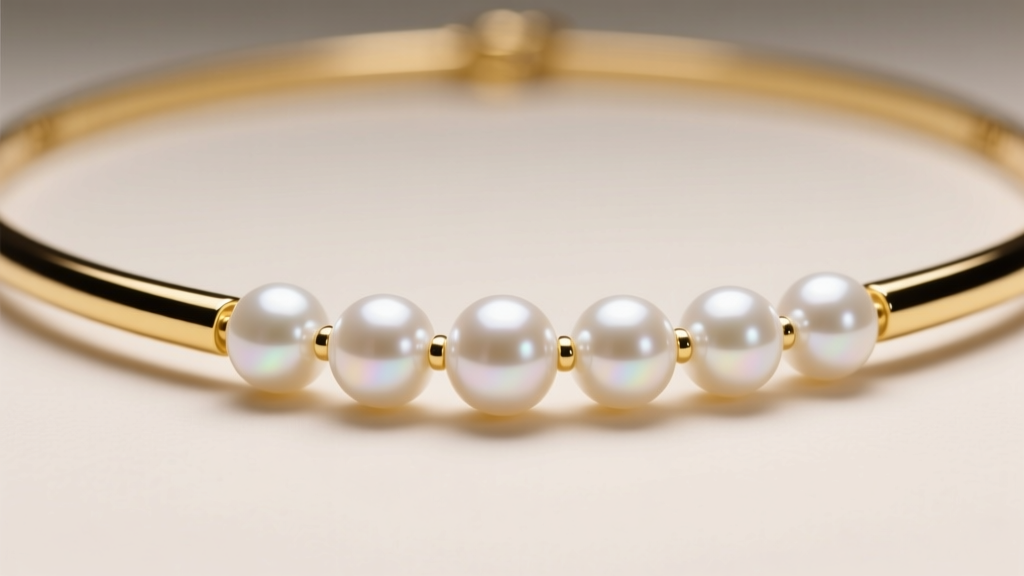
Decoding the Architecture of a Tasaki Pearl Necklace
When evaluating luxury jewelry, the brand name often overshadows the fundamental material science that dictates a piece's longevity, wearability, and intrinsic value. A Tasaki pearl necklace is globally recognized for its avant-garde architectural designs—most notably the iconic 'Balance' and 'Danger' collections. However, beneath the striking silhouettes lies a rigorous selection of materials engineered for both aesthetic perfection and structural integrity. Unlike traditional strung pearl necklaces that rely on silk thread and clasps, Tasaki frequently employs solid metal armatures, precision drilling, and advanced jewelry epoxies. This guide provides a deep-dive material comparison, analyzing the exact properties of the Akoya pearls, precious metal alloys, and diamond accents that define these contemporary masterpieces.
The Core Material: Tasaki’s Akoya Pearl Selection & Nacre Properties
At the heart of almost every Tasaki pearl necklace is the Japanese Akoya pearl. While commercial Akoya pearls often suffer from thin nacre due to accelerated cultivation cycles, Tasaki (which owns its own pearl farms) strictly selects top-tier specimens. The physical properties of these pearls are defined by two critical metrics: maki (nacre thickness) and terimaki (luster).

Nacre Thickness and Structural Vulnerability
Standard commercial Akoya pearls may possess a nacre thickness of just 0.1mm to 0.2mm, making them highly susceptible to peeling and chipping upon impact. Tasaki’s premium selections, often meeting or exceeding the Hanadama certification standards, boast a minimum nacre thickness of 0.4mm, with many specimens reaching 0.6mm or more. According to the Gemological Institute of America (GIA), nacre thickness directly correlates with a pearl's durability and its ability to withstand the mechanical stress of drilling and mounting. The aragonite platelets in thicker nacre are more densely packed, providing superior resistance to the micro-fractures that can occur when pearls are mounted onto rigid gold posts.
Luster and Overtone Interaction
Tasaki favors Akoya pearls with sharp, mirror-like luster and subtle rose or silver overtones. The high refractive index of the crystalline aragonite layers allows light to penetrate and reflect sharply. This specific optical property is crucial when pairing pearls with different metal alloys, as the pearl's overtone will either harmonize or clash with the metal's undertone.
Metal Foundations: 18k Gold vs. Platinum in Tasaki Designs
The rigid structures of the Balance and Abstract collections require metals that offer an optimal balance of malleability for crafting and hardness for daily wear. Tasaki primarily utilizes 18k Yellow Gold, 18k White Gold, and occasionally Platinum (Pt900 or Pt950). Understanding the metallurgical differences is vital for buyers considering long-term wear and maintenance.
| Metal Alloy | Composition | Vickers Hardness (HV) | Tarnish & Scratch Resistance | Best Pearl Overtone Match |
|---|---|---|---|---|
| 18k Yellow Gold | 75% Au, 12.5% Ag, 12.5% Cu | ~125 - 140 HV | Moderate scratch resistance; will not tarnish but can oxidize slightly over decades. | Rose / Cream overtones |
| 18k White Gold | 75% Au, Palladium/Silver/Zinc | ~130 - 160 HV | High scratch resistance; rhodium plating requires re-dipping every 2-4 years. | Silver / Cool white overtones |
| Platinum (Pt950) | 95% Pt, 5% Ruthenium/Iridium | ~120 - 140 HV | Develops a patina rather than losing metal; hypoallergenic and highly durable. | Silver / Icy white overtones |
As noted by the World Gold Council, 18k gold alloys are engineered to withstand the rigors of fine jewelry manufacturing. For Tasaki's rigid bar designs, 18k White Gold (alloyed with palladium rather than nickel) is often preferred for its slightly higher tensile strength and cool hue, which amplifies the icy luster of white Akoya pearls. However, 18k Yellow Gold remains the most popular choice for the classic Balance line, as its warmth provides a striking, high-contrast backdrop for the pearls.
Diamond Accents: Clarity, Cut, and Setting Mechanics
In collections like 'Danger' and 'Abstract', Tasaki introduces diamond accents to create a juxtaposition between the soft, organic curves of the pearl and the sharp, geometric brilliance of diamonds. The material properties of these diamonds and their setting mechanisms require precise engineering.
Melee Diamond Specifications
Tasaki typically utilizes melee diamonds (under 0.20 carats each) with a minimum clarity grade of VS (Very Slightly Included) and color grades ranging from G to H. Because these diamonds are often set in micro-pavé or channel settings along gold spikes or bars, the GIA's cut grading becomes the most critical factor. An excellent or very good cut ensures maximum light return, preventing the small stones from looking dark or glassy when set flush against the metal.
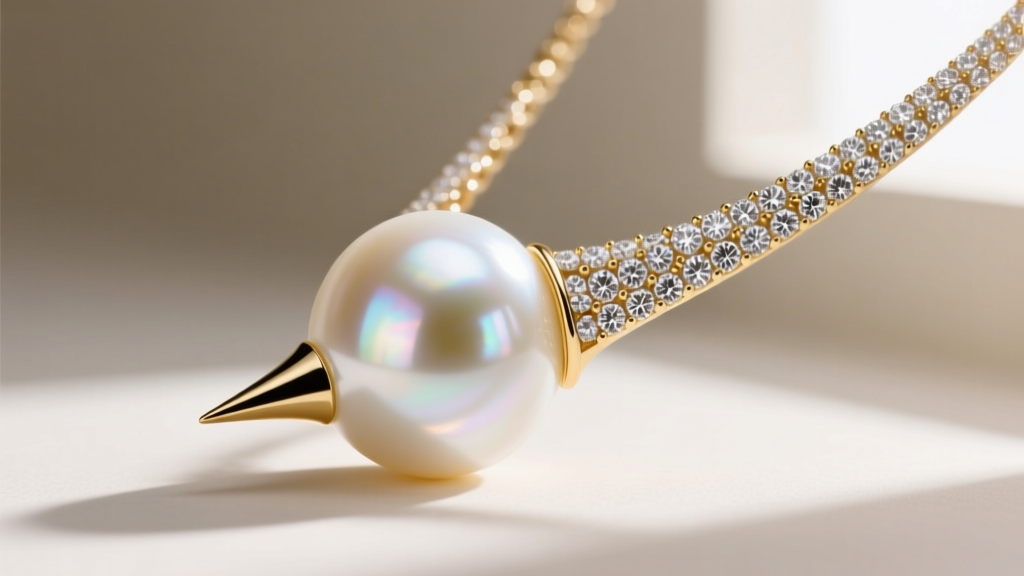
The 'Danger' Collection: Piercing Mechanics and Internal Sleeves
The 'Danger' collection features pearls that appear to be impaled by diamond-set gold spikes. From a material science perspective, driving a solid gold rod directly through a pearl creates immense radial stress, which would easily split the nacre layers. To circumvent this failure mode, Tasaki engineers utilize internal reinforcement. The pearls are precision-drilled, and a microscopic, hardened metal or high-density resin sleeve is inserted into the drill hole before the gold spike passes through. This sleeve distributes the kinetic and static pressure evenly across the pearl's interior, preventing nacre delamination and ensuring the structural integrity of the necklace during daily wear.
Structural Integrity: Mounting Methods and Failure Modes
Unlike traditional pearl strands that rely on the tensile strength of silk thread, a solid-bar Tasaki pearl necklace relies on mechanical posts and chemical adhesives. Understanding this mounting method is crucial for long-term care.
Epoxy Resin vs. Mechanical Tension
In the Balance collection, pearls are mounted onto vertical or horizontal gold posts. The primary retention method is a specialized, jewelry-grade two-part epoxy resin, often supplemented by a microscopic mechanical friction fit. While modern jewelry epoxies possess high shear strength, they are vulnerable to specific environmental factors.
- Chemical Degradation: Prolonged exposure to acetone, chlorine, or high-alcohol cosmetics can break down the epoxy matrix over time, leading to pearl detachment.
- Thermal Shock: Extreme temperature fluctuations (such as leaving the necklace in a hot car or wearing it in a sauna) can cause the metal post and the pearl's organic structure to expand and contract at different rates, weakening the adhesive bond.
- Ultrasonic Damage: Never place a Tasaki pearl necklace in an ultrasonic cleaner. The high-frequency vibrations will not only shatter the epoxy seal but also cause microscopic fracturing within the pearl's aragonite layers.
Pricing Tiers & Investment Value by Material
The pricing of a Tasaki pearl necklace is directly tethered to its material composition, pearl diameter, and diamond carat weight. A standard 5-pearl Balance necklace in 18k Yellow Gold (featuring 7.0-7.5mm Akoya pearls) typically retails between $2,500 and $3,500. When the material shifts to incorporate diamond pavé or larger South Sea pearls (which possess thicker nacre but different luster properties), prices escalate rapidly, often exceeding $8,000 to $15,000. Buyers investing in these pieces are paying for the proprietary mounting engineering and the top 1% tier of Akoya pearl selection, making the material provenance just as important as the aesthetic design.
Final Verdict on Material Selection
Choosing the right Tasaki pearl necklace requires looking beyond the brand's striking silhouettes and evaluating the material properties that align with your lifestyle. If you prioritize warmth and classic contrast, 18k Yellow Gold paired with rose-overtone Akoya pearls is unmatched. If you require higher scratch resistance and a modern, icy aesthetic, opt for 18k White Gold with silver-overtone pearls. Regardless of the metal, the exceptional nacre thickness and innovative internal mounting mechanics ensure that a Tasaki pearl necklace is not just a piece of conceptual art, but a structurally sound, wearable asset.


