Yellow Gold Diamond Heart Necklace Buying Guide: What to Look For
Discover how to choose the perfect yellow gold diamond heart necklace. Learn about karat purity, diamond grading, chain types, and pricing tiers.

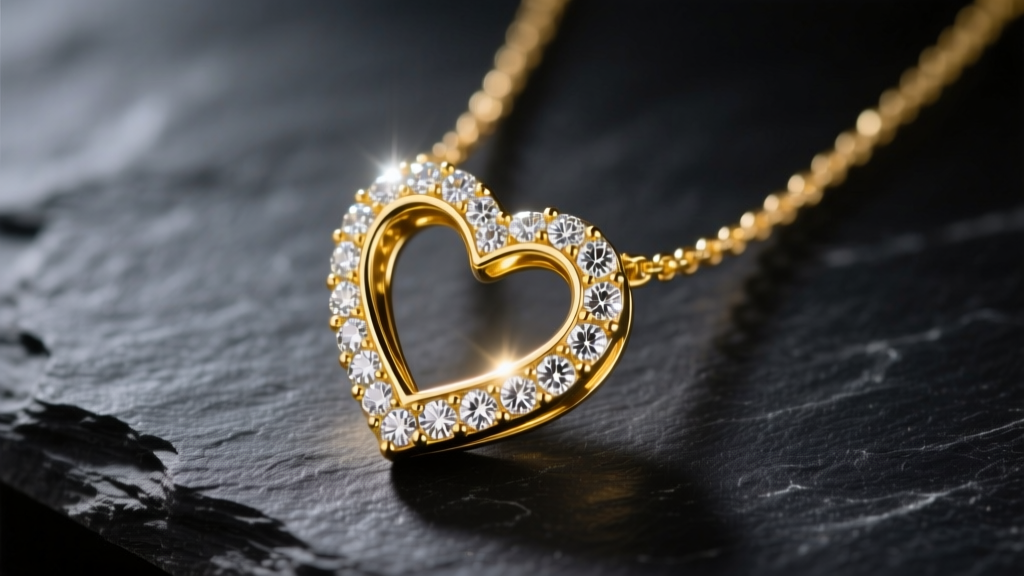
The Resurgence of the Yellow Gold Diamond Heart Necklace
The heart motif remains a cornerstone of romantic and self-purchase jewelry, symbolizing connection and enduring affection. In 2026, the yellow gold diamond heart necklace has experienced a massive resurgence, driven by a collective shift away from stark white metals toward warm-toned, vintage-inspired aesthetics. However, purchasing a heart-shaped diamond set in yellow gold requires navigating a minefield of symmetry issues, alloy variations, and structural vulnerabilities. This comprehensive buying guide breaks down the exact metallurgical and gemological specifications you need to evaluate before making an investment.
Metallurgy Matters: Choosing Your Yellow Gold Karat
The warmth of yellow gold is unmatched, but not all yellow gold is created equal. The karat weight dictates both the color depth and the structural integrity of the pendant setting and chain.
The Alloy Breakdown: 14K vs. 18K
A true yellow gold alloy relies on a precise balance of silver and copper. For 18K yellow gold (75% pure gold), the 25% alloy mix is typically 12.5% silver and 12.5% copper. This yields the rich, buttery yellow hue prized by high jewelers. However, pure gold is exceptionally soft (2.5 on the Mohs scale). Consequently, 18K gold is more susceptible to micro-scratching, denting, and bail friction over time. Conversely, 14K yellow gold (58.3% pure gold) contains a higher percentage of strengthening alloys, resulting in a slightly paler yellow tone but significantly higher tensile strength. For a daily-wear pendant that will endure friction against clothing and skin, 14K is often the superior pragmatic choice, while 18K is reserved for occasional-wear luxury pieces.
Evaluating the Heart-Cut Diamond
Heart-shaped diamonds are modified brilliant cuts, typically featuring 56 to 58 facets. Because the shape is inherently complex, it requires a master cutter to achieve optimal light return. According to the Gemological Institute of America (GIA), fancy shapes require careful facet alignment to minimize light leakage and maximize brilliance.
Symmetry, the Cleft, and the Bow-Tie Effect
The most critical flaw to watch for in a heart diamond is the 'bow-tie' effect—a dark, bow-tie-shaped shadow across the center of the stone caused by light leakage. While a slight bow-tie is common in elongated fancy cuts, a prominent one will make the center of the heart look hollow and black. Furthermore, symmetry is non-negotiable. If the two lobes of the heart are uneven in size or height, the asymmetry will be glaringly obvious once suspended on a chain. The ideal length-to-width ratio for a classic heart shape falls between 0.90 and 1.10. Ratios below 0.90 result in a stubby, wide heart, while ratios above 1.10 stretch the stone into an elongated teardrop hybrid.
| Attribute | Ideal Specification | Compromise / Acceptable |
|---|---|---|
| Length-to-Width Ratio | 0.95 - 1.05 | 0.90 - 1.10 |
| Symmetry Grade | Excellent / Very Good | Good (Avoid Fair/Poor) |
| Clarity Minimum | VS2 (Eye-clean) | SI1 (Inclusions away from cleft) |
| Color Grade | G - H (Near Colorless) | I - J (Slight warmth matches gold) |
Chain Selection and Bail Mechanics
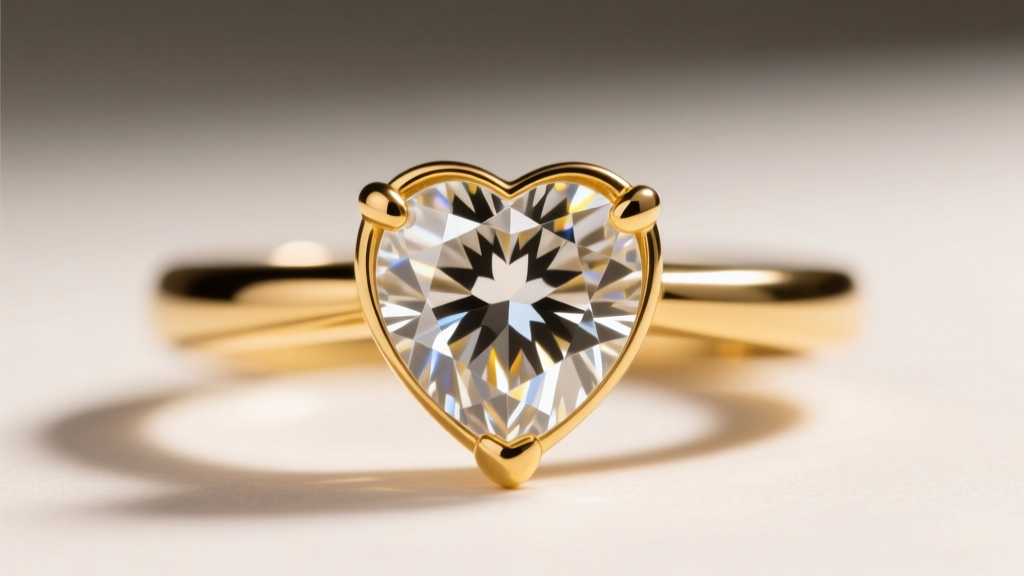
The chain and bail (the loop that connects the pendant to the chain) are the most common points of mechanical failure in necklace design. A heavy 18K gold heart pendant requires a chain with adequate tensile strength to support the weight without stretching.
Link Types and Clasp Security
For heart pendants, a 1.2mm to 1.5mm box chain or a sturdy rope chain provides the best balance of strength and flexibility. Avoid snake chains entirely; their interlocking cup-and-tube structure is highly prone to kinking, and once a snake chain kinks, it cannot be repaired. Additionally, snake chains trap skin oils and dirt, leading to a dull, blackened appearance over time. When it comes to clasps, always opt for a lobster clasp over a spring ring. Spring rings rely on a tiny internal tension spring that frequently fails or gets stuck, whereas a lobster clasp offers a secure, mechanical lock.
The Hidden Danger of Bail Friction
Bail friction is the silent killer of pendant necklaces. A rough or unlined interior bail will act like a microscopic saw against a soft gold chain. Always inspect the bail hole before purchasing. If it lacks a polished interior or a protective platinum/rhodium lining, expect chain wear and eventual snapping within 12 to 18 months of daily wear. Integrated bails (where the bail is formed directly from the diamond setting's basket) often offer smoother interior channels than soldered-on jump ring bails.
Neckline Pairing and Layering Strategies
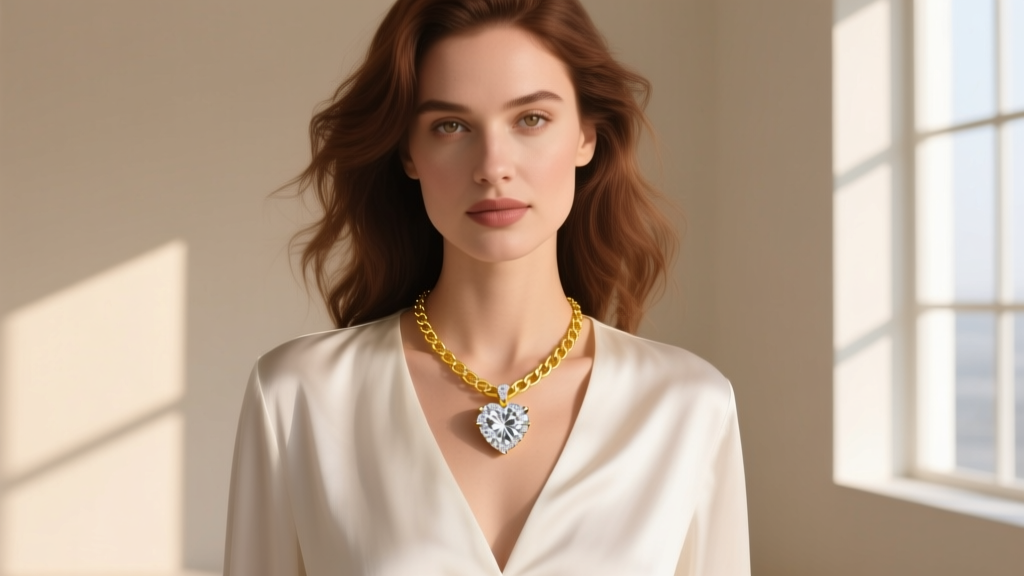
The geometry of a heart pendant makes it uniquely suited for specific necklines. The downward V-shape of the heart naturally extends the visual line of the neck, making it a perfect companion for V-neck blouses, scoop necks, and wrap dresses. It tends to clash with high crew necks or turtlenecks, which interrupt the pendant's natural flow. In 2026, layering remains a dominant trend. To layer a yellow gold diamond heart necklace effectively, anchor it as the middle piece in a three-chain stack. Pair a 14-inch 14K gold choker or delicate paperclip chain at the top, the 16-to-18-inch heart pendant in the middle, and a 20-inch simple gold chain with a small solitaire diamond or coin pendant at the bottom. This creates a cascading effect that prevents the chains from tangling while allowing the heart motif to remain the focal point.
2026 Market Pricing and Value Tiers
Understanding the current market landscape is crucial to avoid overpaying for inflated retail margins. Pricing for a yellow gold diamond heart necklace fluctuates based on the carat weight of the center stone, the presence of a diamond halo, and the gold karat. Below is a general pricing framework for the current market:
- Entry-Level ($400 - $900): Features a 0.10 to 0.25-carat heart diamond (often SI2-I1 clarity) set in 10K or 14K gold. Frequently includes a diamond halo to create the illusion of a larger center stone.
- Mid-Tier ($1,200 - $3,500): Features a 0.50 to 0.75-carat heart diamond (VS clarity, G-H color) set in 14K or 18K gold. This tier offers the best balance of visible size, eye-clean clarity, and structural durability for daily wear.
- High-End / Luxury ($5,000 - $15,000+): Features a 1.00-carat or larger heart diamond (VVS clarity, D-F color) set in premium 18K gold, often with intricate milgrain detailing or a pavé diamond bail.
Expert Sourcing and Red Flags
When sourcing a heart diamond, never buy blind. The complex facet structure of the heart cut can easily hide inclusions, particularly near the cleft or the bottom point. According to Jewelers of America, regular professional inspections are vital, but starting with a well-crafted piece is paramount. Always demand a grading report from a reputable tier-1 laboratory like the GIA or AGS for any center stone over 0.50 carats.
Expert Tip: Pay close attention to the bottom point of the heart. This is the most fragile part of the stone. The setting must utilize a specialized V-prong to wrap around and protect the sharp tip. Standard rounded prongs leave the point exposed, and a single bump against a granite countertop can chip the diamond, drastically reducing its value and structural integrity.
Finally, be wary of 'champagne' or heavily included diamonds marketed as 'vintage-style' in yellow gold settings. While warm-toned diamonds can look beautiful in yellow gold, heavy inclusions (I2 or I3 grades) compromise the stone's durability. A well-chosen yellow gold diamond heart necklace is a generational piece; prioritize structural integrity and precise symmetry over sheer carat weight to ensure it stands the test of time.


