The Black White Necklace: 2026 Monochrome Trend Analysis
Explore the 2026 black white necklace trend. Discover styling frameworks, material guides for onyx and diamonds, and investment tiers for monochrome jewelry.

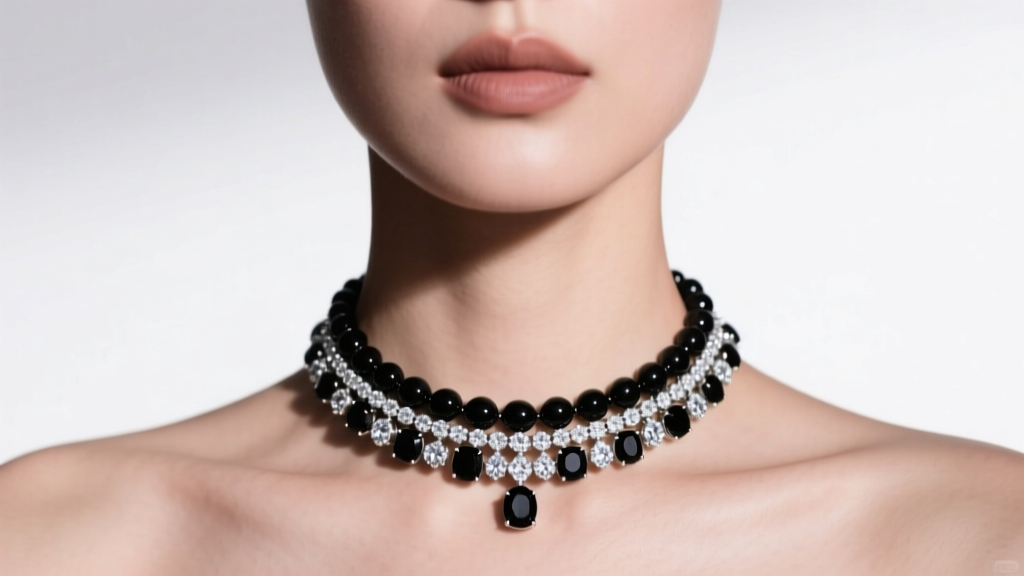
In 2026, the jewelry industry has moved past the fleeting color-blocking fads of the early 2020s, settling into a sophisticated era of textural dissonance. At the forefront of this movement is the modern black white necklace. No longer confined to basic checkerboard patterns or stark gothic tropes, today's monochrome necklaces rely on the interplay of light absorption and reflection. Designers are pairing light-swallowing matte surfaces with high-lumen brilliant cuts, creating optical illusions that elevate a simple two-tone palette into high art. For collectors and style enthusiasts, understanding the material science and structural nuances of these pieces is essential for making informed acquisitions.
The Material Matrix: Engineering High-Contrast Jewelry
The success of a black white necklace hinges entirely on the quality of its contrasting materials. In 2026, the most coveted pieces utilize specific lapidary and metallurgical techniques to achieve permanent, striking contrast.
Black Rhodium vs. Oxidized Silver
To achieve a metallic black finish, jewelers primarily use black rhodium plating (often a ruthenium alloy). A premium black white necklace will feature a plating thickness of 0.15 to 0.25 microns over a white gold or platinum base. This provides a mirror-like, gunmetal-black finish that resists tarnishing. Conversely, oxidized sterling silver offers a matte, charcoal-black aesthetic. While oxidized silver is more affordable, the black patina sits in the recesses of the metal and will naturally wear away on high-friction areas, requiring periodic re-oxidation.
Onyx, Ceramic, and Enamel
According to the Gemological Institute of America (GIA), natural black onyx is exceptionally rare; the vast majority of commercial onyx is actually gray chalcedony agate that has been treated with a sugar and acid process to achieve its uniform, opaque black color. While perfectly stable and accepted in the trade, purists in 2026 are increasingly turning to high-tech black ceramic (zirconium dioxide) or vitreous enamel for their black elements. Ceramic offers a Mohs hardness of 8.5, making it virtually scratch-proof, while enamel provides a glass-like, light-absorbing depth that dyed agate cannot replicate.
The White Counterpart: Diamonds, Pearls, and White Gold
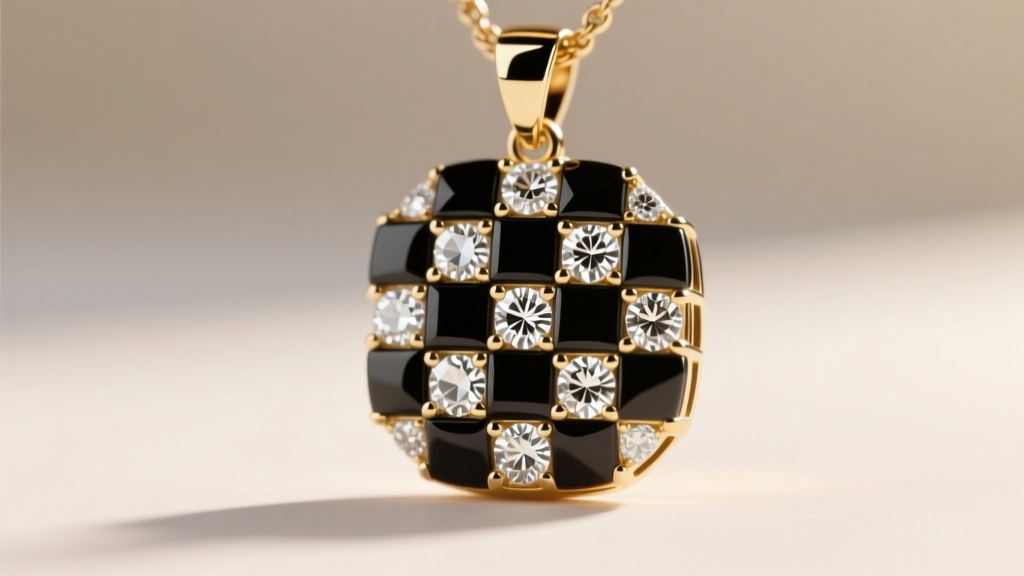
The "white" in a premium monochrome piece must possess enough optical brilliance to stand up to the void-like darkness of black ceramic or onyx. Brilliant-cut white diamonds (ideally G-H color, VS clarity) are the standard for geometric designs. For organic interpretations, high-luster Akoya pearls or white South Sea pearls are favored. As noted in the GIA Pearl Description Guide, Akoya pearls possess a sharp, mirror-like luster that creates a much starker contrast against black onyx than the softer, satiny glow of freshwater pearls.
2026 Design Archetypes: A Market Comparison
The current market for the black white necklace is segmented into four distinct design archetypes. Each serves a different stylistic function and requires a different level of investment. Industry analysts at JCK Magazine have noted a significant consumer pivot toward the 'Graphic Minimalist' and 'Organic Contrast' categories this year.
| Archetype | Primary Materials | Standard Length | Price Range (USD) | Durability Profile |
|---|---|---|---|---|
| The Graphic Minimalist | Black Vitreous Enamel, 18k White Gold | 16" - 18" | $800 - $2,500 | High (Enamel may chip if dropped on tile) |
| The Neo-Gothic | Oxidized Sterling Silver, Faceted Onyx | 14" - 16" (Choker) | $150 - $600 | Medium (Oxidation wears over time) |
| The Organic Contrast | White Akoya Pearls, Black Tahitian Pearls | 18" - 24" (Graduated) | $3,000 - $12,000 | Low (Pearls are sensitive to acids/perfume) |
| The Chessboard | Black Ceramic, White Mother of Pearl, Rose Gold | 17" (Adjustable) | $1,200 - $4,000 | Very High (Ceramic and MOP are resilient) |
Proportion and Placement: The Neckline Framework
A black white necklace commands immediate visual attention due to its extreme contrast. Therefore, pairing it with the correct neckline is not just a matter of preference, but of geometric harmony. The high contrast acts as a visual anchor, meaning the length of the chain will dictate where the observer's eye rests.
- The Crew Neck (14" - 16" Collar/Choker): When wearing a standard crew neck sweater or t-shirt, opt for a 14-inch collar or a 16-inch choker. A black ceramic and white diamond choker will sit exactly at the base of the throat, framing the face and breaking up the solid block of fabric. Avoid 18-inch chains here, as they will visually clash with the hem of the crew neck collar.
- The V-Neck and Plunging Necklines (20" - 24" Y-Drop): A black white necklace featuring a Y-drop or lariat silhouette perfectly mirrors the geometry of a V-neck. An onyx-tipped white gold lariat that falls 22 inches will elongate the torso and draw the eye vertically, enhancing the slimming effect of the V-neck.
- The Off-Shoulder and Boat Neck (12" - 14" Multi-Strand): Exposed collarbones and shoulders require horizontal volume. A multi-strand necklace alternating black onyx and white pearl beads, sitting tightly at 12 to 14 inches, provides a regal, structural element that balances the wide horizontal line of a boat neck.
Investment vs. Fast Fashion: What You Are Actually Paying For
When shopping for a black white necklace, the pricing disparity between fashion jewelry and fine jewelry is vast, and it is entirely dictated by the longevity of the black elements.
The Under $100 Tier (Fashion Jewelry)
At this price point, you are purchasing brass or base metals plated with a microscopically thin layer of black ruthenium or painted with epoxy resin. The "white" elements are typically cubic zirconia or dyed shell. Verdict: Fun for a single season, but the black plating will inevitably rub off within three to six months of daily wear, leaving a patchy, brassy undertone that ruins the monochrome illusion.
The $500 - $1,500 Tier (Bridge Fine Jewelry)
Here, you find solid 14k white gold or sterling silver with heavy black rhodium plating, alongside genuine dyed onyx and small melee diamonds. The craftsmanship is solid, and the stones are securely bezel-set to protect their edges. Verdict: The sweet spot for everyday luxury. Expect to pay $150 to $300 to have the piece re-plated with black rhodium every three to five years to maintain the stark contrast.
The $3,000+ Tier (Heirloom & High Jewelry)
In the upper echelons, the black elements are achieved without plating. Jewelers use solid black ceramic, natural black spinel, or untreated black diamonds (which are heavily included and naturally opaque). The white elements feature high-color-grade natural diamonds or gem-quality South Sea pearls. Verdict: An investment piece. Because the black color is intrinsic to the material rather than a surface treatment, the contrast will outlive the original owner without requiring maintenance.
Care and Maintenance: Preserving the Contrast
The very nature of a black white necklace makes it unforgiving when it comes to maintenance. A smudge of lotion on white gold is barely noticeable; the same smudge on black rhodium or black ceramic looks like a glaring oily streak. Furthermore, standard jewelry cleaning methods can destroy these pieces.
Never use ultrasonic cleaners. The high-frequency vibrations can fracture treated onyx and cause vitreous enamel to craze or pop out of its metal setting. Furthermore, harsh chemical dips will strip black rhodium plating instantly. To clean a monochrome necklace, use a lint-free microfiber cloth lightly dampened with distilled water and a drop of pH-neutral dish soap. Gently wipe the black surfaces in a circular motion, and use a soft-bristled baby toothbrush to clean the prongs holding the white diamonds. Dry immediately to prevent water spots on the dark surfaces, which are notoriously prone to showing hard water mineral deposits.
By understanding the material science, structural archetypes, and precise styling metrics of the 2026 monochrome movement, you can confidently select a black white necklace that serves not just as an accessory, but as a permanent, high-contrast anchor in your fine jewelry wardrobe.


