Fixing A Faded Blue Diamond Cross Necklace: Care & Repair
Is your blue diamond cross necklace fading or dull? Discover expert troubleshooting for heat damage, pave cleaning, and chain gauge matching.

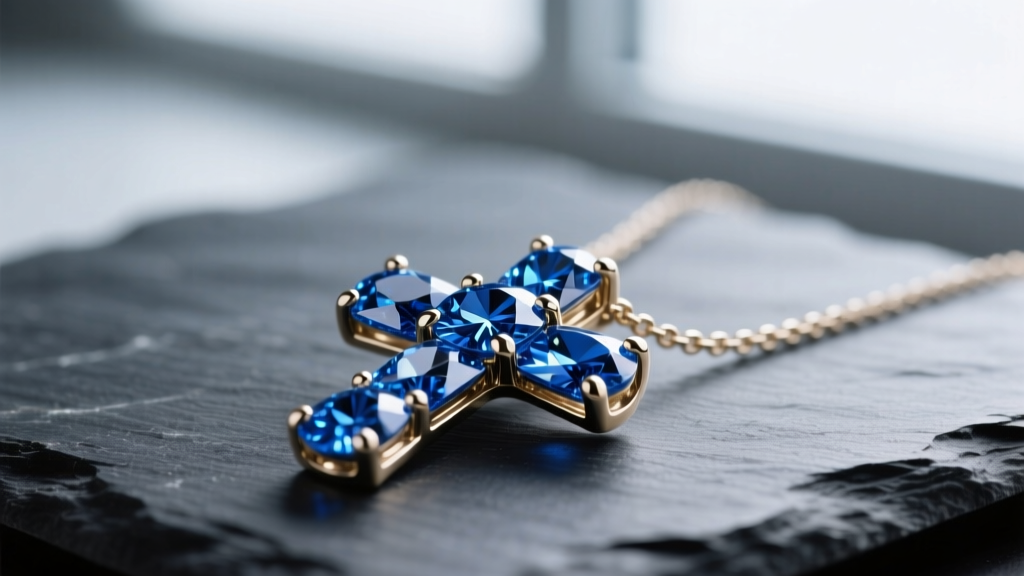
Owning a blue diamond cross necklace is a statement of both personal meaning and striking aesthetics. However, as we navigate the jewelry landscape in 2026, gemologists and bench jewelers are seeing a persistent surge in customer complaints regarding color shifting, structural bail wear, and severe cloudiness in these specific pendants. The intersection of a cross pendant's high-movement wear profile and the unique chemical sensitivities of blue diamonds creates a perfect storm for jewelry damage.
Whether you are dealing with a sudden color change after a repair or a pendant that simply refuses to sparkle, troubleshooting a blue diamond cross necklace requires a deep understanding of gemological treatments and structural mechanics. This guide provides actionable, expert-level solutions to the most common failures associated with this iconic piece of jewelry.
The Gemological Reality: Why Your Blue Diamonds Might Fade
To troubleshoot a fading blue diamond cross necklace, you must first identify the origin of the color. Natural blue diamonds derive their hue from trace amounts of boron impurities within the carbon lattice, classifying them as Type IIb diamonds. These are exceptionally rare, often commanding upwards of $150,000 per carat. Therefore, the vast majority of commercial blue diamond crosses utilize either irradiated natural diamonds or boron-doped lab-grown CVD (Chemical Vapor Deposition) stones.
The primary culprit behind sudden fading or color shifting (often turning brownish or greenish) is improper heat exposure during jewelry repairs. According to research by the Gemological Institute of America (GIA), while natural boron-induced blue is completely stable under extreme heat, irradiated natural diamonds can lose or alter their color when exposed to temperatures exceeding 400°C. If your cross necklace was recently resized, re-polished, or had a prong re-tipped using a traditional jeweler's torch, heat damage is almost certainly the cause.
Troubleshooting Heat Damage During Jewelry Repairs
Cross pendants frequently suffer from worn prongs due to their tendency to flip and snag on clothing. When a prong wears thin, it requires re-tipping. If a bench jeweler uses a standard oxygen-gas torch without proper heat shielding, the localized temperature can easily surpass 600°C, permanently altering the crystal lattice of treated blue diamonds.
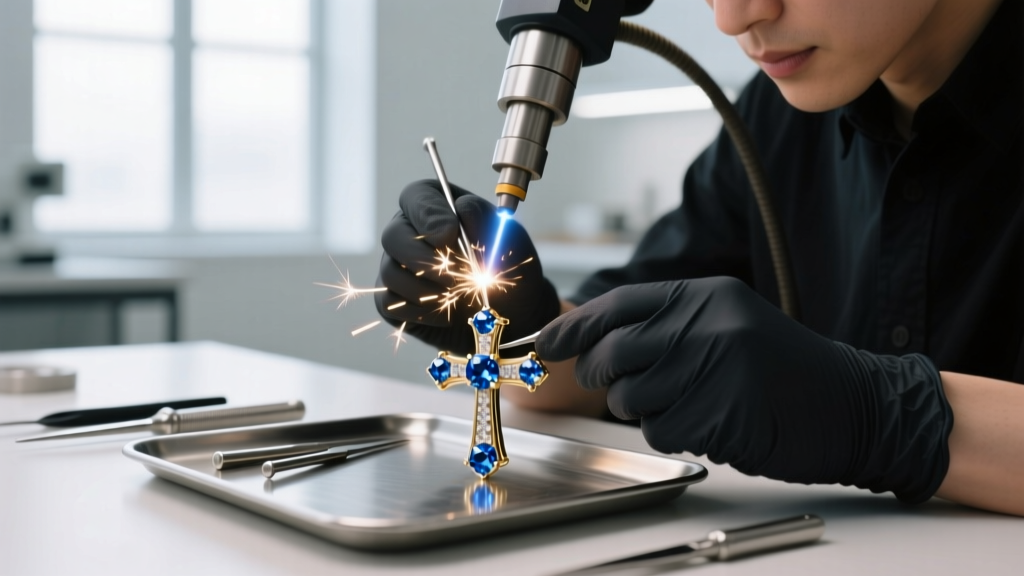
To prevent or troubleshoot this, you must mandate specific repair protocols. Below is a breakdown of heat thresholds and required repair methodologies based on diamond treatment types:
| Diamond Type | Color Origin | Heat Threshold | Mandatory Repair Protocol |
|---|---|---|---|
| Natural Type IIb | Boron Impurities | Stable >1000°C | Standard torch soldering safe; laser preferred for precision. |
| Irradiated Natural | Neutron/Electron Bombardment | 400°C - 500°C | Strict laser welding only; stones must be removed if torch is used. |
| HPHT Treated | High Pressure High Temp | 600°C+ | Laser welding highly recommended; avoid prolonged thermal exposure. |
| CVD Lab-Grown | Boron Doping | Stable >1000°C | Standard soldering safe, but laser preserves pave integrity. |
The Fix: If your stones have already turned brown or green due to torch heat, the damage is unfortunately permanent. The only remedy is to replace the affected stones. Always insist on a jeweler who utilizes a pulse-arc or laser welder for any prong work on your cross pendant.
Structural Failures: Bail Friction and Chain Gauge Mismatches
A blue diamond cross necklace is inherently top-heavy. The vertical and horizontal arms of the cross create a pendulum effect, causing the bail (the loop connecting the pendant to the chain) to experience severe friction. A common troubleshooting scenario is finding the bail worn completely through, resulting in a lost pendant.
Furthermore, pairing a heavy diamond cross with an inadequate chain is a frequent failure point. Many manufacturers ship these crosses with delicate 0.8mm or 1.0mm rope chains to keep retail costs down. This is a structural liability.
Upgrading Your Chain and Bail
- Chain Gauge: For a standard 2.0 to 4.0 carat total weight (CTW) blue diamond cross, you must upgrade to a minimum 1.5mm to 2.0mm solid box chain or a heavy-duty cable chain. Box chains offer superior tensile strength and resist the micro-abrasions caused by the bail rubbing against the links.
- Bail Material: If your cross features a 14k gold bail, consider having a jeweler solder on a platinum or 18k white gold bail insert. Platinum's high melting point and extreme durability will withstand the friction of a swinging cross pendant far longer than standard 14k gold.
- Bail Design: Avoid 'hidden' or fixed bails that lock the pendant in place. A swinging bail distributes wear more evenly across the chain links rather than grinding a single point of contact.
Solving the Cloudiness Trap in Micro-Pave Crosses
Another frequent complaint is a blue diamond cross necklace that looks dull, gray, or cloudy, even when it hasn't suffered heat damage. Cross pendants, especially those featuring intricate micro-pave halos or channel-set arms, are notorious traps for lotions, soaps, and dead skin cells.
Because the cross lays flat against the sternum, the gallery (the underside of the setting) is constantly exposed to body oils and sweat. Over time, this creates an opaque film that blocks light return, making vibrant blue diamonds look like flat, opaque slate.
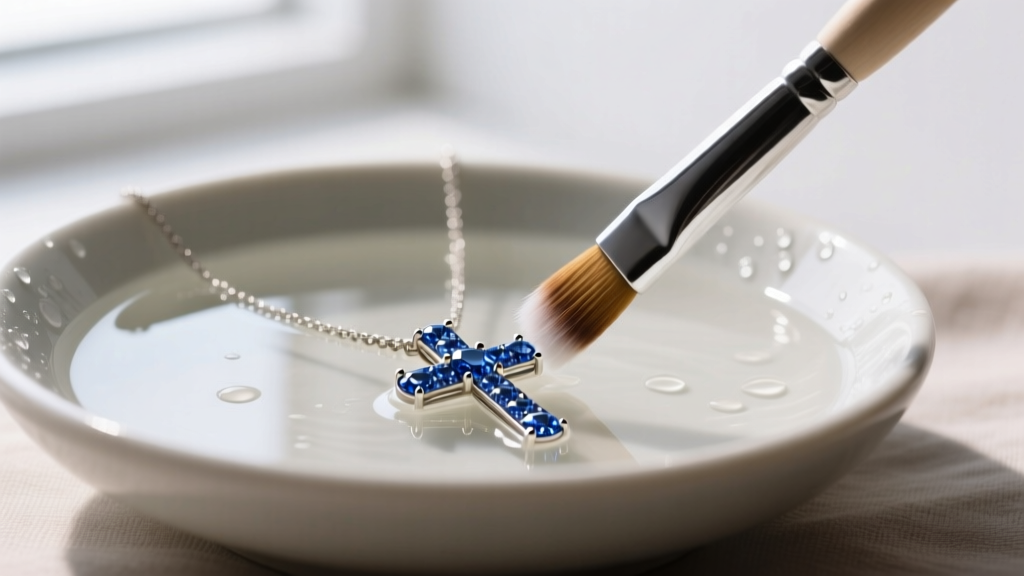
The Safe Cleaning Protocol
While ultrasonic cleaners are excellent for removing debris, they are strictly prohibited if your blue diamonds are fracture-filled or if the cross features fragile micro-pave tension settings. The high-frequency vibrations can shatter filled inclusions or shake loose the tiny melee diamonds.
- Preparation: Mix a solution of lukewarm water and a few drops of ammonia-free, mild dish soap (avoid harsh degreasers that can dull the rhodium plating on white gold settings).
- Agitation: Submerge the cross necklace for 15 minutes to soften the lipid buildup.
- Mechanical Action: Use an extra-soft baby toothbrush to gently agitate the underside of the cross. Focus on the junction where the vertical and horizontal arms meet, as this is where debris accumulates most heavily.
- Rinsing: Rinse thoroughly under a gentle stream of lukewarm water, ensuring the drain is securely plugged.
- Drying: Use a lint-free microfiber cloth. Avoid paper towels, as the wood fibers can scratch the precious metal setting and leave micro-lint trapped in the pave beads.
Appraisal Discrepancies: Insuring Your Blue Diamond Cross
A critical, often overlooked troubleshooting area involves insurance appraisals. Under the Federal Trade Commission (FTC) Jewelry Guides, jewelers must disclose if a diamond's color is the result of treatment. However, many generic store appraisals simply list the item as a 'Blue Diamond Cross Necklace' without specifying the treatment.
This leads to massive premium overpayments for the owner, and worse, claim denials if the item is lost and the insurance adjuster discovers the stones were irradiated rather than naturally occurring Type IIb. To troubleshoot this, review your current appraisal. If it lacks the explicit phrase 'evidence of irradiation' or 'color is naturally occurring,' you must demand a revised document backed by a GIA or AGS laboratory report. Accurate documentation protects your investment and ensures proper replacement value in the event of theft or loss.
Summary Checklist for Blue Diamond Cross Maintenance
To ensure your blue diamond cross necklace remains vibrant and structurally sound, adhere to this annual maintenance framework:
- Bi-Annual Prong Check: Have a jeweler inspect the prongs under 10x magnification every six months due to the pendulum snagging effect.
- Laser Welding Mandate: Never allow a traditional torch near your pendant; always verify the jeweler uses a laser welder for repairs.
- Chain Upgrade: Ensure your chain is at least 1.5mm in gauge to support the weight and movement of the cross.
- Monthly Deep Clean: Use the mild soap and soft brush method to clear the gallery of lipid buildup, avoiding ultrasonics entirely.
- Appraisal Audit: Verify your insurance paperwork accurately reflects the gemological treatment of the blue diamonds.
By understanding the specific vulnerabilities of treated blue diamonds and the mechanical stresses placed on cross pendants, you can preserve the brilliance and integrity of your necklace for decades to come.


