How to Let a Signature Necklace Define Your 2026 Style
Learn how to let a signature necklace define your personal style. This step-by-step guide covers chain types, metal grades, and perfect length mapping.

In the landscape of modern personal styling, the concept of a signature piece has evolved from a mere accessory to the foundational anchor of a wardrobe. When you allow a single, well-chosen necklace to define your daily aesthetic, you eliminate decision fatigue while projecting a cohesive, intentional image. However, selecting this anchor piece requires moving beyond superficial trends and understanding the metallurgical, structural, and proportional nuances of fine jewelry. This step-by-step guide will walk you through the exact specifications required to choose a signature necklace that withstands daily wear and perfectly complements your anatomy.
Step 1: Decoding Metal Grades and Alloy Compositions
The longevity of your signature necklace is entirely dependent on its metal composition. While pure 24-karat gold is chemically inert and hypoallergenic, it is far too soft for daily wear, possessing a Mohs hardness of just 2.5. To create durable jewelry, gold is alloyed with other metals. Understanding these alloys is critical for selecting a piece that will not prematurely oxidize or warp.
14k vs. 18k Gold: The Durability Matrix
According to the Gemological Institute of America (GIA), 18k gold contains 75% pure gold and 25% alloy metals, offering a rich, saturated color but a slightly higher susceptibility to scratching. Conversely, 14k gold contains 58.3% pure gold and 41.7% alloy metals (typically copper, zinc, and silver). For a signature necklace meant to be worn daily—including during commutes and light physical activity—14k gold provides superior tensile strength and scratch resistance. If you opt for white gold, ensure the piece is rhodium-plated and factor in the cost of re-plating every 12 to 18 months to maintain its bright, reflective finish.
The Truth About Gold Vermeil
If your budget necessitates gold vermeil over solid gold, you must verify the micron thickness of the plating. The Federal Trade Commission (FTC) Jewelry Guides mandate that vermeil must have a base of sterling silver and a gold plating of at least 2.5 microns. However, for a true signature piece that resists friction wear at the clasp and links, seek out brands that utilize 3.0 to 4.0 microns of 18k gold over a 925 sterling silver base. Anything less will wear through to the silver core within a year of continuous use.
Step 2: Selecting the Optimal Chain Architecture
The chain style dictates not only the visual weight of the necklace but also its structural integrity. Different link patterns distribute tension differently, making some far more suitable for supporting pendants or enduring the friction of daily wear.
| Chain Style | Visual Profile | Tensile Strength | Best Use Case |
|---|---|---|---|
| Cable | Classic, uniform oval links | Low to Medium | Lightweight pendants, minimalist layering |
| Figaro | Alternating long and short links | Medium | Standalone signature pieces, vintage aesthetics |
| Box | Square, geometric links | High | Heavier pendants, modern minimalist looks |
| Rope | Twisted, helical pattern | Very High | Statement pieces, high-friction environments |
| Cuban | Interlocking, flat, round links | Very High | Bold, standalone streetwear or luxury accents |
For a versatile signature piece that bridges casual and professional environments, a 1.5mm to 2.5mm Box chain or a medium-weight Rope chain offers the ideal balance of visibility and indestructibility. Avoid hollowed-out versions of these chains; while they offer a thicker visual profile at a lower price point, they are prone to crushing and are virtually impossible to repair if kinked.
Step 3: Mapping Length to Neck Anatomy
A necklace can only define your style if it sits in perfect harmony with your unique proportions. Standard jewelry lengths are based on a generalized mannequin, meaning an 18-inch chain will sit drastically differently on a 14-inch neck circumference versus a 16-inch neck circumference. To achieve a bespoke look, you must measure and map.
The Proportional Measurement Method
- The Choker (14" to 16"): Sits tightly at the base of the neck. Ideal for elongated necks and open-collar shirts. If your neck circumference is over 15 inches, opt for a 16.5-inch chain to avoid a constricted appearance.
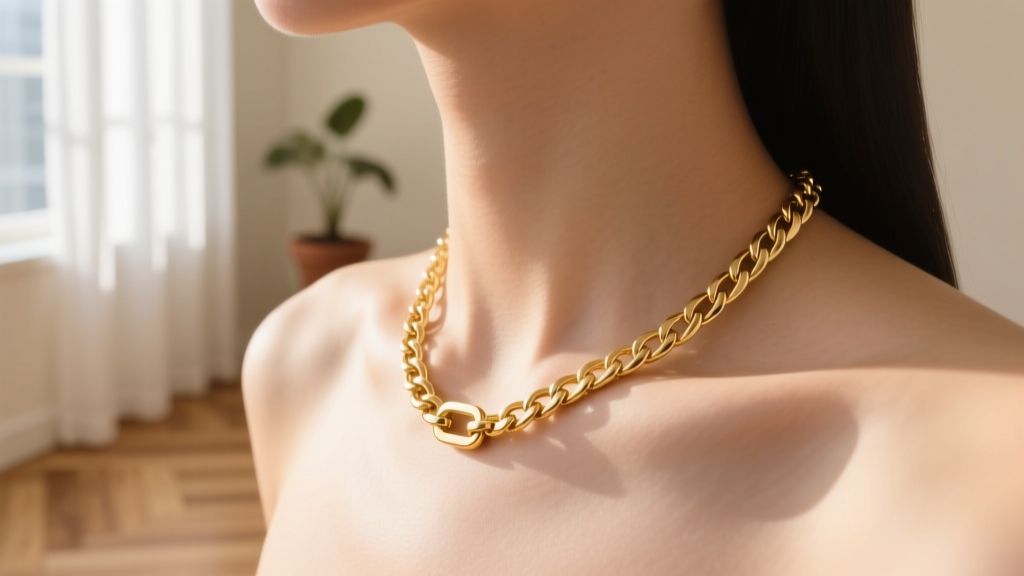
- The Princess (18"): The industry standard, resting precisely on the collarbone. This length is universally flattering and serves as the optimal baseline for a signature pendant.
- The Matinee (20" to 24"): Drops to the sternum. This length is highly effective for breaking up the vertical line of high-neck garments or turtlenecks, drawing the eye downward to create a slimming silhouette.
Expert Tip: Purchase a flexible tailor's measuring tape. Wrap it around your neck at the exact drop point you desire, note the measurement, and add exactly 0.5 inches to account for the displacement caused by the pendant bail and clasp hardware.
Step 4: Upgrading the Hardware and Clasps
The clasp is the most common point of catastrophic failure in fine jewelry. Relying on a standard, mass-produced spring ring clasp for a valuable signature piece is a critical error. Spring rings utilize a microscopic internal spring that degrades over time, frequently resulting in the loss of the necklace.

Hardware Upgrades for Security
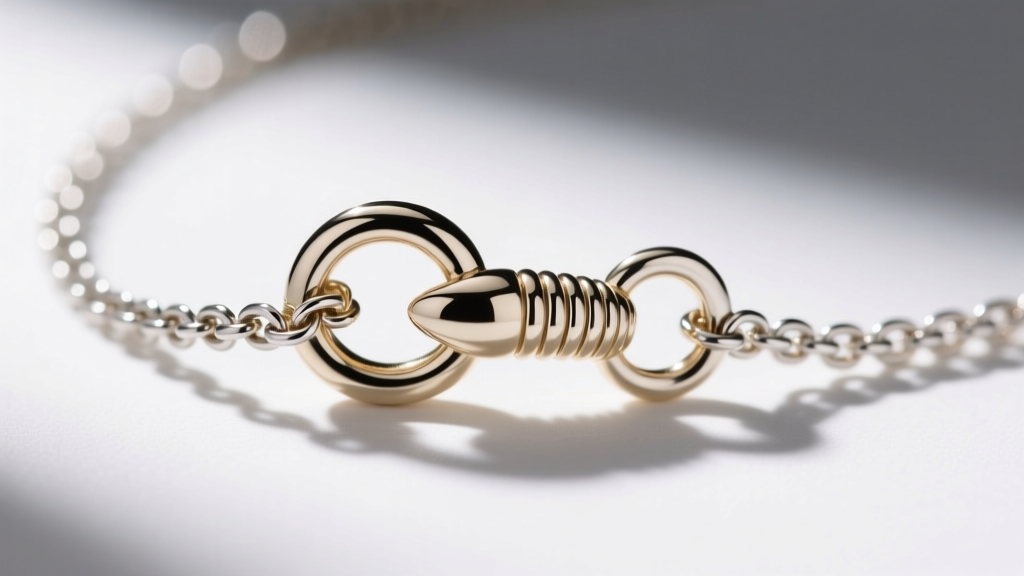
Always insist on a Lobster Clasp for chains under 4.0mm in width. Lobster clasps feature a solid cast body and a heavier, more resilient internal spring mechanism. For chains exceeding 4.0mm, or for heavy statement pendants, upgrade to a Box Clasp with a Figure-8 Safety Catch. This mechanism locks the tongue into a grooved box and is secured by a secondary wire catch, providing dual-layer redundancy against accidental unclasping.
Furthermore, inspect the jump rings—the small circular loops connecting the clasp to the chain. Ensure these are soldered closed. An unsoldered jump ring can easily be pulled apart by the tension of a snagged pendant, leading to immediate loss.
Step 5: Establishing a Maintenance Protocol
Allowing a necklace to define your style means it will be exposed to the elements of your daily life. To maintain the structural integrity and optical brilliance of the metal, implement a strict maintenance protocol.
Never apply perfumes, aerosol hairsprays, or chemical sunscreens while wearing your signature gold or vermeil necklace. The alcohol and volatile organic compounds (VOCs) in these products degrade rhodium plating and dull the polish of raw gold alloys.
Once a week, clean the piece using a solution of warm distilled water and three drops of pH-neutral dish soap. Agitate gently with an ultra-soft baby toothbrush, paying special attention to the crevices of the clasp and the interior of the links where sebum and dead skin cells accumulate. Rinse with distilled water to prevent hard water mineral deposits, and dry completely with a microfiber cloth before storing it flat in an anti-tarnish flannel pouch.
Conclusion
Curating a signature piece is an exercise in precision. By prioritizing high-tensile chain architectures like box or rope links, verifying the micron thickness of vermeil platings, and mapping the exact length to your anatomical proportions, you transition from simply wearing jewelry to strategically engineering your personal style. When you let a meticulously selected necklace define your aesthetic, it ceases to be a mere accessory and becomes a permanent, reliable extension of your identity.