The Blue Flower Necklace: 2026 Botanical Trend Guide
Discover the 2026 blue flower necklace trend. Explore enamel techniques, sapphire botanical motifs, and expert styling tips for floral jewelry.

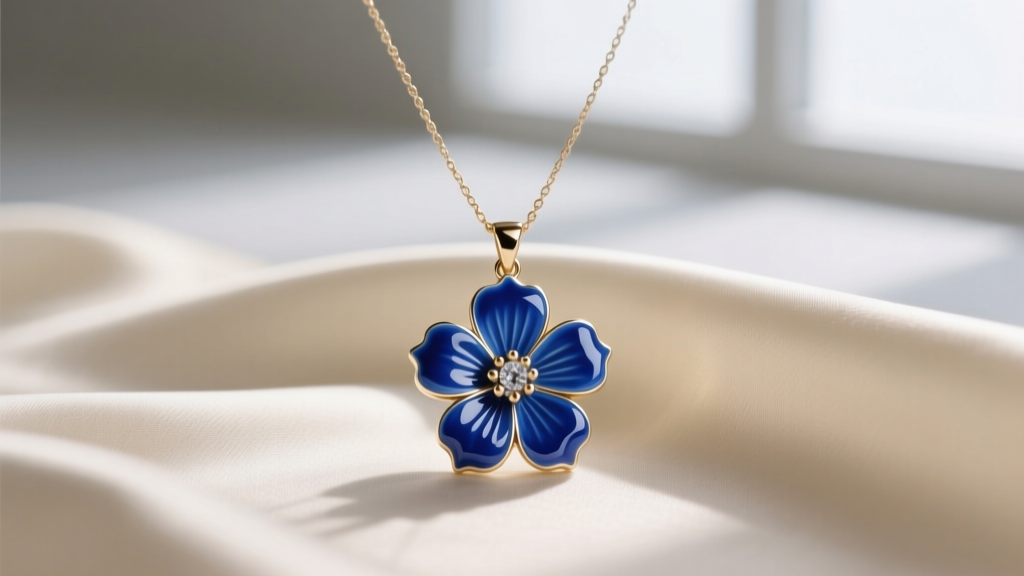
The jewelry landscape of 2026 has decisively pivoted from the understated minimalism of the early 2020s toward a movement industry insiders are calling 'Romantic Maximalism.' At the absolute center of this aesthetic shift is the blue flower necklace. No longer confined to vintage costume jewelry or children's accessories, the botanical floral pendant has been reimagined through the lens of high jewelry craftsmanship, advanced metallurgy, and striking gemological inlays. Whether rendered in vitreous cobalt enamel, carved from raw Afghan lapis lazuli, or paved with Montana sapphires, the blue floral motif is the definitive anchor piece for 2026 necklines. This comprehensive style and trend analysis breaks down the material science, pricing matrices, and expert layering frameworks you need to master this botanical resurgence.
The 2026 Botanical Shift: Why Blue Dominates
In 2026, color psychology in jewelry design has heavily favored grounding, nature-inspired hues. While traditional yellow gold sunbursts and silver daisies have saturated the market, the blue flower necklace offers a striking contrast that appeals to modern collectors. Cobalt, cerulean, and deep indigo provide a visual weight that anchors both casual linen ensembles and structured evening wear. According to trend forecasters, the 'New Romanticism' movement draws heavily from 19th-century botanical illustrations, translating detailed flora into wearable art. The blue floral pendant acts as a focal point that bridges the gap between organic inspiration and geometric precision, making it a highly versatile investment for contemporary wardrobes.
Material Science: Crafting the Perfect Blue Floral Pendant
The true value of a modern blue flower necklace lies in its material execution. Mass-market alloy pendants have been replaced by specialized artisan techniques that dictate both the price point and the longevity of the piece.
Grand Feu Enamel and Plique-à-jour
High-end botanical pendants frequently utilize Grand Feu (great fire) enamel. This process involves fusing silica and cobalt oxide pigments onto a gold or platinum substrate at temperatures exceeding 800°C. The result is a vitreous, glass-like blue that will not fade or yellow over time. A more fragile but breathtaking technique is Plique-à-jour, where the blue enamel is suspended in open-backed gold cells, creating a stained-glass effect. The primary failure mode for these pieces is thermal shock or blunt impact, which can cause the glass to craze or shatter.
Gemstone Inlays: Lapis Lazuli vs. Blue Sapphire
For a more textured, organic look, jewelers are turning to precisely carved lapis lazuli. The highest grade 'Persian Blue' or premium Afghan lapis features a deep, uniform indigo with striking flecks of golden pyrite and minimal white calcite matrix. With a Mohs hardness of 5.0 to 6.0, lapis is relatively soft and porous. Conversely, blue sapphire botanical carvings offer unparalleled durability. Corundum ranks at a 9 on the Mohs scale, making sapphire flower pendants virtually scratch-proof and ideal for everyday wear, though they command a significant premium. For deeper insights into gemstone durability and care, the Gemological Institute of America (GIA) provides extensive guidelines on managing porous stones like lapis.
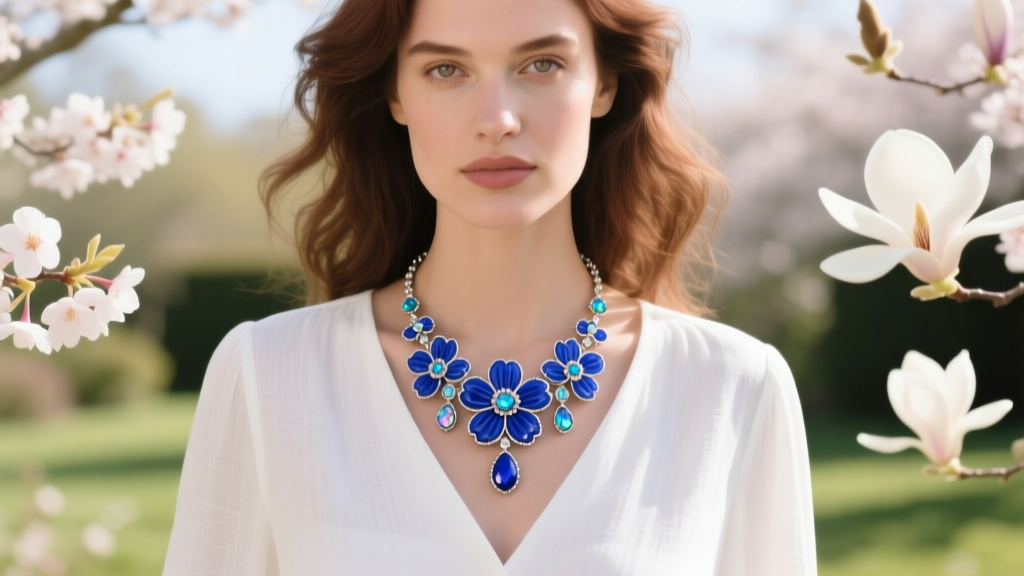
Market Matrix: Pricing and Material Durability
Understanding the intersection of material, durability, and cost is critical when investing in a blue flower necklace. The table below outlines the current 2026 market averages for artisan-crafted floral pendants (excluding the chain).
| Material | Mohs Hardness | Average Price Range (USD) | Durability & Failure Modes |
|---|---|---|---|
| Grand Feu Enamel (18k Gold Base) | 5.5 - 6.5 (Glass) | $800 - $3,500+ | Shatter-prone; avoid impacts and extreme temperature shifts. |
| Afghan Lapis Lazuli Carving | 5.0 - 6.0 | $250 - $1,200 | Porous; sensitive to acids, sweat, and ultrasonic cavitation. |
| Blue Sapphire (Pavé or Carved) | 9.0 | $1,500 - $12,000+ | Excellent; highly scratch-resistant, safe for ultrasonic cleaning. |
| Anodized Titanium | 6.0 (Metal) | $120 - $450 | Hypoallergenic and lightweight; anodized color layer can scratch. |
The 16-18-20 Layering Framework
A standalone blue flower necklace is beautiful, but 2026 styling demands strategic layering. The golden rule for floral pendants is the 16-18-20 framework, which prevents tangling while creating a cascading visual effect.
- The 16-Inch Anchor: Start with a 16-inch, 1.0mm cable chain featuring a simple bezel-set diamond or a minimalist gold dot. This sits at the collarbone and frames the face.
- The 18-Inch Focal Point: Your blue flower necklace should hang at exactly 18 inches. This length ensures the pendant rests perfectly in the hollow of the décolletage, drawing the eye without competing with the collarbone chain.
- The 20-Inch Satellite: Finish with a 20-inch rolo or box chain featuring small, spaced-out gemstone stations (satellite chain). This adds texture and elongates the neck.
When layering, ensure all chains are crafted from the same metal alloy (e.g., all 14k yellow gold or all platinum) to maintain a cohesive, high-end aesthetic and prevent galvanic corrosion if the metals were to constantly rub against one another in the presence of moisture.
Chain Gauges and Clasp Mechanics
Artisan enamel and carved gemstone pendants are surprisingly heavy, often weighing between 12 and 25 grams. Suspending a 20-gram lapis lazuli flower on a flimsy 0.8mm chain is a recipe for catastrophic failure. For pendants exceeding 10 grams, you must upgrade to a chain gauge between 1.2mm and 1.5mm. A 1.4mm rolo chain offers the perfect balance of tensile strength and visual flexibility. Furthermore, discard standard spring ring clasps; they are prone to snapping under dynamic tension. Opt for a 12mm solid lobster clasp or a high-grade neodymium magnetic clasp with a secondary safety figure-eight catch.
Expert Care and Maintenance
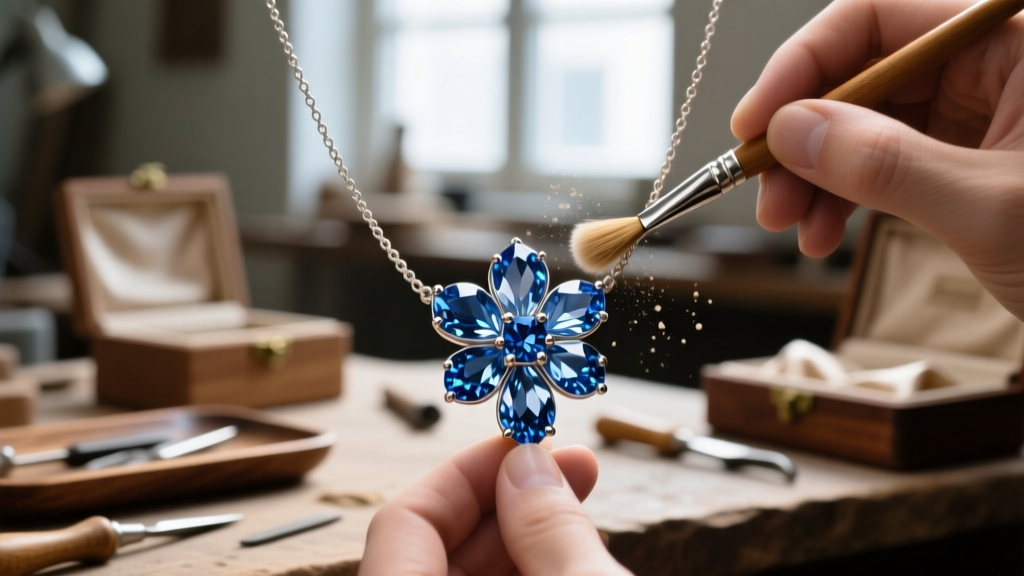
The longevity of your botanical jewelry depends entirely on material-specific care protocols. The most common mistake consumers make is utilizing ultrasonic cleaners for all their jewelry. While ultrasonic waves are perfectly safe for sapphire and diamond floral pendants, they will violently fracture the internal structure of lapis lazuli and cause Grand Feu enamel to craze. According to historical conservation guidelines from the Victoria and Albert Museum, antique and vitreous enamel pieces require exceptionally gentle handling to preserve their glass-like luster.
For enamel and porous stone blue flower necklaces, the only approved cleaning method is a lukewarm bath of distilled water and a drop of pH-neutral dish soap. Use a baby-soft toothbrush to gently dislodge debris from the petal crevices, and pat dry with a microfiber cloth. Never expose lapis lazuli to acidic environments, including citrus-based perfumes or heavy perspiration, as the acid will permanently etch the stone's polished surface, leaving a dull, chalky residue.
Final Thoughts on the 2026 Botanical Trend
The blue flower necklace is more than a fleeting seasonal trend; it is a masterclass in wearable art. By understanding the material science, respecting the gemological hardness scales, and employing strategic layering techniques, you can curate a botanical collection that remains timeless, elegant, and structurally sound for decades to come.


