Necklace with Blue Stone: A Gemstone Material Guide
Discover how to choose the perfect necklace with blue stone. Compare sapphire, aquamarine, lapis, and topaz properties, durability, and pricing.

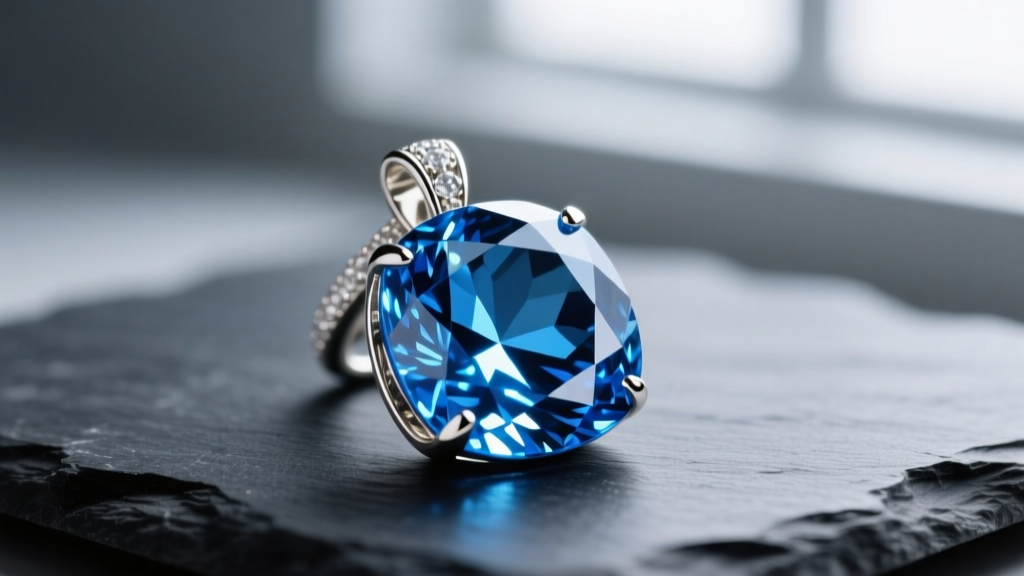
The Allure and Complexity of Blue Gemstones
When searching for the perfect necklace with blue stone, consumers are often captivated by the visual depth and serene color palette these gems provide. However, from a gemological and material science perspective, not all blue stones are created equal. The structural integrity, optical properties, and chemical stability of a gemstone dictate how it will perform when worn daily as a pendant. As of 2026, advancements in gemstone treatment disclosures and lab-grown alternatives have shifted the market, making it crucial for buyers to understand the physical properties of their chosen stone before investing in a necklace.
This guide provides a deep-dive material comparison of the most popular blue gemstones used in necklaces and pendants, evaluating their hardness, toughness, cleavage planes, and ideal setting configurations to ensure longevity and aesthetic brilliance.
The Mohs Scale vs. Gemstone Toughness: A Critical Distinction
A common misconception in jewelry shopping is equating the Mohs scale of mineral hardness with overall durability. Hardness merely measures a stone's resistance to scratching. Toughness, on the other hand, measures a stone's resistance to breaking, chipping, or fracturing upon impact. This distinction is paramount when selecting a necklace with blue stone, as pendants are highly susceptible to swinging and striking against hard surfaces like desks or steering wheels.
Understanding Cleavage Planes
Cleavage refers to the way a mineral breaks along specific structural planes of weakness. For example, while blue topaz ranks a respectable 8 on the Mohs scale, it possesses perfect basal cleavage. This means a single, sharp knock against a granite countertop can cause a topaz pendant to split cleanly in half. Conversely, sapphire (corundum) ranks 9 on the Mohs scale and has no true cleavage, making it exceptionally tough and ideal for daily-wear necklaces.
"When evaluating a gemstone for a pendant, always prioritize toughness and cleavage over pure scratch resistance. A stone that scratches easily but doesn't shatter is often preferable for active lifestyles." — American Gem Society
Comparative Analysis of Popular Blue Gemstones
The table below breaks down the core material properties of the most frequently used blue stones in contemporary pendant designs. This data is essential for matching the stone to your lifestyle and maintenance willingness.
| Gemstone | Mohs Hardness | Toughness & Cleavage | Standard Treatments | Ideal Setting Type |
|---|---|---|---|---|
| Blue Sapphire | 9.0 | Excellent (No cleavage) | Heat (Occasionally Beryllium) | Prong or Bezel |
| Aquamarine | 7.5 - 8.0 | Good (Poor cleavage) | Heat (Routine) | Protected Prong |
| London Blue Topaz | 8.0 | Poor (Perfect cleavage) | Irradiation + Heat | Bezel or Halo |
| Lapis Lazuli | 5.0 - 6.0 | Fair (Granular structure) | Dyeing, Waxing, Oiling | Full Bezel |
| Tanzanite | 6.5 - 7.0 | Good (Perfect cleavage) | Heat (Routine) | Bezel or V-Prong |
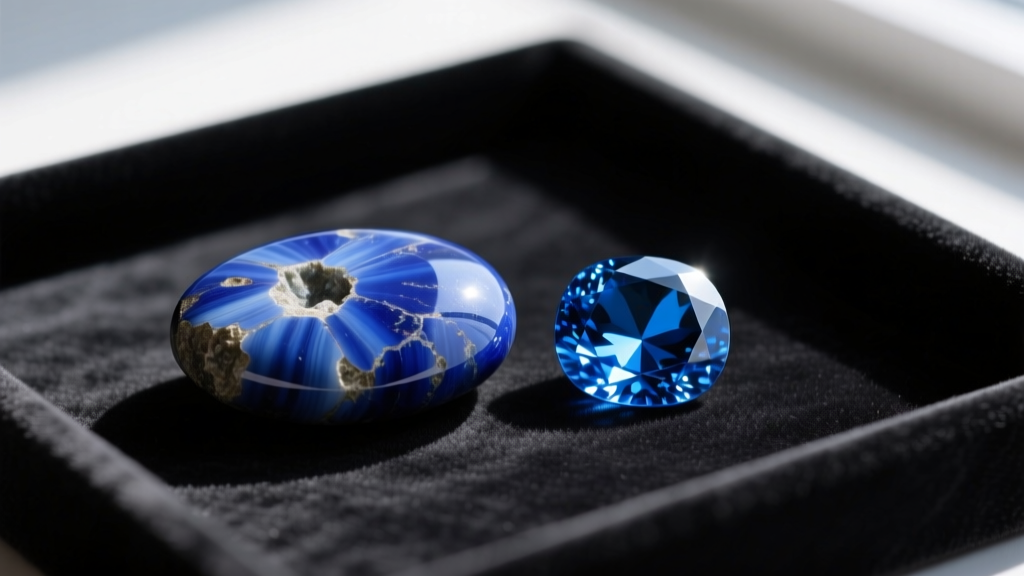
Treatments and Enhancements: What You Must Know
The color of a blue stone in a necklace is rarely entirely natural in the commercial market. Understanding these treatments is vital, as they affect both the value and the care requirements of the jewelry.
Irradiation in Blue Topaz
According to the GIA Gem Encyclopedia, virtually all London Blue and Swiss Blue topaz on the market begins as colorless or pale brown topaz. The stone is subjected to electron beam or gamma irradiation, followed by precise heat treatment, to achieve its signature deep blue hue. This treatment is permanent and stable under normal wearing conditions, though prolonged exposure to extreme, direct heat (like a jeweler's torch during resizing) can alter the color.
Porosity and Dyeing in Lapis Lazuli
Lapis lazuli is not a single mineral, but a metamorphic rock composed primarily of lazurite, calcite, and pyrite. Because it is highly porous, lower-grade lapis is frequently dyed to improve its color saturation and waxed to seal the surface. When wearing a lapis lazuli necklace, you must avoid ultrasonic cleaners, steamers, and harsh chemicals like perfume or chlorine, which can strip the wax and cause the dye to bleed or the calcite to dissolve.
Chain Metal Pairings Based on Stone Undertones
The material properties of the chain and the setting metal should complement both the optical properties of the stone and its structural vulnerabilities.
- Cool Undertones (Aquamarine, Swiss Blue Topaz): These stones possess a crisp, icy blue hue that is optically amplified by white metals. Platinum and 14k or 18k white gold provide a high-contrast, modern aesthetic. Platinum is particularly recommended for topaz due to its superior tensile strength, allowing for thicker, more protective bezel walls without adding excessive weight to the necklace.
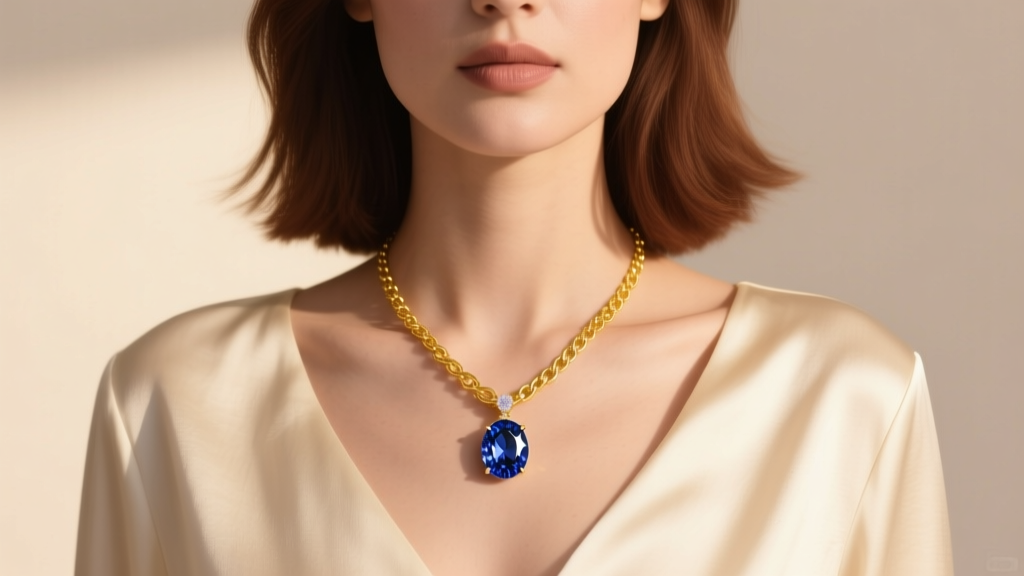
- Warm and Deep Undertones (Cornflower Sapphire, Lapis Lazuli, Teal Sapphire): The rich, velvety blues of these stones are traditionally enhanced by the warm glow of 18k yellow gold or even rose gold. The golden pyrite flecks naturally occurring in high-quality lapis lazuli create a stunning material synergy when set in a yellow gold bezel.
Pricing Tiers and Investment Value
The financial investment required for a necklace with blue stone varies wildly based on the gemological rarity and the presence of natural, untreated characteristics.
The Premium Tier: Unheated Sapphires
Natural, unheated blue sapphires from renowned locales like Kashmir, Burma, or Ceylon (Sri Lanka) command astronomical premiums. A 2-carat unheated Ceylon sapphire pendant can easily range from $4,000 to over $15,000. The material value here lies in the stone's geological rarity and its untouched crystal lattice, which often exhibits superior light return and a velvety luster that heat-treated stones lack.
The Accessible Tier: Treated Topaz and Synthetic Alternatives
London blue topaz offers massive visual impact for a fraction of the cost, typically ranging from $20 to $60 per carat. For buyers seeking the durability of corundum without the natural sapphire price tag, lab-grown blue sapphires (created via the Verneuil or flux-growth methods) offer identical chemical and physical properties—ranking 9 on the Mohs scale with no cleavage—for roughly 10% to 20% of the cost of their mined counterparts.
Final Decision Framework: Selecting Your Ideal Blue Stone
Choosing the right necklace with blue stone ultimately requires balancing your aesthetic desires with your daily habits. If you are an active professional who rarely removes their jewelry, a bezel-set blue sapphire in platinum is the undisputed champion of material durability. If you prefer a larger, statement-making pendant for occasional evening wear and are willing to utilize protective storage, a London blue topaz or tanzanite offers unparalleled size-to-cost ratios. Always demand full treatment disclosure from your jeweler, and ensure the setting architecture physically protects the specific cleavage vulnerabilities of your chosen gemstone.


