Blue Jade Necklace Guide: Material Properties & Authenticity
Discover the material truth behind a blue jade necklace. Compare jadeite, nephrite, and common imitations, plus learn how to spot treatments and buy smart.

The Mineral Reality: What Exactly is Blue Jade?
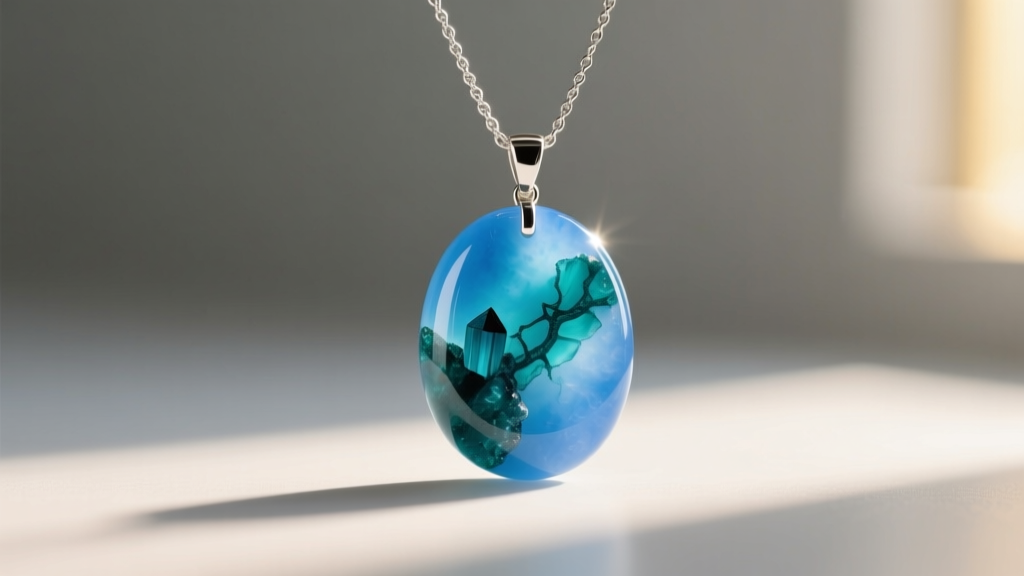
When consumers search for a blue jade necklace, they are often unaware of a fundamental gemological truth: "jade" is not a single mineral, but rather a broad term encompassing two distinct silicate minerals—jadeite and nephrite. Furthermore, naturally occurring blue jade is among the rarest color variations in the gemological world. Understanding the material properties of these stones is critical before investing in high-end jewelry, as the market is heavily saturated with treated stones and outright imitations.
According to the Gemological Institute of America (GIA), jadeite and nephrite possess entirely different chemical compositions, crystal structures, and physical properties. Jadeite is a pyroxene mineral with a granular crystalline structure, while nephrite is an amphibole mineral characterized by a dense, interlocking fibrous matrix. This structural difference dictates not only the stone's toughness but also how it interacts with light and takes a polish.
The Rarity of Guatemalan "Olmec Blue" Jadeite
True blue jadeite is primarily sourced from the Motagua fault zone in Guatemala. Historically revered by the Olmec and Maya civilizations, this material—often referred to as "Olmec Blue"—ranges from a pale, icy blue to a deep, saturated teal. The blue coloration is not caused by the chromium that yields imperial green jade, but rather by trace amounts of titanium and iron within the jadeite's crystal lattice. Because these geological conditions are highly localized, authentic, untreated Guatemalan blue jadeite commands a massive premium in the collector's market.
Blue Nephrite: A Geological Anomaly
Nephrite, the more common form of jade historically sourced from China, New Zealand, and Canada, is exceptionally rarely found in blue. Nephrite typically presents in shades of green, white, yellow, and black. If you encounter a deeply saturated, uniform blue nephrite necklace priced under a few thousand dollars, it is almost guaranteed to be dyed. The interlocking fibrous structure of nephrite makes it highly porous to chemical dyes, a fact that mass-market manufacturers frequently exploit.
Material Comparison Chart: True Jade vs. Common Imposters
Because authentic blue jade is so scarce, the jewelry market is flooded with lookalikes. To evaluate a blue jade necklace accurately, you must understand the diagnostic gemological properties that separate true jade from common simulants like blue chalcedony, dyed serpentine (Bowenite), and dumortierite quartz. Below is a comparative breakdown of the material properties you should expect from a certified gemological lab report.
| Material | Mohs Hardness | Specific Gravity (SG) | Refractive Index (RI) | Market Prevalence as "Blue Jade" |
|---|---|---|---|---|
| Blue Jadeite (Olmec) | 6.5 - 7.0 | 3.30 - 3.38 | 1.66 (point) | Extremely Rare / High-End Collector |
| Blue Nephrite (Dyed) | 6.0 - 6.5 | 2.90 - 3.03 | 1.62 (point) | Very Common / Low-Tier Commercial |
| Blue Chalcedony | 6.5 - 7.0 | 2.58 - 2.64 | 1.53 - 1.54 | Common / Mid-Tier Alternative |
| Serpentine (Bowenite) | 3.0 - 5.5 | 2.44 - 2.62 | 1.56 - 1.57 | Very Common / Tourist Trade |
As noted by mineralogical databases like Mindat.org, the specific gravity (SG) is the most reliable non-destructive test for separating jadeite from its imposters. Jadeite is noticeably heavier than chalcedony or serpentine. If your blue jade pendant feels suspiciously light for its size, you are likely holding dyed serpentine or quartz.
Treatments and Enhancements: Decoding Type A, B, and C
The value and structural integrity of a blue jade necklace are entirely dependent on its treatment history. The gemological trade categorizes jade into three distinct tiers based on enhancement. Understanding these categories is non-negotiable for serious buyers.
Type A: Completely Untreated
Type A jade has been subjected to no chemical treatments, bleaching, or polymer impregnation. It may have been polished with a traditional plum skin or mild wax, which is an accepted, centuries-old practice that does not alter the stone's internal structure. A Type A Guatemalan blue jadeite necklace is an investment-grade asset that will appreciate over time and can be safely passed down through generations.
Type B: Bleached and Polymer-Impregnated
Type B jade is soaked in strong hydrochloric or sulfuric acid to remove brown or yellowish impurities, followed by vacuum-impregnation with a polymer resin to restore its translucency. Avoid Type B jade at all costs. The acid bath destroys the natural interlocking crystalline structure of the jade. Over a period of 5 to 10 years, the polymer resin will yellow, become brittle, and ultimately cause the stone to crack or cloud. A Type B blue jade necklace has virtually no resale value and is structurally compromised.
Type C: Chemically Dyed
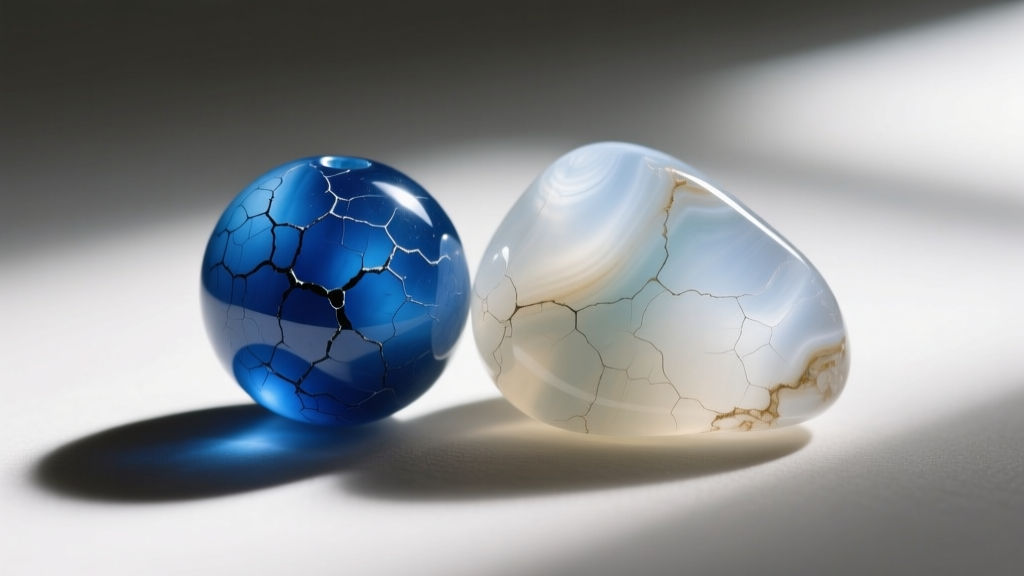
Type C jade has been artificially colored. Because natural blue jade is so rare, the vast majority of vivid, neon, or uniformly saturated blue jade necklaces on the market are Type C (often combined with Type B treatments, known as B+C). The dye is introduced by boiling the stone in chemical baths. Under a gemological microscope or a Chelsea color filter, Type C jade reveals telltale signs: the dye concentrates in the microscopic fissures and grain boundaries, creating a "spiderweb" effect rather than a smooth, natural color distribution.
Evaluating the Setting and Chain Materials
The physical toughness of jade is legendary—nephrite, in particular, possesses greater structural toughness than steel due to its fibrous matrix. However, toughness (resistance to breaking) is not the same as hardness (resistance to scratching). Jadeite can still chip if struck against a hard surface, and its polished surface can be dulled by contact with materials of equal or higher Mohs hardness.
When selecting a blue jade necklace, the setting mechanics are just as important as the stone itself:
- Bezel Settings: The gold standard for jade cabochons. A full or semi-bezel setting in 14k or 18k gold protects the vulnerable girdle (the outer edge) of the stone from impact damage.
- Prong Settings: Generally discouraged for jade. Prongs place localized pressure on the stone and leave the edges exposed to chipping. If prongs are used, they should be wide, flat, and minimally intrusive.
- Drilling Quality: For beaded blue jade necklaces, inspect the drill holes. High-quality jade features precision-drilled, symmetrical holes that do not blow out or chip at the exit point. Uneven drilling is a hallmark of mass-produced, low-grade material.
- Chain Pairing: Because blue jade carries cool, watery undertones, it pairs exceptionally well with platinum, white gold, or sterling silver chains. If the jade leans toward a warmer teal (common in Olmec blue), an 18k yellow gold chain will provide a striking, complementary contrast.
Pricing Tiers and Market Realities
Pricing a blue jade necklace requires a pragmatic understanding of the current gemological market. Do not expect to find museum-quality Olmec blue jadeite at a tourist market or an unverified online auction.
- Investment Grade ($2,500 - $25,000+): Certified Type A Guatemalan blue jadeite. The stones will exhibit a natural, slightly uneven color distribution, high translucency, and a glassy luster. These pieces are accompanied by reports from top-tier laboratories like GIA, Gübelin, or SSEF.
- Mid-Tier Alternatives ($150 - $800): High-quality blue chalcedony or natural grayish-blue jadeite with heavy inclusions. These are beautiful, durable, and honest materials, provided they are sold under their correct mineral names and not deceptively marketed as "Imperial Blue Jade."
- Commercial / Costume Tier ($20 - $100): Dyed nephrite, dyed serpentine, or B+C treated jade. These necklaces are purely decorative. The color will likely fade or shift when exposed to prolonged UV light, cosmetics, or household chemicals.
Final Verdict: Sourcing Your Necklace Safely
A blue jade necklace is a stunning, conversation-starting piece of jewelry, but it demands an educated buyer. Always request a gemological certificate for any piece priced over $500. If a vendor cannot provide verifiable proof of the stone's mineral identity and treatment status, walk away. By prioritizing material authenticity over artificial saturation, you ensure that your necklace remains a timeless, structurally sound heirloom rather than a fading imitation.


