Blue Sapphire Heart Necklace Value: 2026 Pricing Guide
Discover the true cost of a blue sapphire heart necklace in 2026. Compare natural, lab-grown, and treated stones to maximize your jewelry budget.

The Anatomy of Sapphire Pricing: Why Heart Cuts Cost More
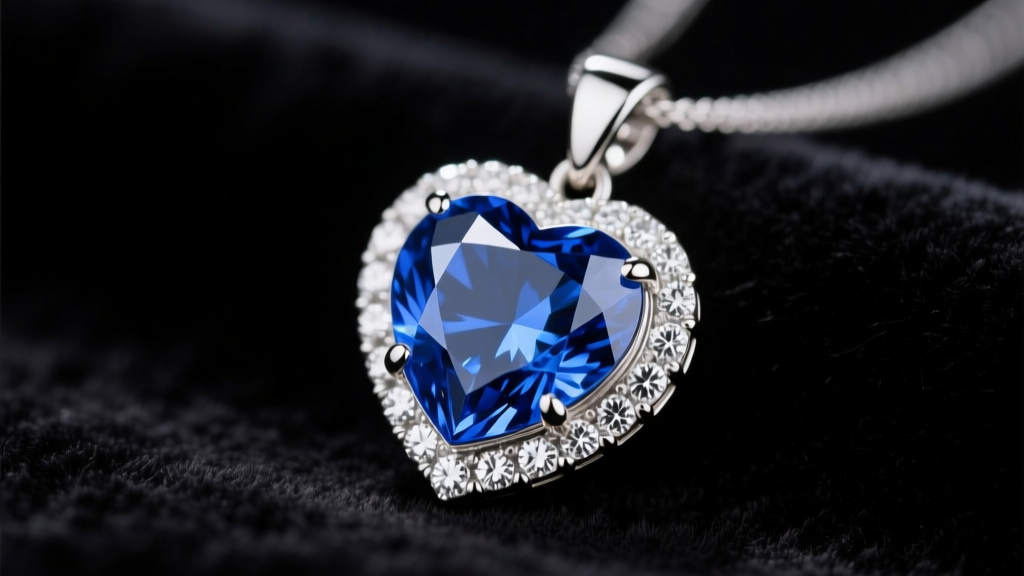
When evaluating a blue sapphire heart necklace, the first hurdle in budget assessment is understanding the geometry of the rough stone. Sapphires are a variety of the mineral corundum, which naturally forms in hexagonal, barrel-shaped crystals. To yield a symmetrical heart shape, a lapidary must sacrifice a significant portion of the original rough—often 60% to 70% of the total carat weight. By contrast, oval or cushion cuts retain more of the rough, sacrificing only about 40% to 50%.
Because of this massive material waste, heart-shaped sapphires command a 15% to 25% premium per carat over oval sapphires of identical color, clarity, and origin. Furthermore, the anatomy of the heart cut introduces structural risks. The "cleft" (the V-shaped dip at the top of the heart) is a natural weak point. If cut too deeply, the stone becomes highly susceptible to chipping during the prong-setting process. A premium heart sapphire will feature a sharp but shallow cleft and perfectly mirrored lobes, requiring a master cutter and driving up the final retail price of the pendant.
Natural vs. Lab-Grown vs. Simulated: 2026 Market Breakdown
The most critical decision in your budget assessment is choosing between natural, lab-created, and simulated stones. The price variance between these categories is astronomical, and understanding the 2026 market rates is essential for avoiding overpayment.
| Stone Category | Origin / Method | Avg. Price per Carat (1.00ct Heart) | Value Retention |
|---|---|---|---|
| Natural (Unheated) | Kashmir / Burma | $5,000 - $15,000+ | Excellent |
| Natural (Heated) | Ceylon / Madagascar | $800 - $3,500 | Good |
| Lab-Grown (Flux) | Chatham / Hydrothermal | $250 - $500 | Low |
| Lab-Grown (Verneuil) | Flame Fusion | $50 - $150 | Negligible |
| Simulated | CZ / Blue Spinel / Glass | $10 - $40 (Total) | None |
For buyers seeking the prestige of a natural stone without the Kashmir premium, heated sapphires from Madagascar offer the best value proposition in 2026. Standard heat treatment is universally accepted in the gemological community, as it permanently enhances color and clarity by dissolving rutile silk inclusions without introducing foreign chemicals.
The Treatment Trap: Heat, Diffusion, and Glass Filling
The secondary market and budget jewelry sectors are flooded with heavily treated sapphires. If you are evaluating a blue sapphire heart necklace priced suspiciously low for its size and color saturation, you are likely looking at an aggressively treated stone. According to the Federal Trade Commission (FTC) Jewelry Guides, sellers are legally required to disclose treatments that significantly affect the value or durability of a gemstone.
Beryllium Diffusion: This process involves heating the sapphire with beryllium to alter its color to the core. While stable, it artificially creates a "Padparadscha" or deep blue hue in otherwise worthless, pale rough. Diffused sapphires trade at a 70% to 80% discount compared to standard heat-only sapphires. Always demand a report from the Gemological Institute of America (GIA) or AGL to verify the absence of lattice diffusion.
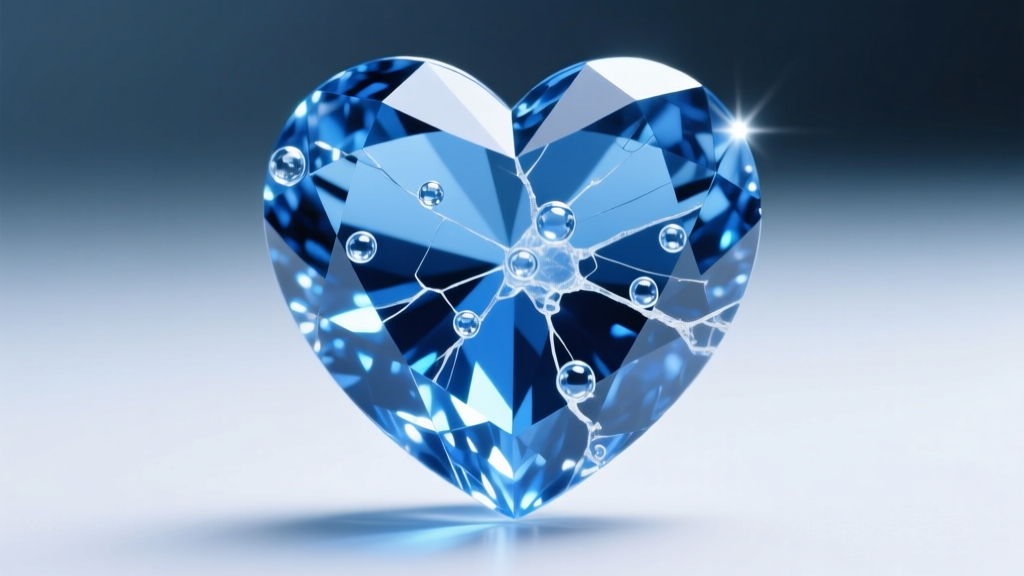
Lead-Glass Filling: Often marketed deceptively as "composite sapphires," these are heavily fractured, low-grade corundum stones infused with lead-glass to improve transparency. They possess almost zero intrinsic gemological value (often under $20 per carat) and are highly fragile. The glass can be etched by mild acids like lemon juice and will shatter in an ultrasonic jewelry cleaner. If a 2.00ct blue sapphire heart pendant in sterling silver is selling for $89, it is almost certainly glass-filled.
Metal Allocations: Balancing Chain and Pendant Durability
A common budget mistake is allocating 90% of the funds to the sapphire and neglecting the metalwork. The heart shape requires specialized setting techniques to protect the vulnerable cleft and the bottom point (the keel).
Prong Security and Chain Weight
For the setting, a V-prong is mandatory at the bottom point of the heart to prevent chipping against the wearer's chest. Platinum is the superior metal for prongs due to its tensile strength and lack of memory (it doesn't spring back when bent, keeping the stone secure). However, platinum is dense and expensive. If your budget is constrained, 14k white gold is the optimal compromise, offering excellent durability and a rhodium-plated finish that complements the cool tones of a blue sapphire.
Regarding the chain, avoid delicate cable chains under 0.9mm in thickness. A 1.00ct sapphire heart pendant in a gold setting weighs roughly 3 to 4 grams. A flimsy 0.5mm chain will suffer from metal fatigue at the clasp and jump ring, eventually snapping. Opt for a 1.0mm to 1.5mm box chain or a wheat chain, which distribute weight evenly and resist kinking.
A Buyer’s Framework for Assessing True Value
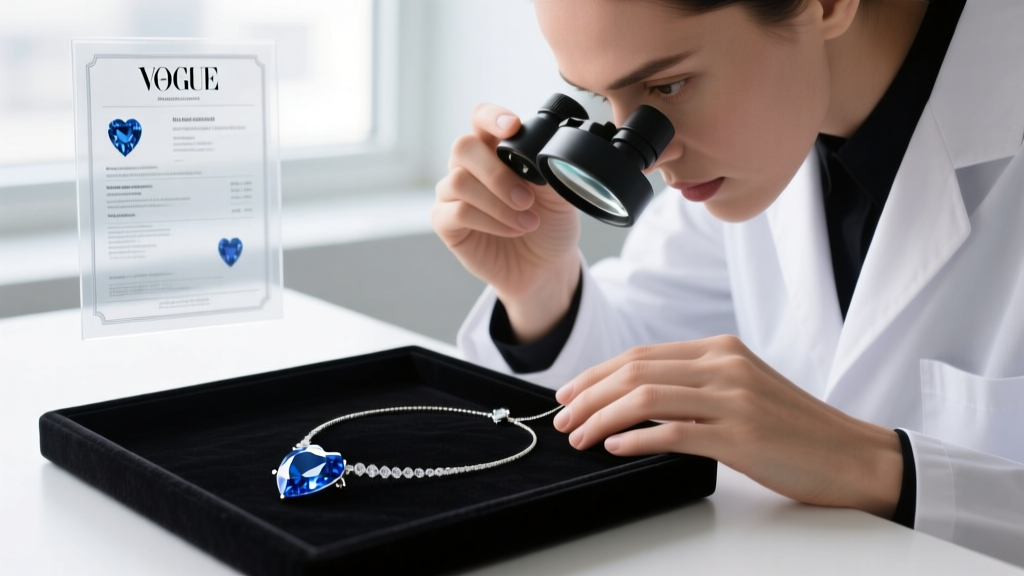
To ensure you are paying a fair market price for a blue sapphire heart necklace, run the piece through this four-point assessment framework before purchasing:
- Symmetry Check: View the pendant face-up. Draw an imaginary line down the cleft. The left and right lobes must be perfectly symmetrical. A lopsided heart drastically reduces resale value and indicates poor lapidary work.
- Color Zoning: Sapphires frequently exhibit color zoning (uneven distribution of color). In a heart cut, the color should ideally pool in the center. If the cleft is completely colorless while the bottom point is inky black, the stone was poorly oriented during cutting.
- Disclosure Verification: Ensure the invoice explicitly states the origin and treatment status. Phrases like "natural sapphire" without the qualifier "heated" or "unheated" are red flags for omission.
- Lighting Test: View the necklace under both daylight-equivalent LEDs and warm incandescent light. High-quality Ceylon sapphires will remain vibrant blue in all lighting, whereas lower-grade stones may "black out" (appear opaque) in dim lighting.
Final Verdict: Where to Allocate Your Budget
The ultimate value of a blue sapphire heart necklace lies in the intersection of optical performance and structural integrity. If your budget exceeds $3,000, prioritize an unheated or standard-heated natural sapphire from Madagascar or Sri Lanka, set in 18k gold or platinum with a protective V-prong, accompanied by a GIA or AGL origin report. If your budget is under $800, pivot entirely to a high-quality, flux-grown lab sapphire set in 14k gold. This guarantees you receive a visually flawless, durable, and chemically authentic corundum stone without paying the heavy premium for earth-mined rough wastage. Avoid glass-filled composites entirely, as they represent a total loss of long-term jewelry value.


