Blue Topaz Tennis Necklace Value Guide: 2026 Pricing & Buying Tips
Discover the true value of a blue topaz tennis necklace in 2026. Compare London, Swiss, and Sky blue grades, pricing tiers, and smart buying tips.

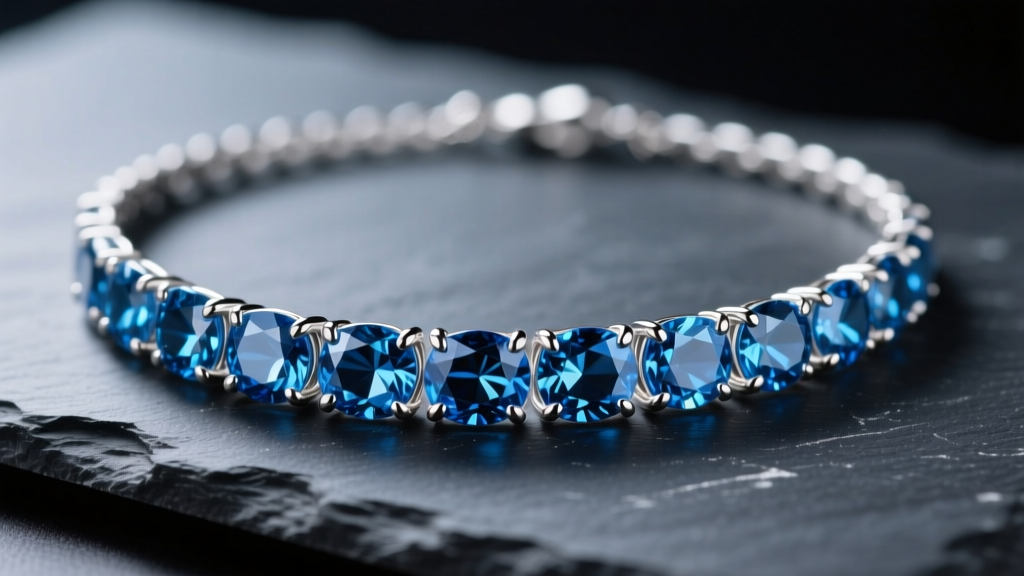
The tennis necklace has cemented its place as a modern jewelry staple, but diamond and sapphire versions often carry prohibitive price tags. Enter the blue topaz tennis necklace: a brilliant, icy alternative that delivers maximum visual impact without the luxury markup. However, as we move through 2026, the market is flooded with varying qualities, treatments, and misleading carat weights. Understanding the true value of these pieces requires looking past the sparkle and examining the gemological and structural realities of topaz.
The Anatomy of a Blue Topaz Tennis Necklace
Unlike diamonds, which are valued on a complex matrix of the 4Cs, blue topaz valuation is heavily skewed toward color saturation and treatment origin. According to the Gemological Institute of America (GIA), virtually all blue topaz on the market begins as colorless or pale brown rough that undergoes irradiation and heat treatment to achieve its blue hue. This is an accepted, permanent industry practice, but it fundamentally alters the value proposition compared to naturally colored gemstones.
Sky, Swiss, and London: Grading the Blue
The market categorizes blue topaz into three primary tiers, each with distinct pricing and visual characteristics:
- Sky Blue: The lightest and most pastel shade, typically achieved through gamma-ray irradiation (often using Cobalt-60). It mimics the look of aquamarine and is the most abundant and affordable grade.
- Swiss Blue: A vivid, medium-toned electric blue. This requires electron beam or neutron irradiation followed by careful heat treatment. It offers the best balance of vibrant color and mid-range pricing.
- London Blue: The deepest, most inky blue with subtle gray or green undertones. It requires the longest irradiation and cooling periods, making it the most expensive and highly sought-after grade for high-impact tennis necklaces.
2026 Market Pricing: What Should You Actually Pay?
Pricing a blue topaz tennis necklace is not as simple as looking at the total carat weight (CTW). The metal choice, the specific shade of blue, and the precision of the lapidary work all dictate the final cost. Below is a realistic 2026 pricing matrix for standard 16-inch to 18-inch tennis necklaces.
| Topaz Grade | Metal Setting | Average CTW | 2026 Estimated Retail Price |
|---|---|---|---|
| Sky Blue | Sterling Silver (Rhodium) | 15 - 20 CTW | $180 - $350 |
| Swiss Blue | Sterling Silver (Rhodium) | 20 - 30 CTW | $400 - $750 |
| London Blue | 10k / 14k White Gold | 25 - 35 CTW | $1,200 - $2,800 |
| London Blue | 14k / 18k White Gold | 40+ CTW | $3,500 - $6,000+ |
Note: Prices under $150 for a 'London Blue' tennis necklace in silver should immediately raise red flags regarding stone authenticity or severe windowing (poor cuts that leak light).
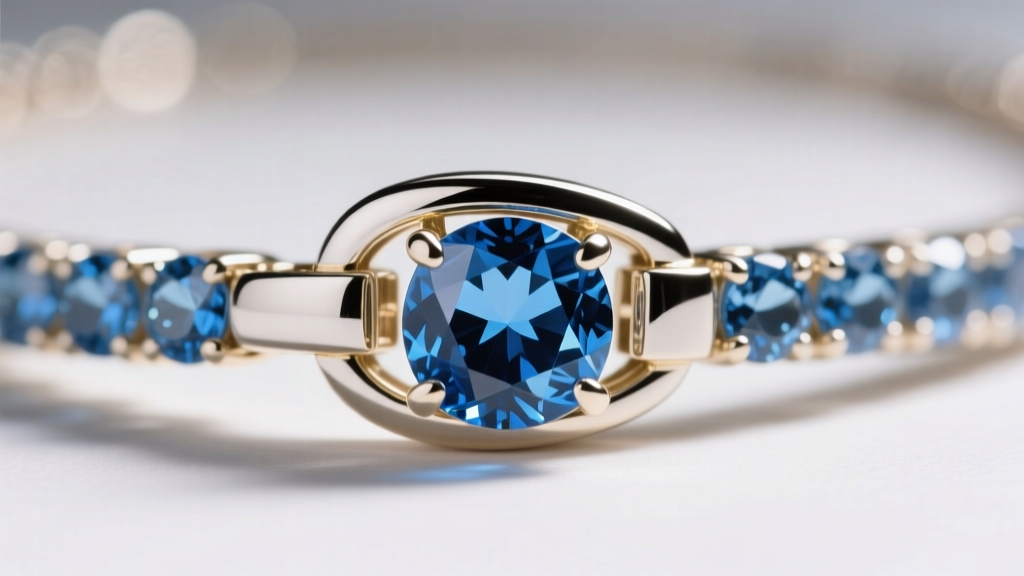
Total Carat Weight vs. Individual Stone Size
A common trap for budget-conscious buyers is focusing solely on the Total Carat Weight (CTW). A 30 CTW necklace can be constructed using sixty 3mm stones (approx. 0.10ct each) or thirty 5mm stones (approx. 0.50ct each). The latter requires significantly higher quality rough material and more precise faceting to maintain brilliance across a larger table facet. According to the International Gem Society (IGS), larger calibrated topaz stones command a premium per carat because they are more prone to revealing inclusions and require expert cutting to avoid 'extinction' (dark, lifeless areas in the stone). Always ask the jeweler for the individual stone millimeter dimensions, not just the aggregate carat weight.
Metal Choices and Setting Durability
Topaz ranks an 8 on the Mohs hardness scale, making it highly resistant to scratching. However, hardness is not the same as toughness. Topaz possesses perfect basal cleavage, meaning a single sharp blow along a specific crystallographic plane can split the stone cleanly in half. This structural vulnerability heavily influences how the necklace should be set and maintained.
The Hidden Cost of Prong vs. Bezel Settings
Most tennis necklaces utilize four-prong settings to maximize light return and minimize the visible metal. While beautiful, prongs leave the girdle (the widest edge of the stone) exposed to impacts. Bezel settings, where a thin rim of metal completely encircles the stone, offer vastly superior protection against cleavage-inducing knocks. However, bezel-setting a 40-stone tennis necklace requires significantly more labor and precious metal, often increasing the base price by 25% to 40%. If you opt for a traditional prong-set piece, ensure the prongs are thick and regularly checked for lifting.

Red Flags: How to Avoid Overpaying
When assessing the budget and value of a blue topaz tennis necklace, keep an eye out for these common retail pitfalls:
- The 'Natural Color' Myth: If a seller claims their blue topaz is 'naturally occurring' and charges a premium, walk away. Natural blue topaz is exceptionally rare and usually very pale. Deep blues are always treated.
- Missing Safety Catches: A tennis necklace draped with heavy topaz stones puts immense strain on the clasp. Any piece over 20 CTW must feature a fold-over box clasp equipped with at least one (preferably two) figure-8 safety catches. Relying on a standard spring-ring or lobster clasp is a recipe for catastrophic loss.
- Ultrasonic Cleaning Warnings: Never clean a topaz tennis necklace in an ultrasonic cleaner. The high-frequency vibrations can easily exploit microscopic stress fractures or trigger the stone's natural cleavage, shattering the gems while they are still in their settings.
- Unplated Sterling Silver: Silver tarnishes quickly, and the dark oxidation between the stones will completely ruin the icy, diamond-like illusion of a blue topaz piece. Ensure the silver is heavily rhodium-plated.
Final Value Verdict: Is It Worth the Investment?
From a pure financial investment standpoint, a blue topaz tennis necklace will not appreciate in value; the abundance of treated rough material keeps resale prices low. However, from a wearability and aesthetic value perspective, it is arguably one of the smartest purchases in the 2026 fine jewelry market. A well-constructed 14k white gold London blue topaz tennis necklace offers the same luxurious drape, weight, and brilliance as a $15,000 sapphire or diamond piece, but at a fraction of the cost. By prioritizing secure clasps, understanding the color grades, and respecting the stone's cleavage vulnerabilities, you can secure a breathtaking piece that delivers lifelong value.


