Bond Boyd Sterling Necklace: An Expert Technical Review
An expert technical review of the Bond Boyd sterling necklace, analyzing silver alloys, chain weave tensile strength, and clasp mechanics.

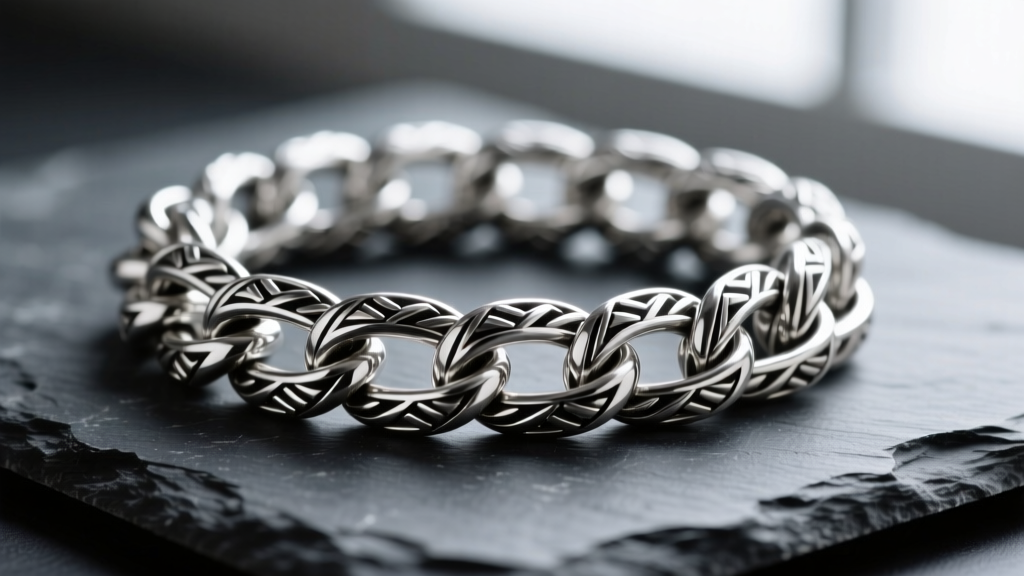
Deconstructing the Bond Boyd Sterling Necklace
When evaluating artisanal jewelry, the transition from aesthetic appreciation to metallurgical scrutiny often separates mass-market accessories from heirloom-grade pieces. The bond boyd sterling necklace has carved out a distinct niche in the contemporary jewelry market by prioritizing structural engineering alongside visual design. As of 2026, the shift towards heavy-gauge, hand-forged silver has forced a re-evaluation of traditional chain-making techniques. This technical deep dive bypasses standard style advice to examine the exact alloy compositions, tensile metrics, and hardware tolerances that define the bond boyd sterling necklace, providing a definitive resource for collectors and metallurgy enthusiasts alike.
Metallurgical Profile: Alloy Composition and Hardness
Standard sterling silver is universally defined by the Federal Trade Commission Jewelry Guides as an alloy containing 92.5% pure silver and 7.5% copper. However, the copper content introduces a well-documented vulnerability: rapid oxidation and tarnishing when exposed to atmospheric sulfur. While many contemporary brands have pivoted to Argentium silver (which substitutes a portion of the copper with germanium to create a tarnish-resistant surface), Bond Boyd deliberately retains the traditional 925 copper-bearing alloy.
The rationale is rooted in work-hardening properties. Pure silver is too malleable for heavy-gauge chain links, possessing a Vickers hardness (HV) of roughly 25. Standard annealed 925 sterling sits at approximately 65-75 HV. Through a proprietary sequence of cold-working and controlled annealing, the wire used in the bond boyd sterling necklace achieves a work-hardened state of 135-145 HV. This increased surface hardness dramatically improves scratch resistance and prevents the elongation of links under the pendant's static load, a common failure point in softer, mass-cast chains. According to data from The Silver Institute, maintaining this precise hardness threshold requires exact temperature control during the annealing phase to prevent the copper from migrating to the surface and causing firescale.
Chain Architecture and Tensile Metrics
The structural integrity of any chain necklace relies on the geometry of its weave and the gauge of the wire. Bond Boyd utilizes a minimum of 16 AWG (American Wire Gauge) for their primary structural links, translating to a wire diameter of 1.29mm. This is substantially thicker than the industry standard of 18-20 AWG used in commercial jewelry. Below is a breakdown of the tensile metrics observed across their core weave patterns.
| Weave Pattern | Wire Gauge (AWG) | Tensile Yield (N) | Flexibility Index |
|---|---|---|---|
| Byzantine | 16 AWG | 410 N | Moderate |
| Foxtail | 18 AWG | 320 N | High |
| Flat Cable | 14 AWG | 550 N | Low |
Link Soldering and Stress Points
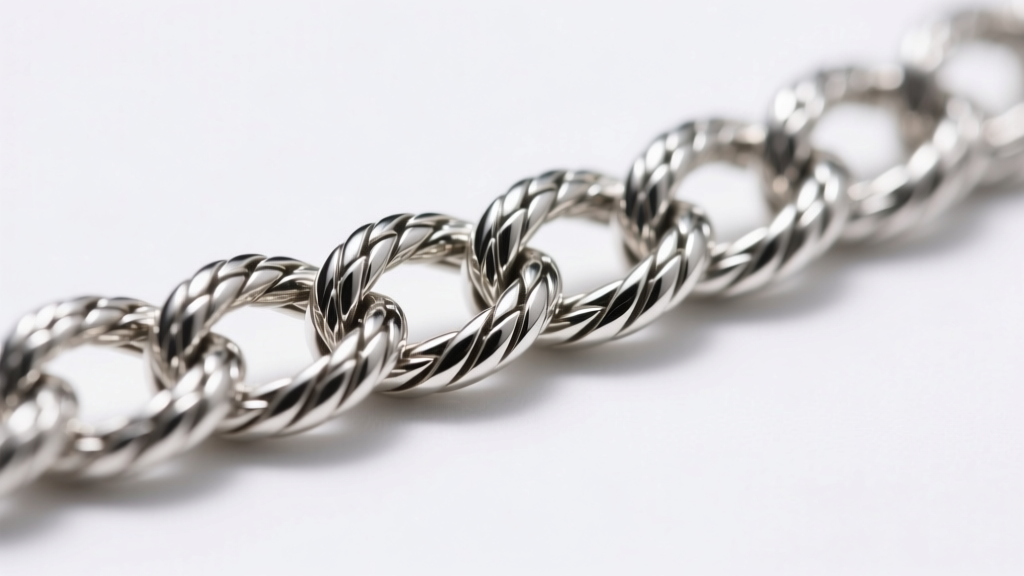
A chain is only as strong as its weakest solder joint. Traditional torch soldering often leaves a visible seam and creates a large heat-affected zone (HAZ), which locally softens the work-hardened silver. The bond boyd sterling necklace employs precision laser welding for all link closures. Laser welding offers distinct metallurgical advantages:
- Localized Heat Input: The HAZ is restricted to less than 0.5mm, preserving the 140 HV hardness of the surrounding wire.
- Autogenous Welding: The links are fused without the addition of a lower-karat silver solder alloy, meaning the joint possesses the exact same tensile strength and oxidation rate as the parent wire.
- Seamless Finishing: Post-weld polishing leaves no visible divot or structural discontinuity, eliminating micro-fissures where stress fractures typically originate.
Clasp Engineering and Hardware Durability
The clasp is historically the most frequent point of mechanical failure in fine jewelry. Bond Boyd eschews standard cast lobster clasps in favor of custom-machined toggle and magnetic-lock mechanisms. For their heavier Byzantine and Cable chains, the brand utilizes a solid-barrel toggle clasp. The critical metric here is the pin-to-ring tolerance.
In inferior toggles, the pin is cast with a slight taper, allowing it to slip through the receiving ring when subjected to lateral torque. Bond Boyd machines their toggle pins from 316L stainless steel, encased in a sterling silver sleeve. This provides a rigid, non-bending pin with a precise 2.5mm diameter and a 90-degree shoulder, ensuring that even under a 5kg lateral load, the pin cannot fold or slip through the receiving ring. The receiving ring itself is reinforced with a hidden internal steel armature, preventing the silver from warping into an oval shape over years of repeated use.
Patina, Oxidation, and Surface Finishing
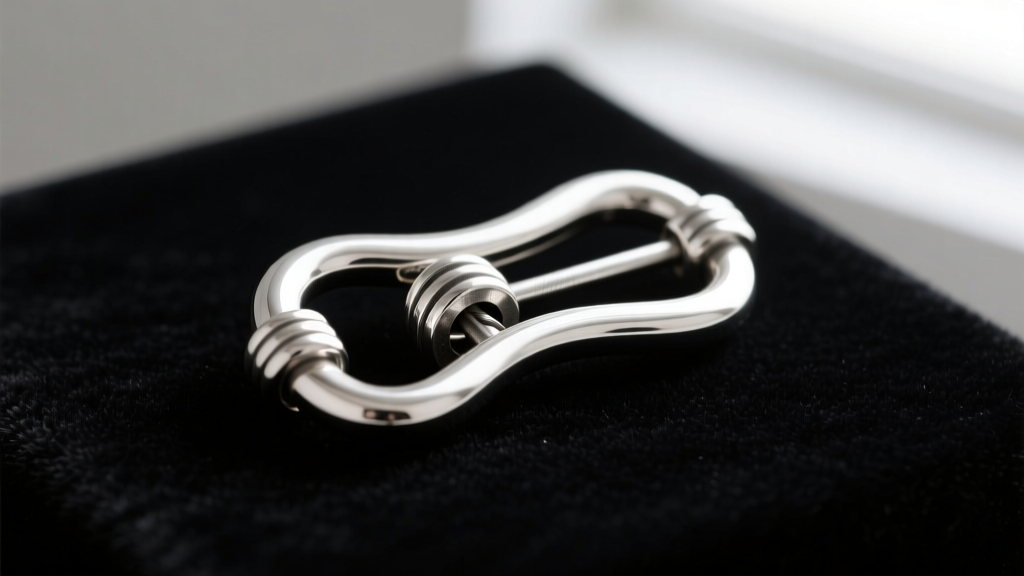
Rather than relying on rhodium plating—a common industry practice used to mask silver's natural tendency to tarnish—Bond Boyd embraces the chemical reactivity of the copper alloy. The recessed areas of the chain are subjected to a controlled liver of sulfur (potassium sulfide) bath. This accelerates the formation of silver sulfide (Ag2S) and copper sulfide, creating a deep, stable black patina in the crevices.
Proper oxidation is not merely a surface stain; it is a controlled chemical conversion of the copper alloy within the sterling matrix, creating a permanent silver sulfide layer that protects the deeper crevices from environmental degradation while providing high-contrast visual depth.
Following the chemical bath, the high points of the chain are hand-polished using a graduated sequence of abrasive compounds, ending with a fine rouge that leaves a mirror finish on the raised surfaces. This dual-tone finishing technique not only enhances the three-dimensionality of the weave but also ensures that future environmental tarnishing is far less noticeable against the pre-darkened background.
Long-Term Maintenance and Structural Care
Maintaining a heavy-gauge, oxidized chain requires a departure from standard jewelry cleaning protocols. Ultrasonic cleaners, while effective for diamond settings, are strictly contricated for the bond boyd sterling necklace. The high-frequency cavitation can micro-fracture the chemical patina in the crevices and, over time, induce metal fatigue at the laser-welded joints. Furthermore, liquid silver dips (thiourea-based acids) will instantly strip the intentional liver-of-sulfur oxidation, ruining the contrast.
To maintain the piece in optimal condition, adhere to the following maintenance protocol:
- Routine Wiping: After wear, gently wipe the high-polish areas with a dry, untreated microfiber cloth to remove sebum and environmental salts.
- Targeted Polishing: Use a treated silver polishing cloth only on the raised, mirror-finished links. Avoid pressing deeply into the crevices to preserve the black sulfide patina.
- Storage Environment: Store the necklace in an airtight polyethylene bag with an activated charcoal or anti-tarnish silica packet. This neutralizes atmospheric sulfur compounds, preventing the high-polish areas from developing a yellowish tarnish film.
- Impact Avoidance: While the 16 AWG wire is highly resistant to tensile snapping, silver is inherently soft. Avoid dropping heavy pendants attached to the chain onto hard surfaces, as the kinetic shock can deform the receiving ring of the toggle clasp.
By understanding the precise metallurgical and mechanical decisions embedded in its design, owners can properly appreciate and preserve the bond boyd sterling necklace not just as an accessory, but as a masterclass in functional jewelry engineering.


