The Bottega Necklace: 2026 Material & Value Deep Dive
An expert technical analysis of the Bottega necklace, covering 925 silver alloys, enamel durability, chain engineering, and 2026 investment value.

Introduction to Bottega Veneta's Hardware Evolution
Over the past decade, Bottega Veneta has fundamentally shifted its design language from understated leather craftsmanship to bold, sculptural jewelry hardware. The modern Bottega necklace is no longer just an accessory; it is a study in industrial design, metallurgical precision, and material weight. As we navigate the 2026 luxury market, understanding the technical specifications behind these pieces is critical for collectors, authenticators, and investors. This deep dive bypasses the marketing fluff to examine the exact alloys, enamel applications, and engineering tolerances that define a genuine Bottega Veneta necklace, providing a definitive framework for evaluating their long-term value and structural integrity.
Metallurgical Breakdown: 925 Silver vs. Gold-Tone Brass
The foundation of any luxury necklace lies in its base metal. Bottega Veneta primarily utilizes two distinct metallurgical profiles for its core necklace collections: 925 sterling silver and gold-plated brass. Each material presents unique engineering challenges and requires specific manufacturing interventions to ensure longevity.
The Rhodium Flash Technique on Sterling Silver
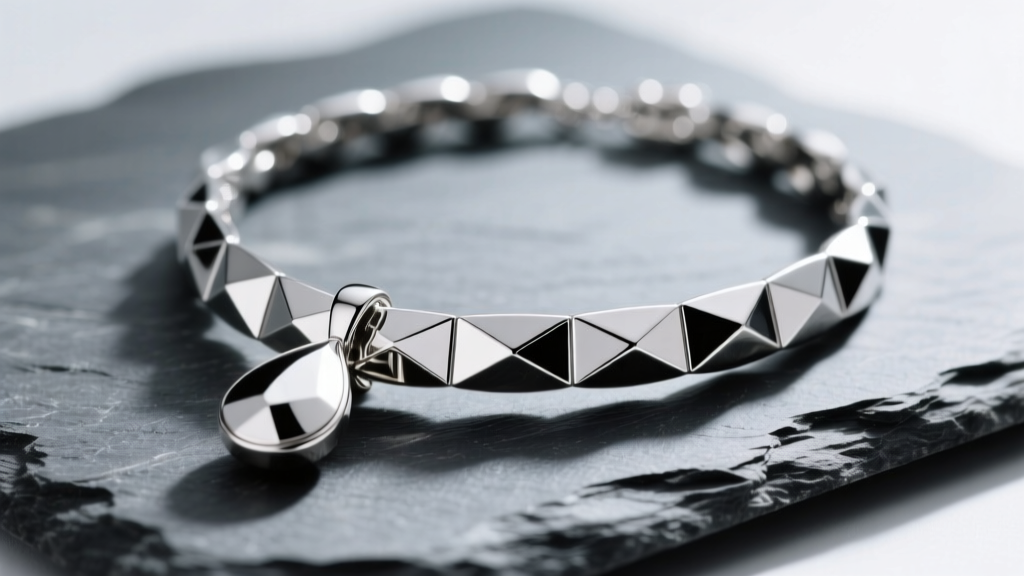
Pure silver (99.9%) is too malleable for the heavy, sculptural drop pendants and chunky chain links that define the brand's aesthetic. To achieve the necessary tensile strength, Bottega uses standard 925 sterling silver, an alloy comprising 92.5% pure silver and 7.5% copper. However, copper is highly reactive and prone to oxidation when exposed to atmospheric sulfur and skin acidity. To mitigate this, Bottega employs a micro-layer rhodium flash. According to the Gemological Institute of America (GIA), rhodium is a platinum-group metal that provides a brilliant, tarnish-resistant barrier. This electroplating process not only prevents the underlying copper from migrating to the surface but also enhances the optical reflectivity of the silver, giving it a mirror-like, white-gold appearance that resists micro-scratching.
Gold-Tone Brass and Barrier Layer Engineering
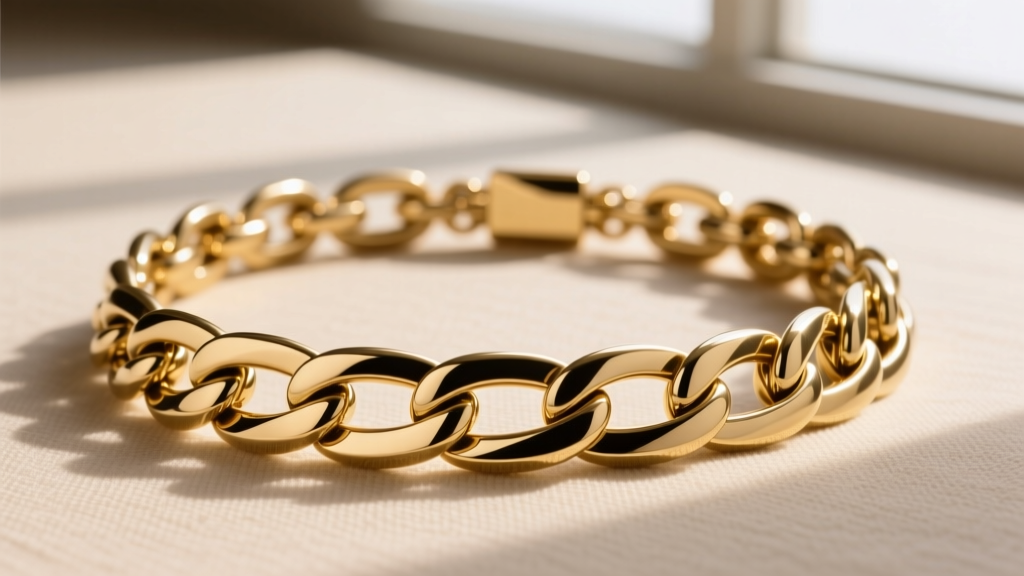
For the brand's iconic gold-tone pieces, the base material is a high-density brass alloy (primarily copper and zinc). Brass offers excellent casting properties, allowing for the sharp, geometric edges seen in the Intrecciato-inspired metal weaves. The technical challenge with brass is 'zinc migration,' where zinc atoms move to the surface over time, creating a pale, chalky residue that degrades gold plating. Bottega solves this by applying a palladium or nickel-free barrier layer before the final 18k or 24k gold flash. This multi-step electroplating process ensures the rich, saturated gold hue remains stable, even with daily wear, aligning with the stringent durability metrics expected in the 2026 luxury sector.
Sculptural Drops: Cold Enamel vs. Vitreous Glass
The vibrant, oversized teardrop pendants—often seen in signature shades like parakeet green, fondant pink, and oxide blue—are masterclasses in material selection. While traditional high jewelry relies on vitreous (glass) enamel, which requires kiln firing at temperatures exceeding 1400°F, Bottega opts for an aerospace-grade epoxy cold enamel. Vitreous enamel, while incredibly hard, is inherently brittle and would shatter upon impact given the substantial weight and pendulum-like swing of Bottega's heavy metal caps. Cold enamel, conversely, cures at room temperature and possesses a slight elastomeric flexibility. This shock-absorbing quality is vital for preventing micro-fractures when the pendant strikes a hard surface. Furthermore, cold enamel allows for a wider, more saturated spectrum of contemporary, opaque colors that perfectly match the brand's seasonal ready-to-wear palettes.
Technical Comparison: 2026 Core Collection Materials
To provide a structured overview of the material choices and their practical implications, refer to the technical comparison table below:
| Material Base | Plating / Finish | Weight Profile | Tarnish Risk | 2026 Resale Value Retention |
|---|---|---|---|---|
| 925 Sterling Silver | Rhodium Flash | Heavy / Dense | Low (if plated) | 75% - 85% |
| Cast Brass | 18k Gold Flash + Barrier | Medium / Solid | Moderate (wear-dependent) | 60% - 70% |
| Brass + Enamel | Epoxy Cold Enamel | Variable | Low (enamel is inert) | 80% - 90% (High Demand) |
Chain Link Engineering and Clasp Mechanics
The structural integrity of a Bottega necklace is heavily dependent on its chain link engineering. Unlike mass-market brands that utilize hollow, stamped links to reduce metal costs, Bottega's signature paperclip and curb chains are solid-cast. This results in a high gram-weight that provides a luxurious, fluid drape around the clavicle. The soldering points on each link are filed completely flush, eliminating the snagging hazards common in inferior chains. The Bottega Veneta official jewelry care guidelines emphasize that this solid construction requires minimal structural maintenance, provided the links are kept free of corrosive chemicals.
Precision Calibrated Lobster Clasps
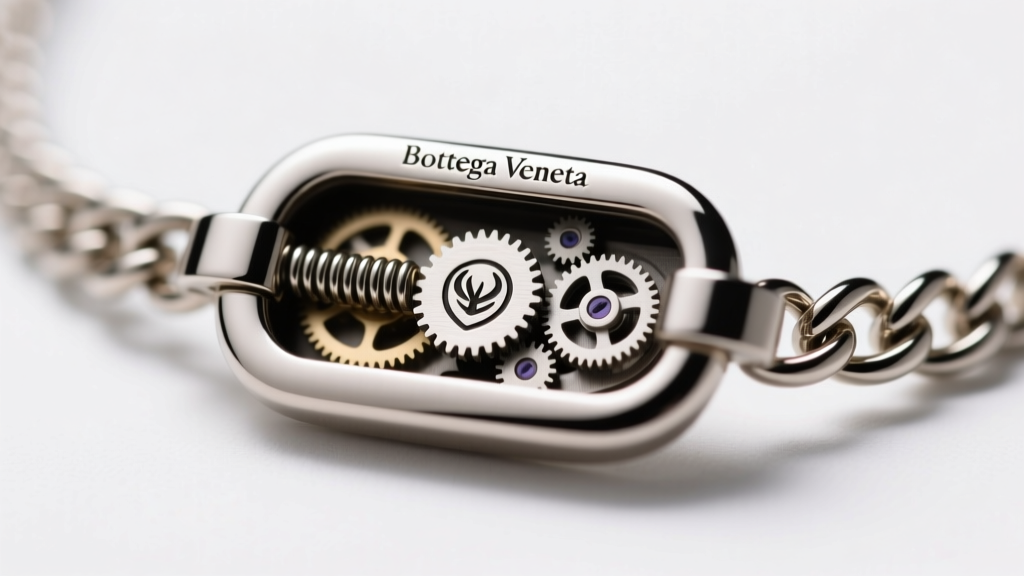
The clasp mechanism is a frequent point of failure in luxury jewelry, but Bottega utilizes custom-tooled lobster clasps engineered for specific spring tension. The internal spring is calibrated to require a deliberate, firm pinch to open, preventing accidental unclasping from the kinetic movement of heavy pendants. The exterior housing features a deep, CNC-milled or laser-engraved 'Bottega Veneta' logotype, which serves as both a branding element and a critical authentication marker.
Authentication Metrics: Identifying Counterfeit Hardware
As the secondary market for luxury hardware expands, The Business of Fashion notes a corresponding rise in high-fidelity counterfeits. However, replicating Bottega's exact metallurgical and engineering tolerances remains cost-prohibitive for counterfeiters. When authenticating a Bottega necklace, experts look for three specific technical tell-tale signs:
- Acoustic Resonance: Solid-cast silver and brass links produce a dense, low-pitch 'clink' when tapped together. Counterfeit hollow links emit a higher-pitched, tinny sound due to the internal air cavity.
- Enamel Meniscus: On genuine enamel drop pendants, the boundary where the enamel meets the metal cap features a perfectly level, seamless meniscus. Fakes often exhibit a concave dip or visible overflow due to poor resin viscosity control.
- Clasp Spring Tension: Replica clasps frequently use cheap, off-the-shelf spring mechanisms that feel either overly stiff or dangerously loose. A genuine Bottega clasp offers a smooth, heavily dampened resistance.
Hallmark Depth and Laser Engraving
Genuine hallmarks (such as '925', 'Made in Italy', and the brand name) are either deeply stamped or precision laser-engraved with sharp, uniform kerning. Counterfeits often use shallow acid etching, resulting in blurred, rounded edges on the typography that become illegible after minor surface wear.
Long-Term Care and Oxidation Management
Preserving the technical integrity of a Bottega necklace requires abandoning traditional jewelry cleaning methods. Ultrasonic cleaners, which use high-frequency cavitation bubbles to dislodge dirt, are strictly contraindicated. The microscopic shockwaves can shatter the cold enamel on drop pendants and strip the delicate rhodium flash from sterling silver. Instead, maintenance should be limited to mechanical wiping with a high-GSM microfiber cloth and, if necessary, a mild, non-abrasive surfactant applied with a soft-bristled brush. Storing the necklace in an anti-tarnish, sulfur-blocking flannel pouch is essential to prevent atmospheric oxidation of the underlying copper alloys.
"The true value of a modern luxury necklace lies not just in its brand provenance, but in the invisible engineering—from barrier layers to spring calibrations—that ensures it survives decades of wear."
Ultimately, the Bottega necklace represents a convergence of fashion and industrial design. By understanding the specific material grades, casting methods, and protective finishes employed by the house, collectors can make highly informed acquisitions, ensuring their pieces retain both their structural brilliance and their market value well into the future.


