Box Necklace Chain Guide: Gauges, Durability & Repairs
Master the technical specs of the box necklace chain. Explore wire gauges, tensile strength, kink repairs, and ideal pendant pairings.

The Anatomy of a Box Necklace Chain
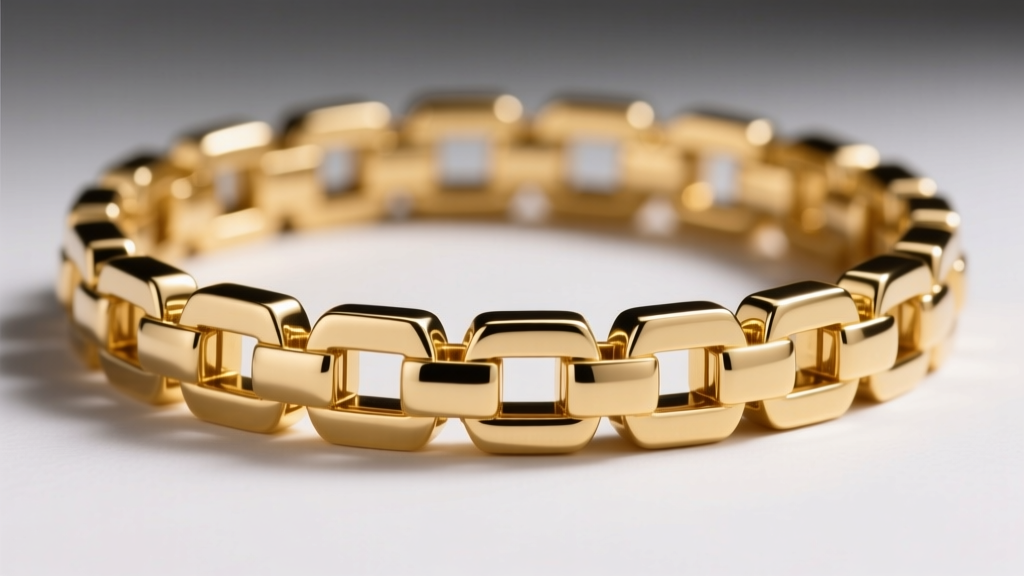
The box necklace chain, frequently referred to as a square link or Briolette chain, is a marvel of geometric precision in jewelry manufacturing. Unlike rope or cable chains that rely on rounded wire loops, the box chain is constructed from square wire that is folded, stamped, and interlocked to create a continuous, fluid series of cubic links. This structural design gives the chain its signature sleek, modern aesthetic and a highly reflective surface area that catches light from multiple angles.
From a metallurgical standpoint, the creation of a high-quality box necklace requires exacting tolerances. The inner diameter of each square link must perfectly accommodate the outer width of the intersecting link, allowing for a 90-degree pivot without excessive friction. When manufactured correctly, this results in a chain that drapes with the fluidity of fabric while maintaining the structural rigidity of a metal lattice. However, this same geometric interlocking is what makes the box necklace uniquely susceptible to specific mechanical failures, which we will explore in depth below.
Wire Gauge vs. Tensile Strength: A Technical Breakdown
Selecting the correct wire gauge is the most critical decision when purchasing or designing a box necklace. The gauge dictates not only the visual weight of the piece but its tensile strength and load-bearing capacity. In the jewelry industry, box chains are typically measured in millimeters (mm) rather than standard American Wire Gauge (AWG), though both metrics are relevant for bench jewelers.
| Thickness (mm) | Approx. AWG | Tensile Strength | Best Application |
|---|---|---|---|
| 0.8mm - 1.0mm | 20g - 18g | Low (4-8 lbs) | Lightweight gemstone pendants, layering |
| 1.2mm - 1.5mm | 16g - 14g | Medium (12-20 lbs) | Everyday wear, medium die-strikes |
| 1.8mm - 2.5mm | 12g - 10g | High (25-40 lbs) | Heavy gold pendants, statement pieces |
| 3.0mm+ | 8g+ | Very High (50+ lbs) | Standalone statement chains, hip-hop jewelry |
According to manufacturing standards cited by the Gemological Institute of America (GIA), the structural integrity of a chain is heavily dependent on the consistency of its wire gauge. A 1.2mm box necklace made from high-density 18k gold will possess a higher breaking point than a 1.2mm chain made from lower-density sterling silver, due to the alloy composition and work-hardening applied during the drawing process.
Hollow vs. Solid Construction: The Weight Debate
One of the most pervasive technical distinctions in the box necklace market is the difference between solid and hollow constructions. Understanding this is vital for both durability and pricing.
Solid Box Chains
Solid box chains are extruded from solid square wire. The links are stamped, interlocked, and soldered. They are heavy, highly durable, and can withstand significant tensile stress. If a solid link is pulled, it will stretch before it snaps. The primary drawback is cost; a solid 2.0mm 14k gold box necklace carries a substantial precious metal weight, making it a significant investment.
Hollow (Tubular) Box Chains
Hollow box chains are manufactured using a flat strip of metal that is folded into a square tube and then interlocked. This technique, often called 'electroforming' or 'tubular linking', allows manufacturers to produce visually thick chains (e.g., 3.0mm or 4.0mm) at a fraction of the gold weight and cost. However, hollow chains possess almost zero crush resistance. If subjected to lateral pressure—such as being slept in or caught on clothing—the square links will permanently dent and collapse. Once a hollow box link is crushed, it cannot be repaired; it must be replaced or removed.
The Kinking Problem and Structural Failure Modes
The most common failure mode specific to the box necklace is kinking. Because the links are square, they have a strict geometric boundary. When the chain is bent sharply or folded back on itself, the corners of adjacent links wedge into one another, causing a mechanical lock. This is known in the trade as a 'hard kink'.
- Soft Kinks: Minor tangles where links are twisted but not crushed. These can be resolved by laying the chain flat on a glass surface and gently rolling a smooth metal cylinder over the affected area to realign the links.
- Hard Kinks: Severe bends where the metal has yielded. Attempting to forcefully pull a hard kink apart will result in the corners of the square wire shearing off or the link tearing open. Hard kinks require professional intervention.
- Work Hardening Fractures: Repeated bending at the same stress point (often near the clasp) causes the metal to work-harden and become brittle, eventually leading to a clean snap. This is common in chains thinner than 1.0mm.
Material Grades and Soldering Techniques
Repairing a box necklace requires advanced bench skills. Traditional torch soldering is almost never appropriate for a box chain. The intense, broad heat of a torch will melt the precise square geometry of the surrounding links, fusing them together and destroying the chain's flexibility.
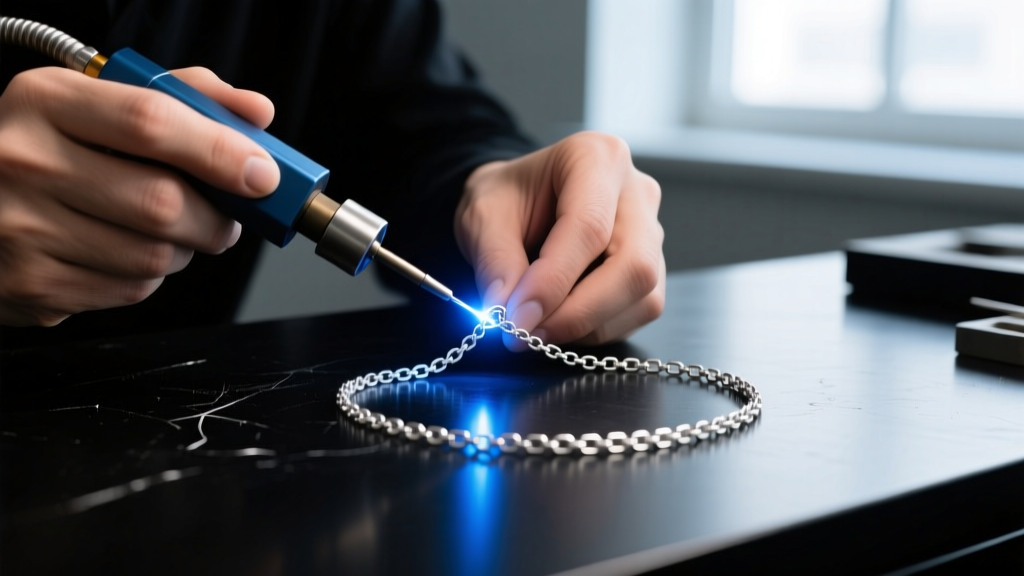
Instead, expert jewelers utilize laser welding technology. A laser welder delivers a highly focused pulse of heat, allowing the jeweler to fuse a microscopic tear in a single square link without transferring thermal energy to the adjacent links. For platinum box necklaces, laser welding is mandatory, as platinum's extremely high melting point (1,768°C) makes torch soldering near delicate linkages virtually impossible without catastrophic distortion.
Pendant Pairing: Load-Bearing Capacities
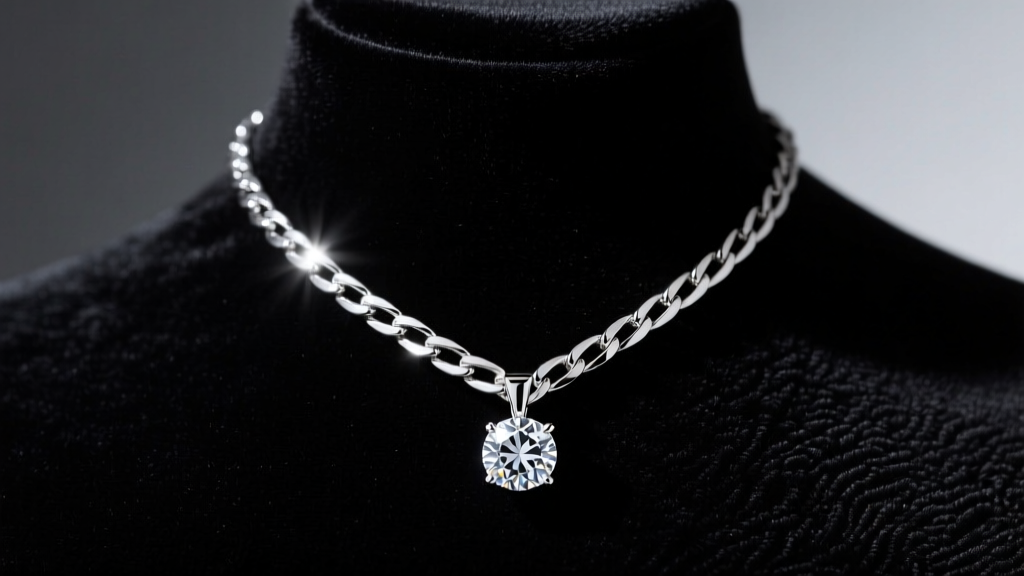
Pairing a pendant with a box necklace requires calculating the dynamic load the chain will endure. A pendant does not just exert static downward force; it creates kinetic stress as it swings and catches on clothing. A general rule of thumb adopted by master jewelers is the 20% rule: the total weight of the pendant, including the bail and any gemstone settings, should not exceed 20% of the total weight of the chain itself.
For example, if you have a 1.5mm solid 14k gold box necklace that weighs 15 grams, your pendant should ideally weigh no more than 3 grams. Exceeding this ratio accelerates wear on the interior corners of the square links, leading to premature thinning and eventual failure at the nape of the neck, where friction is highest.
Expert Maintenance and Cleaning Protocols
Maintaining the brilliant reflectivity of a box necklace requires specific care. The flat surfaces of the square links are excellent reflectors but are also prone to showing micro-scratches and accumulating sebum and cosmetic residues in the link gaps.
- Ultrasonic Cleaning: Safe for solid box chains. The high-frequency cavitation easily dislodges debris from the tight interlocking joints. Warning: Never use ultrasonic cleaners on hollow box chains or chains with fracture-filled gemstone pendants.
- Polishing: Avoid aggressive rotary polishing wheels (like rouge on a muslin buff). The wheel can easily catch the sharp corner of a square link, ripping it open. Instead, use a soft bristle brush with a mild jewelry polishing compound, brushing strictly parallel to the chain's length.
- Storage: Always store a box necklace fully extended and clasped. Coiling it tightly forces the square links into unnatural angles, promoting the formation of soft kinks over time.
By understanding the precise engineering, material limitations, and proper maintenance protocols of the box necklace chain, collectors and wearers can ensure their pieces remain structurally sound and visually striking for decades.


