Brad Pitt Necklace Guide: Fix Tangles & Repair Chains
Master the Brad Pitt necklace look. Learn how to untangle layered chains, fix broken clasps on heavy pendants, and stop cheap metals from turning skin green.

The Brad Pitt Necklace Aesthetic: Why Replicas Fail
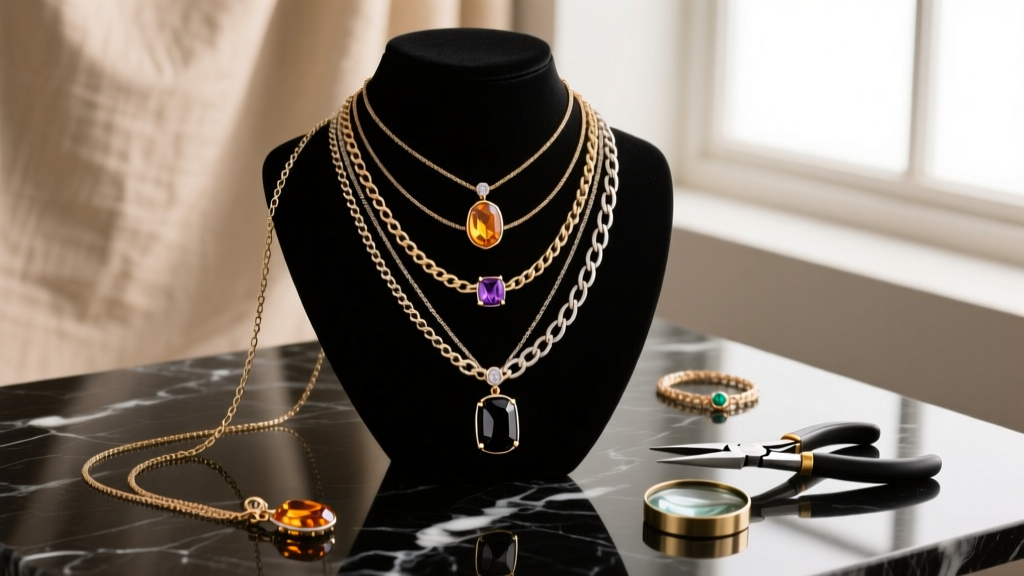
When discussing iconic masculine jewelry, the "Brad Pitt necklace" remains a masterclass in relaxed, bohemian layering. From his early Fight Club era tribal pendants to his modern, elevated red-carpet stacks of 18k gold chains, Pitt has defined the rugged-yet-refined necklace aesthetic. However, as we move through 2026, the market is flooded with fast-fashion replicas attempting to mimic this look. The result? A wave of consumer frustration involving hopelessly tangled layers, severe skin discoloration, and shattered clasps.
Troubleshooting the Brad Pitt necklace style requires understanding the physics of chain geometry and the metallurgy of gold alloys. Pitt’s signature look relies on mixing varying link structures—such as a flat box chain paired with a twisted rope chain—to create visual friction that prevents knotting. When consumers buy cheap, uniform replica sets, they bypass these structural safeguards. Below, we break down the exact mechanical and chemical failures associated with layered men's chains and provide actionable, jeweler-grade solutions to fix them.
Troubleshooting Tangled Layers: The Multi-Chain Fix
The most common complaint with layered gold chains is tangling. This is not a user error; it is a physics problem dictated by the center of gravity and link geometry. When two chains of similar weight and link shape are worn at lengths differing by less than two inches, they act as a single fulcrum, wrapping around each other with every movement.
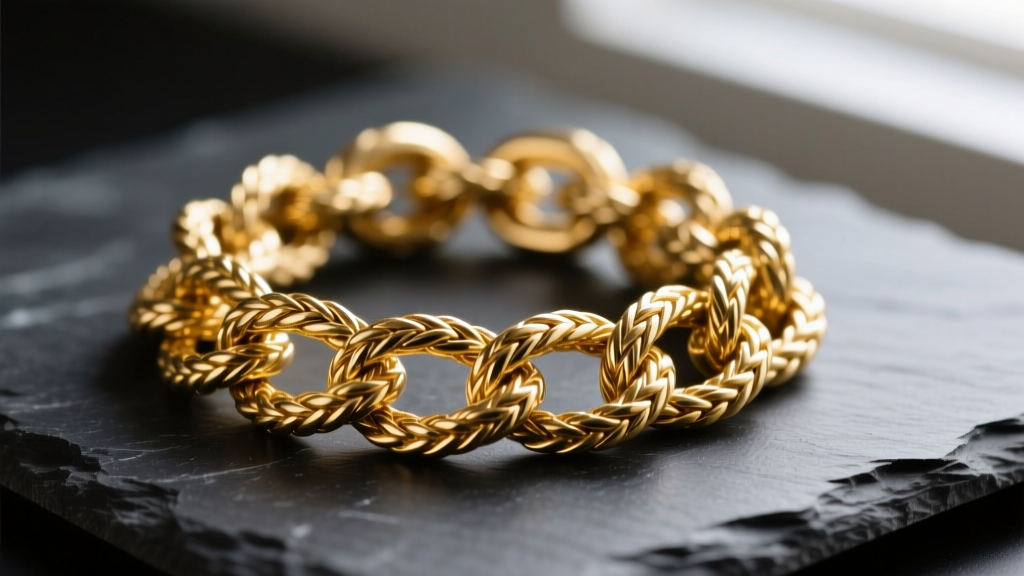
To achieve the effortless Pitt stack without spending twenty minutes untangling knots every morning, you must engineer visual and physical separation. According to master jewelers, varying the chain link type is just as critical as varying the length. Flat chains behave entirely differently than rounded chains.
The Chain Geometry & Tangle Matrix
| Chain Type | Link Geometry | Tangle Risk | Best Layering Pairing |
|---|---|---|---|
| Cuban / Curb | Flat, interlocking ovals | Low | Rope or Figaro (adds contrasting texture) |
| Rope | Twisted, rounded spiral | Medium | Box or Wheat (flat surfaces reduce friction) |
| Herringbone | Flat, fluid, woven scales | Extremely High | Wear alone; never layer with other chains |
| Box | Square, geometric links | Low | Rope or Bead (contrasts sharp edges) |
The Fix: If your current stack is constantly knotting, replace your middle chain with a rigid Box chain (minimum 2.5mm width). The sharp, geometric edges of a box chain physically repel the smooth, rounded links of a rope chain, creating a natural barrier that prevents the layers from wrapping around one another. Furthermore, ensure there is a minimum 3-inch gap between the lengths of your chains (e.g., 18", 21", and 24").
Solving the "Green Neck": Metallurgy & Plating Failures
The Brad Pitt look relies heavily on the warm, rich luster of yellow gold. However, authentic solid 18k gold chains of the thickness Pitt wears (often 4mm to 8mm) can cost upwards of $15,000. Consequently, many opt for gold-plated or gold-filled alternatives. The troubleshooting issue here is the dreaded "green neck"—a chemical reaction that ruins the aesthetic and irritates the skin.
"Skin discoloration from jewelry is almost exclusively caused by the oxidation of copper and brass alloys reacting to the acidic pH of human sweat. Pure gold does not oxidize, but the base metals used in cheap plating do."
— Gemological Institute of America (GIA)
Most budget "celebrity replica" chains are made of a brass core with a microscopic flash-plating of gold (less than 0.5 microns thick). Once the sweat wears through this plating—often within three weeks of daily wear—the exposed copper reacts and stains the skin green.
The Metallurgy Upgrade Path
- Avoid Brass/Copper Cores: Never buy layered chains with a brass base if you plan to wear them against the skin daily.
- Demand Gold Vermeil: According to GIA standards, true gold vermeil must feature a sterling silver (.925) base coated with a minimum of 2.5 microns of 10k, 14k, or 18k gold. Sterling silver does not turn skin green; it only tarnishes, which is easily polished away.
- Opt for PVD Coating: If buying stainless steel chains, look for PVD (Physical Vapor Deposition) gold coating. PVD bonds gold to steel at a molecular level in a vacuum chamber, offering 10x the scratch and sweat resistance of traditional electroplating.
Heavy Pendant Troubleshooting: Clasp & Bail Upgrades
Pitt frequently anchors his layered chains with substantial pendants, such as solid gold crosses, tribal skulls, or signet medallions. A major failure point in men's jewelry is the clasp snapping under the pendulum-like weight of a heavy pendant.
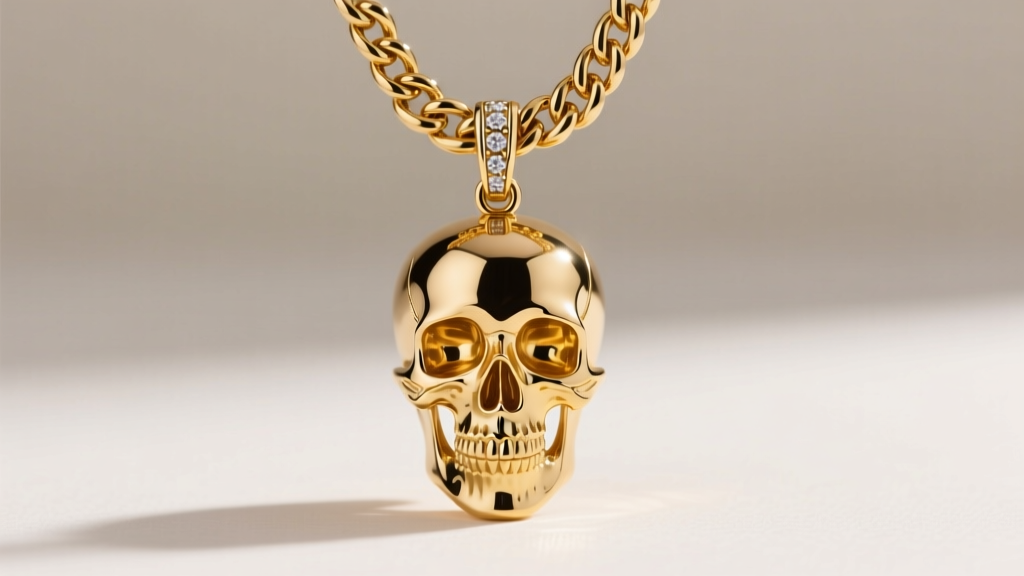
Most commercial chains come equipped with standard spring ring clasps. These clasps contain a microscopic internal steel spring. When subjected to a pendant weighing more than 12 grams, the constant kinetic pulling fatigues the spring, causing the clasp to slide open or snap entirely. Furthermore, the thin wire "jump ring" that connects the clasp to the chain will easily pull apart under lateral stress.
The Jeweler's Clasp & Bail Upgrade Guide
To secure heavy pendants and protect your investment, take your chain to a local bench jeweler and request the following hardware upgrades:
- Swap to a Lobster Claw or Box Clasp: Lobster claws feature a thicker, solid-metal lever mechanism that resists kinetic pulling. For chains over 5mm thick, a Box Clasp with a figure-eight safety latch is mandatory.
- Solder the Jump Rings: Ask the jeweler to solder the jump rings connecting the clasp to the chain links. This eliminates the microscopic gap that allows the wire to pull apart under tension.
- Reinforce the Bail: The "bail" is the loop that connects the pendant to the chain. Heavy pendants act as a file, sawing through thin bails over time. Upgrade to a diamond-cut barrel bail or a hidden tube bail lined with a ceramic or ruby sleeve to eliminate metal-on-metal friction.
Proportion & Length: Avoiding the "Costume" Trap
The final troubleshooting hurdle is proportion. The Brad Pitt necklace aesthetic works because it respects the anatomy of the male neckline. Wearing chains that are too short creates a restrictive, choker-like appearance, while chains that are too long and thin look like costume props.
For the definitive 2026 layered stack, adhere to these exact proportions based on your torso length:
- The Anchor (Inner Layer): 18 to 20 inches. This should sit precisely on the collarbone. Use a delicate 1.5mm to 2mm Figaro or Wheat chain. This layer frames the face without overwhelming the neck.
- The Core (Middle Layer): 22 to 24 inches. This rests on the upper sternum. This is where you introduce a 3mm to 4mm Cuban or Rope chain. If adding a pendant (like Pitt's iconic cross), this is the chain that should bear it.
- The Statement (Outer Layer): 26 to 28 inches. Resting at the mid-chest, this layer should be a heavyweight 5mm+ chain or a thick leather cord with a mixed-metal clasp. It grounds the stack and draws the eye downward, elongating the torso.
By treating your necklace stack as an engineered system rather than a random assortment of accessories, you eliminate the daily frustrations of tangling, breaking, and skin irritation. Proper link selection, verified metallurgy, and structural clasp upgrades will ensure your jewelry performs flawlessly, allowing you to channel effortless rockstar elegance without the mechanical failures.


