Brown Diamond Necklace Value: 2026 Pricing & Buying Guide
Discover if a brown diamond necklace is a smart investment. Our 2026 value guide covers pricing, color grades, and how to avoid treated stone traps.

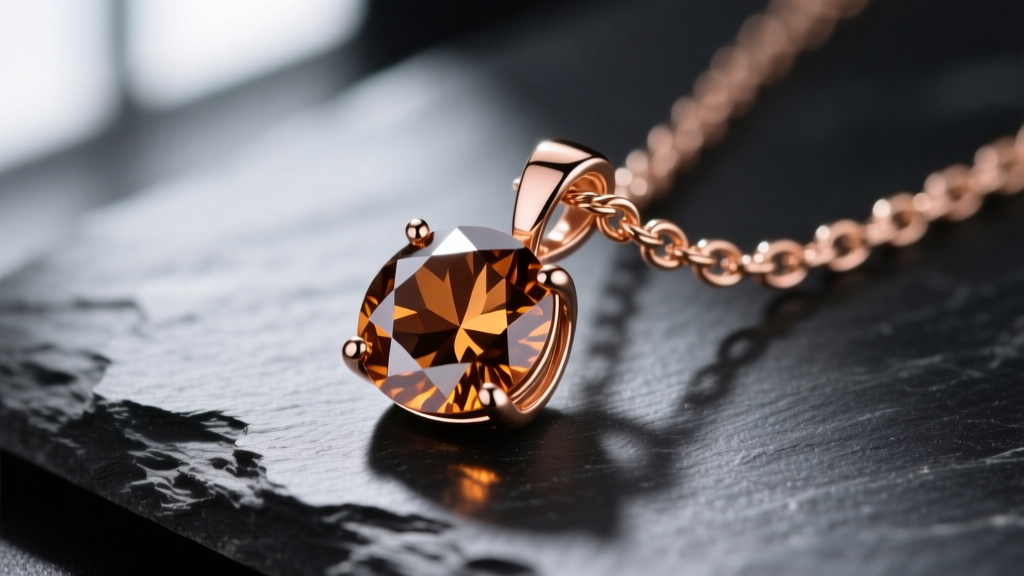
The Evolution of the Brown Diamond Necklace in Fine Jewelry
Brown diamonds, frequently marketed under romanticized monikers like champagne, cognac, or chocolate, have completely transformed from industrial abrasives into highly sought-after centerpieces in fine jewelry. As we navigate the 2026 luxury market, a brown diamond necklace represents a fascinating intersection of accessible luxury and alternative investment. Unlike traditional white diamonds, which are graded on the absence of color, brown diamonds are evaluated on the intensity and evenness of their warm, earthy hues.
However, the modern market is heavily saturated with lab-created, irradiated, and HPHT-treated stones. This makes a rigorous budget and value assessment absolutely essential before making a purchase. Whether you are eyeing a delicate champagne diamond lariat or a heavy cognac diamond pendant, understanding the gemological realities and pricing structures will save you from overpaying for artificially enhanced stones.
The Argyle Mine Closure: How Supply Impacts 2026 Pricing
To assess the true value of a natural brown diamond necklace today, you must understand the supply chain's recent history. For nearly four decades, the Rio Tinto Argyle mine in Western Australia produced over 80% of the world's natural brown and pink diamonds. When the mine officially ceased operations in late 2020, it sent shockwaves through the colored diamond market.
By 2026, the scarcity of newly mined, high-quality natural brown diamonds has created a steady appreciation in the secondary and wholesale markets. A natural, untreated C5 or C6 grade cognac diamond pendant is no longer just a fashion statement; it is a tangible asset with a shrinking supply. Conversely, mass-market jewelry brands have filled the retail gap with treated stones, creating a massive price bifurcation that confuses the average consumer.
Natural vs. Treated: The Biggest Value Trap
The most critical factor in your budget assessment is determining whether the stone is natural or treated. Natural brown diamonds owe their color to "plastic deformation" within the crystal lattice—essentially, immense pressure deep within the earth that distorts the carbon structure and causes it to absorb light in a way that produces brown hues.
On the other hand, treated brown diamonds are typically low-grade, slightly yellowish stones that have been subjected to neutron irradiation or High Pressure High Temperature (HPHT) processes to artificially induce a brown color. According to the Federal Trade Commission (FTC) Jewelry Guides, retailers are legally required to disclose these treatments, but the disclosures are often buried in fine print or lost in multi-tiered supply chains.
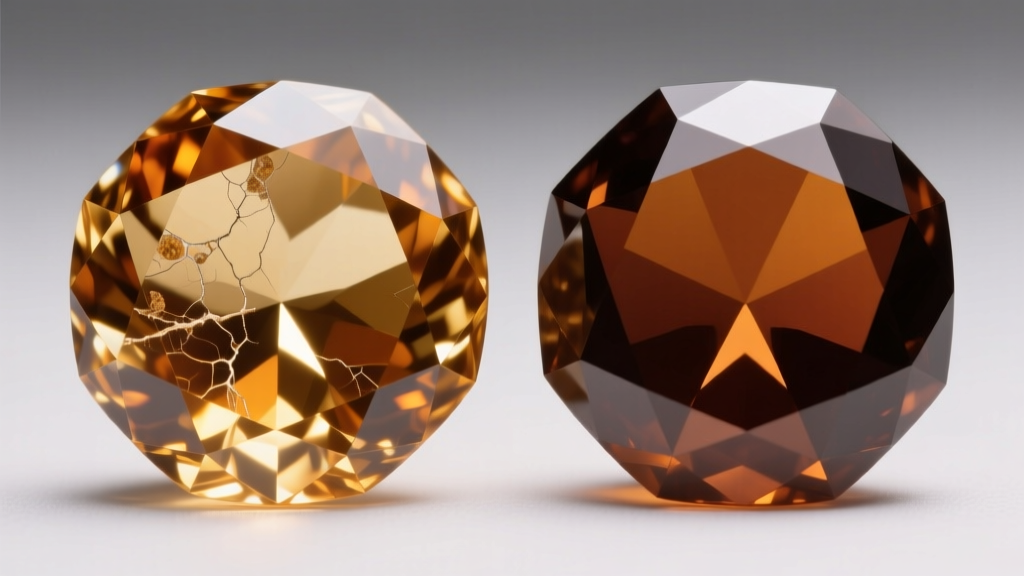
Visual and Structural Differences
Under 10x magnification, a gemologist can often spot the telltale signs of irradiation. Treated stones frequently exhibit "color zoning," where the brown hue is concentrated near the surface or around the girdle, leaving the center of the stone looking murky or grayish. Natural brown diamonds generally display a more uniform saturation, though natural graining (visible as parallel lines within the stone) is common and entirely acceptable.
2026 Pricing Breakdown: What Should You Actually Pay?
Pricing a brown diamond necklace requires navigating two different grading systems: the Argyle C1-C7 scale (historically used for Australian stones) and the Gemological Institute of America (GIA) Fancy Color scale. Below is a realistic 2026 wholesale-to-retail pricing matrix for a 1.00-carat to 2.00-carat center stone, set in a standard 14k or 18k gold pendant.
| Color Grade / Intensity | Industry Term | Natural Price (Per Carat) | Treated Price (Per Carat) |
|---|---|---|---|
| C1-C2 / Faint Brown | Light Champagne | $900 - $1,400 | $150 - $250 |
| C3-C4 / Light Brown | Champagne | $1,600 - $2,800 | $250 - $450 |
| C5-C6 / Medium Brown | Cognac | $3,200 - $5,500 | $450 - $700 |
| C7 / Dark Brown | Chocolate | $4,500 - $8,000+ | $600 - $950 |
Budget Tip: If your budget is capped at $1,500 for the entire necklace, you are almost certainly looking at a treated stone or a very small (under 0.30ct) natural champagne diamond. To maximize value in the mid-tier budget ($3,000 - $5,000), target a 1.00-carat natural C4 (Champagne) stone, which offers excellent brilliance without the steep premium of the darker C7 cognac grades.
Metal Pairings That Maximize Visual Value
The metal you choose for your pendant setting and chain drastically alters the perceived value and color intensity of the brown diamond. Because brown diamonds possess warm undertones, pairing them with the wrong metal can make them look muddy or dull.
- 18k Rose Gold: The absolute best pairing for champagne and light cognac diamonds. The copper alloys in rose gold reflect warm light back into the stone, amplifying its golden-brown hues and making a lower-color-grade stone appear richer than it actually is.
- 14k or 18k Yellow Gold: Ideal for medium to dark cognac stones. Yellow gold provides a seamless, vintage-inspired aesthetic that enhances the "honey" tones of the diamond.
- Platinum or White Gold: Generally avoid these for solitaire brown diamond pendants. The stark white metal creates a high-contrast border that can highlight the brown color in a way that makes the stone look slightly gray or "dirty." If you must use white gold, opt for a halo setting featuring high-quality white melee diamonds to create a deliberate, high-contrast frame.
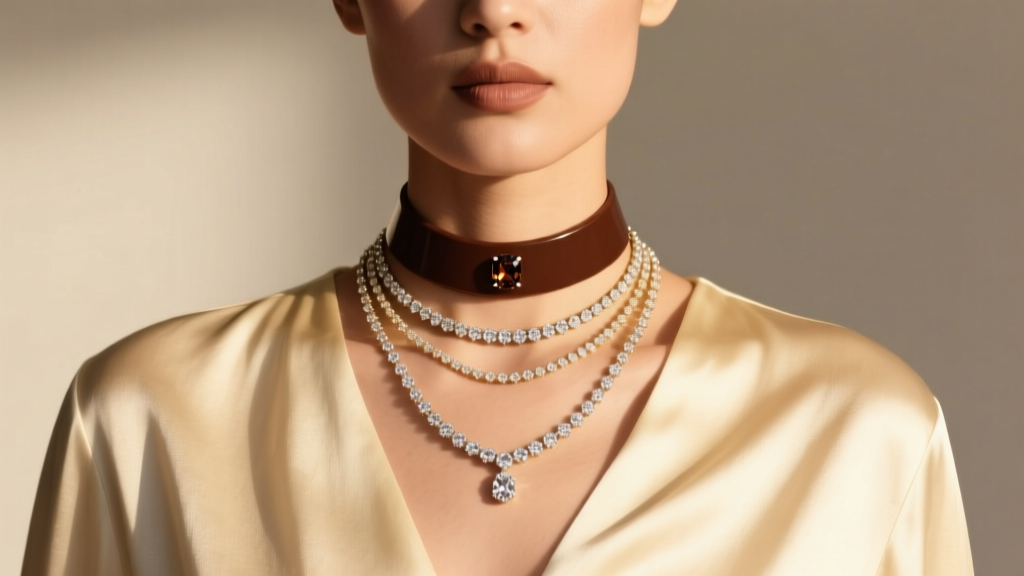
How to Inspect a Brown Diamond Pendant Before Buying
When evaluating a brown diamond necklace, traditional white diamond rules do not apply. You must adjust your priorities regarding the 4Cs to ensure you are allocating your budget efficiently.
The Certification Check
Never purchase a natural brown diamond pendant over $2,000 without a GIA Colored Diamond Grading Report or an AGS equivalent. The certificate must explicitly state the origin of color as "Natural." If the report mentions "irradiated," "HPHT," or "treated," the stone's resale value is virtually zero, and it should be priced according to the treated matrix above.
Clarity: Where You Can Save Money
Brown diamonds are incredibly forgiving when it comes to clarity. The dark body color and complex light absorption naturally mask internal inclusions that would be glaringly obvious in a white diamond. While a VS1 or VVS2 clarity grade is standard for colorless stones, you can comfortably drop down to SI1 or even a very clean SI2 in a brown diamond without any inclusions being visible to the naked eye. This single compromise can save you 20% to 35% on your total budget, allowing you to reallocate funds toward a larger carat weight or a higher color intensity.
Cut: The Non-Negotiable Factor
Do not compromise on cut. A poorly cut brown diamond will suffer from "extinction"—areas where light leaks out the bottom, causing the stone to look opaque, flat, and black. Because brown diamonds naturally absorb more light than white diamonds, they require precise faceting to maximize brilliance. Modified cushion cuts, radiant cuts, and oval brilliants are generally superior to step-cuts (like emerald or Asscher) for brown diamonds, as the numerous facets scatter light and create the coveted "champagne sparkle."
Final Verdict: Budget Allocation Strategies
A brown diamond necklace is a highly rewarding purchase if approached with a strict, data-driven mindset. For the smart buyer in 2026, the ultimate value lies in sourcing a natural, untreated C3 to C5 stone, graded by a reputable lab, set in 18k rose gold. By accepting an SI1 clarity grade and prioritizing a radiant or cushion cut, you secure a piece of jewelry that not only offers a unique, warm aesthetic but also retains intrinsic value in a post-Argyle market. Avoid the temptation of heavily discounted "chocolate" diamonds from mall retailers, as these are almost universally irradiated and hold no long-term value.


