Budget Guide: Buying a Gold Heart Necklace With Diamonds
Discover how to evaluate a gold heart necklace with diamonds. We break down karat weights, melee diamond grades, and true market value for smart buyers.

The True Cost Breakdown of Heart Pendants
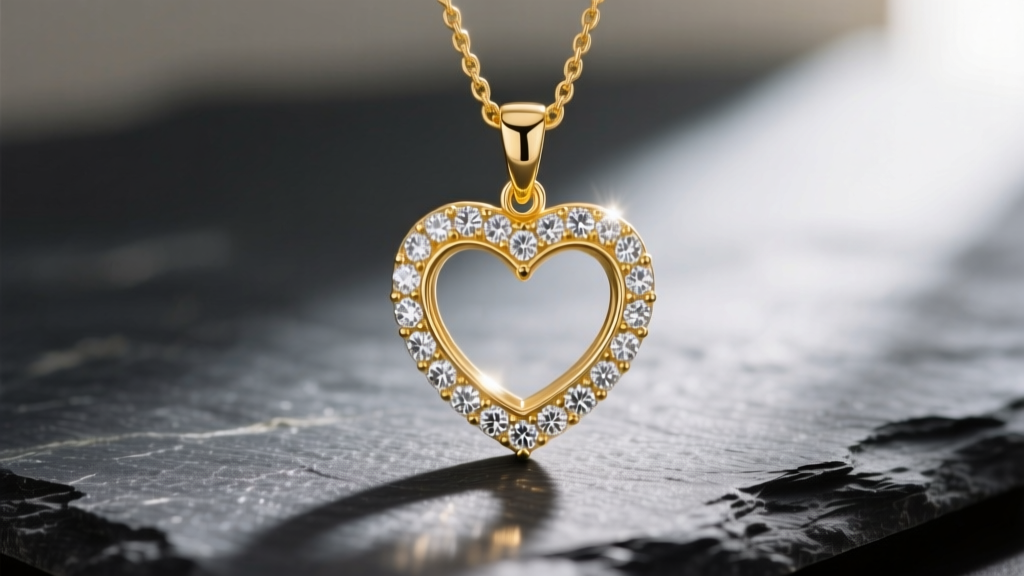
A gold heart necklace with diamonds is one of the most iconic and enduring pieces in fine jewelry. However, its status as a sentimental staple often makes it a prime target for massive retail markups. When you are shopping for this specific silhouette, you are not just paying for the materials; you are often paying for the 'romance tax' associated with heart-shaped jewelry. To navigate the market in 2026 and secure genuine value, you must separate intrinsic material worth from brand prestige and emotional pricing.
The fundamental rule of budget assessment in fine jewelry is understanding that the retail price is a combination of raw metal weight, diamond carat total weight (CTW), labor complexity, and brand overhead. A delicate 15mm heart pendant typically weighs between 1.2 and 2.5 grams. If we look at the raw melt value of 14-karat gold, the intrinsic metal value of the pendant alone is often less than $100. Therefore, when a retailer charges $1,500 for a piece with minuscule diamonds, you are paying almost entirely for the brand name. This guide will teach you how to evaluate the actual specifications of the piece to ensure your budget is allocated toward quality, not just a logo.
Gold Purity and Chain Durability: 10K vs. 14K vs. 18K
The karat weight of the gold dictates both the color saturation and the structural integrity of the necklace. For a pendant that will be worn daily, the alloy composition is critical.
- 10K Gold (41.7% pure): The most budget-friendly and durable option. It is highly resistant to scratching and bending, making it ideal for active lifestyles. However, it has a noticeably paler yellow hue and can cause skin irritation for those with nickel allergies due to the higher alloy content.
- 14K Gold (58.3% pure): The industry standard for the American market. It offers the perfect balance of rich color, durability, and price. A 14K gold heart necklace with diamonds will maintain its shape over decades while providing a warm, luxurious tone.
- 18K Gold (75.0% pure): Prized for its deep, buttery yellow color and hypoallergenic properties. However, 18K gold is significantly softer. If the heart pendant features a delicate bail (the loop that connects to the chain), 18K gold is more prone to friction wear and thinning over time.
Chain Selection: Do not overlook the chain, as it represents a major portion of the total gold weight and budget. Avoid chains thinner than 0.8mm. A 1.0mm box chain or a 1.2mm cable chain provides the necessary tensile strength to support a diamond-set pendant without snapping under accidental snags.
Evaluating the Diamonds: The Melee Trap
The most common area where consumers overpay is the diamond content. Heart pendants rarely feature large, center solitaire diamonds; instead, they utilize 'melee' diamonds—small stones typically ranging from 0.01 to 0.05 carats each, often set in a pavé or halo arrangement. According to the Gemological Institute of America (GIA), melee diamonds are generally not individually graded because their small size makes precise color and clarity grading impractical and cost-prohibitive.
Because they are sold in bulk parcels, many commercial jewelers use melee diamonds with I1 to I3 clarity and M to N color grades. These stones may appear cloudy or slightly yellowish to the naked eye, yet they are still marketed as '100% Natural Diamonds.' When assessing value, look for retailers who guarantee their melee is at least SI (Slightly Included) clarity and G-H color. If a jeweler cannot provide these baseline specs, the diamonds are likely low-grade commercial stock, and the price should reflect that.
Lab-Grown vs. Natural Melee in 2026
The diamond market has shifted dramatically. Lab-grown melee diamonds are now virtually indistinguishable from natural melee to the naked eye, yet they cost a fraction of the price. A natural 0.25 CTW pavé heart pendant might carry a diamond cost of $150 to the jeweler, while the exact same visual result using lab-grown melee costs the jeweler less than $10. If you are buying strictly for the aesthetic and not for resale value, insisting on natural melee in a heart pendant is a poor allocation of your budget.
Setting Styles and Long-Term Value Retention
The way the diamonds are secured into the gold heart drastically affects both the upfront cost and the long-term maintenance budget.
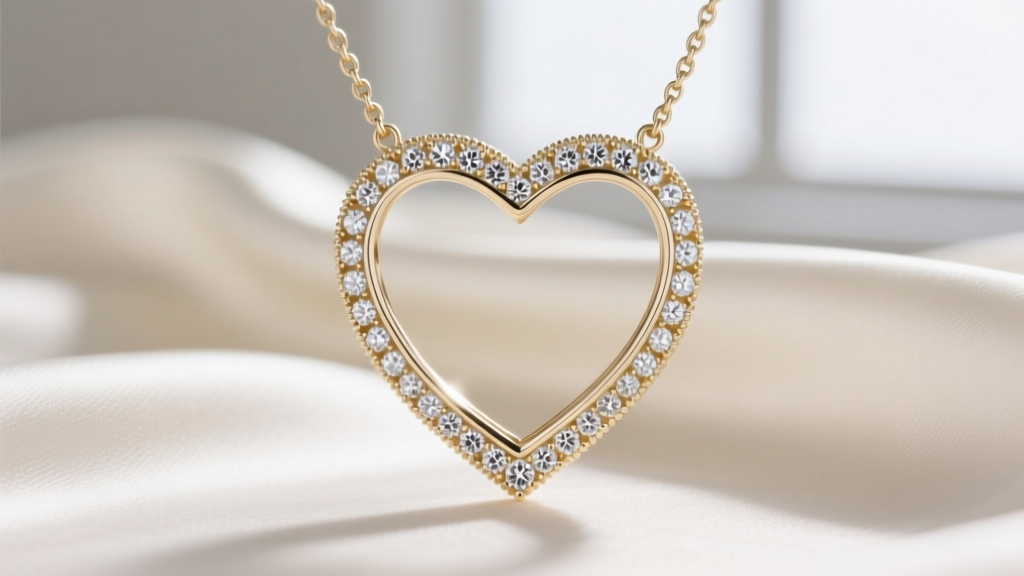
- Pavé / Micro-Prong Settings: This style uses tiny beads of gold to hold dozens of small diamonds, maximizing sparkle. However, it is a maintenance liability. As the gold wears down from daily friction, stones can easily fall out. Replacing lost melee diamonds costs $50 to $100 per stone in labor.
- Bezel Settings: A thin rim of gold completely encircles the diamond. While it slightly reduces the visible surface area of the stone, a bezel setting is virtually indestructible for daily wear. It protects the diamond's girdle from chipping and eliminates the risk of lost stones, making it the superior choice for a budget-conscious buyer who wants zero maintenance costs.
Pricing Matrix: What You Should Actually Pay
To help you benchmark retail prices against intrinsic value, refer to the matrix below. These estimates assume a standard 15mm heart pendant with a 16-inch chain, weighing approximately 2.5 grams total, featuring 0.15 CTW of diamonds.
| Material Specification | Estimated Intrinsic Cost | Fair Retail Price Range | Overpay / Brand Tax Zone |
|---|---|---|---|
| 10K Gold + Lab-Grown Melee | $60 - $85 | $200 - $350 | Above $450 |
| 14K Gold + Natural Melee (I-J Color) | $110 - $140 | $400 - $650 | Above $850 |
| 14K Gold + Natural Melee (G-H Color) | $150 - $190 | $550 - $800 | Above $1,100 |
| 18K Gold + High-Grade Natural Melee | $220 - $280 | $800 - $1,200 | Above $1,600 |
Note: Prices above reflect independent and online jewelers. Luxury mall brands will routinely price these items 2x to 4x higher than the 'Fair Retail' range.
Red Flags in Jewelry Appraisals
When purchasing a gold heart necklace with diamonds, you may be offered an 'insurance appraisal' that values the item at double or triple the purchase price. Be highly skeptical of this practice. The Federal Trade Commission (FTC) Jewelry Guides explicitly warn against inflated appraisals designed to mislead consumers into thinking they are getting a massive bargain. An appraisal should reflect the actual retail replacement cost in your local market, not an exaggerated fantasy figure. If a retailer sells you a necklace for $400 but hands you an appraisal for $1,500, they are likely inflating the diamond quality grades on paper to justify the document. Always demand that the receipt explicitly lists the exact metal weight and estimated diamond color/clarity.
Final Verdict: Maximizing Your Budget
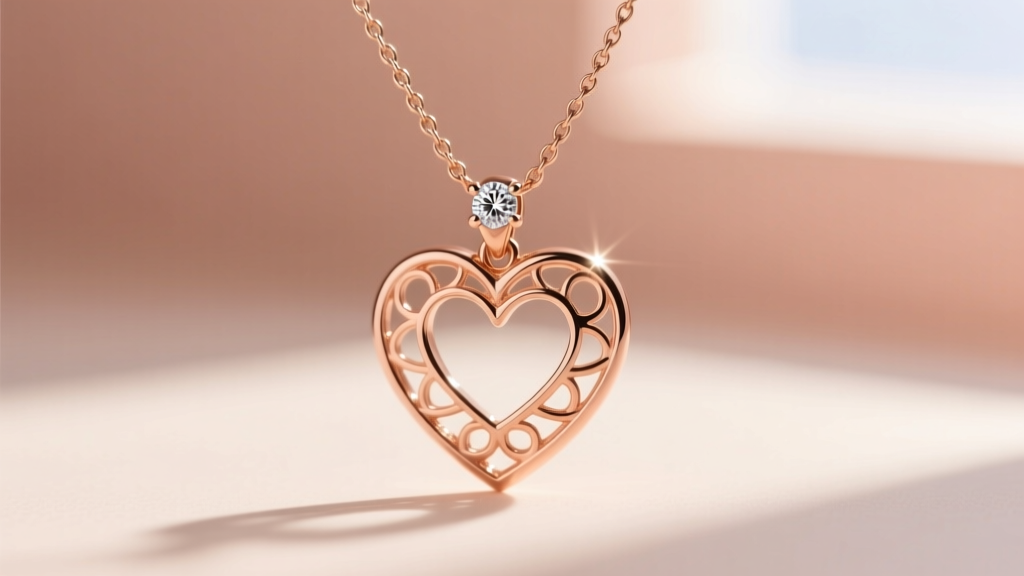
Securing the best value on a gold heart necklace with diamonds requires shifting your focus from brand marketing to material specifications. For the ultimate balance of durability, beauty, and financial prudence, opt for a 14K gold setting with a bezel or channel-set design. If you are open to lab-grown diamonds, you can upgrade to a larger pendant size or a heavier, more durable chain without increasing your overall budget. By understanding the melt value of gold and the reality of melee diamond pricing, you can confidently negotiate, compare, and purchase a piece that offers both sentimental beauty and genuine economic value.


