Jaxxon Necklace Review: Chain Tech, Metal Grades & Durability
An expert metallurgical and structural teardown of the Jaxxon necklace lineup, analyzing gold bonding thickness, chain link welding, and clasp durability.

The Direct-to-Consumer Metallurgical Baseline
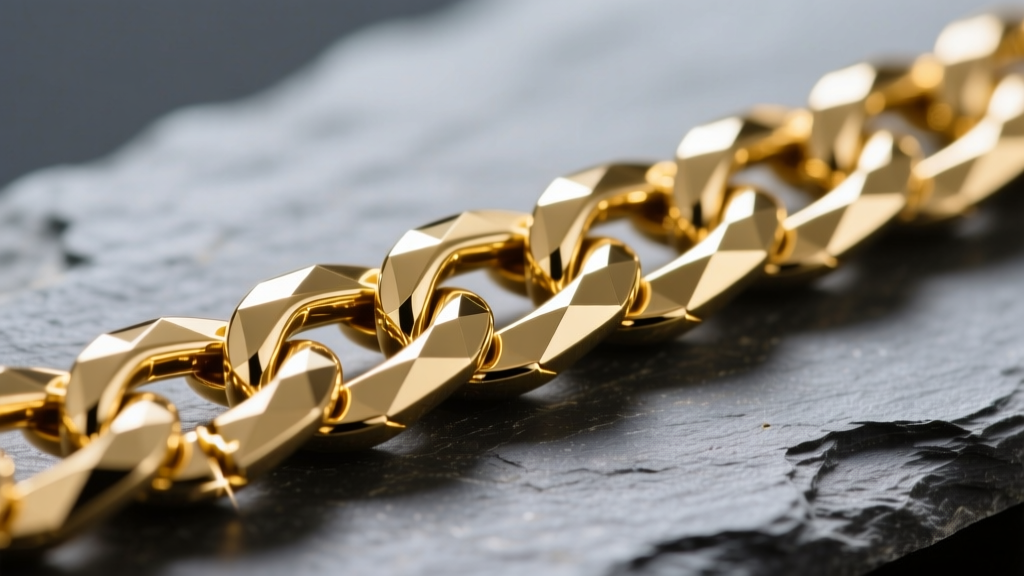
As of 2026, the direct-to-consumer men's jewelry market has matured significantly, moving past the era of cheap brass alloys and flash-plated zinc. The Jaxxon necklace lineup has positioned itself at the intersection of accessible luxury and everyday durability, but marketing claims of "Italian craftsmanship" and "gold bonding" require rigorous metallurgical scrutiny. To understand the true longevity of a Jaxxon necklace, we must look past the aesthetic appeal and examine the molecular structure, chain link architecture, and mechanical failure points inherent in their manufacturing processes.
At the core of nearly every Jaxxon piece is a 925 sterling silver base. According to the Gemological Institute of America (GIA), pure silver (99.9%) is far too soft for functional chain links, rating only 2.5 on the Mohs hardness scale. By alloying 92.5% silver with 7.5% copper, manufacturers achieve the necessary tensile strength to withstand the torque and pulling forces applied to necklaces. However, this copper content is also the primary catalyst for tarnish, a factor we will address in the environmental degradation section.
Gold Bonding vs. Vermeil: Micron Thickness and Adhesion
One of the most heavily marketed aspects of the Jaxxon necklace is its "Gold Bonded" finish. To evaluate this, we must reference the Federal Trade Commission (FTC) Jewelry Guides, which strictly define gold plating and vermeil. Standard electroplating often deposits a mere 0.1 to 0.5 microns of gold—a microscopic layer that will wear through to the silver core within months of daily friction. Vermeil requires a minimum of 2.5 microns of gold over a sterling silver base.
Jaxxon's proprietary gold bonding process generally exceeds standard vermeil specifications, utilizing a combination of heavy electroplating and mechanical burnishing to achieve a gold layer estimated between 3 to 5 microns. This thickness is critical. At 4 microns, the gold layer is substantial enough to survive years of light skin contact and clothing friction before requiring re-plating. Furthermore, the adhesion is enhanced by an ultra-thin strike layer of nickel or palladium (depending on the specific alloy run) which acts as a barrier to prevent copper migration from the sterling silver core, a phenomenon that causes the gold surface to develop a reddish hue over time.
Chain Link Architecture: Laser Welding vs. Torch Soldering
The structural integrity of a Cuban or Figaro chain relies entirely on the closure of the individual links. Traditional jewelry manufacturing utilizes torch soldering, which introduces a wide Heat-Affected Zone (HAZ). This intense, localized heat anneals (softens) the surrounding sterling silver, creating a structural weak point exactly where the link bears the most tensile stress.
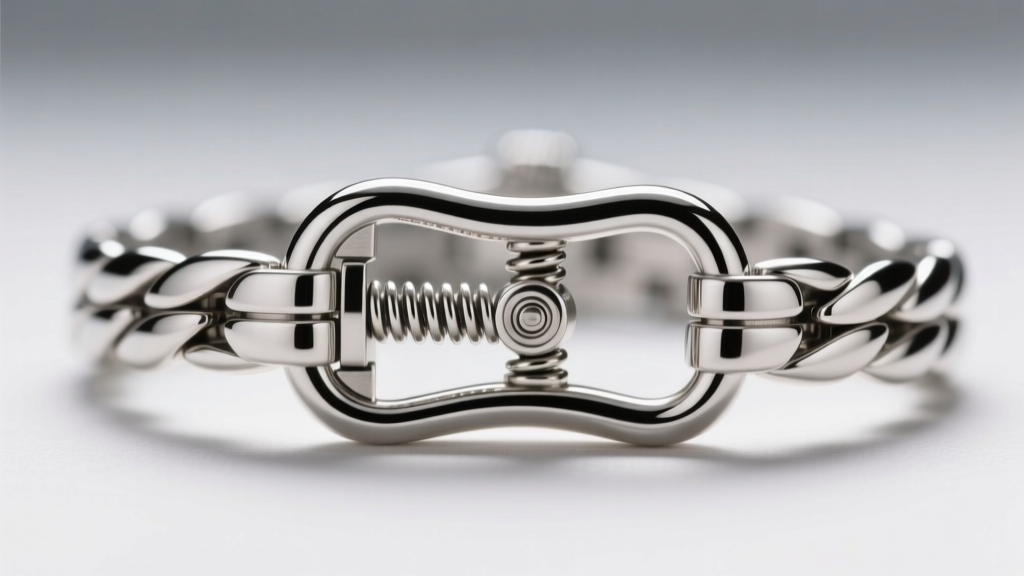
Jaxxon's premium chains increasingly utilize laser welding for link closure. Laser welding focuses a high-energy beam onto a microscopic focal point, fusing the metal without the need for traditional solder alloys. The primary advantage here is the drastically reduced HAZ. The surrounding sterling silver retains its work-hardened temper, meaning a 5mm Jaxxon Cuban link chain possesses a higher tensile yield strength than a similarly sized torch-soldered counterpart. This technical distinction is what separates mid-tier chains that snap under a 5-pound load from those that can withstand over 15 pounds of tensile force.
Clasp Mechanics and Tensile Failure Points
The clasp is universally the first mechanical point of failure on any necklace. Jaxxon employs two primary clasp types across their catalog: the standard lobster clasp and the box clasp with a safety catch. Understanding the mechanical limitations of each is vital for selecting the right chain weight.
| Clasp Type | Max Recommended Chain Weight | Primary Failure Mode | Tensile Yield Estimate |
|---|---|---|---|
| Standard Lobster (12mm) | Up to 45g | Spring tension degradation / Lever bending | ~8 lbs |
| Heavy Lobster (18mm) | Up to 90g | Internal spring snap under lateral torque | ~14 lbs |
| Box Clasp w/ Safety | 100g+ | Tongue metal fatigue / Safety wire snapping | ~22 lbs |
For chains exceeding 6mm in width or 80 grams in total weight, relying on a lobster clasp is a mechanical risk. The internal steel spring inside a gold-bonded or silver lobster clasp is susceptible to corrosion from sweat, eventually losing its rebound tension. The box clasp, which relies on the mechanical friction of a folded metal tongue compressing into a housing, is vastly superior for heavy Cuban links, provided the secondary safety wire is properly gauge-rated.
Pendant Bail Engineering and Friction Wear
When pairing a Jaxxon pendant with a chain, the bail (the loop connecting the two) becomes a high-friction wear zone. Many mass-produced pendants feature cast bails with rough, unfinished interiors. As the chain moves, the diamond-cut facets of a Cuban or rope chain act like microscopic files, slowly grinding away the interior of the pendant bail and the exterior of the chain links.
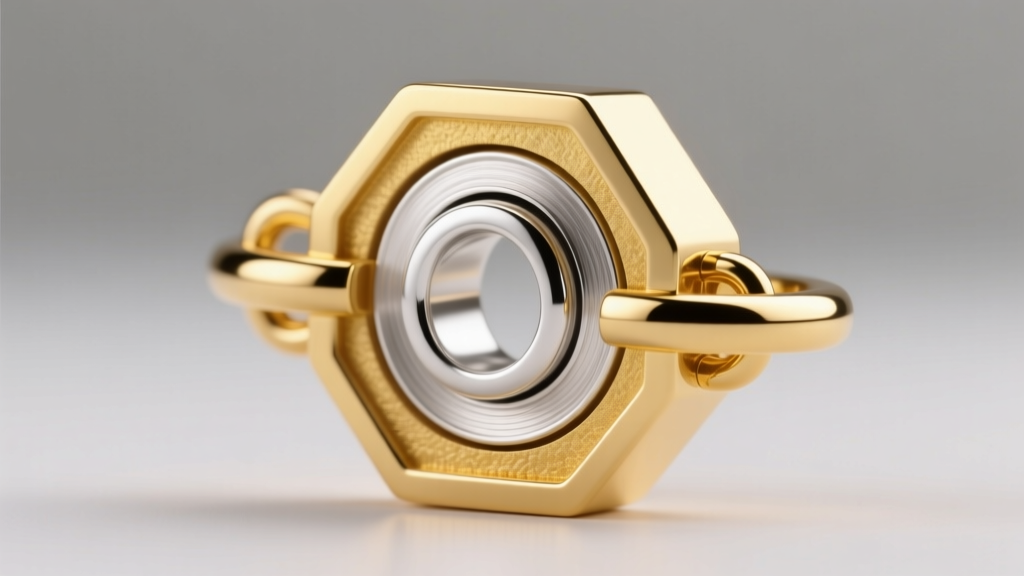
Expert inspection of Jaxxon's heavier pendants reveals hand-polished or tumble-finished bail interiors. This reduces the coefficient of friction significantly. For maximum longevity, consumers should match the chain width to the bail aperture with a minimum of 1.5mm of clearance. Forcing a 5mm chain through a 5.5mm bail creates excessive lateral torque on the chain links directly adjacent to the pendant, accelerating metal fatigue.
Environmental Degradation and the Rhodium Barrier
Because the 7.5% copper in 925 sterling silver reacts readily with sulfur and oxygen, bare silver will form copper sulfide—the black tarnish commonly seen on neglected jewelry. To combat this, Jaxxon applies a microscopic flash of rhodium over their silver pieces. Rhodium, a platinum-group metal, is entirely inert to oxygen and sulfur at room temperature, providing a brilliant, mirror-like barrier.
However, rhodium plating on high-friction areas (like the back of a chain resting against the collarbone) will eventually wear thin. To maintain the structural and aesthetic integrity of a Jaxxon silver necklace, avoid exposure to chlorinated water (which attacks the copper alloy) and sulfur-rich environments like hot springs. Routine maintenance should involve only a microfiber cloth; abrasive silver polishes will strip both the rhodium barrier and the gold-bonded layers, exposing the raw, reactive sterling silver core beneath.
The Final Verdict: Engineering vs. Price Point
Evaluating the Jaxxon necklace lineup through a purely technical lens reveals a highly optimized product for its price bracket. While it does not possess the generational permanence of solid 14k or 18k gold, the engineering choices—specifically the 3+ micron gold bonding, laser-welded link closures, and rhodium barrier plating—demonstrate a clear understanding of material science and failure prevention. For consumers seeking the visual weight and tactile satisfaction of luxury chains without the four-figure investment, the metallurgical reality of Jaxxon's manufacturing firmly justifies its market position.


