Affordable Seed Bead Necklace Ideas: A Value Guide
Discover budget-friendly seed bead necklace ideas and learn how to assess true value, material costs, and craftsmanship before you buy or DIY.

The True Cost of Seed Bead Jewelry: What Are You Paying For?
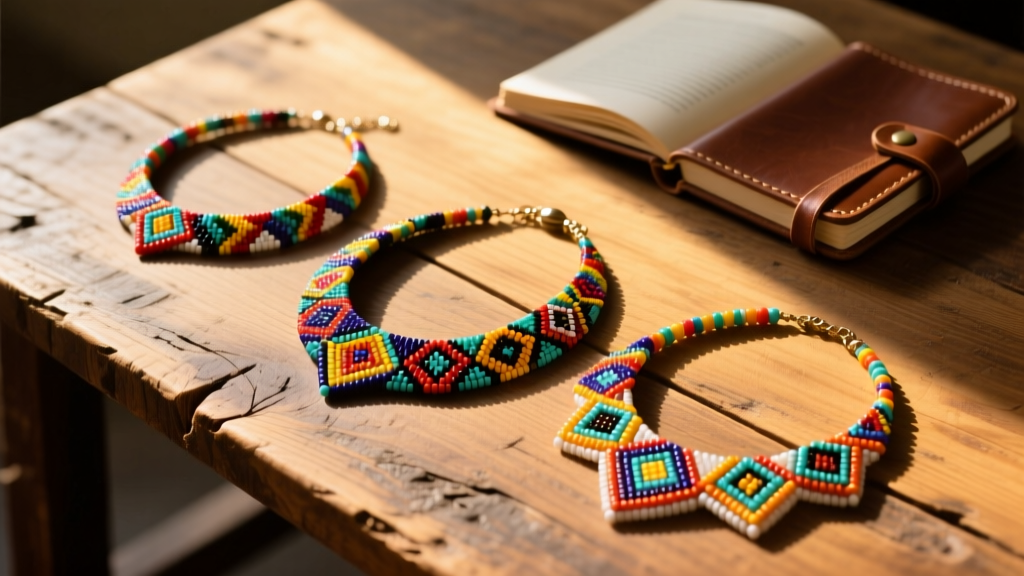
When exploring seed bead necklace ideas, it is easy to be swayed by vibrant colors and intricate patterns. However, from a budget and value assessment perspective, not all beadwork is created equal. The price of a seed bead necklace is rarely about the raw materials alone; it is heavily dictated by labor, bead uniformity, and structural integrity. A complex tubular peyote stitch necklace can take an experienced artisan 15 to 25 hours to complete. At a modest artisan rate of $15 per hour, the labor cost alone ranges from $225 to $375, completely independent of the beads and findings.
Understanding this baseline helps you evaluate whether a $40 mass-produced seed bead choker is a genuine bargain or a structural liability, and whether a $300 handmade piece is a fair investment or overpriced. To make smart purchasing or DIY decisions, we must break down the exact material grades and hardware that dictate true value.
Material Grades: Miyuki, Toho, and Czech Seed Beads
The foundation of any high-value seed bead project is the bead itself. The market is dominated by three primary manufacturers, each offering distinct value propositions for your budget.
1. Miyuki Delica and Toho Treasures (The Premium Standard)
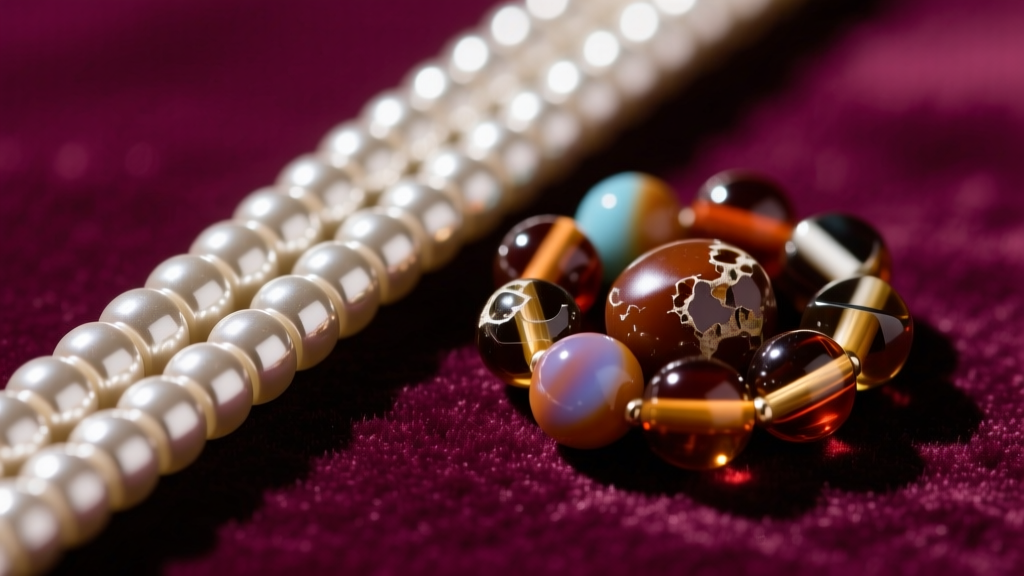
Japanese cylinder beads like Miyuki Delicas and Toho Treasures are the gold standard for precision beadwork. They feature a uniform cylindrical shape and an oversized hole, allowing for multiple thread passes. Fire Mountain Gems typically prices 11/0 Delicas between $6.00 and $9.00 per 5-gram tube. While the upfront cost per gram is high, their uniformity means zero waste—every bead sits perfectly flush, reducing the risk of structural failure and saving you hours of culling misshapen beads.
2. Czech Glass Seed Beads (The Budget Workhorse)
Czech seed beads (often sold in hanks) are rounder and slightly irregular. They cost roughly $2.00 to $4.00 per 20-gram hank, making them exponentially cheaper by volume. However, their irregular shape makes them unsuitable for tight, geometric stitches like brick or peyote. They offer excellent value for fringe work, embroidery, or loom weaving where slight size variations are hidden, but they lower the overall structural value of precision-woven necklaces.
Stringing Materials: Where Budget Necklaces Fail
The most common point of failure in budget seed bead jewelry is the stringing material. Cheap nylon threads degrade, stretch, and snap when exposed to skin oils and UV light. If you are assessing a handmade piece or planning a DIY project, look for these high-value threads:
- Fireline (Braided Gel-Spun): Priced around $7.00 for 50 yards, Fireline is incredibly strong and resists stretching. It is ideal for rigid stitches like right-angle weave.
- Wildfire (Thermally Fused): Costing about $8.00 for 20 yards, Wildfire is waterproof, fray-resistant, and features a smooth coating that glides through beads without fraying, offering superior longevity.
- Nymo (Nylon): A budget option at $3.00 per bobbin, but it requires conditioning with beeswax and is prone to stretching over time, lowering the long-term value of the garment.
Price Comparison: DIY vs. Handmade vs. Mass-Produced
To help you assess where your money goes, here is a value breakdown of the three primary ways to acquire seed bead necklaces.
| Category | Average Cost | Material Quality | Durability & Value |
|---|---|---|---|
| Fast Fashion / Mass-Produced | $15 - $45 | Low (Irregular beads, cheap nylon, alloy clasps) | Poor. High risk of snapping and tarnishing within months. |
| Independent Artisan (Handmade) | $120 - $400+ | High (Miyuki/Toho, Fireline, sterling silver/gold-filled) | Excellent. Heirloom quality if cared for properly. |
| DIY (Do It Yourself) | $30 - $80 (Materials) | Variable (Depends on your sourcing) | High, provided you invest in quality thread and findings. |
5 High-Value Seed Bead Necklace Ideas on a Budget
If you want to maximize visual impact without exhausting your budget on premium Japanese beads, consider these strategic design approaches that balance cost and aesthetics.
1. The Graduated Fringe Lariat
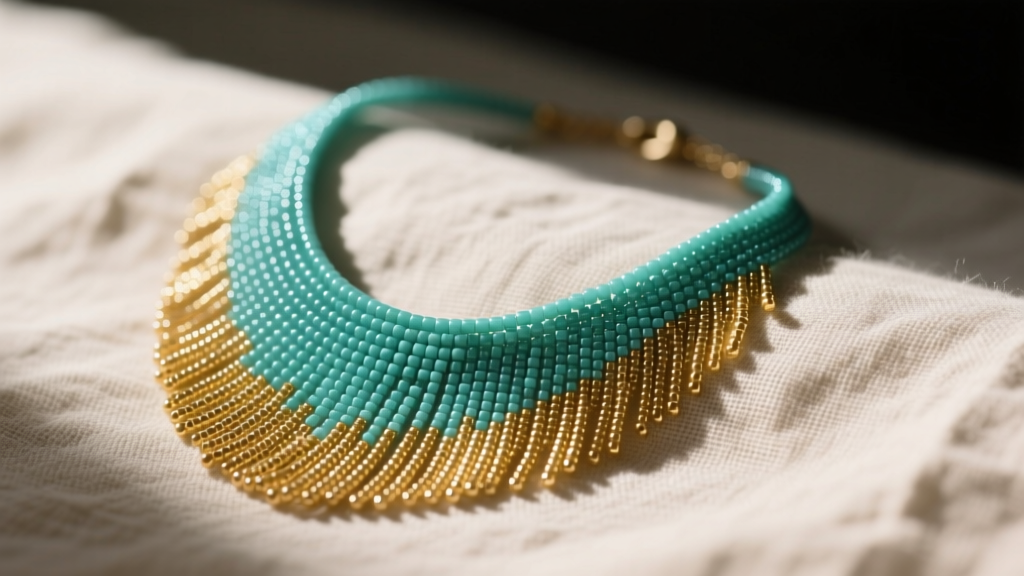
Instead of weaving a solid, bead-heavy collar, use a simple, inexpensive leather or suede cord as the base and create a focal fringe using Czech glass seed beads and a few strategic Miyuki drops. This design uses 70% less material while delivering a dramatic, high-end bohemian aesthetic.
2. The Mixed-Media Illusion Drop
Combine high-quality 15/0 seed beads with larger, budget-friendly crystal or glass beads. By using the seed beads only as 'spacers' or 'caps' around the larger beads, you achieve the look of intricate beadwork while keeping your material costs under $20.
3. The Asymmetric Beaded Chain
Use gold-filled or sterling silver cable chain for 80% of the necklace length, and weave a small, highly detailed brick-stitch focal piece using premium Delica beads. This hybrid approach elevates the perceived value of the piece while keeping the time and material investment remarkably low.
4. The Seed Bead Tassel Pendant
Purchase a budget-friendly brass or copper pendant blank and create a lavish seed bead tassel using Size B Nymo thread and mixed Czech beads. According to tutorials on Beadaholique, tassels are forgiving of bead irregularities, allowing you to use cheaper materials without sacrificing the luxurious drape of the final piece.
5. The Minimalist Seed Bead Choker
A single strand of size 8/0 Czech seed beads interspersed with tiny metallic spacer beads offers a chic, 90s-inspired minimalist look. Because size 8/0 beads are larger, you need significantly fewer of them to complete a 15-inch choker, drastically cutting both material costs and stringing time.
How to Spot Overpriced or Poor-Value Seed Bead Jewelry
When shopping for artisan seed bead necklaces, knowing what to avoid is just as important as knowing what to buy. Watch out for these red flags that indicate poor value:
- Exposed Thread: If you can see the stringing material between the beads in a peyote or herringbone stitch, the tension is too loose. This leads to sagging and eventual snapping.
- Stiff Drape: Conversely, if a woven collar feels like rigid plastic, the artisan pulled the thread too tight or used a thread that is too thick for the bead holes, compromising the structural integrity.
- Base Metal Findings: A $150 beadwork piece attached to a $0.10 zinc-alloy lobster clasp is a poor investment. The clasp will tarnish, turn the skin green, and degrade the value of the entire necklace. Always look for gold-filled, sterling silver, or surgical steel findings.
By critically assessing the beads, the thread, and the hardware, you can confidently navigate the market for seed bead necklace ideas, ensuring that every dollar you spend translates into lasting beauty and structural durability.


