Buffalo Necklace Materials: Horn, Silver & Stone Compared
Compare materials for your buffalo necklace. We analyze buffalo horn, sterling silver, and turquoise properties, durability, and care tips.

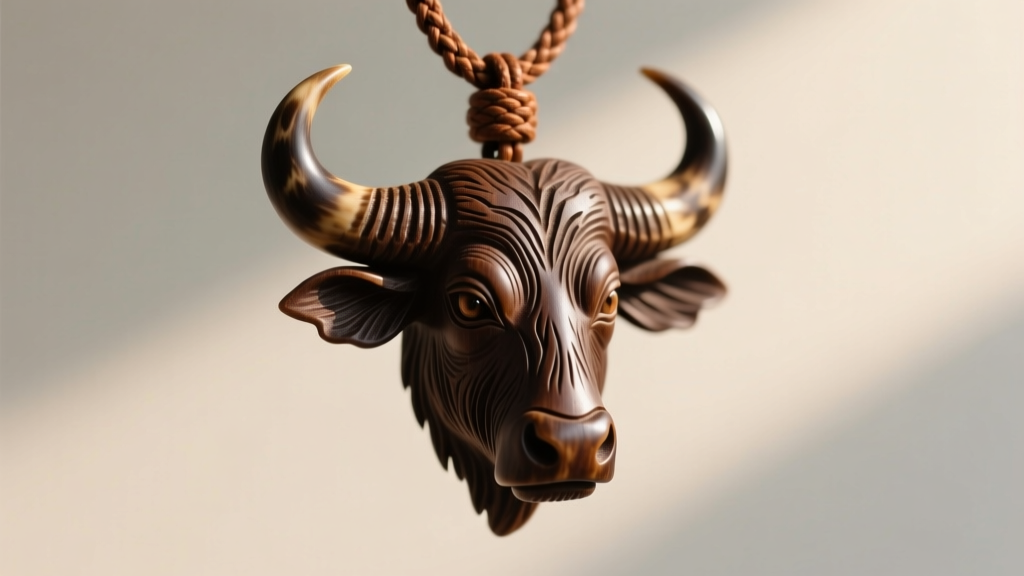
The Dual Identity of the Buffalo Necklace
When jewelry enthusiasts and collectors search for a buffalo necklace in 2026, they are typically navigating two distinct but overlapping categories. The first is the motif-driven piece: pendants featuring the iconic American bison, often modeled after the classic 1913 Buffalo Nickel or Southwestern buffalo skull designs. The second is the material-driven piece: tribal and bohemian jewelry crafted from actual water buffalo horn, bone, or leather. Understanding the material properties of both categories is critical for assessing durability, value, and long-term care. This guide breaks down the exact metallurgical, gemological, and organic properties of the materials used in authentic buffalo necklaces.
Organic Materials: Genuine Buffalo Horn vs. Synthetics
Authentic tribal buffalo necklaces frequently utilize water buffalo horn (Bubalus bubalis). Unlike bone, which is highly calcified and porous, horn is composed primarily of keratin—the same fibrous protein found in human hair and nails. This structural difference gives horn a distinct set of physical properties.
Genuine buffalo horn registers at approximately 2.5 on the Mohs hardness scale, making it relatively soft and susceptible to scratching from quartz dust (Mohs 7) in the environment. More importantly, horn is highly hygroscopic, meaning it absorbs and releases moisture from the surrounding air. Rapid fluctuations in humidity can cause the keratin layers to expand and contract unevenly, leading to micro-fractures or warping. In contrast, modern synthetic alternatives like cast acrylic or epoxy resins (Mohs 3-4) are entirely non-porous and dimensionally stable, though they lack the unique thermal conductivity and organic grain patterns of genuine horn.
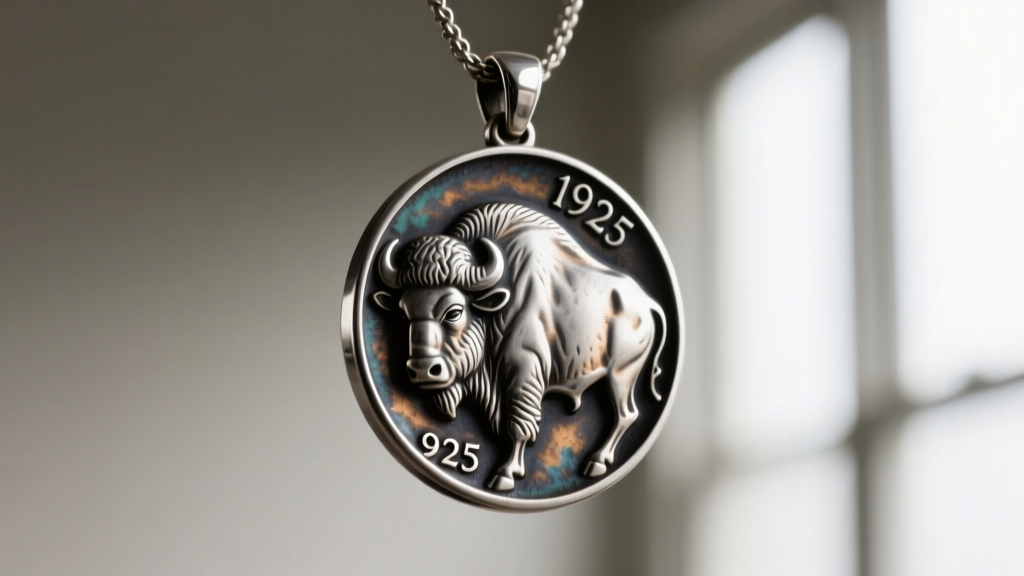
Metallurgy of the Motif: Sterling Silver vs. Base Metals
For the iconic Buffalo Nickel replica or the intricate Southwestern buffalo skull pendant, the choice of metal dictates both the aesthetic aging process and the structural longevity of the piece.
The Chemistry of .925 Sterling Silver
Premium buffalo motif pendants are traditionally cast in .925 sterling silver (92.5% pure silver, 7.5% copper alloy). According to The Silver Institute, pure silver is too malleable for detailed relief work, making the copper alloy essential for hardness. However, this copper content is also responsible for tarnish. When exposed to atmospheric sulfur compounds, the copper reacts to form silver sulfide (Ag2S), creating a dark patina. For a vintage-style buffalo skull pendant, this oxidation is often intentionally accelerated in the recesses of the casting to highlight the textured relief, while the high points are polished to a bright finish.
Brass and Cupronickel Alternatives
Budget-friendly buffalo necklaces often substitute silver with brass (copper and zinc) or cupronickel. While brass offers excellent casting fluidity for capturing the fine details of a buffalo's fur or facial features, it is prone to developing verdigris—a green, powdery corrosion that occurs when copper reacts with moisture and chlorides. Verdigris can stain the skin and degrade the structural integrity of thin pendant bails over time.
Southwestern Inlays: Turquoise and Stone Integrity
Many Southwestern-style buffalo skull and horn pendants feature intricate stone inlays, with turquoise being the undisputed standard. Evaluating turquoise requires an understanding of its porosity and treatment history.
Natural, untreated turquoise is a hydrated phosphate of copper and aluminum, scoring between 5 and 6 on the Mohs scale. As detailed by the Gemological Institute of America (GIA), natural turquoise is highly porous. When worn against the skin, it can absorb sebum, lotions, and perspiration, which may alter its color from a vibrant robin's egg blue to a muddy green over decades of wear. To combat this, the modern jewelry industry frequently uses stabilized turquoise—stones that have been impregnated with a clear epoxy resin under pressure. Stabilization does not make the stone "fake"; rather, it locks in the color and increases the Mohs hardness to a more durable 6.5, making it ideal for the high-impact environment of a daily-wear necklace. Buyers should be highly cautious of "block turquoise" or dyed howlite, which are entirely synthetic or misrepresentative substitutes that lack the matrix veining and thermal properties of genuine stone.
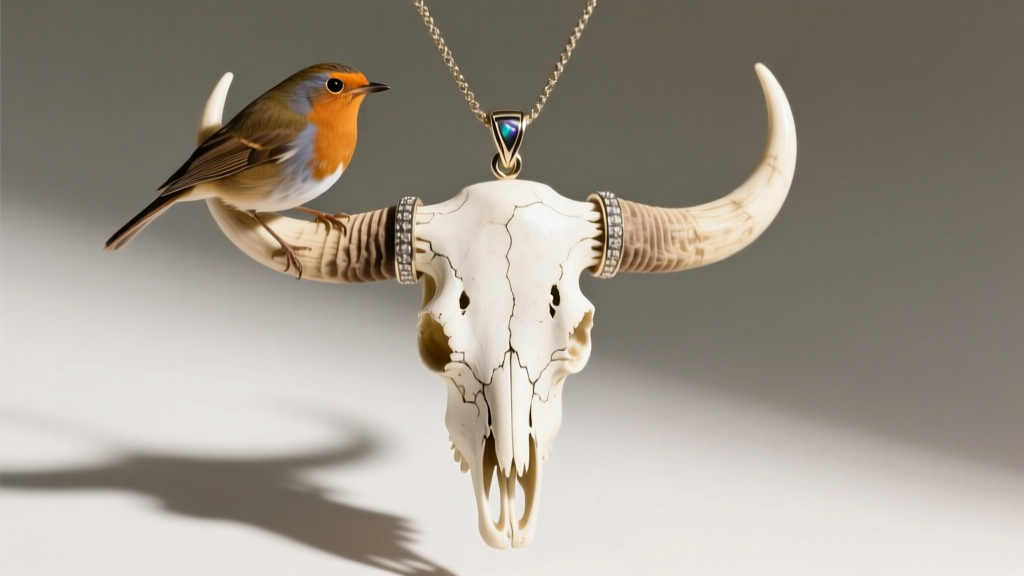
Comprehensive Material Property Matrix
To help you evaluate the construction of a buffalo necklace, refer to the comparative data table below. This matrix outlines the physical properties and market realities of the most common materials used in 2026.
| Material | Mohs Hardness | Porosity / Moisture Risk | Oxidation / Tarnish Profile | Average Pendant Price Range |
|---|---|---|---|---|
| Genuine Buffalo Horn | 2.5 | High (Hygroscopic, warps) | None (May dry out or crack) | $45 - $120 |
| .925 Sterling Silver | 2.5 - 3.0 | Non-porous | High (Silver sulfide tarnish) | $85 - $350+ |
| Natural Turquoise | 5.0 - 6.0 | High (Absorbs oils/chemicals) | Color shift from skin oils | $150 - $800+ |
| Stabilized Turquoise | 6.5 | Low (Resin-sealed) | Color-stable | $75 - $250 |
| Cast Brass | 3.0 - 4.0 | Non-porous | High (Verdigris corrosion) | $25 - $60 |
Cord and Chain Integration: The Hidden Variable
The material of the necklace cord is just as critical as the pendant itself, particularly regarding chemical interactions. A heavy buffalo horn or silver skull pendant requires a robust suspension system.
- Vegetable-Tanned Leather: The traditional choice for Western and tribal necklaces. However, the tannins and residual acids in veg-tan leather can have a low pH. If the leather cord rests directly against a sterling silver bail without a protective jump ring or sealant, the acidic moisture can accelerate localized silver corrosion.
- Chrome-Tanned Leather: More water-resistant and chemically neutral than veg-tan, but lacks the traditional tooling and aesthetic appeal desired for authentic Southwestern styles.
- Waxed Cotton or Hemp: Excellent inert alternatives that provide a rustic look without the acidic risks of raw leather or the moisture-trapping properties of synthetic nylon cords.
Advanced Care and Preservation Protocols
Maintaining a multi-material buffalo necklace requires a segmented approach. Never use ultrasonic cleaners or commercial silver dip solutions on a piece that combines silver with horn or turquoise. The high-frequency vibrations of an ultrasonic cleaner can shatter the internal matrix of natural turquoise, while the harsh thiourea chemicals in silver dips will strip the natural oils from buffalo horn, leaving it brittle and chalky.
For routine cleaning, use a dry, untreated microfiber cloth to buff the silver high-points. For the horn components, a microscopic application of food-grade mineral oil once a year will replenish the keratin's lipid barrier, preventing desiccation and cracking in arid climates. Store the necklace flat in a climate-controlled environment; hanging heavy horn pendants for long periods can cause the organic material to slowly deform under its own weight due to keratin creep.


