Olympic Necklace Materials: Gold vs Steel for Athletic Wear 2026
Compare the best metals for an Olympic necklace in 2026. We analyze 14k gold, PVD stainless steel, and titanium for sweat resistance and durability.

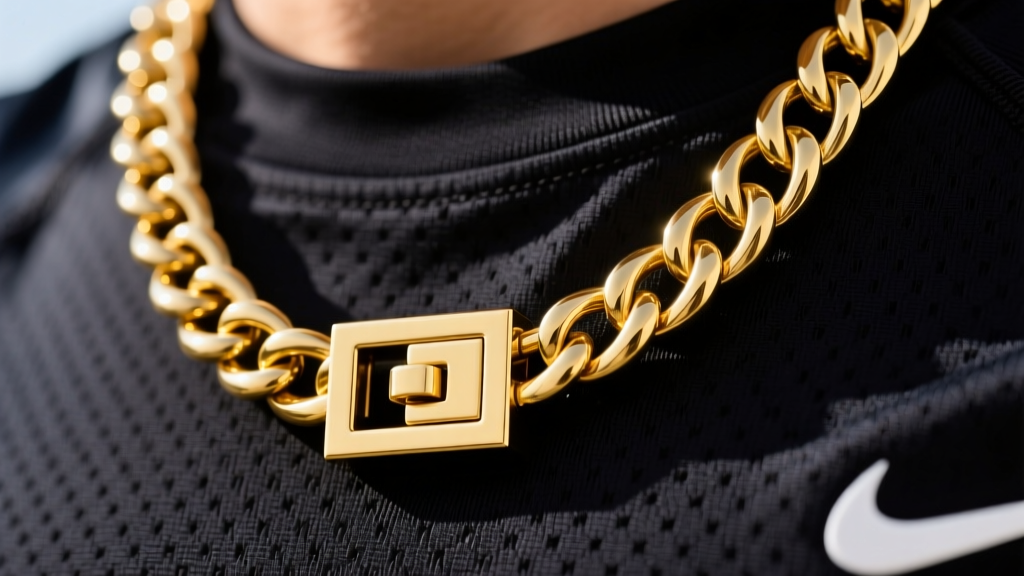
The Anatomy of an Olympic Necklace
The term 'olympic necklace' has evolved far beyond literal replica medals. In 2026, it represents a specific tier of high-impact, heavy-gauge sports jewelry favored by elite athletes, Olympians, and sports enthusiasts. These pieces are characterized by their substantial weight, thick chain profiles (typically 5mm to 12mm), and robust clasp mechanisms designed to withstand rigorous physical activity. Whether you are investing in a solid gold Cuban link or a titanium-framed pendant, the material science behind your jewelry dictates its survival in high-sweat, high-friction environments.
Choosing the right metal is not just about aesthetics; it is a biomechanical and chemical decision. Human sweat, varying in pH and salinity, acts as a corrosive electrolyte. In this guide, we break down the exact metallurgical properties of the top materials used in athletic chains, comparing their tensile strength, corrosion resistance, and long-term viability.
Material Breakdown: What Survives the Podium?
14K and 18K Solid Gold (The Champion's Choice)
Solid gold remains the undisputed king of the Olympic necklace hierarchy, but not all karats perform equally under stress. According to the Gemological Institute of America (GIA), pure 24K gold is far too soft (Vickers hardness of ~25 HV) for heavy athletic chains. Instead, 14K and 18K alloys are the standard.
- 14K Gold (58.5% Au): Alloyed with copper, silver, and zinc, 14K gold boasts a Vickers hardness of roughly 120-150 HV. This makes it highly resistant to the micro-dents and link warping that occur when heavy chains bounce against the sternum during running or weightlifting.
- 18K Gold (75% Au): While richer in color and more expensive, 18K gold is softer. For chains over 8mm in thickness, 18K links are prone to stretching over time due to the sustained gravitational pull and kinetic bouncing.
PVD-Coated Stainless Steel (The Training Camp Workhorse)
For athletes who want the visual weight of gold without the $15,000 price tag, 316L surgical stainless steel treated with PVD (Physical Vapor Deposition) is the ultimate 2026 training solution. Unlike traditional electroplating, which deposits a mere 0.5 microns of gold, PVD utilizes a vacuum chamber to bond a layer of titanium nitride and gold to the steel substrate at the molecular level.
'PVD coatings are typically 2 to 4 microns thick and are up to five times more wear-resistant than traditional electroplated layers, making them ideal for high-friction environments.' - AZoM Materials Science
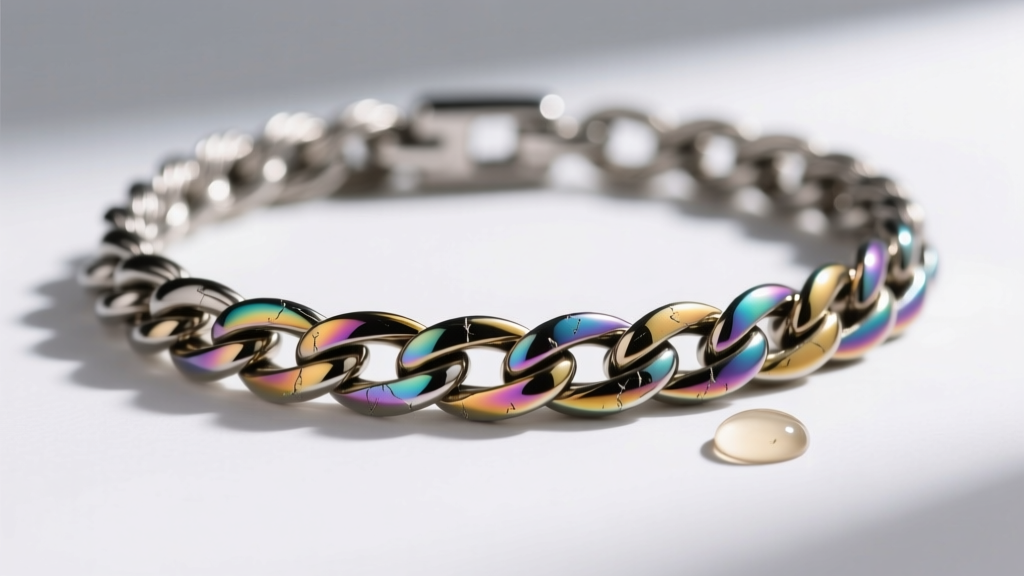
This process results in a chain that can withstand the acidic pH of human sweat (typically 4.5 to 7.0) without the underlying brass or copper base metals bleeding through, a common failure point in cheap vermeil jewelry.
Titanium Grade 5 (The Biomechanical Marvel)
When the Olympic necklace in question features a massive, oversized medal pendant or team logo, the chain's weight becomes a cervical spine issue. Titanium Grade 5 (Ti-6Al-4V) is an aerospace alloy that offers the tensile strength of steel at 45% less weight. It is entirely hypoallergenic and immune to chloride-induced corrosion, meaning you could swim in the ocean or a chlorinated pool with zero risk of pitting or tarnishing.
The Sweat and Tarnish Matrix: How Materials React
Athletic environments expose jewelry to a toxic cocktail of urea, lactic acid, and sodium chloride. Contact dermatitis and metal pitting are common when the wrong alloys meet the skin. Research published in the National Institutes of Health (NIH) highlights that nickel and copper release from jewelry alloys is exponentially accelerated by acidic sweat.
| Material | Base / Alloy Composition | Sweat Resistance (pH 4.5-7.0) | Tensile Strength | Avg Price Range (24' Chain) |
|---|---|---|---|---|
| 14K Solid Gold | 58.5% Au, Copper, Silver, Zinc | Excellent (No pitting) | High (Yield: ~350 MPa) | $4,500 - $8,000 |
| 18K Solid Gold | 75% Au, Copper, Silver | Excellent (Slight scratch risk) | Medium (Yield: ~250 MPa) | $6,500 - $12,000 |
| PVD 316L Steel | Iron, Chromium, Molybdenum | Very Good (Coating dependent) | Very High (Yield: ~515 MPa) | $150 - $350 |
| Grade 5 Titanium | Ti, 6% Al, 4% V | Flawless (Immune to chlorides) | Extreme (Yield: ~880 MPa) | $400 - $900 |
Clasp Mechanics and Chain Gauge: Preventing Snap Failures
The weakest point of any Olympic necklace is not the metal itself, but the clasp. A 10mm solid gold Cuban chain can weigh upwards of 150 grams. During a sprint or a heavy deadlift, the kinetic force placed on the clasp can easily exceed 20 Newtons of sudden tension.
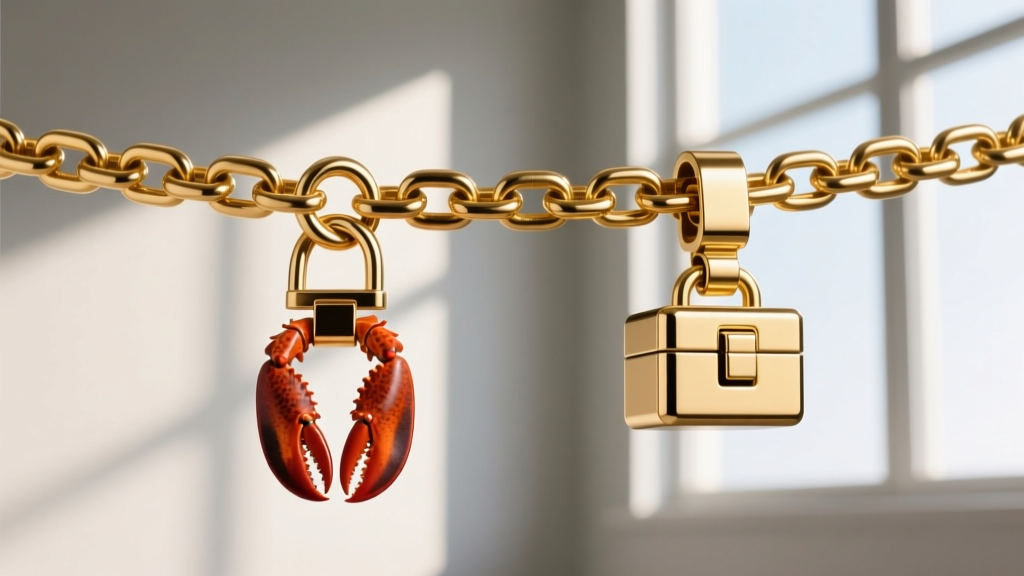
Why Lobster Clasps Fail in Sports
Standard lobster clasps rely on a tiny internal spring mechanism. When subjected to repetitive lateral torque and sweat infiltration, the spring corrodes or fatigues, leading to spontaneous unclasping. Furthermore, the small jump ring connecting the lobster clasp to the chain links is a prime failure point for shear stress.
The Superiority of the Box Clasp with Double Safety
For any athletic chain exceeding 50 grams, a reinforced box clasp (also known as a tongue-and-groove clasp) is mandatory. The 'tongue' compresses and locks securely into the 'box' housing, distributing the tensile load across a wide surface area rather than a single spring pin. High-end sports jewelers now pair these with double-hinged safety latches—small figure-eight wires that snap over side pins, providing a redundant fail-safe if the primary box mechanism is jarred open during physical contact.
Cost vs. Longevity: Investment Tiers for Sports Jewelry
When budgeting for an Olympic necklace, you must calculate the 'cost per wear' alongside the material degradation rate.
- The Daily Beater (PVD Steel): Ideal for daily gym sessions, martial arts, and outdoor sports. While the PVD coating will eventually wear thin at the friction points (usually the back of the neck) after 3 to 5 years of heavy use, the $200 replacement cost is negligible. Brands like Jaxxon and The GLD Co. have perfected the 3-micron PVD standard for these pieces.
- The Podium Piece (14K Solid Gold): Reserved for competition days, media interviews, and off-field lifestyle wear. 14K gold will outlast the athlete's career. It requires minimal maintenance—just an occasional wash with mild dish soap and a soft microfiber cloth to remove sebum buildup from the inner links.
- The Biomechanical Custom (Titanium): Usually reserved for custom-milled pendants or ultra-lightweight chains designed for endurance athletes who want the aesthetic of jewelry without the cervical fatigue of heavy metals.
Final Verdict: Choosing Your Metal
The modern Olympic necklace is a feat of materials engineering as much as it is a fashion statement. If your primary use case involves high-volume sweat, chlorine, and physical impact, 316L PVD stainless steel or Grade 5 Titanium offers unmatched structural integrity. However, if you are building a legacy piece meant to hold intrinsic value and withstand decades of wear without losing its luster, a 5mm to 8mm 14K solid gold chain with a double-safety box clasp remains the undisputed gold standard for athletic jewelry in 2026.


