Beginner Guide to Buying an Antique Black Pearl Necklace
Learn how to identify, authenticate, and buy a genuine antique black pearl necklace. Discover pricing, eras, and care tips for these rare gems.

The Allure of Dark Nacre: What Makes Them 'Antique'?
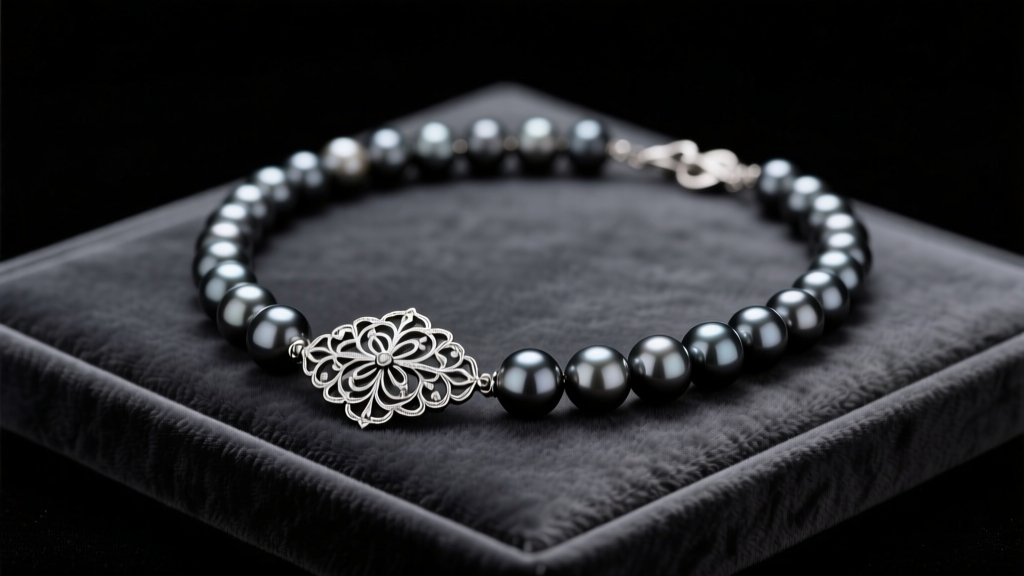
The market for an antique black pearl necklace is shrouded in mystery, romance, and a significant amount of historical deception. For novice collectors and jewelry enthusiasts, the term 'antique' strictly applies to pieces crafted over 100 years ago. In the context of today's market, this means the necklace must originate from the Victorian, Edwardian, or early Art Deco eras (pre-1926). However, unlike white Akoya or freshwater pearls, which were abundantly harvested and cultured in the 19th and early 20th centuries, genuine black pearls were astonishingly rare before the advent of modern Tahitian pearl farming in the 1960s.
Understanding this historical scarcity is the most critical first step in your buying journey. If you are presented with a strand of perfectly matched, large, dark Tahitian pearls claiming to be from the 1890s, you are almost certainly looking at a modern restrung necklace or an outright forgery. True antique dark pearls possess a unique historical footprint, specific material characteristics, and distinct pricing structures that every beginner must understand before making a purchase.
Tahitian vs. Dyed: The Great Black Pearl Deception
When evaluating dark pearl jewelry from the 19th and early 20th centuries, you must understand the two primary sources of black pearls during that era: natural La Paz pearls and chemically dyed alternatives.
The Rare Natural La Paz Pearl
Before the mid-20th century, the only significant source of natural dark saltwater pearls was the Gulf of California, specifically around La Paz, Mexico. These 'Sea of Cortez' pearls were highly prized by European royalty and wealthy industrialists. They typically exhibit a dark grey or brownish body color with vibrant peacock or aubergine overtones. However, by the late 1800s, the natural La Paz pearl beds were nearly depleted due to overharvesting. Finding a genuine, untreated, natural La Paz black pearl necklace from the Victorian era is a museum-grade event, and such pieces command astronomical prices at auction houses like Sotheby's or Christie's.
The Silver Nitrate Dyeing Technique
Because natural black pearls were inaccessible to the burgeoning middle class of the Victorian era, jewelers developed chemical treatments to mimic them. The most common method involved soaking white or pale grey freshwater and Akoya pearls in a silver nitrate solution. When exposed to light, the silver salts turned black, permanently dyeing the nacre. While these antique dyed pearls are still considered genuine historical artifacts, they are vastly less valuable than their natural counterparts.

How to Spot the Dye: The Loupe Test
To authenticate an antique black pearl necklace, you must inspect the drill holes with a 10x jeweler's loupe. According to the Gemological Institute of America (GIA), dyed pearls will often show a concentration of dark color around the drill hole or a visible dark line where the dye penetrated the nacre layers. If the interior of the drill hole looks significantly lighter or chalky compared to the surface, the pearls were likely treated. Additionally, silver nitrate dyeing can sometimes give the pearls an unnatural, metallic, or overly uniform 'shoe polish' black appearance, lacking the subtle orient and overtone play of natural dark nacre.
Historical Eras: Dating Your Necklace
The design, metalwork, and stringing techniques of an antique black pearl necklace can help you pinpoint its exact era of origin. Here is a breakdown of what to look for:
- Victorian Era (1837–1901): Dark pearls were heavily associated with mourning jewelry following the death of Prince Albert. Necklaces from this era often feature dark grey pearls paired with black onyx, jet, or vulcanite. Clasps are typically simple C-clasps without safety catches, and the metal is often silver or low-karat gold (9k or 12k).
- Edwardian Era (1901–1915): The aesthetic shifted to lighter, more delicate designs. While white pearls dominated, dark pearls were sometimes used as striking accents in platinum 'garland' style necklaces or as the centerpiece of a lace choker. You will often see early safety catches and more intricate filigree work.
- Art Deco Era (1920–1935): Note that pieces from the 1920s and 30s are technically 'vintage' rather than 'antique,' but they are frequently grouped together in estate sales. Art Deco dark pearl necklaces feature bold geometric clasps, diamond accents, and sometimes carved pearl beads.
Pricing Matrix: What Should You Pay?
Pricing an antique black pearl necklace requires evaluating the origin of the pearls, the condition of the nacre, and the historical significance of the metalwork. Below is a general pricing guide for the current estate market.
| Era & Type | Pearl Origin / Treatment | Estimated Price Range | Key Value Drivers |
|---|---|---|---|
| Victorian Mourning Strand | Dyed Freshwater / Silver Nitrate | $600 – $1,800 | Original silk, C-clasp, patina |
| Edwardian Platinum Choker | Dyed Akoya with Diamond Accents | $3,500 – $8,500 | Platinum filigree, diamond quality |
| La Paz Natural Strand | Natural Saltwater (Untreated) | $25,000 – $75,000+ | GIA X-Ray certification, provenance |
| Art Deco Carved Bead | Dyed Freshwater with Onyx | $1,200 – $3,000 | Geometric clasp, carved detailing |
Collector's Tip: Never pay 'natural black pearl' prices for a strand without a gemological laboratory report (such as GIA or SSEF) confirming the absence of dye treatment and verifying the saltwater natural origin.
Stringing and Clasps: Hidden Authentication Clues
The hardware and stringing materials of a necklace are often more revealing than the pearls themselves. Antique jewelry construction methods were highly specific to their decades, and modern replacements can drastically alter the value of the piece.
Anatomy of the Antique Clasp
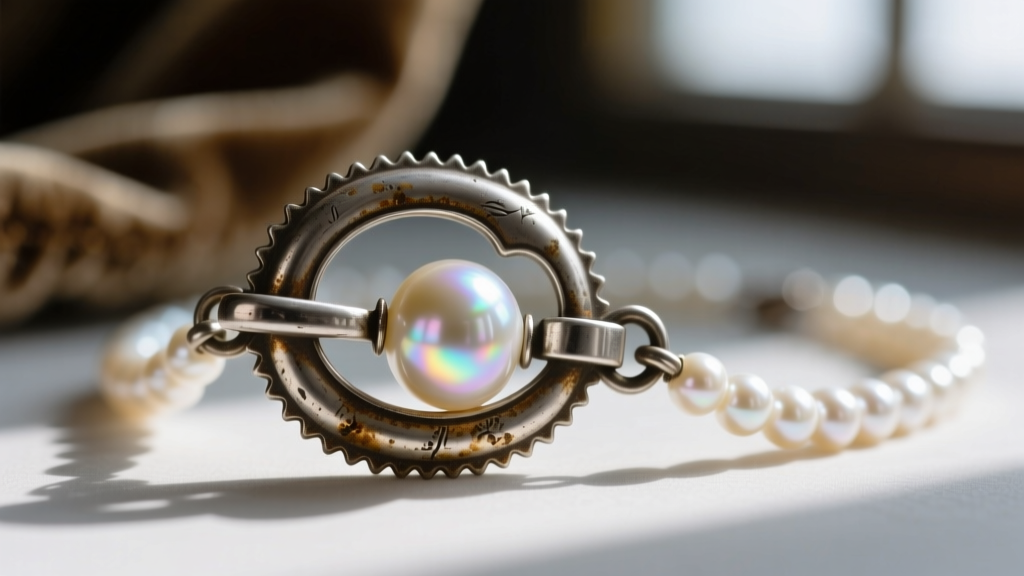
According to Lang Antiques University, the evolution of the pearl clasp is a reliable dating tool. If your necklace features a simple, unadorned 'C-clasp' (a basic hook with no locking mechanism), it likely predates 1900. The introduction of the 'trombone clasp' (a push-pull tube mechanism) and early safety catches occurred in the early 1900s. If a supposed Victorian necklace features a modern lobster clasp or a spring-ring clasp (invented in 1914 but not widely used on pearls until later), the piece has been altered, which diminishes its antique premium.
The Importance of French Wire and Silk
Historically, high-quality pearl necklaces were strung on pure silk thread. To prevent the silk from fraying against the metal clasp, jewelers used a technique called 'French wire' or 'gimp'—a tiny coiled metal wire that wraps around the silk at the ends. If you are inspecting an antique black pearl necklace, look for signs of original French wire. Furthermore, if the necklace still retains its original 100-year-old silk, do not wear it. The silk degrades over time, becoming brittle and prone to snapping. Factor the cost of professional restringing (typically $5 to $10 per knot) into your purchasing budget.
Care and Preservation for Century-Old Nacre
Antique pearls, particularly those that have undergone historical silver nitrate dyeing, are incredibly fragile. The chemical treatments used in the 19th century can compromise the structural integrity of the nacre over decades, making it prone to peeling or cracking.
What to Avoid
- Ultrasonic Cleaners: Never put an antique pearl necklace in an ultrasonic cleaner. The high-frequency vibrations will shatter old, brittle nacre and strip away historical dye.
- Harsh Chemicals: Avoid ammonia, bleach, and commercial jewelry dips. These will instantly cloud the orient and damage the silk thread.
- Steam Cleaning: Steam can cause the layers of old nacre to separate and blister.
Proper Maintenance
To clean your antique black pearl necklace, gently wipe it with a soft, slightly damp microfiber cloth after wearing it to remove skin oils and acids. For deeper cleaning, use a drop of mild, pH-neutral castile soap on a damp cloth, avoiding the drill holes and silk entirely. Always lay the necklace flat to dry; hanging a wet antique pearl strand can cause the weakened silk to stretch and warp. Store the piece in a soft cotton pouch—never in a plastic bag, as pearls require a slight amount of ambient moisture to prevent the nacre from drying out and crazing.
Final Thoughts for the Novice Collector
Purchasing an antique black pearl necklace is an exercise in historical detective work. By understanding the difference between rare natural La Paz pearls and Victorian silver-nitrate dyed strands, examining drill holes with a loupe, and verifying the age of the clasps and stringing, you can navigate the estate market with confidence. Always prioritize pieces with original hardware and demand laboratory certification for any strand marketed as 'natural.' When properly authenticated and cared for, these dark, moody strands of history offer a level of gothic elegance and horological fascination that modern jewelry simply cannot replicate.


