The Ultimate Buying Guide for Friendship Necklaces for 5
Discover how to source, design, and buy friendship necklaces for 5. Learn about 5-way pendant geometry, metal grades, and chain gauges.

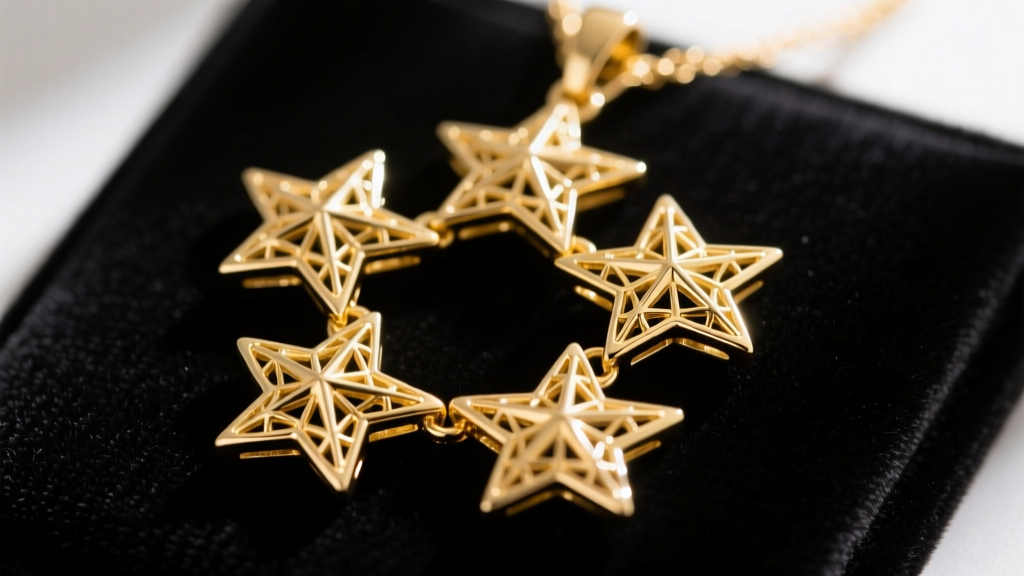
Finding matching jewelry for a duo or trio is a straightforward retail experience. However, when your core friend group consists of five people, the mass-market jewelry industry largely falls short. Searching for friendship necklaces for 5 often leads to awkward compromises, such as buying two mismatched sets, leaving one person out, or forcing a generic charm onto a standard chain. A true five-way split necklace requires specific architectural jewelry knowledge, from radial geometry to precise chain gauges.
This comprehensive buying guide explores the structural, material, and design realities of commissioning or sourcing a five-piece pendant set, ensuring every member of your group gets a high-quality, perfectly fitting piece of the puzzle.
The Geometry of a 5-Way Split Pendant
Standard heart or puzzle pendants rely on a single vertical or curved bisecting line, which mathematically limits them to two or three pieces. A 5-piece split requires radial geometry. The most structurally sound and visually pleasing design for a five-person group is a 72-degree radial cut. This mathematical approach creates interlocking segments that form a cohesive pentagon, a five-pointed star, or a circular mosaic when brought together.
When evaluating friendship necklaces for 5, pay close attention to the cutting method. Cheap sets are often stamped from thin sheet metal, resulting in jagged edges that fail to interlock smoothly. High-quality sets utilize either precision laser-sintering or lost-wax casting. Lost-wax casting allows for 3D interlocking elements—such as a stepped dovetail joint on the sides of each 72-degree slice—ensuring the pieces physically lock into one another when the group is together, rather than just sitting flush against each other.
Material Grades and Pricing for Multi-Piece Sets
Because you are purchasing five individual chains and five pendant segments, material costs scale quickly. It is vital to understand the difference between plating, vermeil, and solid alloys to ensure the necklaces survive daily wear without turning green or tarnishing prematurely.
| Metal Type | Durability & Tarnish Resistance | Estimated Price (Set of 5) | Best For |
|---|---|---|---|
| Sterling Silver (925) | Moderate; requires occasional polishing | $120 - $250 | Everyday wear, budget-conscious groups |
| Gold Vermeil (over 925) | High; must be at least 2.5 microns thick | $200 - $450 | Long-term wear, gold aesthetic on a budget |
| Solid 10k Gold | Very High; highly scratch and tarnish resistant | $400 - $700 | Lifetime keepsakes, active lifestyles |
| Solid 14k Gold | Exceptional; the industry standard for fine jewelry | $750 - $1,500+ | Heirloom quality, luxury gifting |
According to the Gemological Institute of America (GIA), true gold vermeil must feature a sterling silver base with a gold plating of at least 2.5 microns. Anything less is considered standard flash plating and will wear off within months of daily friction. Furthermore, the Federal Trade Commission (FTC) Jewelry Guides mandate that any piece stamped with a quality mark (like '14k' or '925') must also bear a registered manufacturer's trademark, ensuring accountability for the metal's actual purity.
Chain Gauge and Clasp Mechanics
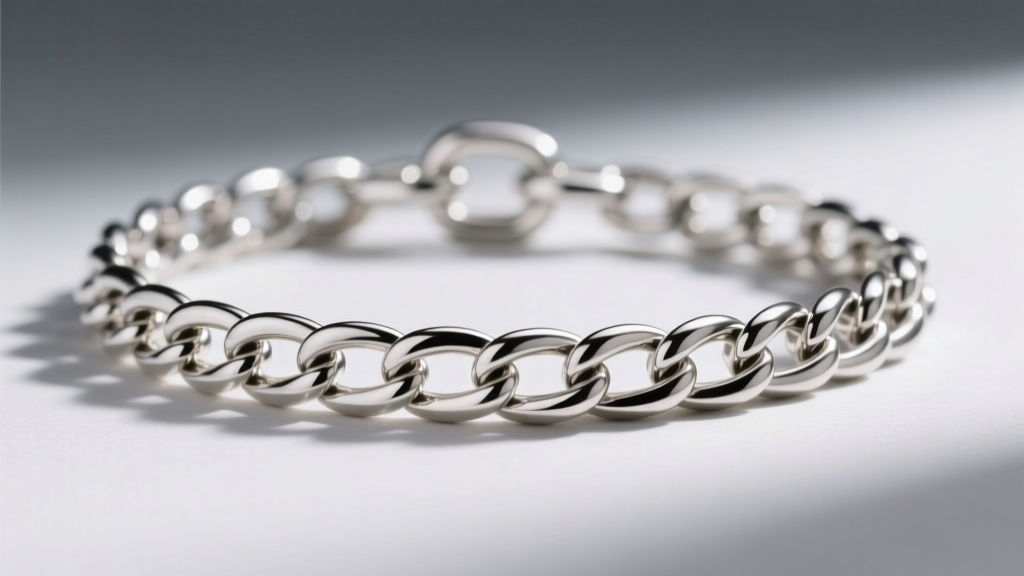
A common mistake when buying multi-way split pendants is pairing a delicate, lightweight pendant slice with an overly thick, heavy chain. Because a 1/5th slice of a standard 25mm pendant is quite small and lightweight, a heavy rope chain will overpower the design and cause the pendant to flip upside down constantly.
Optimal Chain Specifications
- Gauge Size: Look for chains ranging from 0.8mm to 1.2mm. A 0.9mm box chain or a 1.0mm cable chain provides the perfect visual weight without dragging the pendant down.
- Clasp Type: Avoid spring ring clasps, which are notoriously difficult to operate and prone to snapping under tension. Insist on miniature lobster clasps (usually 5mm or 6mm in size), which offer a secure, mechanical lock.
- Jump Rings: Ensure the jump ring connecting the pendant to the chain is soldered shut or features a heavy-gauge split design. An open, unsoldered jump ring will easily warp and drop the pendant slice down the drain.
Sourcing: Mass Market vs. Custom CAD Commissioning
Finding pre-made friendship necklaces for 5 in big-box retail stores is nearly impossible. Your best avenues for sourcing are specialized online marketplaces and custom bench jewelers.
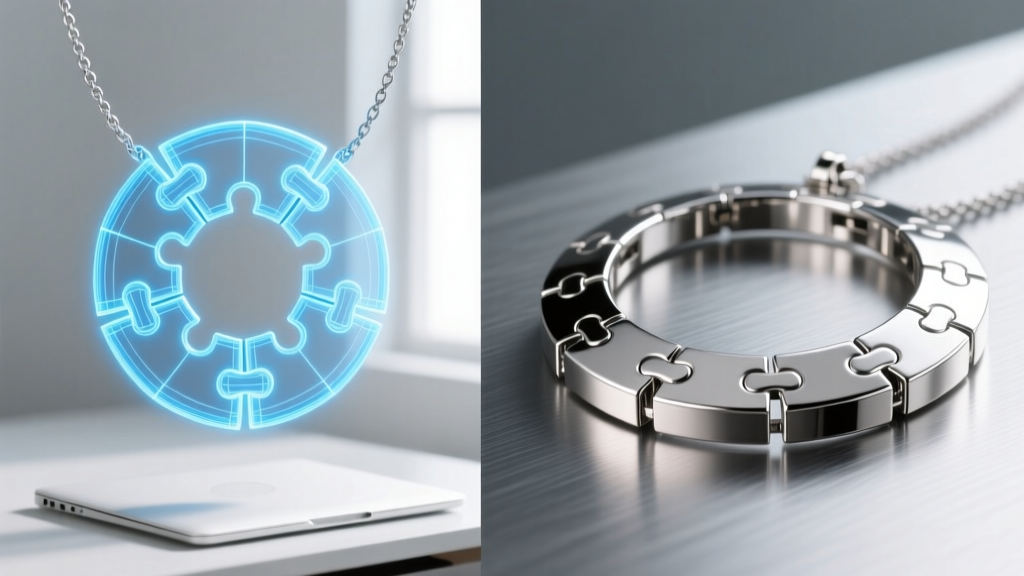
If you opt for a custom route, you will engage with a jeweler who uses CAD (Computer-Aided Design) software. The jeweler will model the master pendant in 3D, digitally slice it into five mathematically perfect 72-degree segments, and 3D print a wax resin model for casting. This route guarantees a flawless fit and allows for personalized elements, such as integrating a specific birthstone into the center of the mosaic before it is split.
Engraving Constraints on Micro-Surfaces
Personalization is a core element of friendship jewelry, but a 1/5th pendant slice offers very little surface area for engraving. A standard 25mm circular pendant, when divided by five, leaves each piece with a maximum printable width of roughly 6mm to 8mm at its widest point.
Expert Tip: Avoid traditional rotary engraving for 5-piece splits. The physical pressure of the diamond-tipped rotary bit can warp thin metal slices. Always request laser engraving, which uses focused light to etch micro-text without applying physical stress to the metal.
For a 6mm surface area, limit your engraving to a single initial, a tiny coordinates stamp, or a minimalist symbol (like a 2mm star or heart). Attempting to squeeze a full date or word onto a 1/5th slice will result in an illegible, muddy etch.
Care, Maintenance, and Skin pH Variables
When five different people wear pieces of the same metal set, you will quickly notice variations in how the metal ages. This is due to individual skin pH levels, cosmetics, and environmental exposure. One friend's sterling silver slice might remain bright, while another's oxidizes rapidly due to higher skin acidity or frequent swimming.
To maintain uniformity across the group, establish a shared care protocol. Provide each friend with a treated anti-tarnish storage pouch and a mild silver polishing cloth. Advise the group to remove the necklaces before exposure to chlorinated pools, sulfur-rich hot springs, or heavy application of self-tanners, all of which will aggressively corrode the alloyed metals in sterling silver and lower-karat golds.
Final Pre-Purchase Checklist
- Verify the pendant uses a 72-degree radial cut or interlocking dovetail joints.
- Confirm the metal is stamped with both a purity mark (e.g., 925) and a manufacturer's hallmark.
- Ensure the chain gauge is between 0.8mm and 1.2mm to match the lightweight pendant slice.
- Check that all jump rings are soldered shut to prevent loss.
- Opt for laser engraving over rotary engraving for micro-surface personalization.
By prioritizing structural geometry and precise material specifications over generic mass-market searches, you can secure a set of friendship necklaces for 5 that is as durable, meaningful, and cohesive as the group itself.


