Beginner's Guide to Buying a Gold Necklace Tree of Life
Discover how to choose the perfect gold necklace tree of life. Learn about karats, chain pairings, sizing, and care in this beginner guide.

The Timeless Symbolism of the Tree of Life
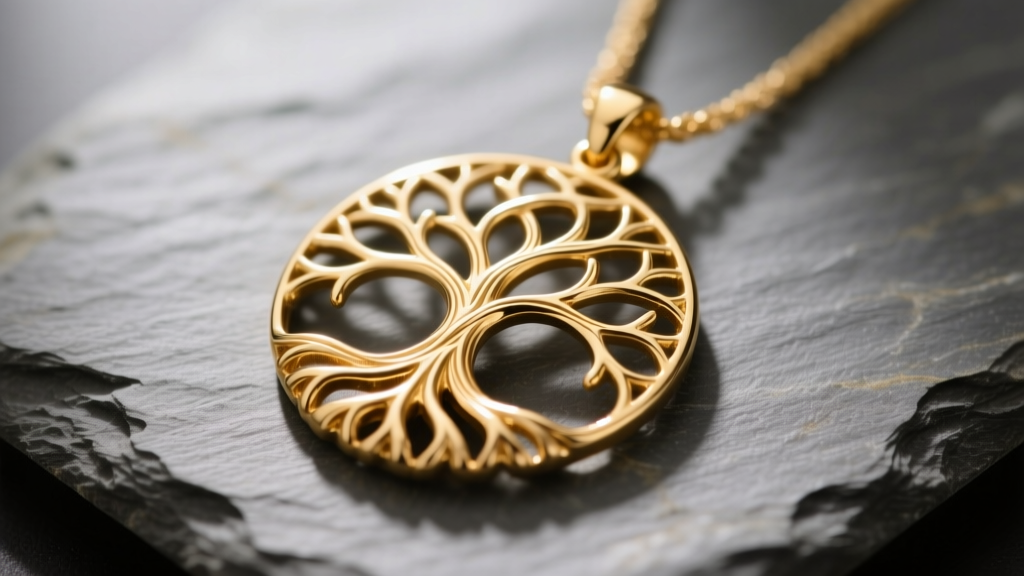
When shopping for a gold necklace tree of life, you are investing in more than just a beautiful piece of jewelry; you are acquiring a profound symbol of interconnectedness, growth, and resilience. The tree of life motif has spanned centuries and cultures, appearing in Celtic knotwork, Kabbalistic teachings, and ancient Mesopotamian art. According to Britannica, the motif universally represents the connection between heaven and earth, with roots digging deep into the ground and branches reaching toward the sky. For beginners entering the jewelry market, understanding how to translate this ancient symbolism into a modern, wearable, and durable gold piece requires a grasp of metallurgy, chain mechanics, and proportional styling.
"The tree of life is a universal archetype, symbolizing the unity of all creation and the continuous cycle of life, death, and rebirth."
Decoding Gold Purity: Which Karat is Best for Intricate Pendants?
Gold in its purest form (24 karat) is far too malleable to hold the delicate, sprawling branches of a tree of life design. The World Gold Council notes that pure gold has a Vickers hardness of roughly 25 HV, making it prone to bending and warping under daily stress. To create durable jewelry, gold is alloyed with metals like copper, silver, and zinc. Here is a breakdown of the most common karatages used for tree of life pendants, including their specific hardness ratings and real-world pricing.
| Karat | Gold Content | Vickers Hardness (Approx.) | Durability Profile | Estimated Price Range |
|---|---|---|---|---|
| 10k | 41.7% | 140 HV | Highly durable, resists scratching, slightly paler yellow hue. | $60 - $180 |
| 14k | 58.3% | 120 HV | The industry standard. Excellent balance of rich color and structural integrity for fine branches. | $150 - $450 |
| 18k | 75.0% | 90 HV | Deep, luxurious yellow tone. Softer, requires thicker branch casting to prevent snapping. | $400 - $950+ |
| 22k | 91.6% | 45 HV | Rarely used for intricate cutouts; better suited for heavy, solid disc pendants with engraved trees. | $800 - $1,500+ |
Expert Recommendation: For a traditional cutout tree of life pendant where the branches are separate and delicate, 14k gold is the undisputed champion. It provides enough tensile strength to prevent the tiny branch tips from snapping if the pendant catches on a sweater, while maintaining a beautifully warm yellow tone.
Manufacturing Methods: Die-Struck vs. Cast
Not all gold tree of life pendants are created equal. The manufacturing method drastically affects the weight, price, and longevity of the piece.
- Die-Struck (Stamped): These pendants are punched out of a flat sheet of gold using high-pressure dies. They are lightweight, hollow on the back, and generally more affordable. However, they lack 3D depth and can dent if subjected to heavy impact.
- Investment Cast: Molten gold is poured into a plaster mold created from a wax original. Cast pendants are solid, heavier, and allow for incredible 3D details, such as textured bark on the trunk and rounded, organic roots. They are more expensive due to the higher gold weight but are vastly superior for heirloom-quality jewelry.
Matching the Pendant with the Right Chain
A common beginner mistake is pairing a heavy, intricate pendant with a weak chain, or a delicate pendant with a bulky chain that overwhelms the design. The bail (the loop at the top of the pendant) dictates your chain thickness, but the visual weight of the tree of life requires specific chain styles to complement its organic geometry.
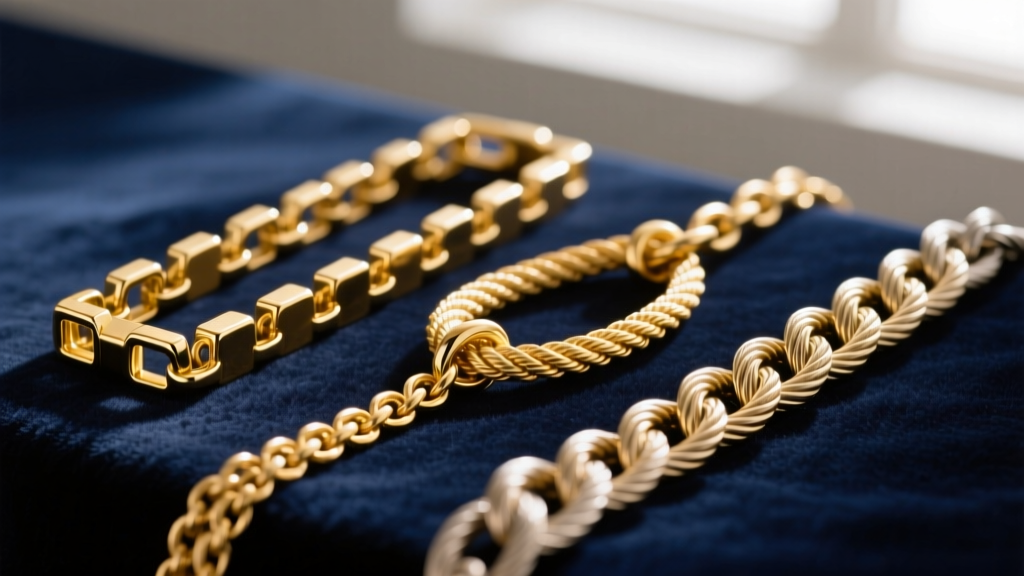
1. The Box Chain (1.0mm - 1.5mm)
Box chains feature square, interlocking links that create a smooth, continuous surface. Because the links are flat and uniform, they will not catch on the intricate branch cutouts of the pendant if the jewelry tangles. A 1.2mm 14k box chain is the most secure and visually balanced choice for medium-sized (18mm-22mm) tree of life pendants.
2. The Rope Chain (1.5mm - 2.5mm)
Rope chains are twisted to mimic the look of a natural fiber rope, reflecting light brilliantly from every angle. The twisted texture pairs beautifully with the organic, natural theme of the tree of life. Opt for a rope chain if your pendant is cast in 18k gold and weighs over 4 grams, as the rope weave offers exceptional tensile strength.
3. The Cable Chain (0.8mm - 1.2mm)
Cable chains consist of uniform oval links. While classic, thin cable chains (under 1.0mm) are prone to kinking and snapping under the pendulum motion of a heavier pendant. Only use a cable chain for ultra-dainty, die-stuck 10k pendants weighing less than 1.5 grams.
Sizing and Proportions for Every Neckline
The visual impact of your gold necklace tree of life depends heavily on the pendant's diameter and the chain's drop length. Here is a practical decision framework for sizing:
- Dainty Layering (12mm - 15mm): Best worn on a 14-inch or 16-inch choker-length chain. This size is perfect for stacking with other minimalist gold chains or wearing under a button-down collar where only a subtle glint of gold is visible.
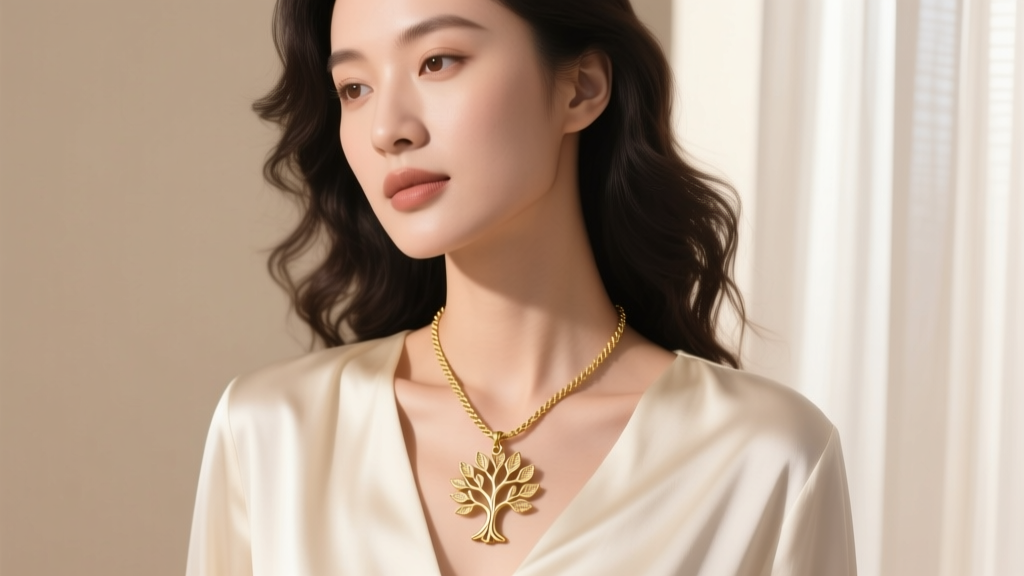
- The Everyday Standard (18mm - 22mm): The most versatile size. Paired with an 18-inch chain, a 20mm pendant will rest perfectly just below the clavicle (collarbone). This placement draws the eye and works beautifully with crew necks, V-necks, and scoop necklines.
- Statement Piece (25mm - 35mm): Larger pendants require thicker chains (2.0mm+) and longer drops (20 to 24 inches). These are ideal for wearing over dark, solid-colored garments or high-necked winter sweaters, allowing the intricate gold branches to serve as the focal point of the outfit.
Clasp Types and Security
The clasp is the single most common point of failure in any necklace. When purchasing your tree of life necklace, pay close attention to the hardware.
- Spring Ring: The small, circular clasp with a tiny spring-loaded lever. While inexpensive and common on lightweight chains, they are notoriously difficult to operate with one hand and can fail if the internal spring degrades.
- Lobster Claw: Shaped like a lobster's claw, this clasp is thicker, more robust, and features a stronger internal spring. Always upgrade to a lobster claw clasp for any tree of life pendant weighing more than 2 grams.
- Magnetic / Toggle Clasps: Avoid these for valuable gold pendants. Magnetic clasps can pull apart if the pendant catches on clothing, leading to catastrophic loss.
Care and Maintenance for Intricate Goldwork
The sprawling branches and negative space cutouts of a tree of life pendant make it a magnet for skin oils, lotions, and environmental dust. Proper maintenance is critical to keep the gold gleaming and the structural integrity intact.
Crucial Warning: Never place a tree of life pendant in an ultrasonic jewelry cleaner. If your pendant features tiny gemstone accents (such as birthstones set into the leaves or a diamond set in the trunk), the high-frequency vibrations of the ultrasonic bath can easily shake the prongs loose, causing the stones to fall out and become lost in the machine's tank.
The Safe Cleaning Protocol
- Mix a few drops of mild, phosphate-free dish soap (like Dawn) into a bowl of lukewarm water.
- Submerge the necklace and let it soak for 10 to 15 minutes to loosen trapped sebum and cosmetics.
- Using an extra-soft baby toothbrush, gently brush the back of the pendant and the intricate branch junctions where dirt accumulates. Do not scrub aggressively, especially on 18k gold, to avoid micro-scratches.
- Rinse thoroughly under a gentle stream of warm water, ensuring the drain is securely plugged.
- Pat dry with a lint-free microfiber cloth. Avoid paper towels, as their wood-pulp fibers can leave microscopic scratches on high-polish gold surfaces.
By understanding the nuances of gold alloys, manufacturing techniques, and proportional styling, you can confidently select a gold necklace tree of life that is not only structurally sound but also a meaningful, enduring addition to your jewelry collection.


