Mastering How to Layer Necklaces: 2026 Buying Guide
Discover how to layer necklaces without tangling. Our 2026 buying guide covers chain weaves, spacing rules, metal grades, and weight ratios for perfect stacks.

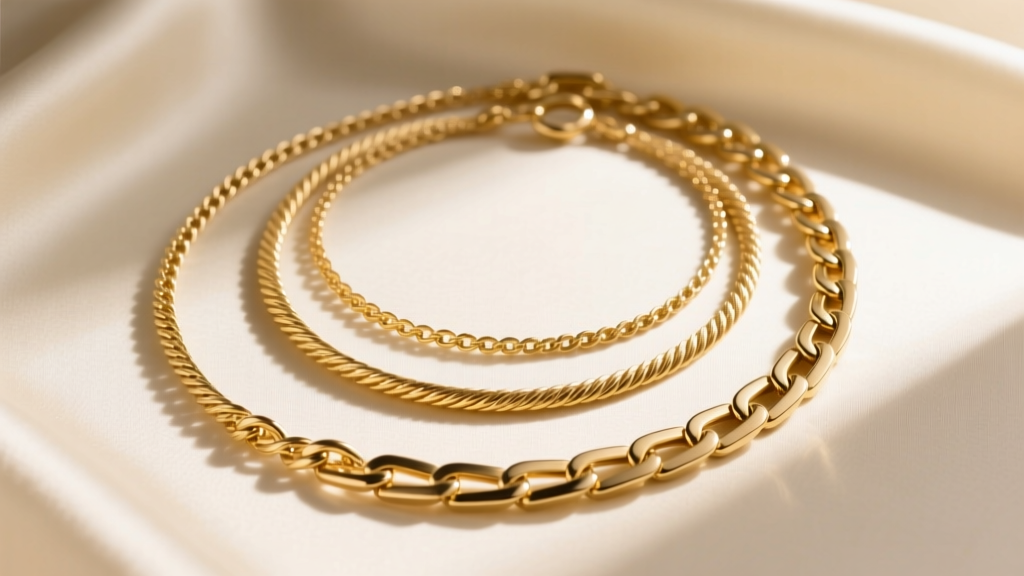
The art of the layered necklace stack has evolved significantly by 2026. Gone are the days of haphazardly throwing on three random chains and hoping for the best. Today, curating a layered look requires an understanding of jewelry physics, metal friction coefficients, and precise spatial planning. If you have ever spent ten minutes untangling a knot of gold chains behind your neck, the issue isn't bad luck—it is a failure of structural compatibility. This comprehensive buying guide will teach you exactly what to look for when purchasing necklaces specifically for layering, ensuring your stack remains elegant, balanced, and completely tangle-free.
The Anatomy of a Tangle-Free Stack
Tangling occurs when the links of one chain catch on the links of another, or when static electricity and friction cause chains to bind together. To prevent this, you must buy necklaces with intentional length differentials and compatible chain geometries. The most common mistake consumers make is purchasing chains that are too similar in length, causing them to twist around one another with every movement.
The 2-Inch Spacing Rule
The golden rule of layering is the 2-inch differential. For a stack to lay flat and avoid friction, there must be a minimum of two inches between each layer. If your base layer is a 16-inch collarbone chain, your next layer must be at least 18 inches, and your third layer should be 20 inches. Buying a 16-inch and a 17-inch chain guarantees that the clasps and pendants will collide, creating a fulcrum point that inevitably leads to knotting. When shopping, always check the exact millimeter or inch specifications rather than relying on generic terms like 'medium' or 'long'.
Chain Weaves: The Tangling Matrix
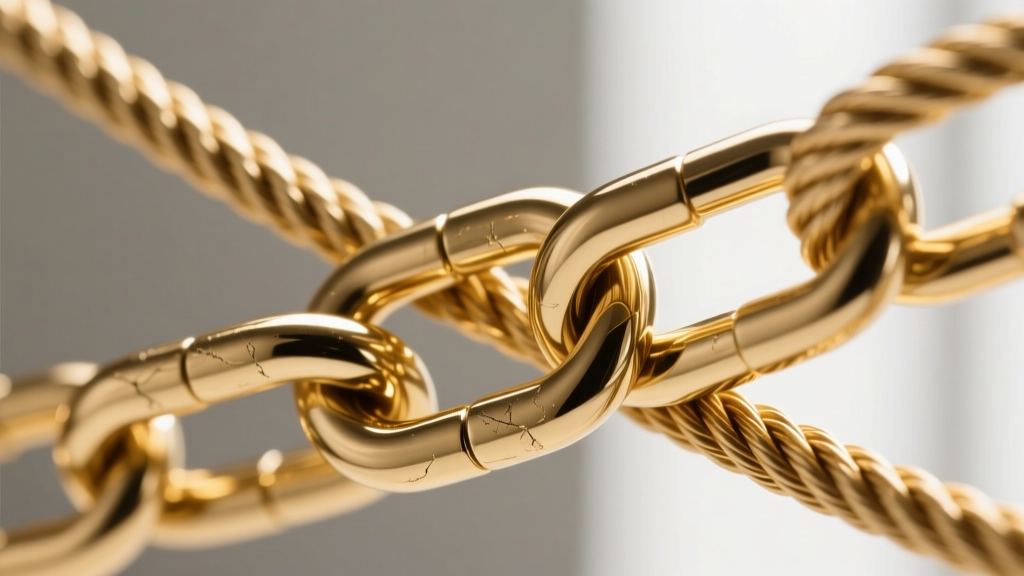
Not all chain weaves are created equal when it comes to layering. The surface texture of a chain dictates its friction coefficient. Chains with flat, smooth surfaces or tight, rounded links will glide past one another. Chains with jagged edges, gaps, or wavy profiles will act like Velcro, catching on hair, clothing, and adjacent chains.
| Chain Weave | Surface Profile | Friction Level | Tangling Risk | Ideal Layer Position |
|---|---|---|---|---|
| Cable | Round, uniform links | Low | Minimal | Top (14"-16") |
| Rope | Twisted, helical pattern | Low | Minimal | Middle (18") |
| Figaro | Flat, alternating links | Moderate | Low-Medium | Bottom (20"+) |
| Box | Square, hollow links | High | High | Wear Solo |
| Snake | Wavy, tight bands | Very High | Severe | Wear Solo |
As the matrix above illustrates, you should entirely avoid box and snake chains when building a layered stack. Box chains have sharp 90-degree inner corners that easily hook onto the rounded links of a cable chain. Snake chains, while beautiful and fluid on their own, have a wavy micro-structure that traps hair and binds aggressively to other metals. Stick to cable, rope, and curb variations for a frictionless stack.
Gauge Thickness and Weight Ratios
Visual balance and physical stability in a layered stack rely heavily on gram weight and gauge thickness (the diameter of the wire used to make the links). A common styling error is pairing a heavy, thick chain on top with a delicate, lightweight chain on the bottom. Because the bottom layer lacks the gravitational pull to anchor the stack, it will constantly flip upward and tangle with the middle layer.
When buying necklaces for a three-piece stack, follow the 1-2-3 Weight Ratio:
- Top Layer (16-inch): 1.0mm to 1.5mm gauge, weighing approximately 2 to 4 grams. This layer should feature a small, lightweight pendant (under 2g) or be a bare chain.
- Middle Layer (18-inch): 2.0mm to 3.0mm gauge, weighing 6 to 10 grams. This is the transitional piece that bridges the delicate top and the heavy bottom.
- Bottom Layer (20-inch+): 3.5mm to 5.0mm gauge, weighing 12 to 20+ grams. This serves as the 'anchor' of your stack. The heavier gram weight pulls the lower neckline taut, preventing the upper chains from sliding down and bunching together.
Metal Grades: Solid, Vermeil, and Plated
Layering subjects your jewelry to constant micro-abrasions. Where two chains rub together, the top layer of metal will slowly wear away. Therefore, the metal grade you choose is critical for the longevity of your stack. According to the Gemological Institute of America (GIA), understanding the difference between solid gold, vermeil, and standard plating is essential for daily-wear jewelry.
- Solid Gold (14k or 18k): The ultimate choice for layering. Because the gold is alloyed all the way through, friction will never reveal a base metal. 14k gold is slightly harder and more scratch-resistant than 18k, making it ideal for chains that will constantly rub against one another.
- Gold Vermeil: A superior alternative to standard plating. True vermeil consists of a thick layer of gold (minimum 2.5 microns) bonded over a sterling silver base. It can withstand the friction of layering for years before requiring re-plating.
- Gold Plated: Typically features a brass or copper base with a microscopic flash of gold (often less than 0.5 microns). Avoid plated chains for layering, as the friction points will wear down to the base metal within weeks, causing skin discoloration and chain degradation.
Expert Buying Tip: When shopping for vermeil layering chains, always check the product specifications for the exact micron thickness. If the retailer does not explicitly state '2.5 microns' or 'sterling silver base,' assume it is standard flash plating and avoid using it in a high-friction stack.
Clasp Mechanics and Hardware Matching
The clasp is the most vulnerable point of any necklace, and in a layered stack, you are dealing with multiple clasps clustered at the nape of your neck. The Jewelers of America recommends prioritizing security and ease of use when selecting hardware for daily wear.
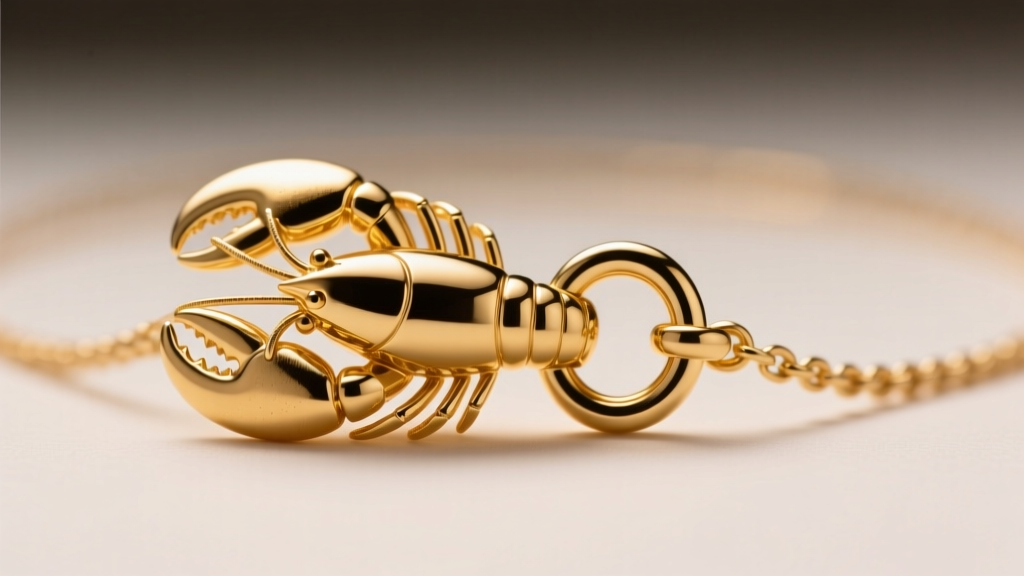
Avoid spring-ring clasps for layered stacks. They are notoriously difficult to operate with one hand, and when you have three chains bunched at the back of your neck, trying to pinch a tiny 4mm spring ring is an exercise in frustration. Instead, exclusively buy necklaces equipped with lobster clasps. A standard 5mm or 7mm lobster clasp provides a secure, spring-loaded lock that is easy to hook onto a jump ring, even when multiple chains are in the way. For an upgraded, modern 2026 aesthetic, look for brands offering oversized, decorative toggle clasps or magnetic neodymium clasps that allow you to secure your entire stack in one fluid motion.
The 2026 Buyer's Checklist
Before you add a new piece to your layered collection, run it through this final diagnostic checklist to ensure it will integrate seamlessly into your existing stack:
- Length Verification: Is it at least 2 inches longer or shorter than my adjacent layers?
- Weave Compatibility: Is it a low-friction weave (cable, rope, curb) rather than a high-friction trap (box, snake, popcorn)?
- Weight Anchoring: Does the gram weight fit the 1-2-3 ratio for its specific position in the stack?
- Pendant Proportions: Is the pendant bail large enough to slide freely over the thickest link in the chain without getting stuck?
- Metal Integrity: Is it solid gold or heavy vermeil (2.5+ microns) capable of withstanding metal-on-metal friction?
- Clasp Ergonomics: Does it feature a user-friendly lobster clasp or magnetic closure rather than a fiddly spring ring?
By treating your necklace stack as an engineered system rather than a random assortment of accessories, you elevate your daily styling routine. Investing in structurally compatible chains guarantees that your jewelry looks as immaculate at the end of the day as it did the moment you put it on, allowing you to focus on your personal style rather than untangling knots.


