The 2026 Buying Guide to Popular Bead Necklaces: What to Look For
Discover what to look for when buying popular bead necklaces in 2026. Expert guide on stringing materials, bead grades, clasps, and sizing.

The Evolution of Bead Necklaces in 2026
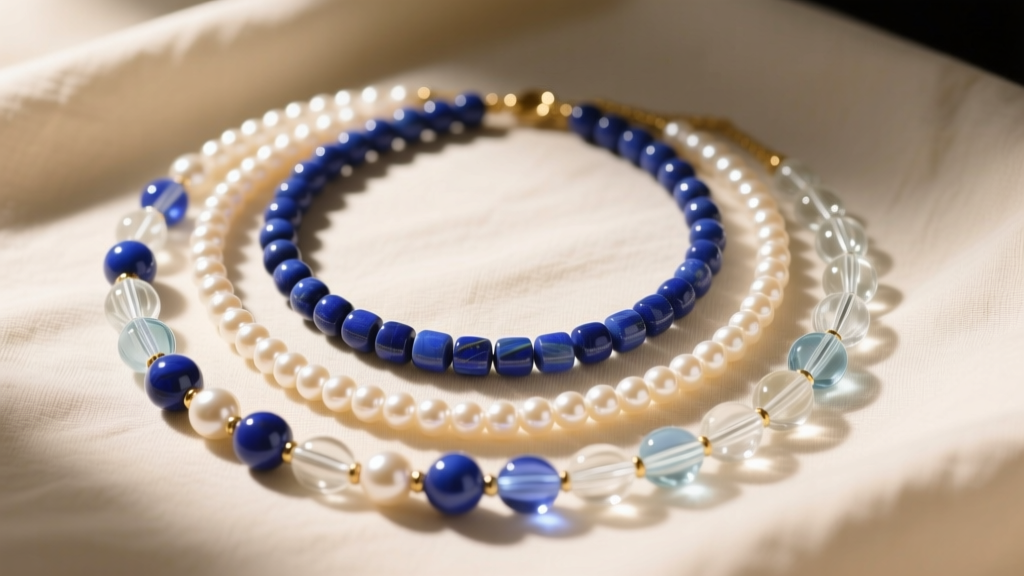
Bead necklaces have transcended their reputation as mere casual vacation souvenirs or bohemian staples. In 2026, popular bead necklaces are firmly rooted in high jewelry and sophisticated everyday layering. From meticulously knotted freshwater pearls to precision-cut semi-precious gemstones and artisanal Murano glass, the modern bead necklace is a study in texture, color, and structural engineering. However, the market is flooded with mass-produced imitations that prioritize aesthetics over longevity. As a buyer, understanding the hidden architecture of these pieces—specifically the stringing materials, bead hardness, and clasp mechanics—is the difference between an heirloom investment and a disposable accessory that snaps within a month.
The Hidden Backbone: Stringing Materials Decoded
The most critical point of failure in any beaded necklace is the stringing material. When evaluating popular bead necklaces, always inquire about what holds the beads together. The drape, durability, and appropriate bead types are entirely dictated by the core thread or wire.
Nylon-Coated Stainless Steel (Beadalon)
For heavy gemstones, glass, and crystal beads, nylon-coated stainless steel wire is the industry standard. However, not all wire is created equal. The wire is categorized by its strand count, which directly impacts its drape and kink-resistance:
- 7-Strand Wire: The most economical but stiffest option. It is prone to permanent kinking if bent or stored improperly. Avoid this for high-end necklaces.
- 19-Strand Wire: A mid-tier option offering a balance of flexibility and cost. Suitable for medium-weight beads with larger drill holes.
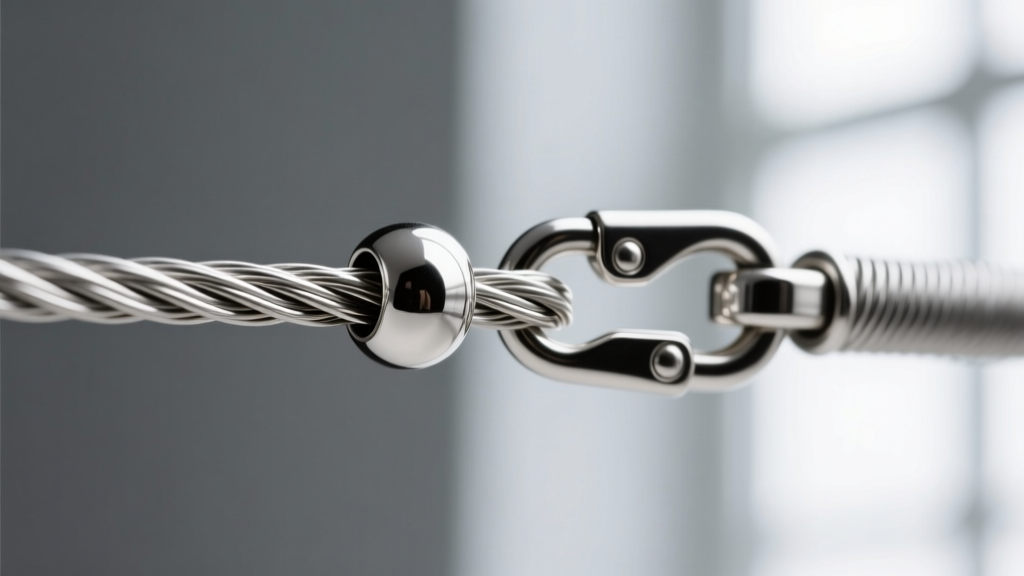
- 49-Strand Wire: The premium standard. Composed of 49 micro-strands of stainless steel encased in nylon, it mimics the fluid drape of silk thread while offering the tensile strength of steel. It resists kinking and is essential for heavy, high-value gemstone beads.
Expert Tip: Look for necklaces finished with 2x2mm sterling silver or gold-filled crimp beads, ideally concealed beneath metal crimp covers. This prevents the sharp wire edge from fraying against the clasp ring over time.
Silk Thread and the Art of Knotting
For pearls, amber, and coral, traditional silk thread remains the gold standard. Unlike steel wire, silk is soft and will not abrade the delicate nacre of pearls or the soft surface of organic gems. According to jewelry manufacturing standards outlined by Rio Grande, high-end pearl necklaces must be individually knotted between every single bead. This serves two purposes: it prevents the beads from rubbing against each other and causing friction damage, and it ensures that if the necklace breaks, you lose only one pearl rather than the entire strand. If you are buying a popular bead necklace made of pearls and there are no knots between the beads, walk away.
Elastic and Stretch Cords
Stretch cords (like Stretch Magic) are popular in entry-level and casual bead necklaces due to the convenience of a clasp-free design. However, elastic degrades when exposed to UV light, skin oils, and lotions. Expect an elastic bead necklace to require restringing every 12 to 18 months. Never use elastic for heavy or sharp-edged gemstones, as the friction will sever the cord unexpectedly.
Bead Material Grades: What You Are Actually Paying For
The visual appeal of a bead necklace is obvious, but its material integrity dictates its lifespan. When shopping for popular bead necklaces, you must consider the Mohs Hardness Scale and the uniformity of the bead cuts.
Gemstone Hardness and Treatments
The Gemological Institute of America (GIA) emphasizes that hardness (resistance to scratching) and toughness (resistance to breaking) are distinct properties. When buying gemstone bead necklaces, consider how the beads will interact:
- Quartz Family (Amethyst, Citrine, Agate): Ranking at 7 on the Mohs scale, these are excellent for everyday wear. They resist scratching from common dust (which contains quartz particles) and hold a polish beautifully.
- Softer Stones (Lapis Lazuli, Turquoise, Malachite): Ranking between 3 and 6, these stones are highly susceptible to scratching and chemical damage. Turquoise is porous and will discolor if exposed to perfumes or skin oils. Ensure these beads are spaced with metal rondelles or knotted to prevent bead-on-bead friction, which will dull their polish over time.
- Treatments: Many popular bead necklaces feature dyed agates or stabilized turquoise. While stabilization is necessary for soft stones like turquoise to survive the drilling process, dyed beads can bleed color onto clothing when exposed to sweat. Always ask if the beads are naturally colored or treated.
Glass, Crystal, and Seed Bead Uniformity
In the realm of glass and seed beads, precision is the primary indicator of quality. For seed bead necklaces, Japanese brands like Miyuki (specifically the Delica line) and Toho (Treasures line) are the benchmark. These beads are manufactured to a tolerance of less than 0.1mm, ensuring a perfectly uniform, liquid-like drape. Cheaper alternatives often feature irregular sizing, resulting in a stiff, jagged necklace that fails to lay flat against the collarbone. For glass beads, look for hand-lampworked Murano glass or precision-cut Swarovski/Preciosa crystals, which feature consistent facet alignment that maximizes light refraction.
Sizing, Drape, and Neckline Pairing
The length of a bead necklace drastically alters its visual weight and the way it interacts with your wardrobe. Furthermore, the millimeter size of the beads must be proportionate to the length of the strand to avoid a heavy, cumbersome feel.
| Necklace Style | Length (Inches) | Ideal Bead Size (mm) | Best Neckline Pairing |
|---|---|---|---|
| Collar | 14" - 16" | 2mm - 4mm | Boat neck, off-the-shoulder, open V-neck |
| Choker | 16" - 18" | 4mm - 6mm | Crew neck, scoop neck, casual tees |
| Princess | 18" - 20" | 6mm - 8mm | High necklines, collared shirts, blazers |
| Matinee | 20" - 24" | 8mm - 10mm | Business attire, deep V-necks, sweater dresses |
| Opera | 28" - 36" | 4mm - 8mm | Evening wear, turtlenecks, long tunics |
Clasp Mechanics: Security vs. Aesthetics
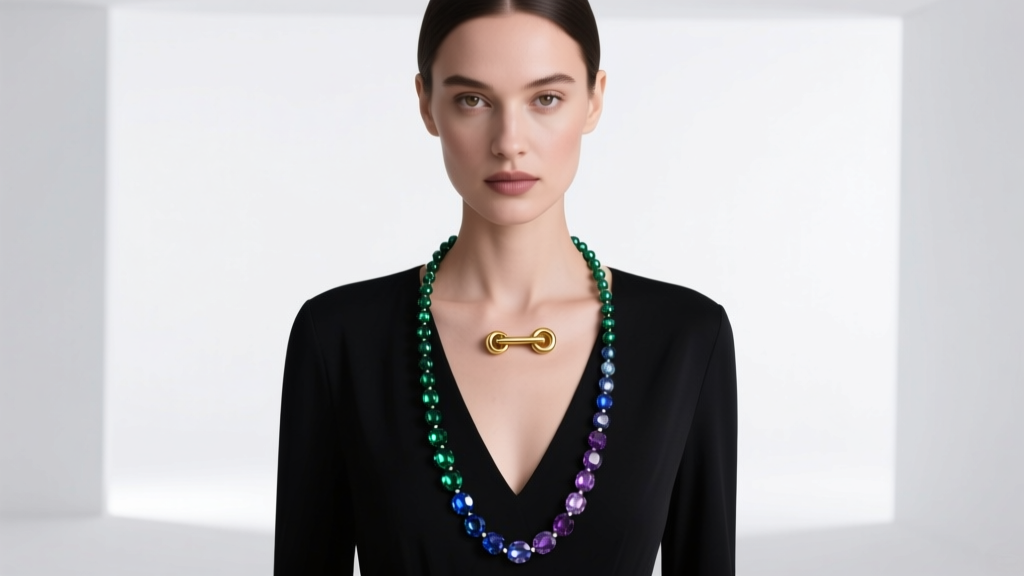
A bead necklace is only as secure as its clasp. The weight of the beads creates kinetic tension on the clasp every time you move, meaning the hardware must be engineered to handle dynamic loads.
- Toggle Clasps: Consisting of a T-bar that slips through an O-ring, toggles are highly secure for heavy bead necklaces. The weight of the beads pulls the T-bar horizontally against the ring, creating a mechanical lock that cannot slip open accidentally. Ensure the O-ring is soldered (no visible seam) to prevent the wire from slipping through a gap.
- Lobster Claw Clasps: The most common clasp, featuring a spring-loaded mechanism. While secure, the tiny internal spring is a known failure point over time. For heavy gemstone beads, a standard lobster claw is insufficient; look for a heavy-duty, solid-cast lobster clasp without hollow components.
- Magnetic Clasps: Utilizing neodymium magnets, these are excellent for accessibility. However, they are dangerous for heavy bead necklaces. A sudden tug on the necklace will cause the magnets to separate, sending beads flying. Only use magnetic clasps for lightweight seed bead or small pearl necklaces, and ensure they feature a secondary safety chain.
- Fishhook / Pearl Clasps: A traditional box clasp with a hook that locks into place. These are beautiful and secure for knotted pearl necklaces but require two hands to operate and can bend if the necklace is pulled sharply.
Price Tiers & Value Assessment
Understanding the pricing landscape helps you identify genuine value versus inflated brand markups when shopping for popular bead necklaces in 2026.
- Entry-Level ($20 - $60): Typically features dyed agates, lower-grade glass, or elastic-strung seed beads. Hardware is usually base metal or thin gold-plated brass. Expect a lifespan of 1-3 years before restringing or hardware failure.
- Mid-Tier ($75 - $250): The sweet spot for quality. Features genuine, untreated semi-precious gemstones (amethyst, garnet, jade), high-grade freshwater pearls, strung on 49-strand Beadalon wire with sterling silver crimps and lobster clasps.
- Investment / Artisan ($300 - $1,000+): Museum-grade materials. Think perfectly matched, knotted Akoya or South Sea pearls, rare gemstones like Paraiba tourmaline or high-grade Sleeping Beauty turquoise, finished with 18k solid gold toggles and diamond accents.
Final Checklist Before You Buy
Before finalizing your purchase of any popular bead necklace, run through this quick physical inspection checklist:
- The Drape Test: Hold the necklace by the clasp and let it hang. It should form a smooth, fluid U-shape. If it looks jagged or stiff, the wire is too thick or the strand count is too low.
- The Friction Check: Run your fingers along the strand. If the beads are grinding against each other and there are no knots or metal spacer beads, the drill holes will eventually wear through the stringing material.
- The Clasp Pull: Gently pull the clasp in opposite directions. If the wire is visible between the crimp bead and the clasp ring, the piece was strung with too much slack and will stretch out of shape over time.
- The Light Test: Hold glass or crystal beads up to the light. Look for internal bubbles (a sign of cheap cast glass rather than cut crystal) or uneven dye pooling in the drill holes of colored gemstones.
By prioritizing structural integrity and material transparency over fleeting trends, you can curate a collection of bead necklaces that are not only visually stunning but engineered to last a lifetime.


