The Ultimate Buying Guide for an Opal and Diamond Necklace
Discover what to look for in an opal and diamond necklace. Learn about opal types, diamond accents, settings, and pricing in our expert guide.

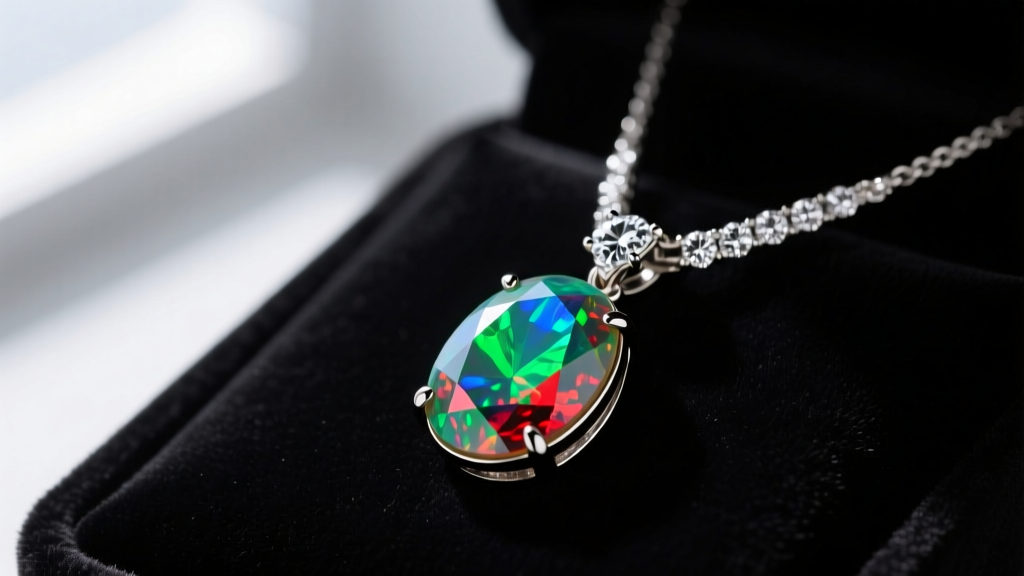
An opal and diamond necklace represents one of the most striking juxtapositions in fine jewelry. You are pairing a stone renowned for its fragile, water-sensitive, 5.5 Mohs hardness with the hardest natural material on earth (10 Mohs). While the visual contrast between the fiery play-of-color and the icy brilliance of diamonds is undeniable, this combination requires careful engineering and informed purchasing. In 2026, the market is flooded with everything from solid Australian black opals to hydrophane Ethiopian stones and synthetic doublets. This buying guide cuts through the marketing fluff to give you the exact gemological frameworks, setting requirements, and pricing metrics you need to make a smart investment.
Decoding Opal Origins: Australian vs. Ethiopian
The first critical decision when evaluating an opal and diamond necklace is the origin of the center stone. The geographic source dictates the stone's porosity, stability, and long-term care requirements.
Australian Opals (The Stable Standard)
Mined primarily in Lightning Ridge (black opals) and Coober Pedy (white/light opals), Australian opals are non-porous. They are graded on the N1 to N9 body tone scale, where N1-N4 represents the highly prized, dark body tones that make neon red and green play-of-color pop. Because they contain a stable, low water content (typically 3-5%), they will not absorb moisture from the skin or environment, making them the superior choice for everyday pendants.
Ethiopian Opals (The Hydrophane Hazard)
Ethiopian Welo opals are famous for their spectacular, large-scale color patches and lower price point. However, they are hydrophane, meaning they are highly porous. According to the Gemological Institute of America (GIA), hydrophane opals can absorb water, oils, and lotions. If you wear an Ethiopian opal necklace while sweating or showering, the stone can temporarily lose its color, turn cloudy, or even crack due to rapid moisture expansion. If you choose Ethiopian, you must commit to meticulous, dry-wear maintenance.
Evaluating the Diamond Accent Quality
In an opal and diamond necklace, the diamonds are typically melee stones (weighing under 0.15 carats each) used in halos, bale accents, or pave bands. Jewelers often overcharge for diamond grades that are entirely unnecessary for accent stones.
- Clarity: Do not pay premiums for VVS or VS clarity in melee diamonds. The human eye cannot resolve inclusions in stones this small. SI1 to I1 clarity is the industry standard and perfectly acceptable for accents.
- Color: Color matching is vital. If your necklace is set in platinum or white gold, ensure the melee diamonds are in the G-H (near colorless) range. If set in 14k or 18k yellow gold, J-K color grades are ideal, as the warm metal reflection masks any faint yellow tint.
- Lab-Grown Accents: As of 2026, utilizing lab-grown diamonds for the halo and pave accents is a highly recommended strategy. It allows you to reallocate your budget toward a higher-grade, solid natural opal center stone without sacrificing sparkle.
Setting Engineering: Protecting the 5.5 Mohs Stone
Opal is relatively soft and possesses poor toughness, meaning it is prone to chipping and scratching. The setting style of your pendant is not just an aesthetic choice; it is a structural necessity.
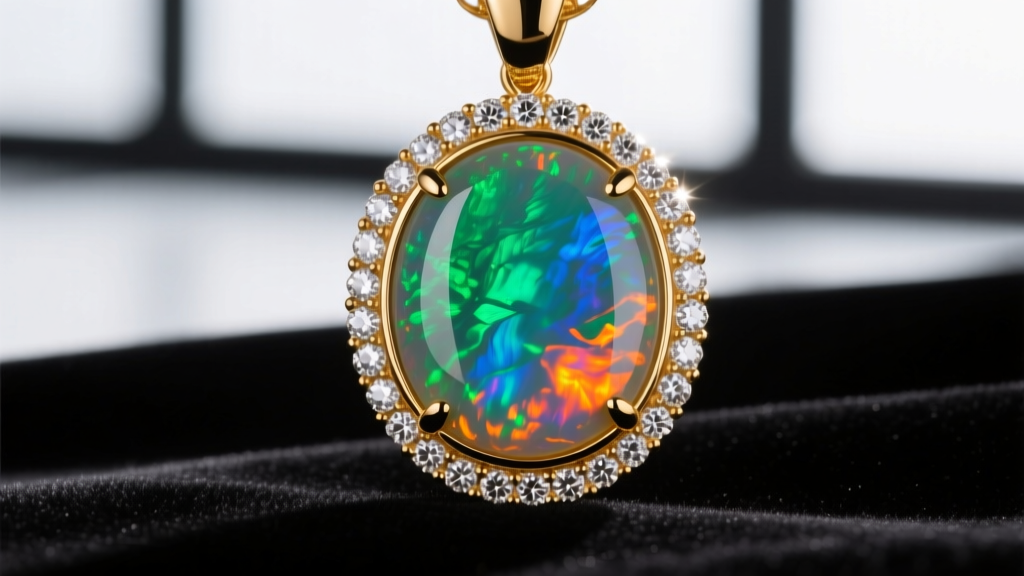
Why Bezel Beats Prong
While a four-prong or six-prong setting allows maximum light entry, it leaves the delicate girdle (edge) of the opal completely exposed to impacts. A full bezel setting, where a rim of metal completely encircles the opal's perimeter, is the gold standard for opal pendants. If you prefer the look of prongs, opt for a 'V-prong' at the corners or a heavy half-bezel to shield the most vulnerable strike points.
Expert Warning: Never buy an opal pendant where the diamond prongs share tension with the opal setting. The extreme pressure required to set hard diamonds can transfer stress fractures to the softer opal over time. Ensure the jeweler uses independent setting structures for the center stone and the diamond accents.
Pricing Matrix: What Should You Actually Pay?
Pricing an opal and diamond necklace is complex because opal is valued by its play-of-color pattern and body tone, not just carat weight. Below is a 2026 market baseline for solid, natural opals set in 14k gold with natural diamond melee.
| Tier | Opal Type & Body Tone | Diamond Accent Quality | Estimated Price Range |
|---|---|---|---|
| Entry-Level | Australian White (N7-N9) or Ethiopian | I1 Clarity, J-K Color (0.10 ctw) | $400 - $900 |
| Mid-Range | Australian Light/Dark (N5-N6) | SI1-SI2 Clarity, G-H Color (0.25 ctw) | $1,200 - $3,500 |
| Investment | Australian Black (N1-N4) with Red Flash | VS2 Clarity, E-F Color (0.50+ ctw) | $5,000 - $15,000+ |
Chain Selection and Clasp Mechanics
A solid opal pendant, especially when surrounded by a diamond halo and encased in a bezel, carries significant weight. Delicate chains will snap or stretch.
- Chain Style: Avoid hollow rope or thin cable chains. Opt for a solid box chain or wheat chain with a minimum width of 1.2mm to 1.5mm. These styles distribute weight evenly and resist kinking.
- Clasp: Discard spring ring clasps immediately. Upgrade to a solid lobster clasp or a magnetic safety clasp to ensure the heavy pendant remains secure around your neck.
Red Flags: Identifying Doublets, Triplets, and Synthetics
Unscrupulous sellers frequently market composite or synthetic stones as solid opals. Knowing how to identify these will save you from severe overpayment.
The Composite Trap
A doublet consists of a thin slice of precious opal glued to a black backing (often potch or glass) to mimic the body tone of a rare black opal. A triplet adds a clear dome of quartz or glass on top to protect the thin slice. While these are valid jewelry options, they should cost a fraction of a solid opal's price.
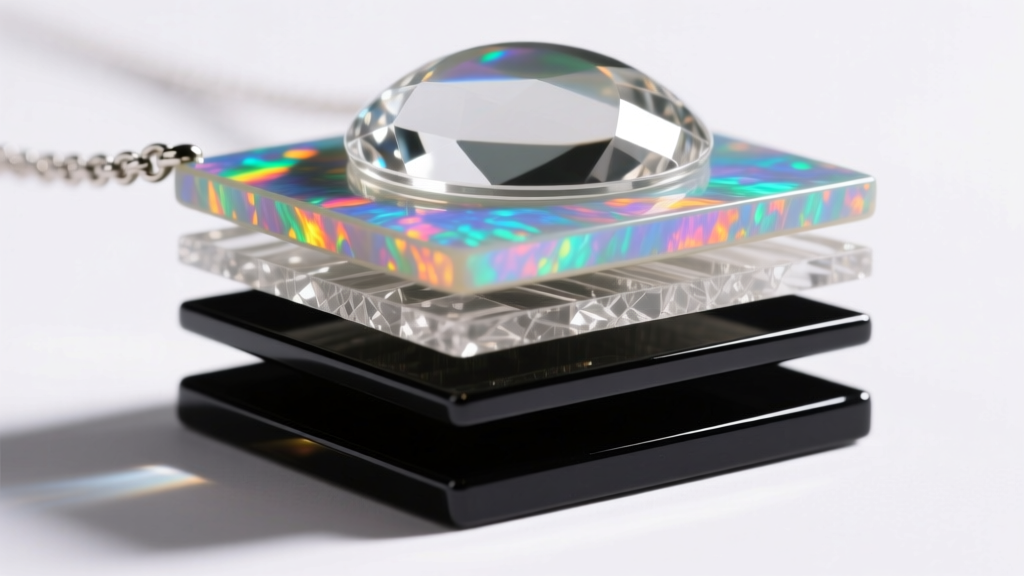
How to check: Look at the pendant from the side profile. If you see a distinct, perfectly straight glue line separating the colorful top from a dark bottom, or a glassy, overly rounded dome that doesn't match the natural curvature of the stone's base, you are looking at a composite. Furthermore, the GIA Opal Care Guide warns that prolonged water exposure can dissolve the adhesive in doublets and triplets, causing the layers to separate.
Synthetic Opals
Gilson synthetic opals are chemically identical to natural opals but are grown in a lab. They often exhibit a 'lizard skin' or 'chicken wire' pattern in their color patches when viewed under magnification. Synthetics also lack the natural inclusions or sand grains found in authentic Australian stones.
Long-Term Care and Maintenance
To preserve the structural integrity of your opal and diamond necklace, you must abandon traditional jewelry cleaning methods. Never use an ultrasonic cleaner. The high-frequency vibrations will shatter an opal's internal silica structure. Similarly, steam cleaners can cause rapid thermal shock, leading to 'crazing' (a network of fine cracks that ruins the stone's transparency and color). Instead, clean the diamond accents with a soft baby toothbrush and mild dish soap, carefully avoiding heavy scrubbing on the opal itself, and dry immediately with a microfiber cloth.


