White Shell Necklace Materials: Mother of Pearl vs. Puka vs. Cowrie
Compare mother of pearl, puka, and cowrie white shell necklaces. Discover material properties, durability grades, and expert care tips for lasting wear.

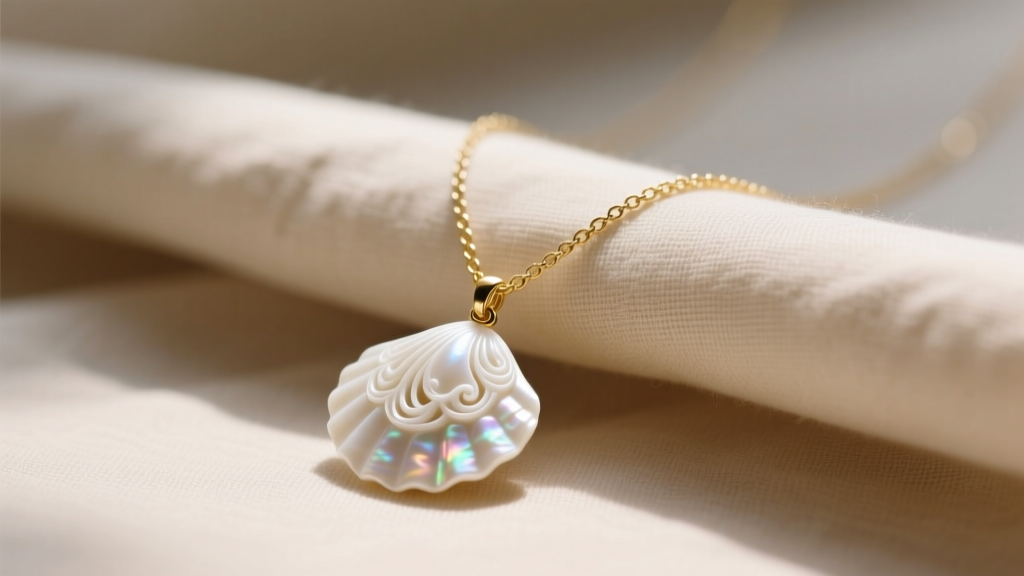
The Anatomy of a White Shell Necklace
When shopping for a white shell necklace, consumers often assume they are purchasing a single, uniform material. In reality, 'shell' is a broad biological classification encompassing vastly different mineral structures, hardness levels, and vulnerabilities. A necklace crafted from iridescent nacre behaves entirely differently than one strung with matte, calcium-rich cone snails. Understanding these material properties is critical for making an informed purchase, ensuring longevity, and properly caring for your jewelry.
In this comprehensive material comparison, we break down the three most prominent white shells used in fine and fashion jewelry: Mother of Pearl, Puka, and Cowrie. We will examine their biomineralization, Mohs hardness, porosity, and how they react to everyday environmental stressors.
The Big Three: Material Breakdown & Properties
1. Mother of Pearl (Nacre)
Mother of pearl is the iridescent inner layer of certain mollusk shells, primarily oysters and abalone. It is a composite material produced through biomineralization. The structure consists of microscopic hexagonal platelets of aragonite (a crystalline form of calcium carbonate) glued together by an organic matrix of elastic biopolymers called conchiolin.
- Mohs Hardness: 2.5 - 3.0
- Visual Property: High iridescence (orient) caused by light diffraction through the aragonite layers.
- Vulnerability: Highly sensitive to acids. The calcium carbonate will etch and dissolve if exposed to prolonged acidic environments, including human sweat (which typically has a pH between 4.5 and 7.0).
- Market Pricing: $50 to $300+ for high-grade, thick, hand-carved pendants.
2. Puka Shell
Authentic puka shells are the naturally tumbled remains of the cone snail (Conus miliaris). The defining feature of a genuine puka is its naturally occurring hole, which is the remnant of the snail's siphonal canal. Unlike nacre, puka is composed of dense, non-iridescent calcium carbonate.
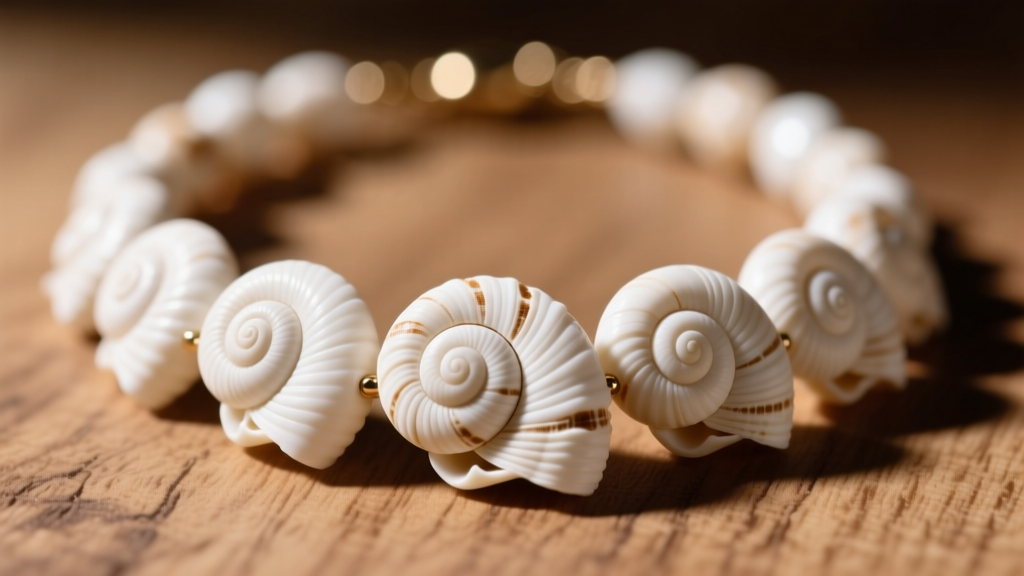
- Mohs Hardness: 3.0
- Visual Property: Matte, chalky white finish with natural, asymmetrical spiral holes. No two beads are perfectly identical.
- Vulnerability: High porosity. Puka shells can absorb oils, lotions, and dyes, leading to permanent yellowing or staining over time.
- Market Pricing: $40 to $150 for authentic, ocean-tumbled strands. (Beware of $15 heishi imitations made from ground shell dust and resin).
3. Cowrie Shell
Cowrie shells belong to the Cypraeidae family. The brilliant, glossy white finish of a cowrie is not a polish applied by humans; it is naturally secreted by the living snail's mantle, which constantly folds over the shell to deposit a smooth, enamel-like layer of calcium carbonate.
- Mohs Hardness: 3.0 - 3.5
- Visual Property: High-gloss, porcelain-like finish with a distinct toothed aperture on the ventral side.
- Vulnerability: The glossy enamel layer can chip or craze if subjected to sharp impacts or extreme temperature fluctuations.
- Market Pricing: $20 to $100, heavily dependent on the species and size.
Durability & Hardness Comparison Chart
To contextualize how these materials perform in daily wear, we must look at their physical properties. For reference, a copper penny has a Mohs hardness of about 3.5, meaning all three of these shells can be easily scratched by common metals and dust (which contains quartz, Mohs 7.0).
| Material | Primary Mineral | Mohs Hardness | Porosity | Acid Resistance | Avg. Retail Price |
|---|---|---|---|---|---|
| Mother of Pearl | Aragonite / Conchiolin | 2.5 - 3.0 | Low | Very Poor | $50 - $300 |
| Puka Shell | Calcium Carbonate | 3.0 | High | Poor | $40 - $150 |
| Cowrie Shell | Calcium Carbonate (Enamel) | 3.0 - 3.5 | Very Low | Poor | $20 - $100 |
Authenticity Testing: Natural vs. Synthetic Shells
The market is flooded with synthetic and reconstituted alternatives. According to the GIA Gem Encyclopedia, organic gem materials are frequently simulated using plastics, glass, or shell powder bound with epoxy. Here is how to authenticate your white shell necklace:
The Tooth Test: Gently rub the edge of the shell against the biting edge of your front tooth. Genuine mother of pearl and cowrie will feel distinctly gritty or sandy due to the microscopic crystalline structure. Plastic, glass, and resin will feel perfectly smooth.
Magnification and UV Light Analysis
Using a 10x jeweler's loupe, examine the surface. Natural mother of pearl will show subtle, overlapping growth lines and a 'stack of plates' texture on the edges. Reconstituted shell (shell dust mixed with resin) will appear uniformly granular with no natural growth patterns.
Under long-wave UV light (365nm), natural shells often exhibit a dull white or pale blue fluorescence due to the presence of organic proteins (conchiolin). Plastics and synthetic resins may either show no fluorescence or glow in bright, unnatural synthetic colors.
Sourcing, Ethics, and CITES Regulations
When purchasing a white shell necklace, provenance matters. The overharvesting of certain species has led to strict international trade regulations. The Giant Clam (Tridacna gigas), known for its massive, thick white shells, is listed under Appendix II of the CITES Appendices. This means international trade is heavily restricted and requires specific permits to ensure survival of the species.
Actionable Advice: Always ask retailers for the scientific name of the shell species. Opt for brands that source mother of pearl as a byproduct of the sustainable food oyster industry, or those that harvest naturally deceased cowrie and puka shells from beaches rather than dredging live populations.
Expert Care & Maintenance Protocols
Because organic shells are fundamentally different from faceted gemstones, standard jewelry cleaning methods can be catastrophic. Follow these strict protocols to preserve the structural integrity of your white shell necklace.

1. The pH Rule and Sweat Mitigation
Human sweat is mildly acidic. When a mother of pearl pendant rests against the collarbone during hot weather, the acidic sweat slowly eats away at the calcium carbonate, leaving the surface dull, chalky, and pitted. Always wipe your shell necklace with a damp, lint-free microfiber cloth immediately after wearing it. Never use commercial jewelry dips, which contain harsh ammonia or thiourea.
2. The Ultrasonic Cleaner Ban
Never place a white shell necklace in an ultrasonic cleaner. The high-frequency sound waves create microscopic cavitation bubbles that implode against the surface. While this safely cleans hard metals, the shockwaves will easily shatter the delicate aragonite layers of nacre and cause micro-fractures in the enamel of cowrie shells.
3. Humidity-Controlled Storage
Shells contain organic proteins that require a specific moisture balance. Storing a shell necklace in an airtight plastic bag can trap moisture and promote fungal growth on the conchiolin. Conversely, storing it in a highly arid environment (like a safety deposit box or near a heating vent) will cause the organic proteins to dehydrate, shrink, and ultimately crack the shell.
- Ideal Storage: A breathable cotton or linen pouch.
- Ideal Environment: 40% to 50% relative humidity, away from direct UV sunlight which can yellow the organic matrices over time.
Final Verdict: Choosing Your Shell
If you prioritize iridescence and are willing to commit to rigorous aftercare, Mother of Pearl remains the undisputed queen of fine jewelry shells. For a rugged, casual, and bohemian aesthetic that hides wear-and-tear well, authentic Puka is unmatched. If you desire a high-gloss, statement-making pendant with historical significance, the Cowrie shell offers a unique, porcelain-like elegance. By understanding the mineralogy and limitations of your chosen material, your white shell necklace will remain a pristine staple in your wardrobe for decades.


