Buying Trending Necklaces in 2026: A Quality & Style Guide
Discover how to buy trending necklaces in 2026. Our expert guide covers metal grades, chain durability, clasp mechanics, and layering.

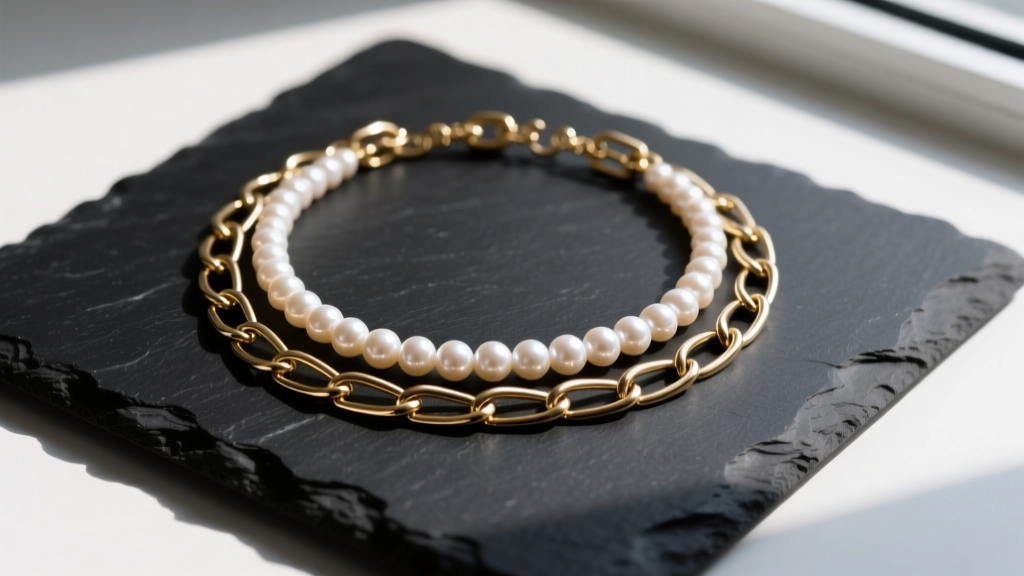
The jewelry landscape in 2026 has decisively shifted away from disposable fast-fashion accessories toward what industry insiders call 'investment trends.' Consumers are no longer just asking what is in style; they are asking how long it will last. When buying trending necklaces this year, the focus is on structural integrity, precise metal grades, and versatile layering mechanics. Whether you are eyeing a chunky liquid-metal choker or a delicate, gemstone-studded lariat, understanding the engineering behind the piece is the difference between a lifelong staple and a tarnished disappointment.
This comprehensive buyer’s guide breaks down the exact specifications, material grades, and failure points you need to evaluate before adding trending necklaces to your collection.
Decoding Metal Grades: What Actually Lasts?
The most common pitfall when shopping for trending necklaces is misunderstanding metal terminology. Brands often use buzzwords like 'gold dipped' or 'gold bonded' to obscure the actual thickness of the precious metal layer. According to the Federal Trade Commission Jewelry Guides, there are strict legal definitions for these terms, and knowing them will save you from premature tarnishing.
The Vermeil vs. Gold-Filled Dilemma
For those who cannot justify the $800+ price tag of solid 14k gold but want a durable alternative, the choice usually comes down to gold vermeil and gold-filled chains.
- Gold Vermeil: By definition, vermeil must have a sterling silver (.925) base and be plated with at least 2.5 microns of 10k, 14k, or 18k gold. In 2026, premium brands are pushing this to 3.0 or even 4.0 microns for high-friction areas like the clasp and the back of the neck. If a brand does not explicitly state the micron thickness, assume it is the bare minimum or less.
- Gold-Filled: This is a mechanical bond, not a plating. The gold layer must constitute at least 5% (or 1/20th) of the total weight of the item. Gold-filled trending necklaces are vastly superior for daily wear, especially for those with acidic skin pH that strips electroplated vermeil within months.
| Material Grade | Base Metal | Gold Layer Thickness | Estimated Lifespan (Daily Wear) | Avg. Price Range (16" Chain) |
|---|---|---|---|---|
| Flash Plated | Brass or Copper | < 0.5 microns | 1 - 3 Months | $25 - $60 |
| Gold Vermeil | Sterling Silver | 2.5+ microns | 1 - 3 Years | $80 - $180 |
| Gold-Filled | Jeweler's Brass | 5% of total weight | 5 - 10+ Years | $120 - $250 |
| Solid 14k Gold | Gold Alloy | 100% Solid | Lifetime | $400 - $900+ |
For a deeper understanding of how alloy compositions affect both color and durability, the Gemological Institute of America (GIA) offers extensive resources on why 14k gold (58.5% pure gold) remains the gold standard for trending chain necklaces due to its optimal balance of rich color and tensile strength.
Chain Link Architecture: Aesthetics vs. Durability
The silhouette of trending necklaces in 2026 is dominated by specific chain weaves. However, not all links are created equal. The structural integrity of a chain dictates whether it will survive a snag on a sweater or snap under the weight of a pendant.
The Paperclip Chain: Hollow vs. Solid
The elongated paperclip chain remains a massive trend, but buyers must check the link construction. Hollow paperclip chains are lightweight and affordable, but they are highly susceptible to denting if compressed. Once a hollow link dents, it weakens the structural memory of the chain, leading to snapping. Solid or semi-solid paperclip chains (often cast or drawn and soldered) are heavier but will withstand daily friction. Always look for laser-soldered seams on the individual links; unsoldered links will pull apart when subjected to just a few pounds of tension.
The Herringbone: High Shine, High Maintenance
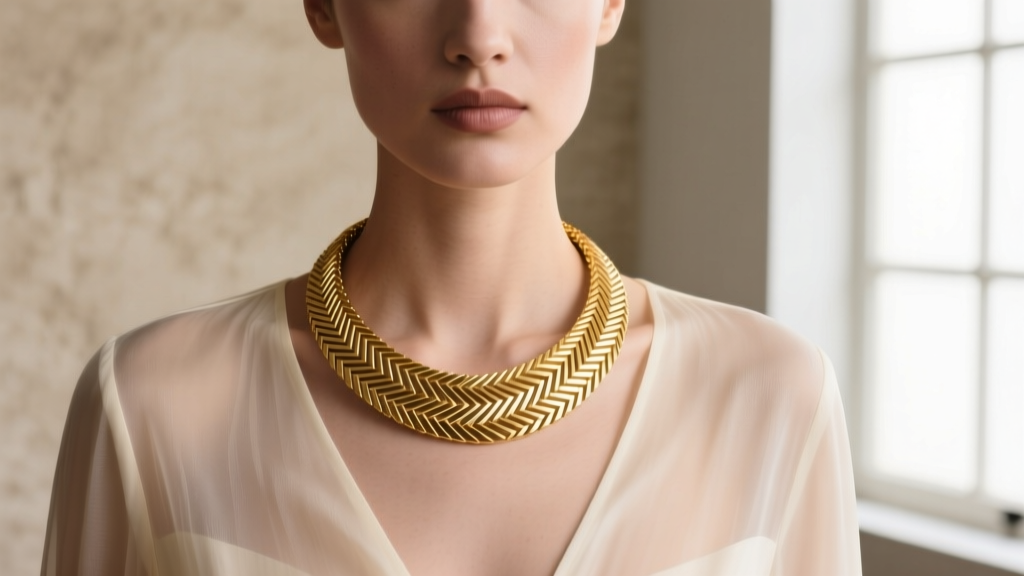
Herringbone chains offer a stunning, liquid-metal effect that lays perfectly flat against the collarbone. However, their interlocking, flat weave lacks structural flexibility. If a herringbone chain is bent sharply or slept in, it will permanently kink. When buying a trending herringbone necklace, ensure you have a dedicated flat jewelry box for storage, and never pair it with heavy pendants, as the concentrated weight will warp the weave.
The Cuban and Curb Links
For a more utilitarian, gender-neutral trend, the Cuban link is ubiquitous. When evaluating a Cuban chain, check the interlocking tightness. A high-quality Cuban link should flex smoothly without excessive lateral twisting. Diamond-cut facets are trending heavily this year, but be aware that deep cutting removes metal mass, slightly reducing the chain's overall tensile strength compared to a smooth, polished finish.
Clasp Mechanics and Failure Points
The clasp is the most frequent point of failure on any necklace. When investing in trending necklaces, do not overlook this tiny but critical component.
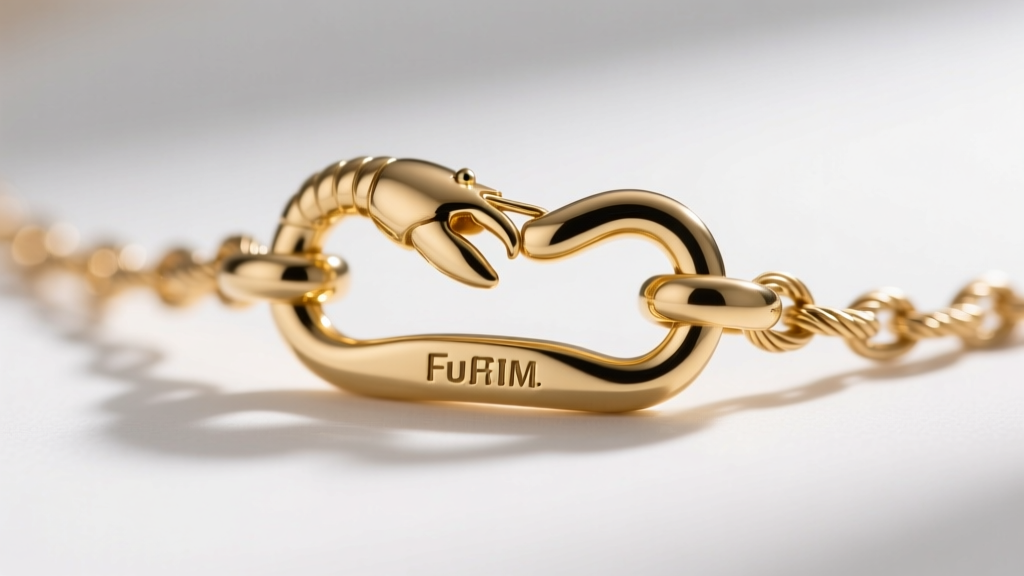
- Lobster Clasps: The industry standard for security. Look for a lobster clasp with a robust internal spring mechanism. The lever should snap back with an audible, crisp click. A sluggish lever indicates a weak spring that will eventually fail to close completely.
- Spring Ring Clasps: Often found on delicate, budget-friendly chains. These are notoriously difficult to operate with one hand and the tiny internal spring is prone to jamming. Avoid these on chains thicker than 1.5mm.
- Magnetic Clasps: Highly trending for their ease of use, particularly for accessibility. However, standard neodymium magnetic clasps are only safe for lightweight chains (under 15 grams). If you are attaching a heavy gemstone pendant, the lateral shear force will easily break the magnetic bond, resulting in a lost necklace.
Pro-Tip: Always inspect the jump ring that connects the clasp to the chain. If the jump ring is not soldered shut (meaning there is a visible gap where the metal meets), it will eventually pull open. High-end trending necklaces will always feature soldered jump rings at the connection points.
Sizing and Proportion Framework for 2026
Layering is no longer just about throwing multiple chains together; it is about precise mathematical spacing. The current trend relies on a minimum 2-inch to 3-inch gap between layered necklaces to prevent tangling and allow each piece to breathe.
The Core Length Matrix
When building your collection of trending necklaces, use this sizing framework to ensure compatibility with modern necklines:
- 14 Inches (The Choker): Sits tightly at the base of the neck. Ideal for square necklines and off-the-shoulder tops. Best in rigid materials like pearls, beads, or thick, solid curb chains.
- 16 Inches (The Collarbone): The most versatile and popular length. Rests perfectly on the collarbone. This is the optimal length for a standalone pendant or a delicate paperclip chain paired with a crewneck t-shirt.
- 18 Inches (The Princess): Drops just below the collarbone. Essential for V-necks and business casual button-downs. This length provides the necessary clearance to avoid looking choked when layered with a 16-inch chain.
- 20 to 24 Inches (The Matinee): Falls on the upper chest. Trending heavily in 2026 for layering over turtlenecks and heavy knitwear. Opt for heavier gauge chains (2.5mm to 4.0mm) at this length, as delicate chains will get lost in the fabric and are prone to snapping when pulled over the head.
Final Verdict: Buying with Intention
Navigating the market for trending necklaces requires a shift from impulse buying to intentional curation. By scrutinizing the micron thickness of gold plating, demanding soldered jump rings, understanding the physical limitations of specific chain weaves like the herringbone, and utilizing a strict spacing matrix for layering, you can build a jewelry wardrobe that survives the fickle nature of fashion trends. In 2026, the ultimate flex is not just wearing what is popular, but wearing pieces that are engineered to last a lifetime.


