The Ultimate Turquoise Leather Necklace Guide: Grading & Care
Master the technical details of a turquoise leather necklace. Learn stone stabilization grades, leather tanning types, and expert care protocols.

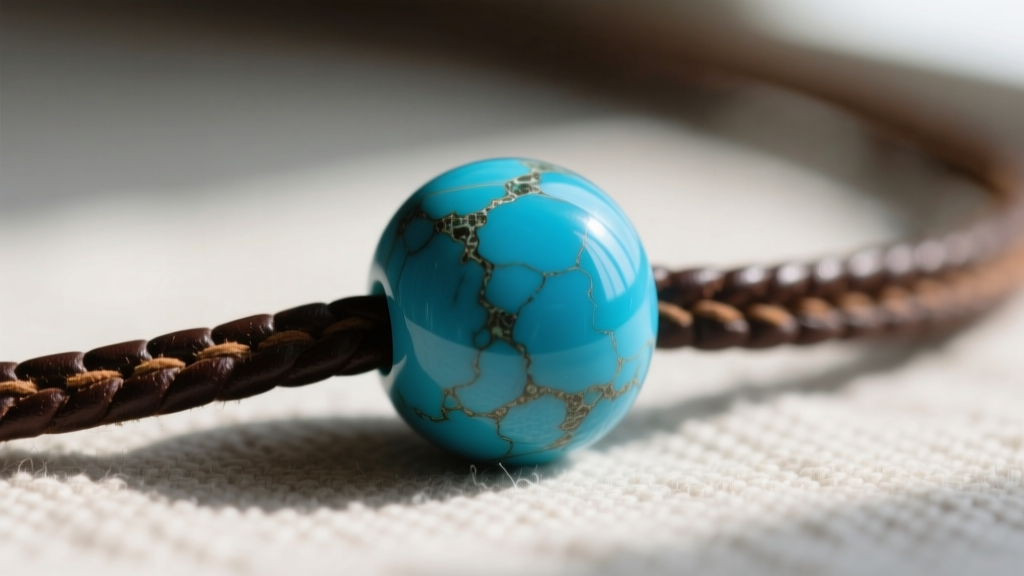
The Complex Anatomy of Mixed-Media Jewelry
A turquoise leather necklace represents a fascinating but volatile collision of two highly reactive materials. On one hand, you have turquoise: a porous, hydration-sensitive copper aluminum phosphate mineral that ranks between 5 and 6 on the Mohs hardness scale. On the other, you have leather: a protein-based, hygroscopic organic matrix derived from animal hide. When combined into a single wearable garment, these materials interact with each other, the wearer's skin chemistry, and the ambient environment. For collectors, artisans, and informed buyers, understanding the technical specifications of both the stone and the cord is paramount to ensuring the necklace's structural integrity and aesthetic longevity. This guide bypasses generic styling advice to deliver a deep dive into the material science, grading systems, and mechanical stress points inherent in turquoise and leather jewelry.
Turquoise Grading and Stabilization: What You Are Actually Buying
The term 'turquoise' in the commercial jewelry market encompasses a wide spectrum of material grades. Because natural, untreated turquoise is exceptionally rare and highly susceptible to chemical alteration from skin oils and cosmetics, the vast majority of stones used in leather necklaces undergo some form of enhancement. According to the Gemological Institute of America (GIA), understanding the distinction between natural, stabilized, and dyed turquoise is the first step in evaluating a piece's true value and durability.
The Stabilization Process
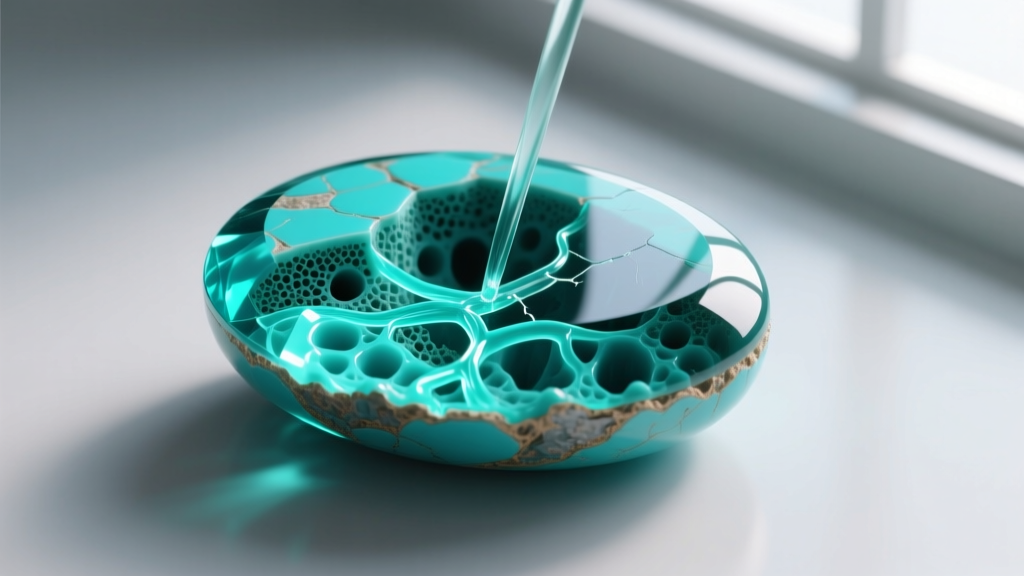
Stabilization is a widely accepted industry practice where porous, lower-grade turquoise is subjected to a vacuum chamber and infused with a liquid polymer, epoxy resin, or acrylic. This process fills the microscopic voids within the stone's crystal lattice, increasing its Mohs hardness to a more durable 6.5 or 7 and preventing it from absorbing destructive oils. The Zachery process, a proprietary and highly respected stabilization method, uses a specific chemical treatment that reduces porosity without introducing external polymers, thereby preserving the stone's natural feel and electrical conductivity. When sourcing beads or pendants for a leather cord, stabilized turquoise is often the superior choice, as it will not degrade when exposed to the natural tannins and residual moisture present in leather.
Dyed and 'Block' Turquoise: The Red Flags
Conversely, dyed turquoise (often howlite or magnesite masquerading as turquoise) and 'block' turquoise (reconstituted turquoise dust mixed with epoxy and dye) lack the structural and gemological integrity required for heirloom-quality leather necklaces. Block turquoise is essentially plastic with trace mineral inclusions; it scratches easily, melts under high friction, and off-gasses synthetic odors when heated by the wearer's body temperature. Always demand disclosure of treatment from vendors; a reputable supplier will explicitly state if a stone is 'stabilized' versus 'reconstituted'.
Leather Cord Specifications: Tanning, Gauge, and Tensile Strength
The leather cord acts as the structural spine of the necklace. Its tanning method dictates its reactivity to water and skin acids, while its gauge (diameter) determines its tensile strength and suitability for specific stone weights. The Leather Working Group (LWG) sets the global standard for environmental compliance in leather manufacturing, but for jewelry applications, the physical characteristics of the hide are the primary concern.
Vegetable-Tanned vs. Chrome-Tanned Leather
Vegetable-tanned leather utilizes natural tannins extracted from tree bark and wood. It is highly prized in artisan jewelry for its ability to develop a rich, dark patina over time. However, veg-tan leather is highly hydrophilic (water-absorbent) and will stiffen, warp, or rot if repeatedly exposed to sweat or high humidity without proper conditioning. Chrome-tanned leather, which uses chromium salts, is significantly more water-resistant, flexible, and colorfast, making it a pragmatic choice for daily-wear necklaces, though it lacks the traditional tooling and patina qualities of veg-tan.
Cord Gauge and Load-Bearing Metrics
Selecting the correct cord thickness is a matter of mechanical engineering. A heavy silver and turquoise squash blossom necklace will easily snap a 1.0mm cord under dynamic movement. Below is a technical breakdown of leather cord specifications and their optimal applications:
| Cord Diameter | Approx. Tensile Strength | Optimal Application | Hardware Compatibility |
|---|---|---|---|
| 1.0mm | 15 - 20 lbs | Micro-beads, lightweight single pendants | Micro-crimps, 2mm end caps |
| 1.5mm | 35 - 45 lbs | Standard heishi beads, medium cabochons | Standard sliding knots, 3mm caps |
| 2.0mm | 60 - 75 lbs | Heavy pendants, multi-stone clusters | Screw-in end caps, macramé |
| 3.0mm+ | 100+ lbs | Statement collars, heavy squash blossoms | Custom fabricated clasps |
Hardware Integration and Mechanical Stress Points
The most common point of catastrophic failure in a turquoise leather necklace is not the leather snapping in the middle, but the cord pulling out of the clasp hardware. The traditional method of using metal crimp beads on leather is fundamentally flawed. Crushing a metal tube onto a leather cord severs the collagen fibers, creating a severe structural weak point that will inevitably fail under tension.
The Superiority of Screw-In End Caps and Cyanoacrylate
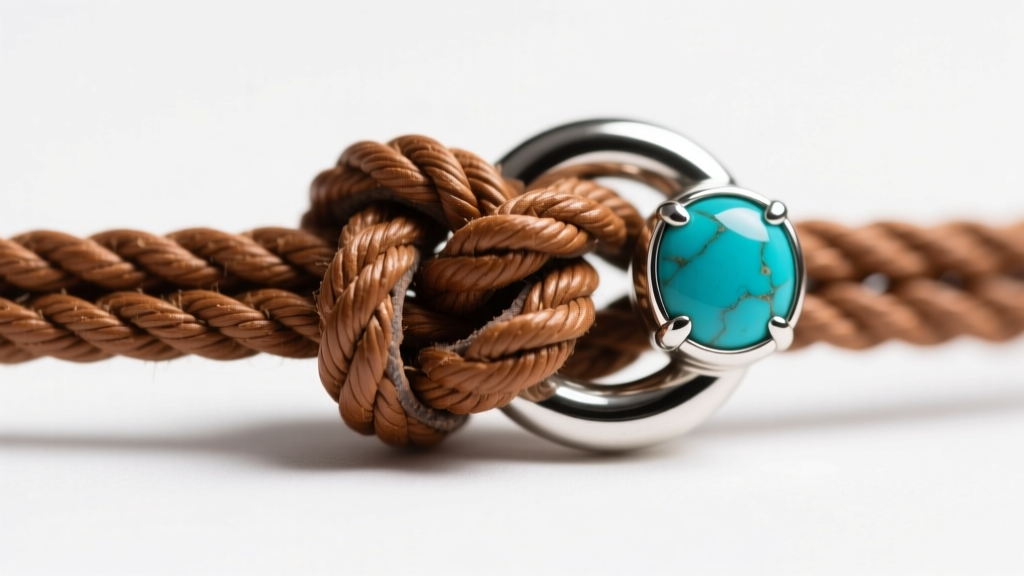
For cords 2.0mm and above, sterling silver or brass screw-in end caps are the industry standard for high-end jewelry. The leather is trimmed flat, inserted into the threaded cap, and secured using a microscopic drop of cyanoacrylate (jewelry-grade super glue) applied strictly to the interior of the metal cap, never directly onto the visible leather surface. The cap is then screwed into the receiver, which features a secondary locking pin or heavy-duty jump ring. Alternatively, artisan macramé sliding knots, woven from a secondary, thinner leather or waxed linen cord, distribute the tensile load across a broader surface area of the main cord, eliminating the need for metal crimps entirely while allowing for adjustable length.
Environmental Degradation and pH Sensitivity
Both turquoise and leather are acutely sensitive to the pH levels of the wearer's skin and the chemical environment. Human sweat typically has a pH ranging from 4.5 to 7.0, leaning slightly acidic. Over time, this acidic moisture transfers to the leather, breaking down the tanning agents and causing the cord to become brittle. Simultaneously, if the turquoise is natural or poorly stabilized, the acids and lipids (fats) from the skin will penetrate the stone's matrix, causing it to oxidize and shift from a vibrant sky blue to a muddy, irreversible green or brown.
Furthermore, environmental pollutants, aerosolized cosmetics, and chlorinated water act as catalysts for degradation. Perfumes containing alcohol will strip the natural oils from the leather cord, leading to micro-fissures. It is imperative that a turquoise leather necklace is the 'last on, first off' item in a daily wardrobe routine to minimize exposure to these chemical hazards.
Expert Maintenance Protocols
Maintaining a mixed-media necklace requires a bifurcated approach, as the cleaning agents suitable for stone are often destructive to leather, and vice versa. Never submerge a turquoise leather necklace in water, and absolutely never place it in an ultrasonic cleaner; the high-frequency vibrations will shatter the turquoise and disintegrate the leather fibers.
- Stone Cleaning: Use a dry, untreated microfiber cloth to gently buff the turquoise beads. If heavy soil is present, a barely damp cloth with a drop of pH-neutral castile soap can be used, but it must be kept strictly away from the leather cord.
- Leather Conditioning: Every six to twelve months, apply a minuscule amount of high-quality, wax-based leather conditioner (such as pure beeswax or a specialized saddle soap) to a cotton swab. Carefully trace the leather cord, avoiding any contact with the turquoise stones, as the wax will cloud the stone's polish and clog its pores.
- Storage Mechanics: Store the necklace flat in a climate-controlled environment with a relative humidity of 40-50%. Hanging a heavy turquoise necklace on a standard jewelry stand for prolonged periods will cause the leather cord to stretch and permanently deform under the static load of the stones. Use a velvet-lined, flat archival box with acid-free tissue paper to prevent the silver hardware from tarnishing and the leather from drying out.
By respecting the mineralogical and organic properties of these materials, you ensure that a turquoise leather necklace transcends being a mere accessory and becomes a durable, enduring piece of wearable art.


