Buying a Vintage Branch Coral Necklace: Authentication Guide
Discover how to authenticate, grade, and price a vintage branch coral necklace. Learn to spot dyed imitations and protect your antique coral jewelry.

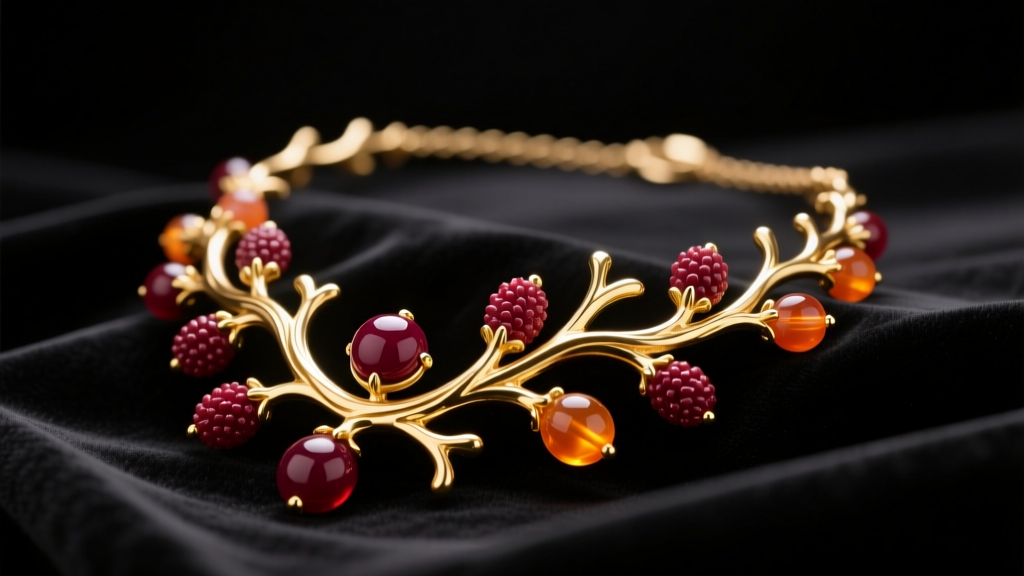
The market for a vintage branch coral necklace has shifted dramatically over the last decade. Once a staple of Victorian and Mid-Century jewelry boxes, natural precious coral is now a highly regulated, increasingly scarce organic gemstone. For collectors and enthusiasts navigating the 2026 estate jewelry market, distinguishing between genuine antique Corallium rubrum, dyed bamboo coral, and modern synthetic imitations requires more than a casual glance. This comprehensive buying guide details the exact material grades, authentication protocols, and structural failure modes you must evaluate before investing in vintage branch coral.
The Anatomy and Composition of Precious Branch Coral
True precious coral is not a stone; it is the calcium carbonate skeleton of marine polyps, primarily the Corallium rubrum (Mediterranean red coral) and Corallium japonicum (Pacific red coral) species. Its highly prized red, pink, and salmon hues are derived from carotenoid pigments deposited within its microcrystalline calcite matrix. According to the Gemological Institute of America (GIA), natural precious coral possesses a specific gravity of 2.60 to 2.70 and a Mohs hardness of 3.5, making it significantly softer and more reactive than traditional faceted gemstones.
Branch coral refers to pieces that are cut and polished directly from the natural, tree-like skeletal structures of the coral colony, retaining organic, asymmetrical shapes rather than being carved into uniform beads or cabochons. This preservation of the natural branch structure is highly coveted in vintage pieces, particularly those from the Victorian and Edwardian eras, where the raw, organic texture was celebrated as a symbol of nature and vitality.
Authentication Protocols: Natural vs. Dyed and Synthetic
The most common deception in the vintage coral market is the sale of dyed Keratoisis (bamboo coral) or howlite as genuine precious coral. Bamboo coral is naturally white or grey and features a distinct jointed, bamboo-like internal structure. To mimic expensive Mediterranean red coral, it is heavily dyed. Here is how to definitively authenticate a vintage branch coral necklace:
- The Acetone Test: Dip a cotton swab in pure acetone (nail polish remover) and gently rub an inconspicuous area of the coral, such as the back of a branch near the clasp. If the swab turns red or pink, the piece is dyed bamboo coral or howlite. Genuine precious coral will not yield color to acetone.
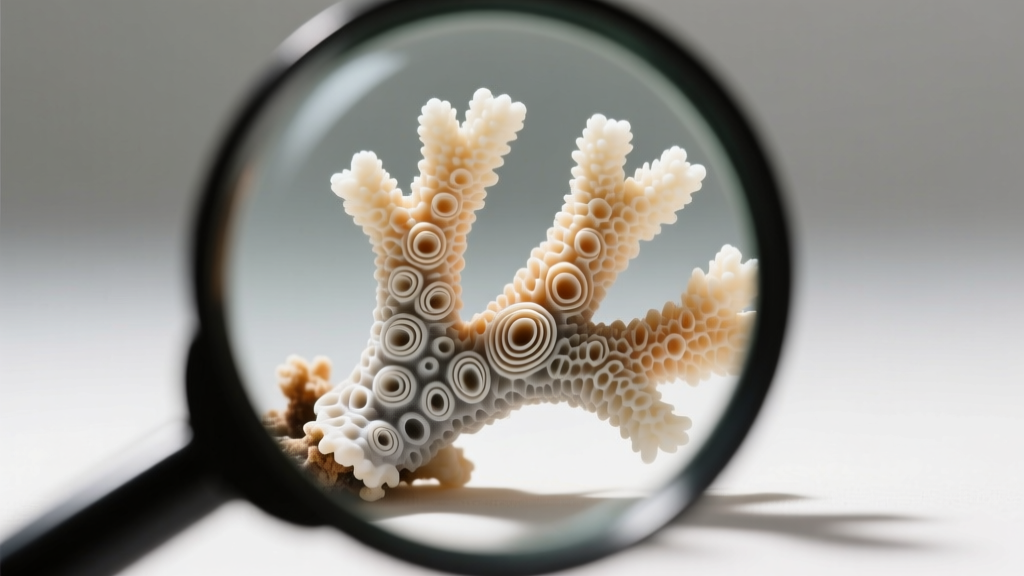
- Magnification and Growth Rings: Under a 10x triplet loupe, natural branch coral reveals subtle, concentric growth rings and longitudinal striations, much like the grain in wood. Dyed bamboo coral will show a network of tiny, spider-web-like fractures where the dye has pooled, and it lacks the continuous concentric banding of true Corallium.
- Thermal Conductivity: Coral is an excellent thermal insulator. When pressed against the cheek or lips, genuine coral feels distinctly cool and takes several seconds to warm to body temperature. Glass or resin imitations will feel room temperature or warm almost instantly.
- Reaction to Acid: While destructive and not recommended for buyers, it is worth noting that calcium carbonate reacts with hydrochloric acid by effervescing (bubbling). Plastic and glass will not. However, never perform this test on a finished vintage piece, as even weak acids like lemon juice or vinegar will permanently etch and dull the polish of genuine coral.
Dating Your Vintage Coral Necklace: Hardware and Drilling
Authenticating the coral material is only half the battle; verifying the age of the necklace requires a close examination of the metalwork, clasps, and drilling techniques. The evolution of jewelry manufacturing provides a reliable timeline for dating vintage pieces.
| Era | Clasp and Hardware Types | Drilling and Stringing Characteristics | Typical Gold Purity |
|---|---|---|---|
| Victorian (1837-1901) | C-clasps, barrel clasps, trombone clasps without safety catches | Hand-drilled, often slightly irregular or asymmetrical holes; strung on thick silk or horsehair | 15k, 18k (European), 9k-14k (US) |
| Edwardian (1901-1915) | Early spring-ring clasps, intricate filigree push-clasps | More precise drilling; introduction of platinum wire wrapping on branch ends | Platinum over gold, 14k, 18k |
| Art Deco (1920-1935) | Box clasps with early figure-8 safety catches | Uniform machine drilling; geometric gold caps on branch ends | 14k, 18k, white gold |
| Mid-Century (1940-1970) | Modern box clasps with dual safety figures, lobster claws (late 60s) | Perfectly uniform drilling; nylon or synthetic thread alongside silk | 14k, 18k yellow gold |
If a seller claims a necklace is Victorian, but it features a modern lobster clasp and perfectly uniform, laser-drilled holes, the piece has either been heavily altered or is a modern reproduction using vintage-style coral cuts.
Pricing Tiers and Market Value in 2026
The valuation of a vintage branch coral necklace is dictated by the species of coral, the depth and uniformity of the color, the karat weight of the gold settings, and the historical provenance of the piece.
Costume and Dyed Tier ($50 - $250)
Pieces made from dyed bamboo coral, coral paste, or plastic. These are purely decorative and hold no investment value. Often found in mid-century tourist jewelry from Italy or Asia.
Mid-Century Salmon and Pink Tier ($800 - $3,500)
Genuine Corallium rubrum or Corallium elatius (boke pink coral) set in 14k gold. The lighter pink and salmon hues are more abundant than deep reds, making them accessible yet highly desirable for everyday vintage wear.
Investment Grade Oxblood Tier ($4,500 - $15,000+)
Victorian or Edwardian necklaces featuring deep, uniform oxblood red (Aka) coral. The Convention on International Trade in Endangered Species (CITES) heavily regulates the modern harvesting and export of Corallium species, making existing antique oxblood branch coral necklaces exceptionally rare and legally complex to trade across borders without proper pre-Convention certificates.
Structural Failure Modes: What to Avoid
Because organic gemstones are highly reactive, vintage branch coral necklaces are prone to specific failure modes that can destroy their value and structural integrity.
Expert Insight: Never purchase a vintage coral necklace if the branches exhibit a chalky, matte, or powdery surface texture. This indicates severe dehydration and acid degradation, which is irreversible.
- Acid Etching from Skin Contact: Coral is highly sensitive to the natural acids in human sweat, as well as perfumes and cosmetics. Over decades, this exposure dissolves the calcium carbonate surface, leaving it dull and pitted.
- Thread Rot and Abrasion: Vintage necklaces strung on natural silk are vulnerable to thread degradation. If the silk rots and stretches, the sharp, unpolished edges of the branch coral holes will saw against the thread, leading to sudden catastrophic breakage.
- Heat Damage: Exposure to high heat (such as being left in a hot car or near a radiator) can cause the carotenoid pigments in the coral to fade or the internal moisture to evaporate, resulting in micro-fractures and cracking.
Essential Care and Preservation Protocols
Owning a vintage branch coral necklace requires a strict maintenance regimen to preserve both the organic material and the antique stringing.
- The 'Last On, First Off' Rule: Always put your coral necklace on after applying makeup, hairspray, and perfume. Remove it immediately upon returning home to minimize chemical exposure.
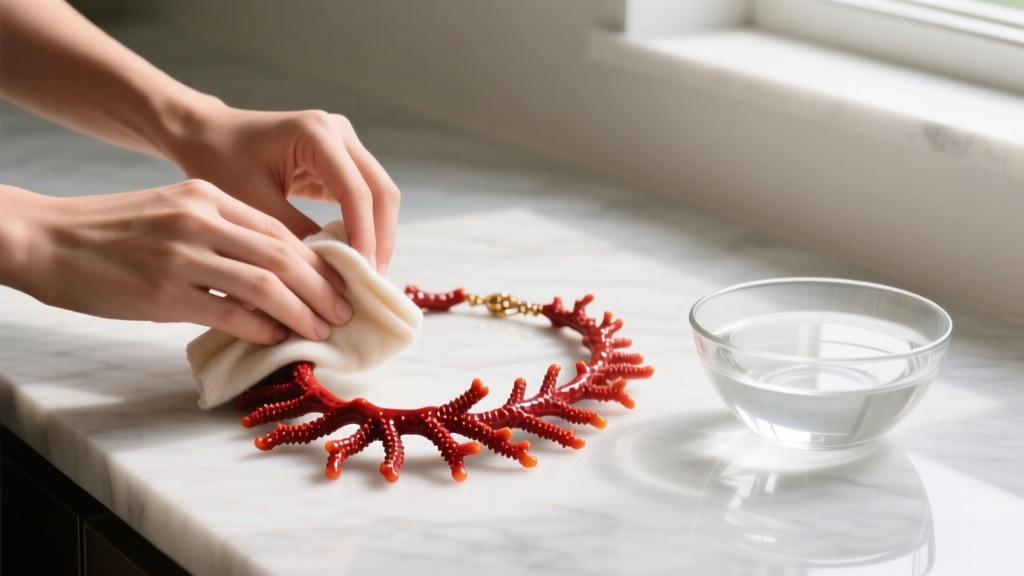
- Proper Cleaning: Never use ultrasonic cleaners, steamers, or commercial jewelry dips. After wearing, gently wipe the coral branches with a soft, slightly damp microfiber cloth to remove skin oils, then dry immediately with a separate soft cloth.
- Strategic Restringing: Have the necklace professionally restrung every 3 to 5 years. A master stringer should use high-grade silk thread and employ French wire (gimp) at the clasp loops to prevent the metal from cutting the silk. Ensure the stringer uses individual knots between major branch clusters to prevent the coral pieces from grinding against one another.
- Hydration and Storage: Store the necklace in a soft pouch away from direct sunlight and extreme temperature fluctuations. If you live in a very dry climate, placing a small, damp (not wet) cotton ball in the corner of the storage box can help maintain ambient humidity and prevent the coral from drying out and cracking.
Final Verdict
Acquiring a vintage branch coral necklace is an exercise in historical appreciation and material science. By rigorously testing for dye, examining the hardware for period-correct manufacturing marks, and understanding the strict legal and environmental frameworks governing precious coral, you can confidently navigate the estate market. When properly authenticated and meticulously cared for, these organic masterpieces remain some of the most striking and historically significant artifacts in antique jewelry.


