A Collector's Guide to Buying a Women's Jade Necklace
Discover how to evaluate, grade, and authenticate a women's jade necklace. Learn the differences between Type A, B, and C jade before you buy.

When shopping for a women's jade necklace, the untrained eye sees only a beautiful green or lavender stone. The trained gemologist, however, sees a complex matrix of silicate minerals, potential polymer treatments, and a rich cultural heritage. As we move through 2026, the market for authentic, untreated jade has become increasingly competitive due to tightening export restrictions in Myanmar and a surge in collector demand. This guide cuts through the retail jargon, providing you with the exact gemological frameworks needed to evaluate, grade, and authenticate jade before you make a purchase.
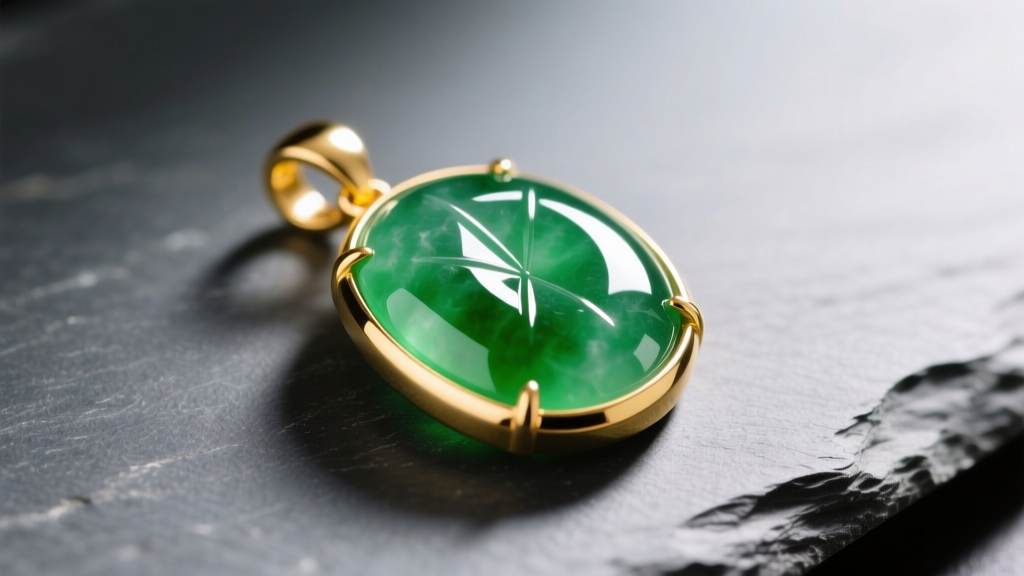
Mineralogy 101: Jadeite vs. Nephrite
The term "jade" is an umbrella term for two distinct metamorphic rocks. Understanding the difference is the first critical step in evaluating any women's jade necklace.
Jadeite (The Premium Standard)
Jadeite is a sodium- and aluminum-rich pyroxene (NaAlSi2O6). It registers between 6.5 and 7 on the Mohs hardness scale, making it slightly harder and more scratch-resistant than nephrite. High-quality jadeite possesses a vitreous (glassy) luster and can range from completely opaque to highly translucent. The most coveted deposits are located in the Kachin state of Myanmar. According to the Gemological Institute of America (GIA), fine jadeite is prized for its "water head" (translucency) and vivid color saturation.
Nephrite (The Historical Workhorse)
Nephrite is a calcium- and magnesium-iron-rich amphibole (Ca2(Mg,Fe)5Si8O22(OH)2). It is slightly softer (6.0 to 6.5 Mohs) but possesses a higher tensile strength due to its interlocking fibrous crystal structure. Nephrite exhibits a greasy or waxy luster rather than a glassy one. Historically sourced from China (Hetian), New Zealand (Pounamu), and Canada (British Columbia), nephrite is generally more abundant and affordable than jadeite, making it a popular choice for heavily carved pendants and large bead strands.
The ABCs of Jade Treatments: What to Avoid
The most common pitfall when buying a women's jade necklace is unknowingly purchasing treated stone. The gemological industry categorizes jade into three distinct treatment grades:
- Type A (Natural): Completely untreated jade, save for a traditional plum wax polishing. This is the only grade that holds or appreciates in investment value.
- Type B (Bleached and Polymer-Impregnated): Lower-quality jade is boiled in hydrochloric acid to remove brown or yellow inclusions, leaving a porous, brittle structure. It is then vacuum-impregnated with polymer resin. Over time, the resin yellows, and the stone becomes brittle.
- Type C (Dyed): Jade is heated and submerged in chemical dyes to mimic Imperial Green or Lavender. The color concentrates in the fractures and will fade under prolonged UV exposure.
- Type B+C: A combination of acid-bleaching, resin-filling, and dyeing. This is essentially costume jewelry masquerading as fine gemstones.
Industry experts like Mason-Kay Fine Jade Jewelry emphasize that Type B and C jade should always be explicitly disclosed, yet many tourist markets and online auction sites fail to do so. Always demand a lab report from GIA, Gubelin, or SSEF for any piece priced over $1,000.
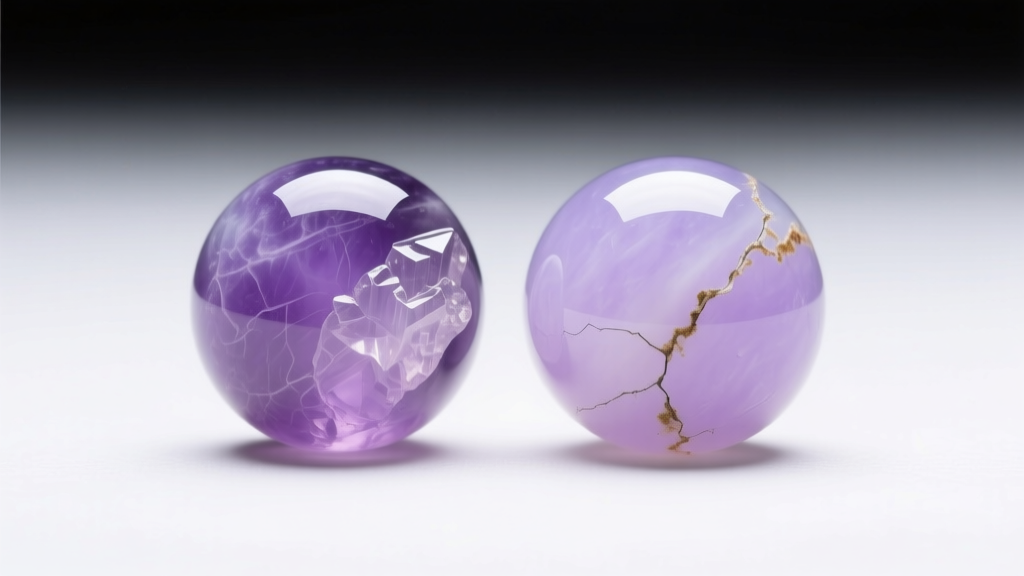
Color Grading and Value Matrix
Color is the most significant value driver for jadeite, while texture and translucency dictate the ceiling of that value. Below is a 2026 market estimation for Type A jadeite necklace components.
| Color Grade | Mineral Trace | Translucency | Est. Price Range (Per Carat) |
|---|---|---|---|
| Imperial Green | Chromium | High (Glassy) | $10,000 - $50,000+ |
| Apple Green | Chromium/Iron | Medium-High | $500 - $3,000 |
| Lavender | Manganese | Medium | $200 - $1,500 |
| Spinach Green (Nephrite) | Iron | Opaque | $20 - $150 |
| Mutton Fat (Nephrite) | Trace Elements | Semi-Translucent | $100 - $800 |
The Impact of Lighting on Jade Evaluation
Never purchase a high-value women's jade necklace under standard retail halogen or warm LED lighting. Jewelry stores intentionally use high-CRI (Color Rendering Index) warm lights to enhance the green saturation and mask grey or brown undertones in lower-grade jadeite. Always request to view the stone in natural, diffused daylight. Northern-facing window light is the gemological standard for color grading, as it provides a neutral, balanced spectrum that reveals the true depth, secondary color modifiers, and exact translucency of the stone. If a seller refuses to let you examine the piece near a window or outdoors, consider it a massive red flag regarding the stone's true color quality.
Necklace Construction and Hardware Failure Points
Even the finest Type A jadeite can be ruined by poor necklace construction. When inspecting a beaded jade necklace or a heavy pendant, pay close attention to the structural integrity of the hardware.
Cord vs. Wire Stringing
Authentic, high-end jade bead necklaces are almost exclusively strung on silk or high-tensile nylon cord, with individual hand-tied knots between each bead. This prevents bead-on-bead abrasion (which can dull the polish over decades) and ensures that if the cord snaps, you do not lose the entire necklace. Avoid jade bead necklaces strung on unknotted steel wire; the wire will eventually saw through the drill holes of the softer nephrite beads.
Clasp Mechanics
For heavy jade pendants or multi-strand bead necklaces, standard lobster clasps are a failure point. The weight of the stone will warp the spring mechanism over time. Look for barrel clasps, tongue-and-groove safety clasps, or hand-carved jade toggle clasps (a traditional and highly secure method used in Asian jewelry markets).
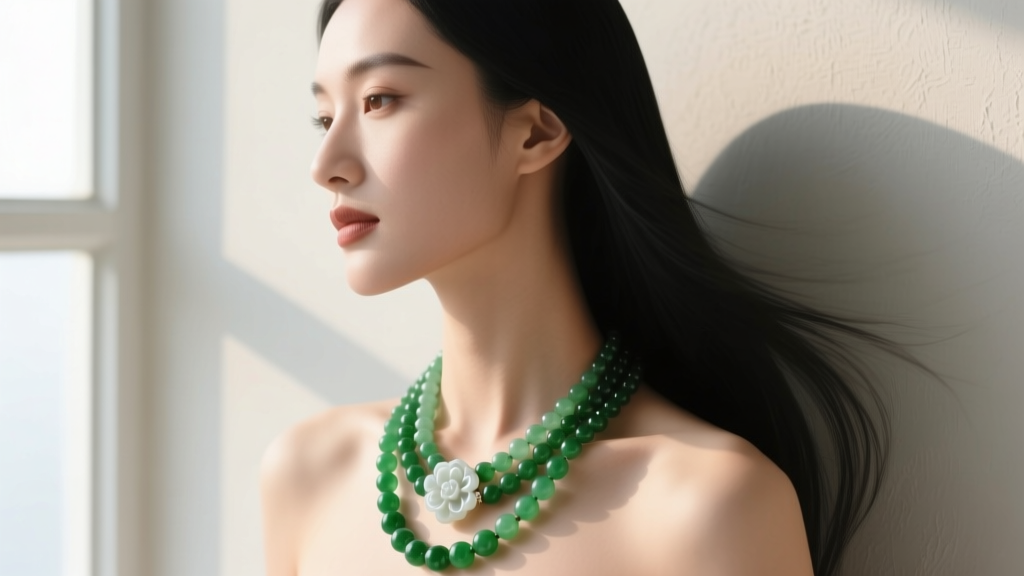
Styling: Pairing Jade with Modern Necklines
Jade carries a heavy visual weight, both physically and aesthetically. Styling a women's jade necklace requires balancing the stone's opacity with your wardrobe.
- The Carved Jade Pendant (Bi Disk or Pi Yao): Best worn on a 20-to-24-inch cord over a crew-neck sweater or a simple linen button-down. The matte fabric provides a necessary contrast to the vitreous luster of the jade.
- The Graduated Jadeite Bead Necklace: A classic 16-to-18-inch strand of 8mm-12mm beads demands a V-neck or scoop-neck silhouette. This frames the face and allows the light to pass through the translucent beads, activating their "water head."
- Minimalist Gold-and-Jade Solitaire: A single, bezel-set imperial green cabochon on a delicate 18k gold chain is ideal for layering. Pair it with a 14k gold paperclip chain and a small diamond pendant for a mixed-texture, contemporary 2026 aesthetic.
Final Authentication Checklist
Before finalizing your purchase, run the stone through this rapid diagnostic checklist:
- Temperature Test: Real jade feels distinctly cold to the touch and takes several seconds to warm up against the skin. Glass or plastic imitations warm up almost instantly.
- The Scratch Test (Use with Caution): While jadeite (6.5-7) will not be scratched by a steel knife (5.5), nephrite might show a faint mark. However, never perform this on a finished piece without permission.
- UV Fluorescence: Under a 365nm long-wave UV flashlight, Type A natural jade will show little to no fluorescence. Type B resin-impregnated jade will often glow with a chalky, blueish-white hue due to the polymers.
- Magnification: Using a 10x jeweler's loupe, look for the "spiderweb" effect. If you see dye concentrated in the microscopic surface fractures, you are looking at Type C jade.
Investing in a women's jade necklace is a commitment to both geological history and artisanal craftsmanship. By prioritizing Type A authenticity, understanding the mineral differences, and inspecting the structural hardware, you ensure your acquisition remains a timeless heirloom rather than a depreciating trinket.


