Camphor Necklace Material Guide: Properties, Care & Comparisons
Discover the unique properties of a camphor necklace. Compare camphorwood to sandalwood, learn authenticity tests, and master organic bead care.

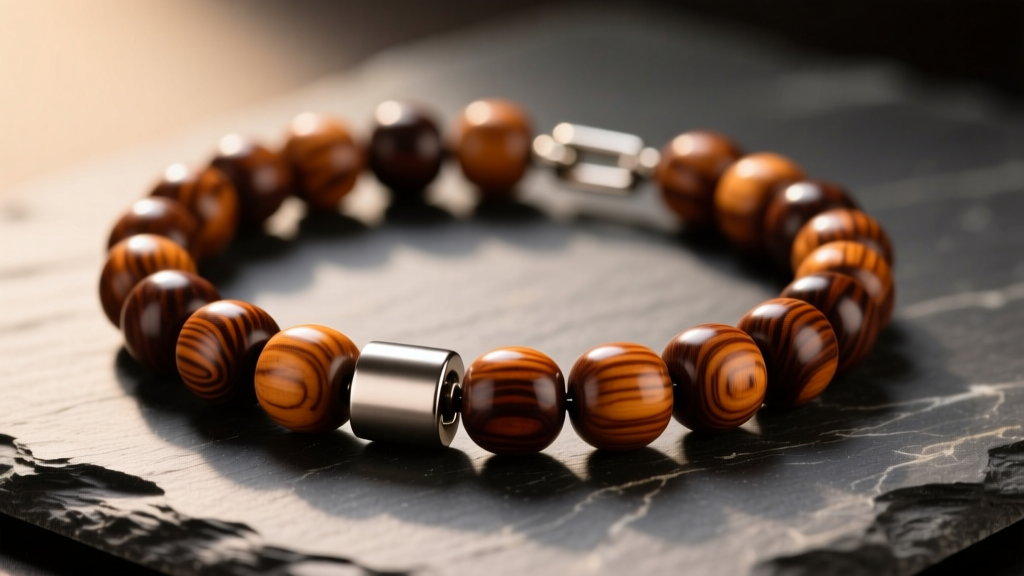
The Botanical and Historical Roots of Camphorwood Jewelry
When collectors and holistic jewelry enthusiasts seek out a camphor necklace, they are engaging with a material that bridges the gap between aromatic botany and wearable art. Derived primarily from Cinnamomum camphora, an evergreen tree native to East Asia, camphorwood has been carved into beads, pendants, and prayer malas for centuries. In Japanese tradition, the ancient camphor tree (Kusunoki) is revered as a sacred entity, and wood harvested from its fallen branches is prized for its spiritual and aromatic properties.
Unlike mineral gemstones, a camphor necklace is a living, breathing organic material. Its cellular structure contains volatile essential oils—primarily the terpene ketone known as camphor (C10H16O)—which slowly sublimate at room temperature. This sublimation is responsible for the wood's signature sharp, sweet, and medicinal aroma, which is traditionally believed to promote mental clarity, repel insects, and ward off negative energy. However, because it is an organic matrix, designing, stringing, and maintaining a camphor necklace requires a deep understanding of its specific material science.
Material Properties: The Science of Camphorwood
To properly evaluate a camphor necklace against other organic alternatives, we must look at its physical and mechanical properties. According to data from The Wood Database, camphorwood exhibits specific characteristics that dictate how it should be worn and cared for.
Janka Hardness and Structural Integrity
Camphorwood registers at approximately 950 lbf (4,230 N) on the Janka hardness scale. This places it in the medium-hard category for jewelry woods. It is significantly harder than balsa or basswood, making it resistant to the minor dings and dents that occur during daily wear. However, it is softer than African Blackwood (3,000+ lbf) or high-grade sandalwood. This moderate hardness means that while a camphor necklace will hold a polished luster, the bead holes are susceptible to reaming if strung on abrasive wire.
Specific Gravity and Porosity
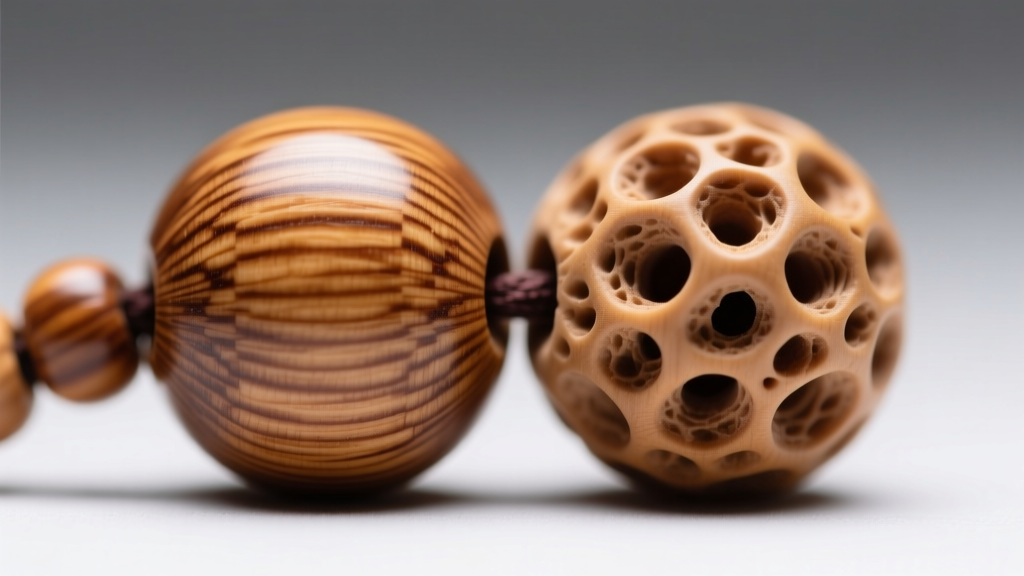
The specific gravity (SG) of air-dried camphorwood typically ranges from 0.50 to 0.65. This relatively low density means the beads are incredibly lightweight, allowing for large, statement-sized pendants or 108-bead malas that do not cause neck fatigue. The wood's pore structure is diffuse-porous, with medium-sized pores that are often plugged with tyloses and natural resin deposits. These deposits are what trap the camphor oils, but they also mean the wood is semi-porous and can absorb skin oils, lotions, and environmental pollutants over time.
Camphor Necklace vs. Other Organic Materials
How does a camphor necklace stack up against other popular organic jewelry materials? The table below breaks down the critical metrics for jewelry makers and collectors.
| Material | Janka Hardness | Specific Gravity | Scent Longevity | Avg. Price (8mm Bead) |
|---|---|---|---|---|
| Camphorwood | 950 lbf | 0.50 - 0.65 | 10 - 30 Years | $0.80 - $2.50 |
| Indian Sandalwood | 1,200 lbf | 0.75 - 0.85 | 5 - 15 Years | $5.00 - $15.00 |
| Agarwood (Oud) | 600 lbf (varies) | 0.40 - 1.10 | Centuries | $20.00 - $150.00+ |
| Baltic Amber | 2.5 Mohs | 1.05 - 1.10 | N/A (Scentless) | $2.00 - $10.00 |
| Bodhi Seed | N/A (Seed) | 1.15 - 1.25 | N/A | $0.20 - $1.00 |
While sandalwood offers a creamier, warmer scent and higher density, it is heavily over-harvested, making authentic Santalum album prohibitively expensive. Agarwood offers unparalleled aromatic complexity but is often faked and requires a massive budget. A camphor necklace occupies the perfect middle ground: it is highly affordable, sustainably harvested (often from pruning or naturally fallen heritage trees), and offers a crisp, energizing scent profile that is distinct from the heavy, musky notes of agarwood.
How to Authenticate Genuine Camphorwood
The market is flooded with cheap, porous woods soaked in synthetic camphor oil. To ensure your camphor necklace is crafted from genuine Cinnamomum camphora, employ these non-destructive testing methods:
- The Friction and Scent Test: Vigorously rub a bead against a piece of untreated cotton or your palm for 15 seconds. Genuine camphorwood will release a sharp, penetrating, and slightly sweet medicinal aroma. Synthetic oils will smell flat, overly chemical, or resemble cheap pine cleaner. Furthermore, real camphorwood will leave a microscopic, non-greasy waxy residue on the cloth due to its natural terpene content.
- The Visual Grain Inspection: Under a 10x jeweler's loupe, authentic camphorwood reveals a distinct interlocked grain with subtle, iridescent ribbon figures when polished. Dyed woods often show pigment pooling in the pores, whereas natural camphorwood ranges from pale yellow-brown to a rich, reddish-brown heartwood without artificial color blocking.
- The UV Fluorescence Test: While not definitive on its own, many genuine camphorwood samples exhibit a faint yellowish-green fluorescence under long-wave (365nm) UV light, a reaction caused by specific natural extractives within the heartwood.
Stringing Materials and Hardware Pairings
The chemical nature of camphorwood dictates strict rules regarding hardware. Camphor oil and the wood's natural tannins are mildly reactive. If you string a camphor necklace using copper, brass, or low-grade bronze findings, the volatile oils will accelerate galvanic corrosion, resulting in a green verdigris crust that will permanently stain the adjacent wood beads.
For clasps and spacer beads, always opt for Grade 5 Titanium (Ti-6Al-4V) or 316L surgical stainless steel. These alloys are entirely inert to organic terpenes. If you prefer precious metals, 18k yellow gold or platinum are safe choices. Sterling silver (925) can be used, but it should be rhodium-plated to prevent the sulfur compounds in the environment from causing tarnish that could transfer to the wood.
For the stringing medium, avoid synthetic braided wires like PowerPro, which can act like a saw and ream out the soft wood holes over time. The gold standard for a high-end camphor necklace is Size F or G natural silk thread, knotted between each bead. The knots prevent bead-on-bead friction, preserve the wood's polished surface, and provide a fluid, luxurious drape that synthetic cords cannot replicate. Always use sterling silver or gold-filled French wire (bullion) at the clasp loops to protect the silk from fraying against the metal.
Long-Term Care and Patina Development
Unlike amber or jade, which are sealed and inert, a camphor necklace requires active management of its volatile compounds. According to chemical profiles on PubChem, camphor sublimates directly from a solid to a gas. This means the scent will slowly diminish if the necklace is worn daily and exposed to body heat and airflow.
Never apply mineral oil, beeswax, or commercial wood polishes to a camphor necklace. These substances seal the pores and trap the camphor gas inside, effectively killing the aromatic benefit of the jewelry. Instead, rely on the natural sebum from your skin to develop a smooth, glassy patina over the years.
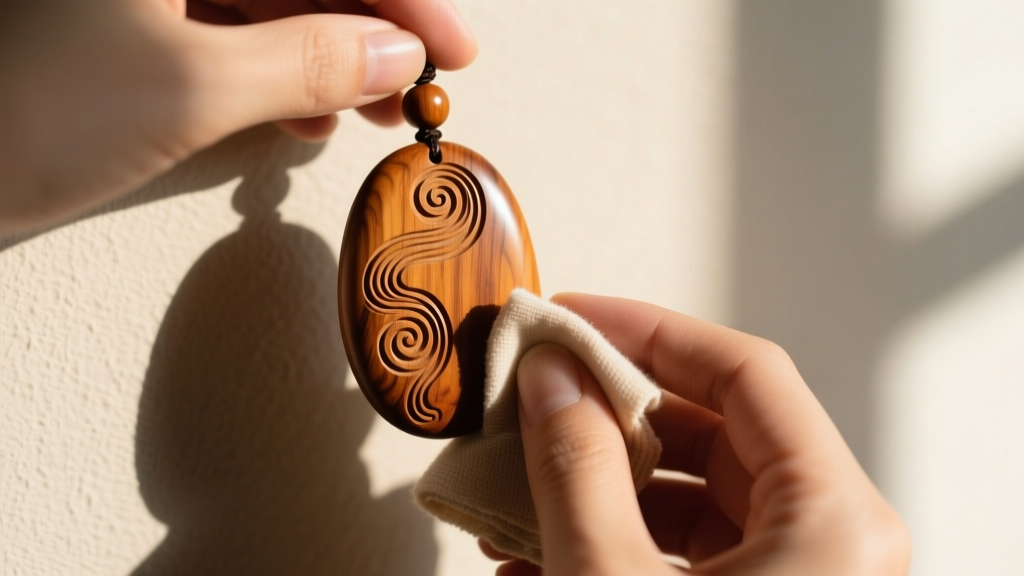
When the scent inevitably fades after a decade of wear, you can 'recharge' the necklace. Using a piece of 2000-grit or 3000-grit wet/dry sandpaper, gently buff the surface of the beads. This removes the oxidized, oil-sealed outer layer of the patina and opens fresh pores, releasing a new wave of trapped camphor terpenes. Wipe away the fine dust with a dry microfiber cloth, and the necklace will smell as vibrant as the day it was carved. Store the necklace in a breathable linen pouch when not in use; airtight plastic bags can cause the sublimated gases to condense and create a sticky residue on the wood surface.


