Expert Cleaning & Care Guide for a 22 Inch Mens Necklace
Learn expert cleaning, maintenance, and storage tips for your 22 inch mens necklace. Protect gold, silver, and steel chains from daily wear.

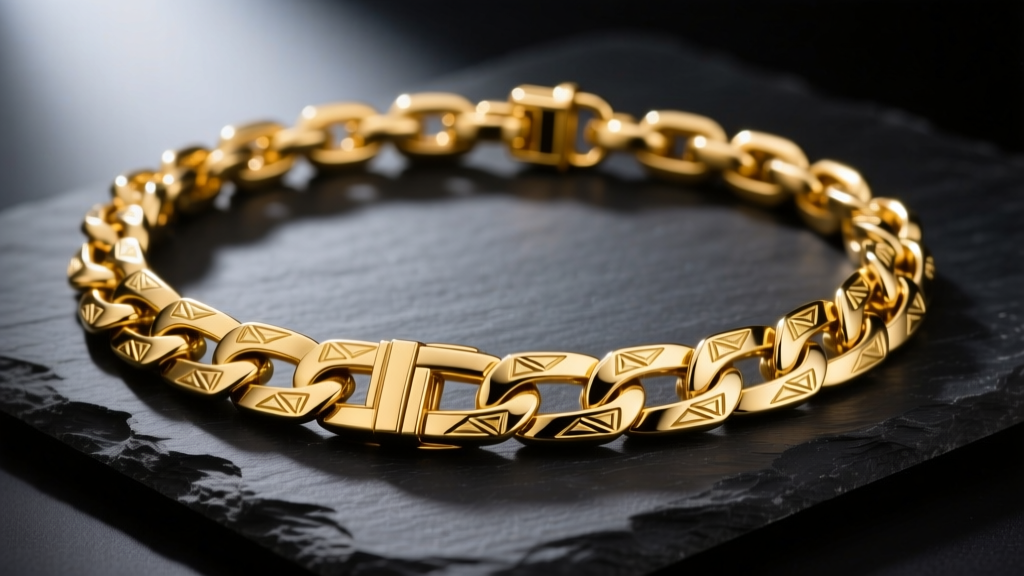
The 22-inch chain is widely considered the gold standard in men's jewelry. It sits perfectly at the collarbone, offering maximum versatility—visible above a standard crewneck t-shirt, yet easily concealed beneath a button-down shirt. However, this specific anatomical placement creates a unique set of maintenance challenges. A 22 inch mens necklace resides squarely in what jewelers call the 'collarbone friction zone,' an area subjected to constant skin contact, sebum production, and fabric abrasion.
Ignoring the specific care requirements of this length leads to accelerated tarnishing, clasp fatigue, and link degradation. This comprehensive guide moves beyond generic jewelry advice, providing material-specific protocols, mechanical troubleshooting, and deep-cleaning frameworks to keep your chain in pristine condition.
The Collarbone Friction Zone: Why 22-Inch Chains Degrade Faster
Unlike longer chains (24 to 30 inches) that hang freely against the sternum, a 22 inch mens necklace rests directly against the base of the neck and upper chest. This area is rich in sebaceous glands and sweat pores. Human sebum has a slightly acidic pH (typically between 4.5 and 6.0), while sweat contains urea, lactic acid, and trace salts. When these biological compounds become trapped between the metal links and the skin, they create a localized corrosive environment.
Furthermore, the collarbone area experiences high kinetic friction. Every time you turn your head, walk, or adjust your clothing, the chain undergoes micro-abrasions against your skin and collar fabric. Over time, this friction can wear down high-polish finishes, trap dead skin cells deep within the crevices of complex links (like Cuban or Figaro chains), and compromise the structural integrity of the clasp.
Material-Specific Cleaning Protocols
The chemical composition of your chain dictates how it reacts to environmental stressors and cleaning agents. According to guidelines from the Jewelers of America, using the wrong chemical solvent can permanently damage specific metal alloys. Below is a breakdown of how to treat the most common materials used in men's chains.
316L Surgical Stainless Steel
316L steel owes its corrosion resistance to a microscopic passivation layer of chromium oxide, bolstered by the addition of molybdenum. While highly resistant to rust, the crevices of a 22-inch steel chain can trap chloride salts from dried sweat, which can eventually cause pitting corrosion if left uncleaned. Avoid bleach or chlorine-based cleaners, which actively destroy the passivation layer.
925 Sterling Silver
Sterling silver is 92.5% pure silver and 7.5% copper. It is the copper content that reacts with sulfur compounds in the air and in human sweat to form silver sulfide—the dark, unsightly tarnish commonly seen on neglected chains. Never use toothpaste or baking soda paste on silver; the abrasive silica particles will create micro-scratches that increase the surface area, making the chain tarnish faster in the future.
14k and 18k Gold
Pure 24k gold is too soft for daily wear, so it is alloyed with metals like zinc, copper, and nickel. While gold itself does not tarnish, the alloy metals can react to harsh chemicals. The primary enemy of gold chains is lotion and soap scum, which creates a dull, waxy film that traps dirt against the skin.
The Deep Cleaning Framework
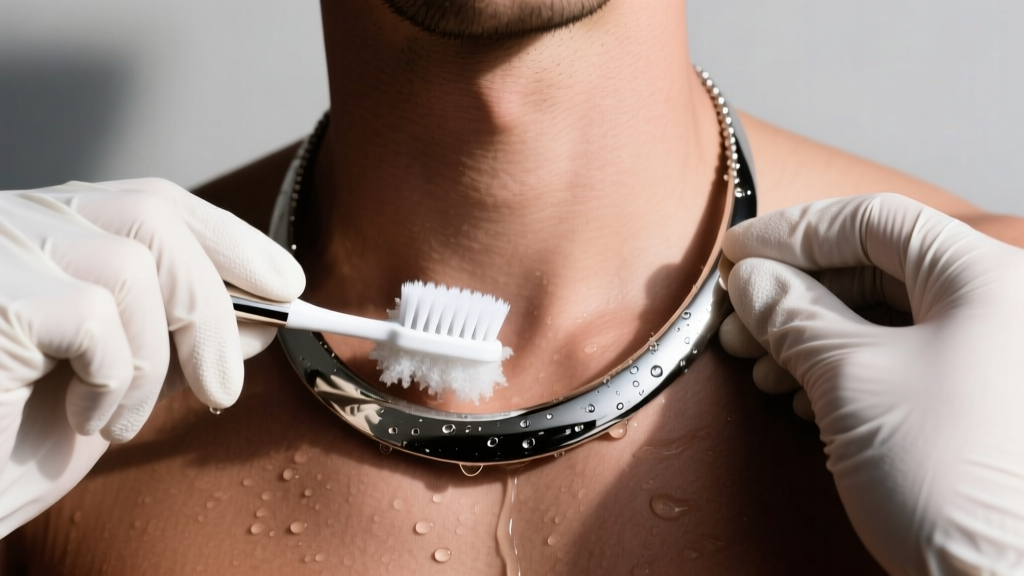
Ditch the commercial 'instant dip' cleaners found in drugstores. These products typically rely on thiourea, a chemical that strips tarnish instantly but leaves microscopic pits in the metal. This porous surface actually accelerates future tarnishing and ruins the original factory polish. Instead, utilize the following professional-grade manual cleaning framework.
Step 1: The pH-Neutral Soak
Fill a glass bowl with warm (not hot) distilled water and add three drops of a pH-neutral, phosphate-free dish soap (such as original Dawn). Submerge your 22 inch mens necklace and let it soak for 15 to 20 minutes. This loosens sebum, dead skin, and environmental grime without attacking the metal alloys.
Step 2: Agitation and Detailing
Remove the chain and lay it flat on a clean microfiber towel. Using a brand-new, extra-soft baby toothbrush, gently agitate the links. Focus heavily on the clasp mechanism and the jump rings, where debris accumulates. Always brush in the direction of the link pattern to avoid bending delicate connections.
Step 3: Rinsing and Drying
Rinse thoroughly under lukewarm running water. Do not use paper towels to dry the chain; wood pulp fibers in paper towels are hard enough to inflict micro-scratches on high-karat gold and polished silver. Instead, pat dry with a lint-free microfiber cloth and use a hair dryer on the 'cool' setting to blast water out of the internal link cavities.
Cleaning Agent Matrix by Material
| Metal Type | Recommended Cleaner | Chemicals to Avoid | Polishing Method |
|---|---|---|---|
| 316L Stainless Steel | Mild dish soap, warm water | Bleach, chlorine, ammonia | Microfiber cloth only |
| 925 Sterling Silver | Specialized silver foam, dish soap | Thiourea dips, baking soda | 100% cotton rouge cloth |
| 14k / 18k Gold | Dish soap, ammonia-free glass cleaner | Hair dye chemicals, pool chlorine | Jeweler's polishing cloth |
| Titanium (Grade 5) | Isopropyl alcohol, soap | Hydrofluoric acid (industrial) | Not required (brushed finish) |
Hardware, Clasps, and Shear Stress
The most overlooked aspect of chain maintenance is the hardware. A heavy 22 inch mens necklace, such as a 6mm Cuban link weighing over 100 grams, places immense shear stress on the clasp mechanism. Standard 12mm lobster clasps rely on a tiny internal steel spring and a minuscule wire ring. Over time, the weight of the chain pulling against the collarbone causes the spring to fatigue and the jump ring to warp open.
Expert Tip: Inspect the jump ring connecting your clasp every six months. If you see even a hairline gap where the ring meets, take it to a jeweler to be soldered shut. An unsoldered jump ring is the number one cause of lost chains.
For chains exceeding 80 grams, consider upgrading the hardware. Rio Grande jewelry supply guidelines suggest utilizing box clasps with double safety latches, or heavy-duty locking carabiner clasps, which distribute the tensile load much more evenly than a traditional spring-loaded lobster clasp.
Long-Term Storage and Prevention
How you store your 22 inch mens necklace when it is not on your body is just as critical as how you clean it. Tossing a chain into a drawer leads to 'link-on-link' abrasion and severe tangling. When a chain tangles, the links act like tiny saws against one another, wearing away millimeters of precious metal over time.
The Hanging Method vs. The Flat Coil
For lightweight chains (under 40 grams), hanging them on a velvet-lined jewelry stand keeps the links aligned and prevents kinking. However, for heavy, thick chains, gravity can stretch the links over years of hanging. Heavy chains should be coiled loosely into a figure-eight pattern and stored flat.
Atmospheric Control
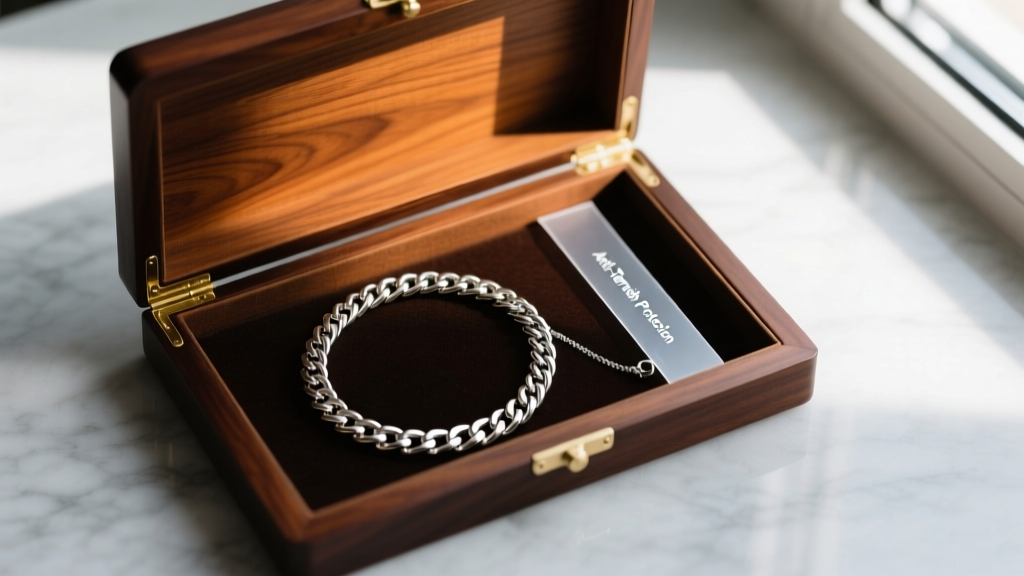
If your chain is sterling silver, atmospheric sulfur is your enemy. Store the coiled chain inside a sealed polyethylene plastic bag (avoid PVC, which emits corrosive gases). Drop a 3M anti-tarnish strip inside the bag before sealing. These strips absorb sulfur compounds and airborne pollutants, keeping your silver bright for up to 12 months without needing a polish. By understanding the unique biological and mechanical stressors placed on a 22-inch chain, you can preserve its weight, luster, and structural integrity for a lifetime of daily wear.


