How to Clean and Maintain Your 3 Layered Necklace
Learn expert techniques to clean, untangle, and store your 3 layered necklace without damaging delicate chains or mixing metal polishes.

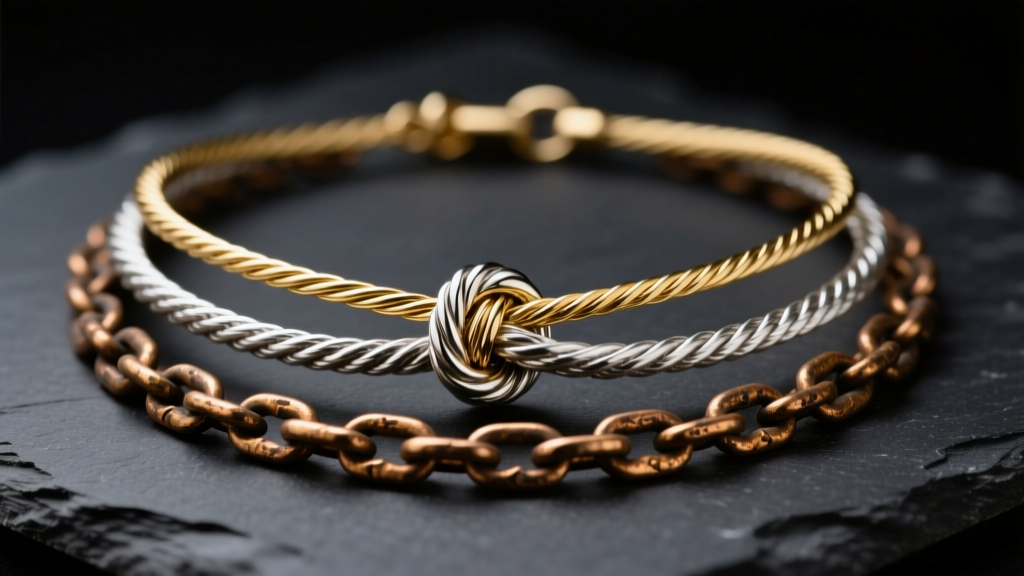
The 3 layered necklace has cemented its place as a foundational element of modern jewelry styling. By combining a 14-inch choker, an 18-inch princess chain, and a 22-inch matinee strand, you create a cascading visual effect that elevates any neckline. However, the physical reality of wearing and storing multiple delicate chains in close proximity introduces severe maintenance challenges. From micro-abrasions and galvanic corrosion to the dreaded 'jewelry box spaghetti' effect, maintaining a multi-strand setup requires a highly specific, scientifically grounded approach to care.
Unlike a single heavy pendant, a layered configuration subjects each individual chain to continuous friction and environmental exposure. In this comprehensive guide, we break down the exact protocols for cleaning, untangling, and preserving the structural integrity of your layered necklaces.
The Physics of Friction and Galvanic Corrosion
When you wear a 3 layered necklace, the chains do not simply rest on top of one another; they interact dynamically with every movement. This interaction leads to two primary forms of degradation:
Micro-Abrasions and the Mohs Scale
If your layered set mixes metals or incorporates heavy pendants on the longest strand, you risk mechanical wear. For instance, if a stainless steel pendant (Mohs hardness of 5.5) rests against a sterling silver chain (Mohs hardness of 2.5 to 3), the steel will act as a microscopic file. Over six months of daily wear, this friction can shave off microns of silver, weakening the links and leading to catastrophic chain failure. According to the Gemological Institute of America (GIA), keeping mixed-metal layers separated by soft fabric when not in use is critical to preventing this cross-contamination of wear.
Galvanic Corrosion in Mixed Metals
If your 3 layered necklace features a mix of sterling silver and copper-heavy brass or rose gold, sweat and humidity act as an electrolyte. This creates a galvanic cell where the less noble metal (like copper or zinc in brass) oxidizes rapidly, transferring tarnish to the silver chains. This is why a layered set often looks duller and dirtier than a single-strand piece—the chemical reactions are compounding.
Pre-Cleaning: The Detangling Imperative
The most common mistake jewelry owners make is submerging a tangled 3 layered necklace into a liquid cleaning solution. Water and liquid surfactants act as capillary adhesives. When liquid enters the microscopic gaps of a knot, surface tension pulls the links tighter together, transforming a loose tangle into a hardened, nearly impossible micro-knot.
The Golden Rule: Never introduce moisture to a tangled chain. Always detangle completely while the metal is dry.
The Dry Lubrication Method
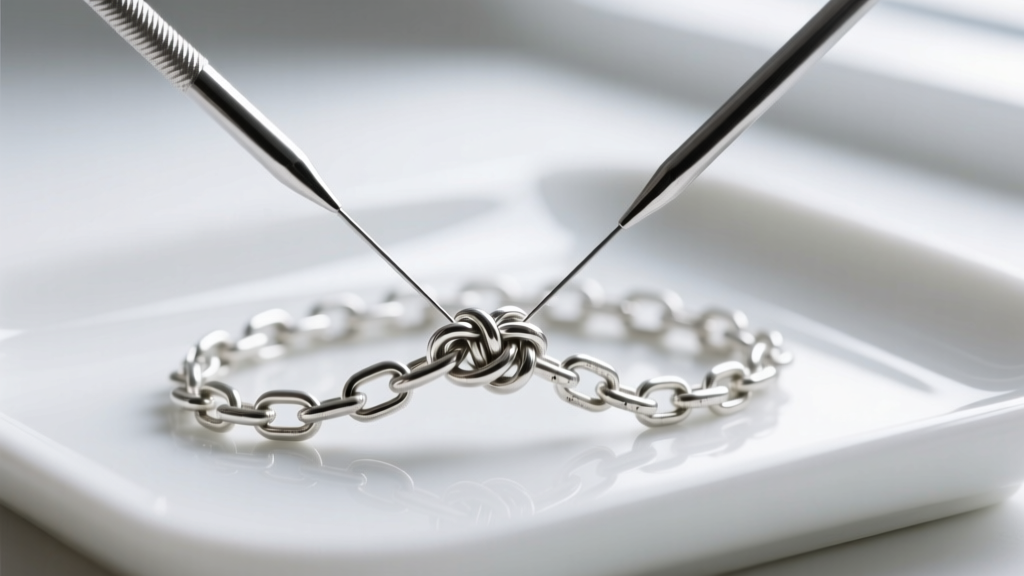
For stubborn knots in delicate 1mm or 0.8mm chains, avoid pulling. Instead, lay the necklace on a non-porous, high-contrast surface like a white ceramic tile or a glass tray. Apply a minuscule amount of food-grade mineral oil or specialized jewelry detangler directly to the knot using a toothpick. Avoid olive oil or baby oil, as these contain organic compounds that will oxidize, turn rancid, and leave a sticky residue that attracts dust. Use two 0.30mm beading needles to gently push the center links outward, loosening the tension from the inside out.
Material-Specific Cleaning Matrix
Because a 3 layered necklace often features different chain styles (e.g., a delicate cable chain, a textured rope chain, and a flat box chain), dirt traps vary. Furthermore, the metal composition dictates the chemical pH of the cleaner you must use. Below is the definitive cleaning matrix based on Federal Trade Commission (FTC) Jewelry Guides for metal classifications.
| Metal Type | Chain Style Vulnerability | Recommended Cleaner | Chemicals to Avoid |
|---|---|---|---|
| Sterling Silver (925) | Rope chains trap sulfur and skin oils deeply in the twists. | Mild dish soap (pH 7) and warm water; silver polishing cloth for links. | Ammonia, bleach, toothpaste (abrasives scratch the finish). |
| Gold Vermeil (2.5μm+) | Box chains can suffer edge-wear, exposing the silver core. | Only lukewarm water and a microfiber cloth. No soaking. | Ultrasonic cleaners, commercial gold dips (strips the gold layer). |
| 14k Gold-Filled (1/20) | Cable chains are highly durable but clasp springs can corrode. | Ammonia-free jewelry foam applied with a soft baby toothbrush. | Chlorine (causes irreversible stress-corrosion cracking in karat gold). |
| Stainless Steel / PVD | Curb chains are robust; PVD coating can chip if struck. | Isopropyl alcohol (70%) on a cotton swab for targeted spot cleaning. | Hydrochloric acid or heavy abrasive polishing pastes. |
The Manual Agitation Technique
Once your 3 layered necklace is completely untangled and you have identified the metal types, it is time to clean. Abandon the idea of ultrasonic cleaners for layered sets. The high-frequency cavitation bubbles generated by ultrasonic machines can easily warp delicate jump rings and shatter the tension springs inside lobster clasps.
- Isolate the Strands: Clean each of the three layers individually. Do not wash them in the same bowl, as detached tarnish particles from a silver chain can embed into the porous surface of a gold-filled chain.
- The Soak: Mix three drops of phosphate-free, lotion-free dish detergent (like Dawn Original) into a bowl of distilled water. Tap water contains chlorine and calcium that leave microscopic water spots on polished metals.
- Agitation: Submerge the chain for exactly 3 to 5 minutes. Use a soft-bristled infant toothbrush to gently stroke the chain in the direction of the links, never in circular motions, which can bend delicate cable loops.
- The Rinse and Dry: Rinse under a gentle stream of distilled water. Immediately pat dry with a lint-free microfiber cloth, and use a hair dryer on the 'cool' setting to blow moisture out of the clasp mechanisms.
Advanced Storage Architectures
Proper storage is 90% of the maintenance battle for a 3 layered necklace. The goal is to eliminate entropy—the natural tendency of flexible chains to knot when subjected to random movement in a drawer or jewelry box.
The Clasp-Lock Method
Before storing, thread the clasp of the 14-inch choker through the links of the 22-inch matinee chain, and then secure it. By physically linking the layers together in a controlled, parallel loop, you prevent the individual chains from crossing over one another and forming slipknots during transit.
Atmospheric Control
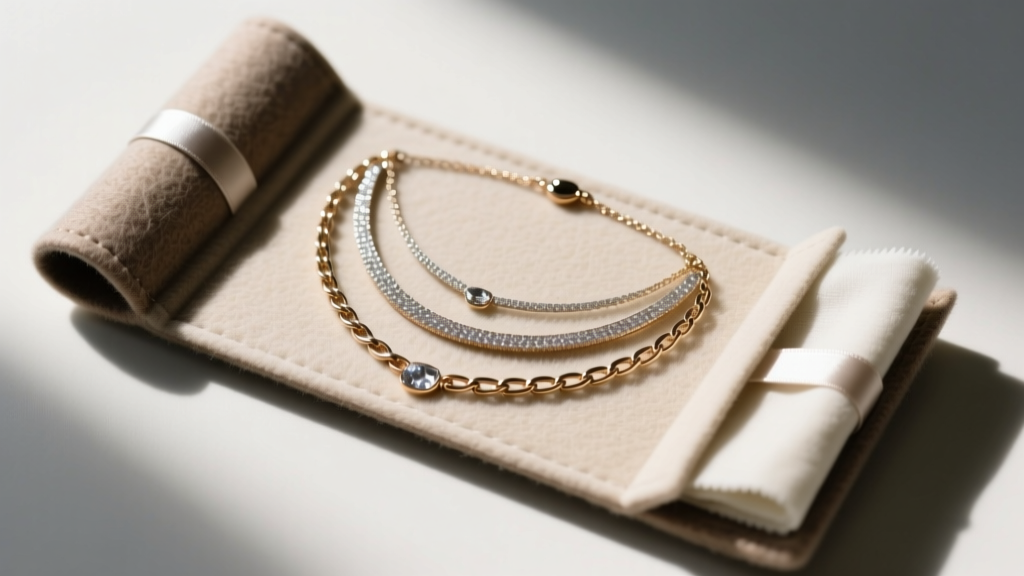
Sterling silver tarnishes when exposed to hydrogen sulfide in the air. When storing your layered set in a velvet pouch or a felt jewelry roll, always include a 3M anti-tarnish strip. These strips utilize chemically treated copper particles that act as a sacrificial anode, absorbing sulfur and moisture from the micro-environment of the pouch before it can react with your silver or copper-alloy chains. Replace these strips every six months to ensure maximum efficacy.
'A layered necklace is an investment in styling, but it demands an investment in physics. Treat the layers as individual entities during cleaning, and as a unified system during storage.' — Master Bench Jeweler Adage
Conclusion: Establishing a Maintenance Cadence
To keep your 3 layered necklace looking as pristine as the day you bought it, establish a strict maintenance cadence. Perform a dry microfiber wipe-down after every wear to remove acidic skin oils and cosmetic residues. Execute the manual agitation wash once a month, or more frequently if you live in a high-humidity coastal environment. By respecting the material science of your chains and adopting these meticulous care protocols, your layered stack will remain a flawless, tangle-free centerpiece of your wardrobe for decades.


