Ultimate Care Guide for Your Crescent Moon Star Necklace
Learn expert tips to clean, polish, and store your crescent moon star necklace. Prevent tarnish and protect delicate celestial pendants and gemstones.

Why Celestial Jewelry Requires Specialized Care
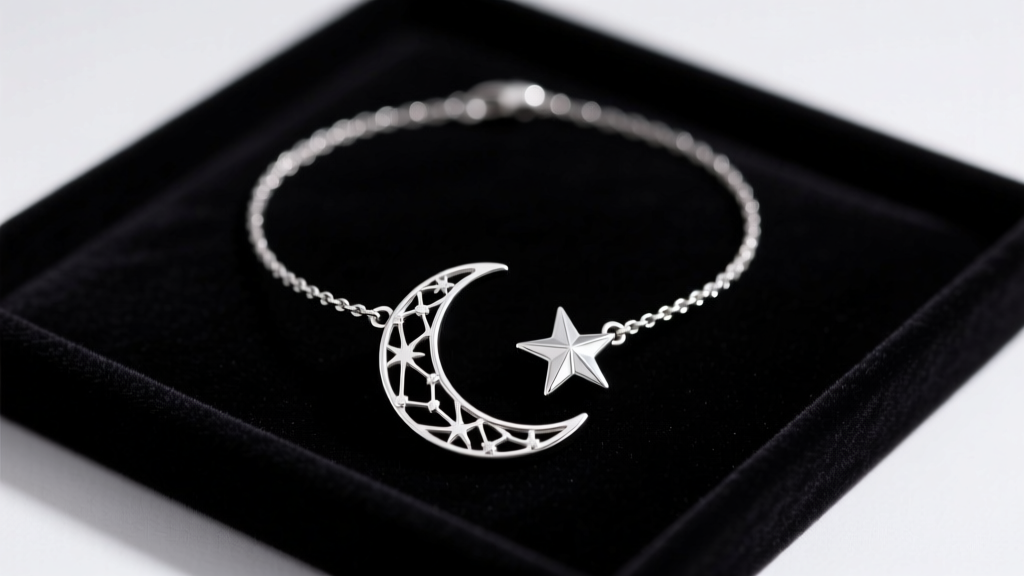
Celestial jewelry, particularly the beloved crescent moon star necklace, captures a sense of whimsy and elegance that transcends seasonal trends. However, from a metallurgical and gemological perspective, these intricate designs present unique maintenance challenges. The tight interior angles where the star overlaps or sits beside the crescent moon create microscopic crevices. These crevices trap sebum, cosmetic residues, and environmental sulfur, accelerating tarnish and dulling the metal's brilliance.
Unlike a simple solitaire pendant, a crescent moon star necklace features complex geometry that standard jewelry wipes cannot reach. To preserve the structural integrity and optical brilliance of your piece, you must adopt a targeted cleaning protocol tailored to its specific material composition.
Material Breakdown: What Are You Actually Cleaning?
Before submerging your necklace in any solution, you must identify the base metal and the plating. The cleaning methodology for solid 925 sterling silver differs vastly from that of gold vermeil.
Sterling Silver (925) and Silver Sulfide
Sterling silver is an alloy containing 92.5% pure silver and 7.5% copper. The copper provides durability but is highly reactive to sulfur and moisture in the air, forming silver sulfide (Ag2S)—the black layer we recognize as tarnish. The crevices of a star and moon pendant trap ambient humidity, making these recessed areas the first to oxidize.
Gold Vermeil and Plating Thickness
According to the Federal Trade Commission, true gold vermeil must feature a gold layer of at least 2.5 microns over a sterling silver base. Aggressive polishing or abrasive pastes will strip this microscopic layer, exposing the reactive silver beneath. When cleaning a vermeil crescent moon star necklace, friction is your enemy.
The Step-by-Step Cleaning Protocol
To safely remove buildup without damaging the metal or any gemstone accents, follow this master jeweler-approved methodology.
Tools Required
- Mild, phosphate-free dish soap
- Lukewarm distilled water (tap water contains chlorine and minerals that can spot silver)
- Soft-bristled baby toothbrush or a clean, soft makeup brush
- Wooden jeweler's pick or a wooden cuticle stick (never use metal needles, which will scratch 925 silver)
- Lint-free microfiber cloth
Method 1: The Lukewarm Soap Bath (For Solid Silver and CZ Accents)
Fill a small glass bowl with distilled lukewarm water and add two drops of mild dish soap. Submerge your crescent moon star necklace for exactly three to five minutes. This allows the surfactants to break down the lipid bonds of skin oils trapped in the celestial cutouts.
After soaking, take your soft-bristled brush and gently agitate the water around the pendant. For the tight junction where the star meets the moon, use the wooden pick to gently dislodge any compacted debris. Wood is softer than silver and gold, ensuring you will not leave micro-scratches on the polished surfaces.
Rinse thoroughly under a gentle stream of distilled water, then pat dry with a microfiber cloth. Allow it to air dry completely on a paper towel before storing.
Method 2: The Dry Polish (For Gold Vermeil and Oxidized Details)
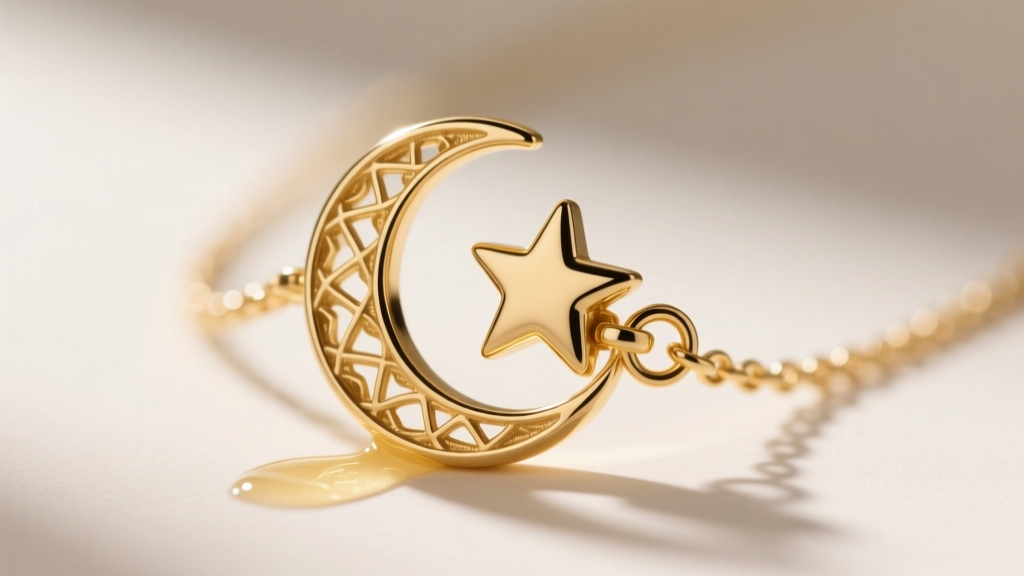
If your necklace features gold vermeil or intentional oxidized (blackened) recesses to highlight the moon's craters, avoid liquid soaks. Instead, use a high-quality untreated jeweler's polishing cloth. Gently rub the raised surfaces of the star and moon. Avoid pressing hard into the crevices, as you may rub away the intentional oxidation that gives the pendant its three-dimensional depth.
Chemical Compatibility Chart
Not all cleaning agents are safe for every material. Refer to this compatibility matrix before applying any commercial jewelry cleaner to your crescent moon star necklace.
| Cleaning Agent | Sterling Silver (925) | Gold Vermeil | Moonstone / CZ Accents |
|---|---|---|---|
| Mild Dish Soap & Distilled Water | Safe | Safe | Safe |
| Baking Soda Paste | Use with Caution | Avoid (Abrasives strip gold) | Avoid (Scratches surface) |
| Ultrasonic Cleaner (40kHz) | Safe (if no stones) | Avoid (Vibration loosens plating) | Strictly Avoid (Fractures stone) |
| Silver Dip (Thiourea based) | Safe for heavy tarnish | Strictly Avoid | Strictly Avoid |
| Ammonia-based Cleaners | Avoid | Avoid | Avoid (Destroys CZ foil backing) |
Gemstone Warning: Handling Moonstone and Opal Accents
Many celestial-themed necklaces incorporate moonstones or opals to enhance the cosmic aesthetic. These gemstones require extreme caution. According to the Gemological Institute of America (GIA), moonstone ranks between 6 and 6.5 on the Mohs scale of hardness, making it highly susceptible to scratching and fracturing.
"Never place a moonstone or opal pendant in an ultrasonic cleaner. The 40kHz high-frequency vibrations can easily cause the internal lamellar twinning of the moonstone to fracture, completely destroying its adularescence—the very optical phenomenon that gives the stone its magical glow."
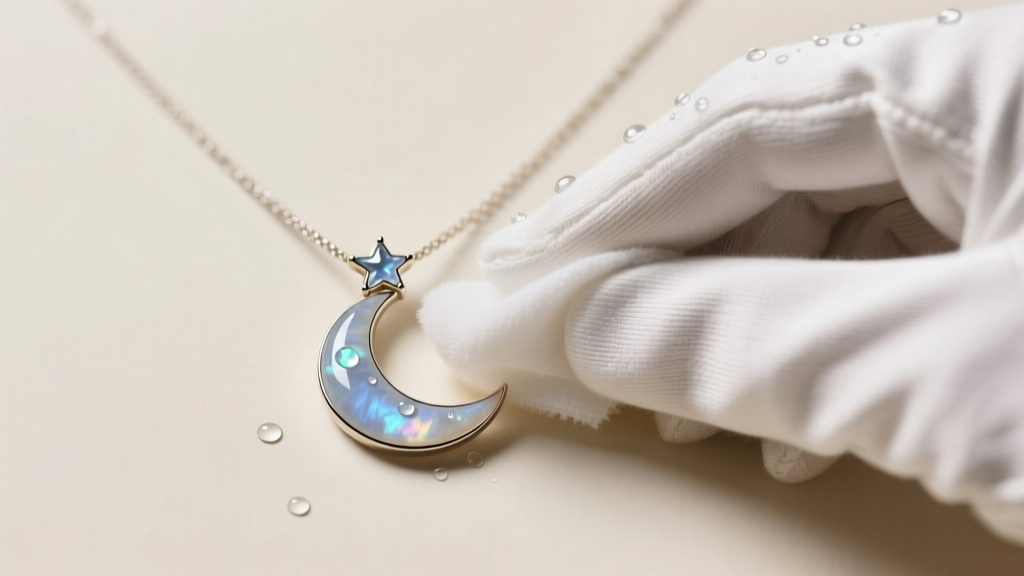
If your crescent moon star necklace features a cabochon moonstone, clean it only with a barely damp microfiber cloth. Avoid any contact with harsh chemicals, perfumes, or hairsprays, as these can penetrate the microscopic pores of the stone and cause permanent clouding.
Storage Solutions to Halt Tarnish at the Source
Proper maintenance extends far beyond the cleaning process; it is fundamentally about environmental control. The Silver Institute emphasizes that controlling humidity and limiting exposure to airborne sulfur are the most effective ways to prevent silver sulfide formation.
The Anti-Tarnish Microenvironment
Never toss your crescent moon star necklace into a communal jewelry box where it can tangle with harder chains or scratch against diamond or sapphire pieces (which rank 9 and 10 on the Mohs scale). Instead, create a specialized microenvironment:
- Individual Poly Bags: Store the necklace in a small, airtight polyethylene ziplock bag. Squeeze out as much air as possible before sealing to minimize the oxygen and moisture available for the tarnishing reaction.
- Anti-Tarnish Strips: Place a 3M anti-tarnish strip inside the bag. These strips contain copper-based polymers that act as a sacrificial metal, absorbing ambient sulfur and hydrogen sulfide gases before they can reach your silver pendant.
- Silica Gel Packets: Include a small desiccant packet to maintain a low-humidity environment, which is particularly crucial if you live in a coastal or tropical climate.
The Golden Rule of Jewelry Wear
To minimize the need for deep cleaning, adopt the "Last On, First Off" rule. Your crescent moon star necklace should be the final accessory you put on after applying lotions, perfumes, and cosmetics, and the very first item you remove when you return home. This simple habit prevents the accumulation of cosmetic waxes and chemical solvents that degrade both metal finishes and gemstone luster over time.
By understanding the specific metallurgical and gemological properties of your jewelry, you can ensure that your crescent moon star necklace remains as luminous and captivating as the night sky it represents.


