Expert Guide to the Kukui Nuts Necklace: Curing, Grading, and Care
Discover the botanical science, traditional curing methods, and grading standards behind authentic kukui nuts necklaces in this expert crafting guide.

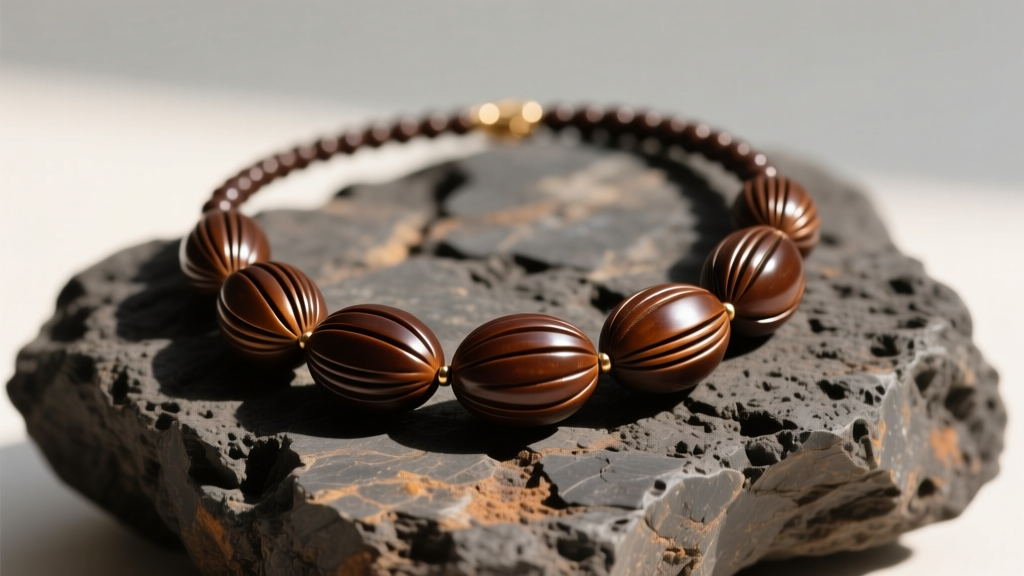
Botanical Origins and Material Properties of Aleurites moluccana
The kukui nut necklace is far more than a simple souvenir; it is a masterclass in botanical jewelry. Derived from Aleurites moluccana, commonly known as the candlenut tree and the official state tree of Hawaii, the 'nut' used in jewelry is technically the endocarp—the hard, lignified inner shell that protects the seed. Understanding the material science of the endocarp is critical for jewelers and collectors alike.
Unlike wood-based beads, the kukui endocarp is incredibly dense, boasting a specific gravity that allows it to sink in water when fully cured. Its cellular structure is rich in lignin and naturally infused with oils, which gives it a unique capacity to achieve a glass-like polish without the need for synthetic lacquers. However, this high oil content also makes the raw material highly susceptible to rancidity and fungal degradation if not processed with exacting precision. According to ethnobotanical records from the Bishop Museum, early Hawaiians utilized these oils for lighting, but the transition to jewelry required mastering the removal of the fleshy, moisture-heavy exocarp.
The Curing and Polishing Process: Traditional vs. Modern Techniques
The transformation of a raw, fallen candlenut into a gem-grade bead is a multi-stage process that dictates the final structural integrity and luster of a kukui nuts necklace. Harvesters only collect nuts that have naturally fallen to the ground, ensuring the seed inside has fully matured and the endocarp has begun to lignify.
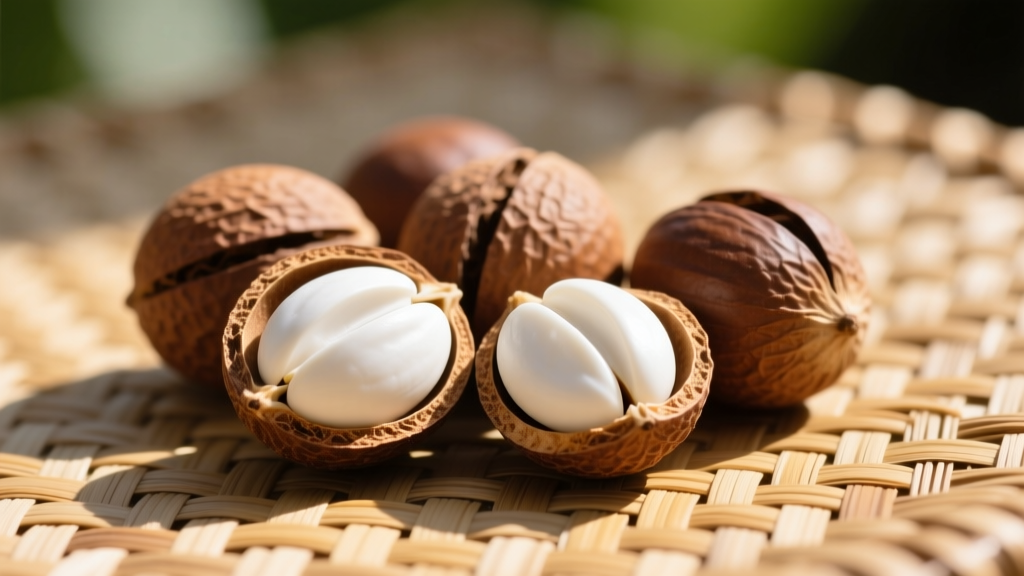
The traditional curing process involves burying the nuts in damp soil or submerging them in running streams for several weeks. This controlled rotting process, known as leaching, breaks down the outer husk and leaches out excess moisture and volatile compounds that cause cracking. Once cleaned, the nuts are sun-dried for up to three months to reach a stable hygroscopic equilibrium.
Modern lapidary techniques have introduced kiln-drying and chemical bleaching, which drastically reduce processing time but often compromise the cellular integrity of the shell, leading to micro-fractures. Polishing has similarly evolved. While traditionalists still use volcanic sand and banana leaves to burnish the shells, commercial operations rely on rotary tumblers loaded with cerium oxide or aluminum oxide compounds to achieve a uniform, high-gloss finish.
Curing and Finishing Methods Comparison
| Method | Processing Time | Structural Integrity | Finish Quality |
|---|---|---|---|
| Traditional Soil Leaching & Sun Drying | 3 - 6 Months | Exceptional (Preserves natural oils) | Deep, warm luster with natural variations |
| Modern Kiln Drying & Tumbling | 2 - 4 Weeks | Moderate (Risk of micro-fractures) | Uniform, glass-like high gloss |
| Chemical Bleaching & Lacquering | 1 - 2 Weeks | Poor (Strips natural oils, brittle) | Plastic-like, artificial shine |
Grading Standards: How to Identify Authentic Kukui Nuts
As the demand for authentic Hawaiian jewelry has grown, so has the market for imitations made from dyed wood, compressed sawdust, or synthetic resins. Expert graders evaluate a kukui nuts necklace based on four primary criteria: color depth, surface topography, weight, and acoustic resonance.
- Grade A (Heirloom/Jeweler's Grade): Hand-selected, flawlessly polished nuts with a deep, translucent black or rich mahogany brown hue. These measure a uniform 15-18mm in diameter, feature perfectly smoothed natural ridges, and possess a high density that yields a sharp, ceramic-like 'clack' when tapped together.
- Grade B (Commercial/Polished): Tumble-polished nuts with slight color variations and minor surface pitting. Sizes may range from 12-20mm. These are standard for most retail necklaces and offer excellent durability.
- Grade C (Rustic/Raw): Unpolished or lightly sanded nuts retaining their deep, natural corrugated ridges and matte finish. Often left in their natural pale tan or grey state, these are favored for casual, organic-style jewelry.
To identify fakes, experts use the 'hot pin test' on an inconspicuous area; authentic kukui will smell like burning wood or roasted nuts, while resin or plastic imitations will emit a harsh chemical odor and melt. Furthermore, the National Tropical Botanical Garden notes that true kukui endocarps have a distinct, asymmetric internal cavity that is often visible through the drill hole, whereas molded fakes have uniform, perfectly cylindrical channels.
Cordage and Assembly: Structural Integrity of the Necklace
The mechanical failure point of any botanical necklace is rarely the bead itself, but rather the cordage and clasp assembly. Because kukui nuts are relatively heavy and possess sharp, unyielding drill-hole edges, the tensile strength and abrasion resistance of the threading material are paramount.
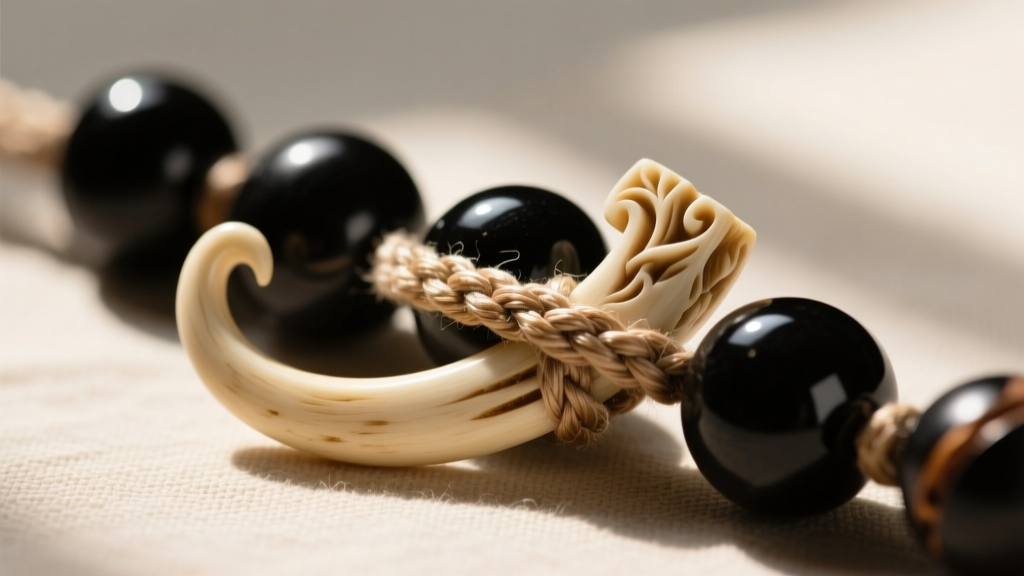
Historically, the gold standard for cordage was olonā (Touchardia latifolia), a native Hawaiian shrub that produces one of the strongest natural plant fibers in the world, boasting a tensile strength that rivals modern nylon. However, olonā is exceedingly rare today. Modern master crafters substitute it with high-grade, waxed polyester cord or braided nylon, typically in the 1.5mm to 2.0mm thickness range. The wax coating is crucial; it prevents the cord from fraying against the microscopic sharp edges of the nut's drill hole.
For clasps, traditional macramé sliding knots remain popular for their adjustability and lack of metal hardware. When a rigid clasp is preferred, hand-carved bone or coconut shell hooks are used to maintain the organic aesthetic. If metal clasps are integrated, sterling silver or 14k gold-filled lobster claws are recommended, secured with reinforced crimp beads and a drop of cyanoacrylate adhesive to prevent slippage under the necklace's dynamic weight load.
Long-Term Maintenance and Environmental Vulnerabilities
Despite their hardwood-like exterior, kukui nuts remain hygroscopic organic materials. They will absorb and release moisture in response to ambient humidity, which can lead to swelling, shrinking, and eventual cracking if subjected to rapid environmental shifts. A kukui nuts necklace must never be worn in the shower, swimming pool, or ocean, as prolonged water exposure will degrade the cordage and cause the nuts to swell and splinter from the inside out.
Ultraviolet radiation is another enemy; prolonged exposure to direct sunlight will oxidize the natural oils within the shell, causing the deep black or brown colors to fade to a dull, chalky grey. To maintain the structural integrity and luster of the necklace, owners should perform a bi-annual conditioning treatment. Apply a micro-drop of fractionated coconut oil or pure jojoba oil to a microfiber cloth and gently buff each nut. Avoid mineral oil or petroleum-based products, which can clog the cellular pores and trap moisture. Store the necklace flat in a climate-controlled environment, ideally inside a cedar-lined box that naturally regulates humidity and deters insect infestations.


