How to Clean and Care for Your Date Everything Necklace
Learn expert cleaning and maintenance tips to keep your date everything necklace shining. Discover safe methods for gold, silver, and enamel pendants.

The Anatomy of a Date Everything Necklace
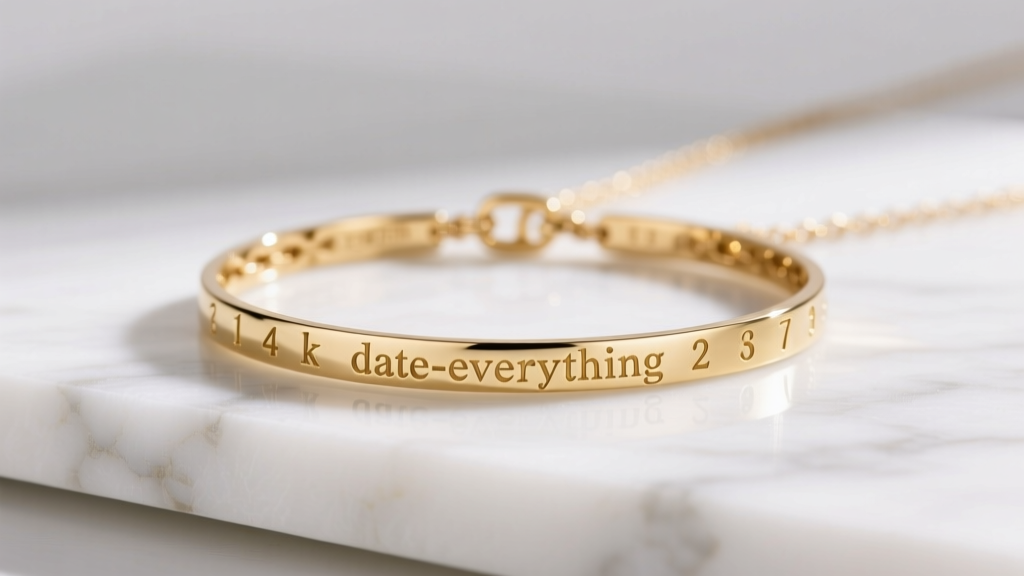
Personalized jewelry holds immense sentimental value, and the date everything necklace has become a definitive staple in modern fine jewelry. Whether commemorating an anniversary, a child’s birth, or a milestone achievement, these pieces typically feature a delicate chain (ranging from 0.9mm to 1.2mm in thickness) paired with a flat disc or rectangular bar pendant. The dates themselves are rendered in Arabic or Roman numerals through various techniques: deep laser engraving, hand-stamping, or vitreous enamel inlays. Because these necklaces are worn close to the skin and often layered with other pieces, they are uniquely susceptible to cosmetic buildup, friction, and environmental tarnishing. Proper care is not just about maintaining shine; it is about preserving the legibility of the engraving and the structural integrity of the delicate findings.
Why Standard Cleaning Hacks Can Ruin Your Pendant
Before diving into the correct cleaning protocols, it is crucial to understand why popular DIY jewelry cleaning hacks are actively harmful to personalized pendants. Many online guides suggest using baking soda paste or toothpaste to remove tarnish. Baking soda has a Mohs hardness that fluctuates based on its crystalline structure, but when scrubbed against high-polish 14k gold or sterling silver, it creates microscopic abrasions. Over time, these micro-scratches dull the metal and can actually wear away the shallow laser engravings that make your date everything necklace unique.
Similarly, ultrasonic cleaners—while excellent for solid diamond rings—pose a severe threat to date necklaces. The high-frequency sound waves create microscopic cavitation bubbles that can fracture vitreous enamel inlays or strip cold enamel (epoxy-based) entirely. Furthermore, the intense vibrations can weaken the soldered joints on delicate 0.9mm cable chains and the tiny jump rings connecting the pendant bail, leading to catastrophic breakage.
Step-by-Step Cleaning Protocols by Material
Protocol A: Solid 14k Gold and Sterling Silver (No Enamel)
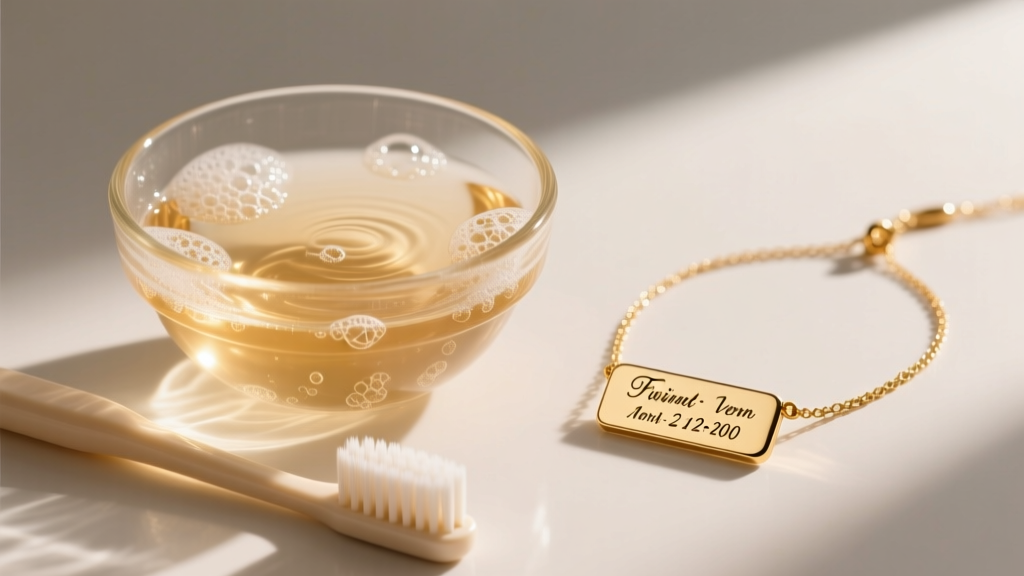
For solid gold and bare sterling silver pieces without enamel inlays, the safest and most effective method is a gentle surfactant soak. Fill a small glass bowl with lukewarm water (never hot, as thermal shock can stress the metal) and add three drops of a mild, phosphate-free dish soap, such as Dawn. Allow the necklace to soak for exactly 10 to 15 minutes. This loosens the sebum, dead skin cells, and cosmetic residue trapped in the chain links and the crevices of the engraved numerals. After soaking, use a super-soft baby toothbrush to gently agitate the dirt. Brush in the direction of the engraving lines to avoid lifting any microscopic burrs in the metal. Rinse thoroughly under lukewarm running water and pat dry with a lint-free microfiber cloth. Never use paper towels, as their wood-pulp fibers will scratch high-polish gold.
Protocol B: 14k Gold Vermeil and Gold Plated
Gold vermeil consists of a thick layer of 14k or 18k gold (legally required to be at least 2.5 microns thick) electroplated over a sterling silver base. Because the gold layer is finite, aggressive cleaning will wear it down, exposing the silver beneath and leading to rapid tarnishing. Never soak vermeil jewelry. Instead, dampen a microfiber cloth with a solution of warm water and a single drop of mild soap. Gently wipe the pendant and chain in one direction. Do not scrub the engraved date areas, as friction is the primary enemy of gold plating. Rinse the cloth with plain water, wring it out completely, and wipe the necklace again to remove any soap residue. Allow it to air dry flat.
Protocol C: Vitreous and Cold Enamel Inlays
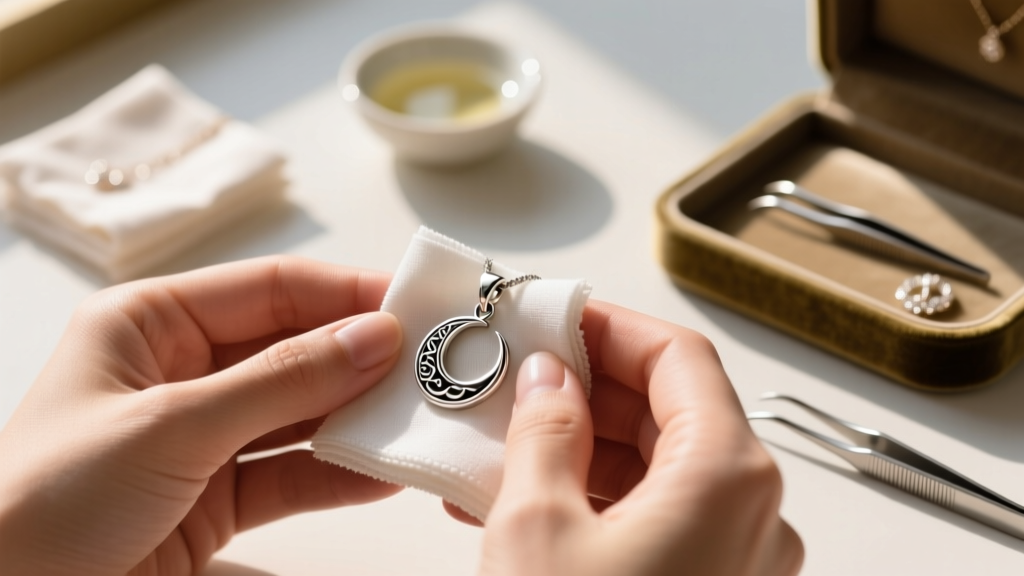
If your date everything necklace features black or white enamel filling the numerals, water exposure must be strictly minimized. Cold enamel is essentially a colored epoxy resin that is highly sensitive to heat, alcohol, and harsh chemicals. Vitreous enamel is powdered glass fused to metal at extreme temperatures; while more durable, it is prone to chipping if knocked against hard surfaces and can suffer from thermal shock. For enamel pieces, avoid liquid cleaners entirely. Use a dry, untreated jewelry polishing cloth to gently buff the bare metal surrounding the date. To clean the enamel itself, use a dry, soft-bristled makeup brush to sweep dust and skin cells out of the recessed numerals.
Material-Specific Cleaning Compatibility Chart
| Material / Finish | Mild Soap Soak | Ultrasonic Cleaner | Silver Dip / Polish | Dry Microfiber Wipe |
|---|---|---|---|---|
| Solid 14k Gold | ✅ Safe | ✅ Safe (No Enamel) | ❌ Avoid | ✅ Safe |
| Sterling Silver | ✅ Safe | ✅ Safe (No Enamel) | ⚠️ Use Sparingly | ✅ Safe |
| 14k Gold Vermeil | ❌ Avoid Soaking | ❌ Never | ❌ Never | ✅ Safe |
| Enamel Inlay (Any Metal) | ❌ Never | ❌ Never | ❌ Never | ✅ Safe (Dry Only) |
Preventative Maintenance and Smart Storage
The most effective way to maintain your date everything necklace is to prevent damage before it occurs. Sterling silver tarnishes when it reacts with hydrogen sulfide in the air, forming silver sulfide—a black, dull layer on the surface. To combat this, implement the following storage protocols:
- Avoid Sulfur Sources: Never store your jewelry near rubber bands, wool, or unsealed cardboard boxes, as these materials off-gas sulfur and accelerate tarnishing exponentially.
- Control Humidity: Place a small silica gel packet inside your jewelry box or storage pouch to absorb ambient moisture that catalyzes oxidation.
- Block Airflow: Store silver and vermeil pieces in airtight polyethylene ziplock bags alongside 3M Anti-Tarnish Strips to neutralize corrosive gases.
Tangling is another major issue for delicate chains. When a 1.0mm box chain tangles, attempting to pull it apart can stretch the links, permanently weakening the chain. To prevent this, always fasten the clasp before storing the necklace, or thread one end of the chain through a plastic drinking straw before clasping it. This keeps the chain rigid and entirely tangle-free.
Expert Rule of Thumb: Always put your date everything necklace on after applying perfume, hairspray, and lotion, and take it off before showering, swimming, or exercising. The chlorine in pools and the salt in sweat are highly corrosive to both gold alloys and silver.
When to Seek Professional Jewelry Cleaning
While at-home maintenance is sufficient for weekly upkeep, professional inspection is a critical component of long-term jewelry care. According to Jewelers of America, fine jewelry should be professionally cleaned and inspected at least once a year. A master jeweler will examine the bail (the loop that connects the pendant to the chain) and the jump ring for signs of friction wear. Because the pendant constantly rubs against the chain and your skin, these tiny findings can thin out and snap without warning.
Furthermore, the Gemological Institute of America (GIA) notes that professional jewelers have access to specialized steam cleaners and know exactly which gemstones, enamels, and metal treatments can safely withstand ultrasonic frequencies. If your engraved date has accumulated years of hardened cosmetic buildup that a soft toothbrush cannot remove, a professional can safely steam it clean without compromising the integrity of the metal or the legibility of your precious numbers.
Final Thoughts on Preserving Your Memories
A date everything necklace is more than just an accessory; it is a wearable timestamp of a moment that matters. By understanding the specific material composition of your piece and abandoning harsh, abrasive cleaning trends in favor of gentle, targeted protocols, you ensure that the numbers commemorating your milestone remain crisp, legible, and brilliant for decades to come.


