How to Clean and Maintain a Necklace with Cross Name Pendants
Learn expert cleaning and maintenance tips to keep your necklace with cross name pendants shining. Discover material-specific care and storage hacks.

A personalized necklace with cross name designs represents a beautiful intersection of faith, identity, and style. However, the intricate anatomy of these pendants—where flowing script lettering weaves through the rigid geometric lines of a cross—creates unique maintenance challenges. The loops in letters like 'e', 'o', and 's' naturally intersect with the crossbar, forming microscopic crevices that trap sebum, cosmetic powders, dead skin cells, and environmental pollutants. Over time, this buildup not only dulls the metal's luster but can also accelerate tarnishing and degrade the structural integrity of the jump rings.
Whether your piece is crafted from solid 14k gold, gold vermeil, or sterling silver, maintaining its brilliance requires a targeted approach that goes beyond a simple wipe-down. In this comprehensive guide, we break down the exact chemistry, tools, and techniques needed to safely clean and preserve your personalized jewelry.
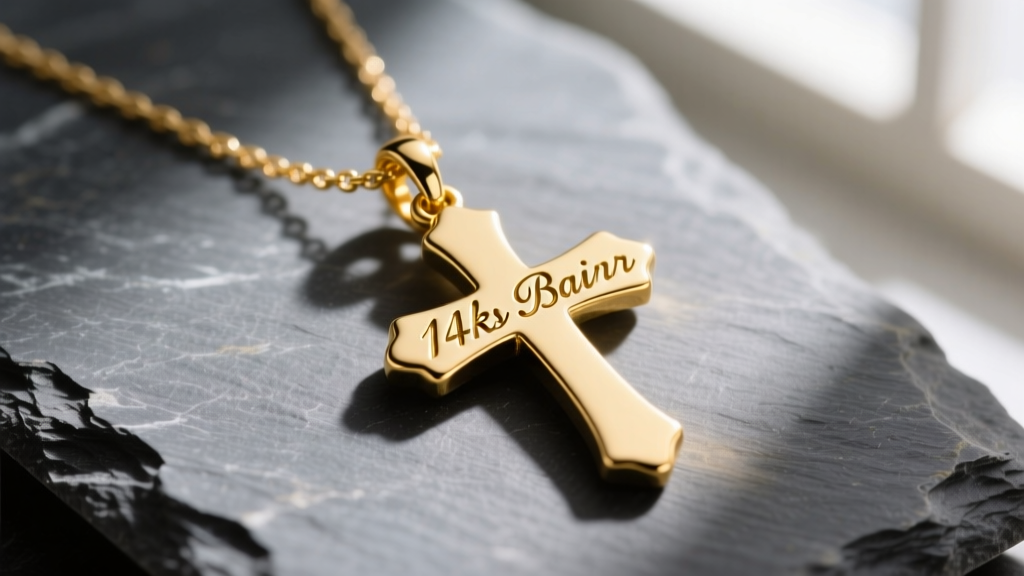
Material Identification: The First Step in Proper Care
Before applying any cleaning solution, you must accurately identify the metal composition of your necklace with cross name detailing. Using the wrong chemical agent can permanently strip plating or cause irreversible oxidation. According to the Federal Trade Commission Jewelry Guides, understanding the distinction between solid gold, vermeil, and standard plating is critical for consumer care.
- Solid 14k or 18k Gold: Highly resistant to tarnish. Safe for most gentle chemical soaks and ultrasonic cleaning (provided there are no fragile gemstones).
- 925 Sterling Silver: Prone to silver sulfide tarnish (the black layer that forms when silver reacts with sulfur in the air). Requires specific anti-tarnish polishes.
- Gold Vermeil: A thick layer of gold (minimum 2.5 microns) bonded over a sterling silver base. Never use silver dip or abrasive polishes, as you will strip the gold layer.
- Gold Plated (Brass Base): A very thin layer of gold (often under 0.5 microns). Requires the gentlest possible cleaning to avoid wearing through to the base metal.
Material Care Matrix
| Material | Tarnish Risk | Ultrasonic Safe? | Recommended Cleaner |
|---|---|---|---|
| Solid 14k/18k Gold | Very Low | Yes (if no micro-pave gems) | Phosphate-free Dish Soap |
| 925 Sterling Silver | High | Yes (if no gems) | Specialized Silver Foam |
| Gold Vermeil | Medium (if worn) | No | Mild Soap & Distilled Water |
| Stainless Steel | None | Yes | Glass Cleaner or Soap |
Step-by-Step Cleaning Routine for Intricate Name-Cross Pendants
Cleaning a necklace with cross name elements requires mechanical agitation in hard-to-reach areas without scratching the high-polish finish. The Blue Nile Jewelry Cleaning Guide emphasizes that gentle, consistent cleaning is far superior to aggressive, infrequent scrubbing.
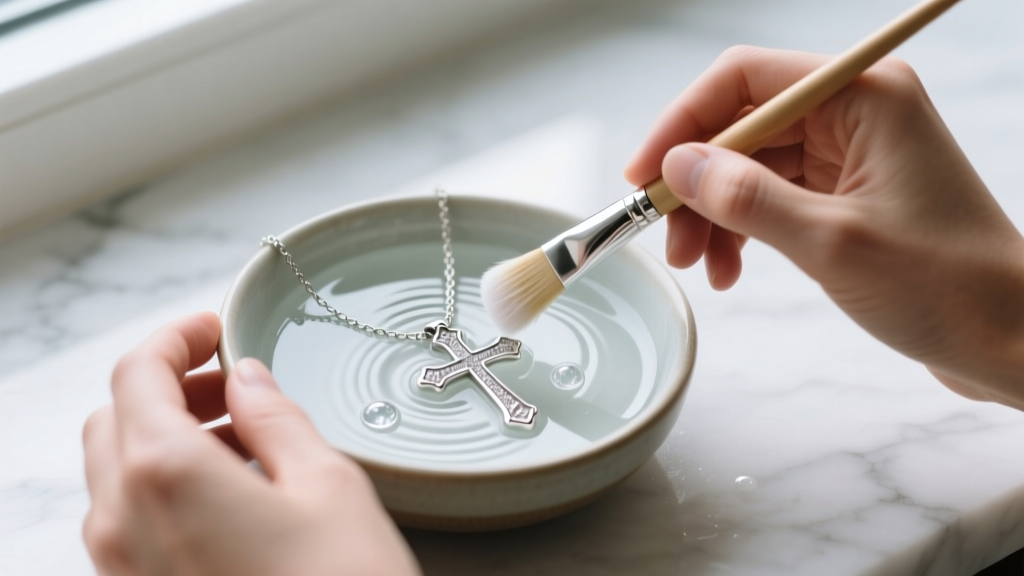
Step 1: The Lukewarm Distilled Soak
Fill a small glass bowl with lukewarm distilled water. Avoid tap water, as the chlorine and hard minerals can leave a cloudy film on the metal, particularly in the tight corners of the script lettering. Add a single drop of phosphate-free, mild dish soap (such as original Dawn). Phosphates can react with certain metal alloys and cause long-term dulling. Submerge the pendant and chain for exactly 3 to 5 minutes. This allows the surfactants in the soap to break down the lipid bonds of body oils trapped in the cross crevices.
Step 2: Micro-Bristle Agitation
Remove the necklace from the soak. Using an extra-soft infant toothbrush (which features bristles with a diameter of roughly 0.1mm), gently brush the pendant. Standard adult toothbrushes are far too stiff and will inflict micro-scratches on the gold or silver surface. Pay special attention to the underside of the pendant, where it rests against the collarbone and accumulates the most sweat and lotion. Brush in the direction of the metal's grain, carefully navigating the intersections where the name script overlaps the cross.
Step 3: The Rinse and Lint-Free Dry
Rinse the necklace thoroughly under a gentle stream of distilled water to remove all soap residue. Do not use paper towels or tissue paper to dry the piece; these products are made from wood pulp and will cause microscopic abrasions. Instead, pat the jewelry dry using a clean, lint-free microfiber cloth. For the tiny loops in the name lettering, use a can of compressed air (held at least six inches away) to blow out trapped moisture, preventing water spots.
What to Avoid: Common Mistakes That Ruin Personalized Pendants
Many well-intentioned jewelry owners inadvertently destroy their pieces by using outdated or overly aggressive cleaning methods. When dealing with a necklace with cross name designs, avoid the following pitfalls:
Warning: Never use toothpaste or baking soda pastes on gold vermeil or high-polish silver. These substances contain silica and calcium carbonate, which rank high on the Mohs hardness scale and will permanently scratch the metal's mirror finish, leaving it looking cloudy and matte.
- Ultrasonic Cleaners: While excellent for solid diamond solitaires, ultrasonic machines operate at high frequencies (typically 40,000 Hz) that create cavitation bubbles. If your cross pendant features micro-pave cubic zirconia or small diamonds, these vibrations can easily fracture the stones or loosen the epoxy and micro-prongs holding them in place.
- Commercial Silver Dips: These liquid solutions contain thiourea and strong acids that instantly strip tarnish. However, they are highly corrosive. If left on for even a few seconds too long, they will etch the silver, leaving a porous, white surface that attracts tarnish even faster in the future.
- Chlorine Exposure: Never wear your necklace into a swimming pool or hot tub. Chlorine reacts violently with the copper and zinc alloys present in 14k gold and sterling silver, causing a phenomenon known as 'stress corrosion cracking,' which can cause the delicate jump rings and chain links to snap.
Daily Wear and Long-Term Storage Strategies
Proper storage is just as critical as the cleaning process. The sprawling, asymmetrical nature of a personalized name script makes these pendants notorious for tangling. The loops of the letters act like tiny hooks, easily catching on the links of other chains or the prongs of other jewelry.

The Anti-Tarnish Storage Protocol
To prevent tarnish and tangling, store your necklace with cross name pendant in an individual, airtight polyethylene ziplock bag. Squeeze out as much air as possible before sealing. For sterling silver pieces, place a 3M Anti-Tarnish strip inside the bag. These strips contain specialized particles that absorb hydrogen sulfide and sulfur dioxide gases from the enclosed air, neutralizing the primary catalysts for silver oxidation before they can reach your jewelry.
Furthermore, always unclasp the chain and lay it flat, or hang it on a dedicated velvet-lined jewelry stand. Never toss a name-cross necklace into a communal jewelry box, as the friction from other pieces will cause surface scratching, and the clasp may become hopelessly wedged in the script lettering.
When to Seek Professional Jewelry Repair
While routine cleaning can be done at home, certain maintenance tasks require the expertise of a professional bench jeweler. The Gemological Institute of America (GIA) recommends annual professional inspections for frequently worn fine jewelry.
You should take your necklace to a jeweler if:
- The Jump Ring is Gaping: The connection point between the chain and the personalized cross name pendant experiences constant friction. If the gap in the jump ring widens, you risk losing the pendant entirely. A jeweler can solder it shut securely.
- Vermeil is Fading: If the gold color is wearing off the high-contact edges of the cross or the nameplate, a professional can polish out minor scratches and apply a fresh layer of gold plating (re-plating) to restore the piece to its original glory.
- Stones are Loose: If your cross features accent gemstones and you hear a faint rattling sound when you gently tap the pendant, stop wearing it immediately and have a jeweler re-tip the prongs.
By understanding the unique structural vulnerabilities of personalized jewelry and adhering to a disciplined, material-specific cleaning regimen, you can ensure that your necklace remains a brilliant, meaningful staple in your collection for decades to come.


