How to Clean a Gold Necklace with Coin Pendant Safely
Learn expert cleaning and maintenance tips to protect the intricate details and high-polish finish of your gold necklace with coin pendant.


The Unique Challenges of Coin Pendant Jewelry
A gold necklace with coin pendant is a timeless staple that bridges the gap between historical numismatics and modern fashion. Whether your piece features a replica of an ancient Roman denarius, a zodiac motif, or a modern bullion-inspired medallion, the structural and metallurgical realities of these pieces demand a specialized approach to maintenance. Unlike standard cast pendants, coin pendants are typically struck or stamped, featuring high-relief devices (the raised design) and delicate fields (the background). Furthermore, the chain and the pendant are often forged from different karats of gold to balance durability with color, creating a complex cleaning scenario.
Using generic jewelry cleaning methods on these pieces is a primary cause of irreversible damage. According to the Numismatic Guaranty Company (NGC), abrasive cleaning agents that might safely polish a simple gold band will permanently destroy the optical contrast and proof-like finish of a struck coin pendant. This guide provides a masterclass in preserving the structural integrity, luster, and intricate detailing of your gold necklace with coin pendant.
Metallurgy and Karat Discrepancies: Know Your Metals
Before applying any cleaning solution, you must identify the karatage of both the chain and the pendant. It is exceptionally rare for the entire assembly to be a single karat.
- The Chain (Usually 14k Gold): 14k gold contains 58.5% pure gold, alloyed with metals like copper, silver, and zinc. This composition provides the tensile strength required to prevent the chain from stretching or snapping under the weight of the pendant.
- The Pendant (Often 18k, 22k, or 24k Gold): To achieve the rich, buttery yellow hue associated with historical coins and high-end medallions, jewelers often use 18k (75% pure), 22k (91.6% pure), or even 24k (99.9% pure) gold for the coin itself.
The Failure Mode: High-karat gold is significantly softer than 14k gold. If you clean your gold necklace with coin pendant while the pieces are tangled, or if you aggressively rub the softer pendant with a polishing cloth meant for the harder chain, you will embed microscopic scratches into the pendant's surface. Always separate the clasp and lay the chain and pendant flat on a microfiber towel before beginning the cleaning process.
The Step-by-Step Numismatic Cleaning Protocol
To safely lift sebum, cosmetic residue, and environmental pollutants from the deep crevices of the coin's high-relief striking, follow this conservative, non-abrasive protocol.
Step 1: The Distilled Water Soak
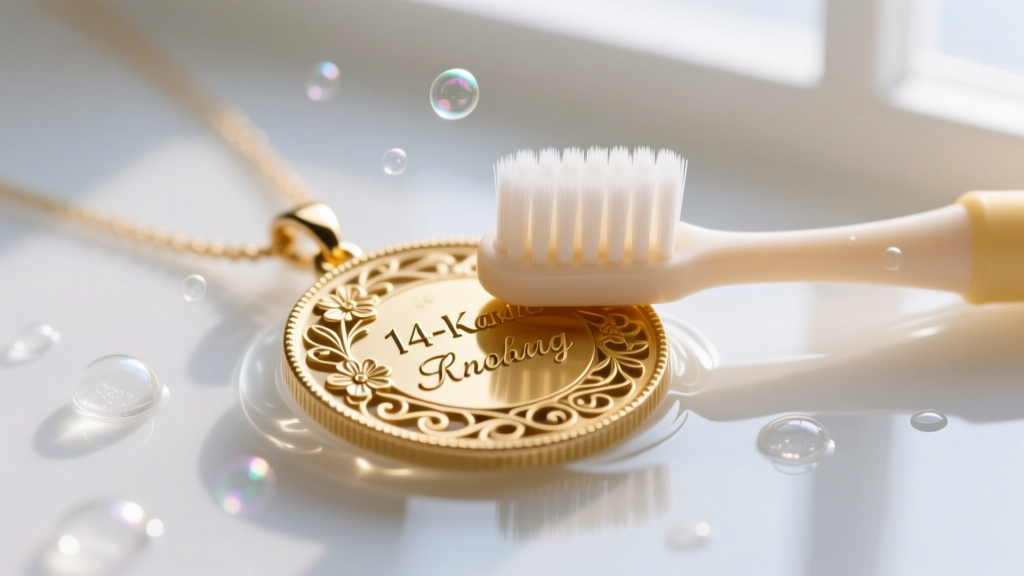
Fill a glass bowl with lukewarm distilled water. Avoid tap water, as the dissolved minerals and chlorine can leave microscopic calcium deposits in the recessed areas of the coin's design. Add three drops of a pH-neutral, phosphate-free dish soap (such as Dawn Free & Clear). Submerge the necklace and let it soak for exactly 10 to 15 minutes. Do not exceed this time, as prolonged exposure to moisture can weaken the solder joints on the bail.
Step 2: Targeted Agitation
Remove the piece and use an extra-soft baby toothbrush or a dedicated, clean makeup blending brush. Gently sweep the bristles across the coin's surface in a single direction, following the flow of the engraved design. Never use circular motions, as this can create visible swirl marks on the softer high-karat gold fields. Pay special attention to the reeded edge (the ridged rim) of the coin pendant, where skin oils accumulate heavily.
Step 3: The Rinse and Dry
Rinse the necklace under a gentle stream of lukewarm distilled water. Immediately pat it dry with a lint-free microfiber cloth. Do not air-dry, as water spots will form on the polished gold surfaces. Use a wooden toothpick or a blast of compressed air to dislodge any trapped moisture from the bail loop and the chain links.
The Damage Matrix: Cleaners to Avoid at All Costs
The Gemological Institute of America (GIA) warns against the use of harsh household chemicals on gold alloys. However, coin pendants have an added layer of vulnerability: their surface finishes. Many modern coin pendants feature a 'cameo' finish, where the background is highly polished (proof-like) and the raised design is matte or frosted. Improper chemicals will ruin this contrast.
| Cleaning Agent | Chemical Composition | Effect on Gold Chain | Effect on Coin Pendant Detail |
|---|---|---|---|
| Baking Soda Paste | Sodium Bicarbonate (High Abrasive) | Creates micro-scratches, dulls polish | Permanently destroys matte/frosted device finishes |
| Whitening Toothpaste | Hydrated Silica (High RDA Score) | Strips rhodium plating on white gold chains | Packs into high-relief crevices, causing white residue |
| Chlorine Bleach | Sodium Hypochlorite | Causes stress corrosion cracking in chain links | Dissolves copper alloys, causing irreversible pitting |
| Ultrasonic Cleaners | 40-45 kHz Cavitation Waves | Safe for solid chains, risky for hollow links | Can loosen enamel fills or fracture brittle bezel settings |
| Silver Dip Solutions | Thiourea / Acids | Strips surface alloys, causing pink discoloration | Chemically etches the proof-like mirrored fields |
Bail and Bezel Maintenance: The Structural Weak Points
The most common point of failure on any gold necklace with coin pendant is not the chain, but the connection point: the bail and the bezel.
Inspecting the Bail
The bail is the loop that threads the chain through the pendant. Due to the heavy, swinging nature of coin pendants, the interior of the bail experiences constant friction from the chain. Every six months, use a 10x jeweler's loupe to inspect the top of the bail. If you see a groove or thinning of the metal exceeding 15% of its original thickness, take it to a jeweler for a laser weld reinforcement before it snaps.
Bezel vs. Drill-Hole Mountings
- Bezel Settings: If your coin is encased in a smooth gold rim (a bezel), moisture can become trapped between the glass-like inner lip of the bezel and the coin itself. When drying, use compressed air to ensure no water remains trapped in this microscopic gap, which can lead to localized oxidation of the alloy metals.
- Drill-Hole Bails: Some authentic bullion coins (like the Mexican 50 Peso or certain Sovereigns) are retrofitted with a soldered loop at the 12 o'clock position. Check the solder joints where the bail meets the coin's reeded edge. Heat and stress can cause these solder seams to develop hairline fractures over time.
Strategic Storage and Daily Wear Rules
Proper storage is the final pillar of maintaining a pristine gold necklace with coin pendant. Gold is a noble metal and does not tarnish in its pure form, but the alloy metals (copper and silver) mixed into 14k and 18k gold can react with sulfur and humidity in the air, leading to a dull, reddish-brown surface film.
The Storage Protocol
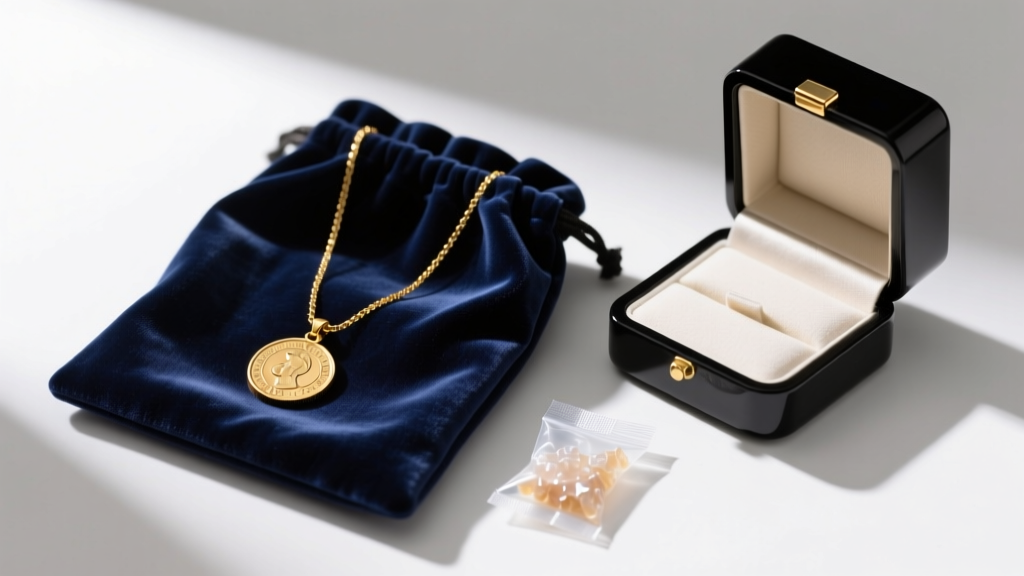
- Isolate the Piece: Never store your coin pendant in a communal jewelry box where it can be scratched by diamond rings or harder gemstones. Diamonds rank a 10 on the Mohs scale, while 18k gold ranks around 2.5 to 3. A single brush against a diamond will gouge the coin's field.
- Use Anti-Tarnish Strips: Place a 3M anti-tarnish strip inside the storage pouch. These strips absorb airborne sulfides and significantly slow the oxidation of the copper alloys within your gold chain.
- Control Humidity: Store the pouch in a climate-controlled room. Avoid keeping your necklace in the bathroom, where the high humidity and aerosolized cosmetics will rapidly degrade the gold's luster and pack into the coin's engraved lettering.
The 'Last On, First Off' Rule
Always put your gold necklace on after applying perfumes, lotions, and hairsprays. The alcohol and volatile organic compounds (VOCs) in cosmetics can create a cloudy film over the high-relief details of the coin pendant, masking the sharpness of the strike. Conversely, remove the necklace first when undressing to prevent the chain from catching on fabrics and putting undue stress on the bail.
When to Seek Professional Conservation
If your gold necklace with coin pendant features an actual, historically significant ancient coin (such as an authentic Byzantine solidus or Roman aureus) set in a modern gold frame, do not attempt to clean the coin portion yourself. Ancient coins possess a delicate patina—a stable layer of oxidation that proves its authenticity and preserves its historical value. Cleaning an ancient coin can strip this patina, reducing its numismatic value by up to 80%. In these cases, take the piece to a professional numismatic conservator who can clean the modern gold frame and chain using specialized solvents without compromising the ancient artifact suspended within it.
By respecting the unique metallurgy and structural nuances of your jewelry, you ensure that the rich history and brilliant luster of your piece will endure for generations.


