Initial K Necklace Care: Cleaning & Maintenance Tips
Learn expert cleaning and maintenance tips for your initial K necklace. Discover safe methods for gold, silver, and pave diamond letter pendants.

The Unique Anatomy of the Letter K: Why It Traps Dirt
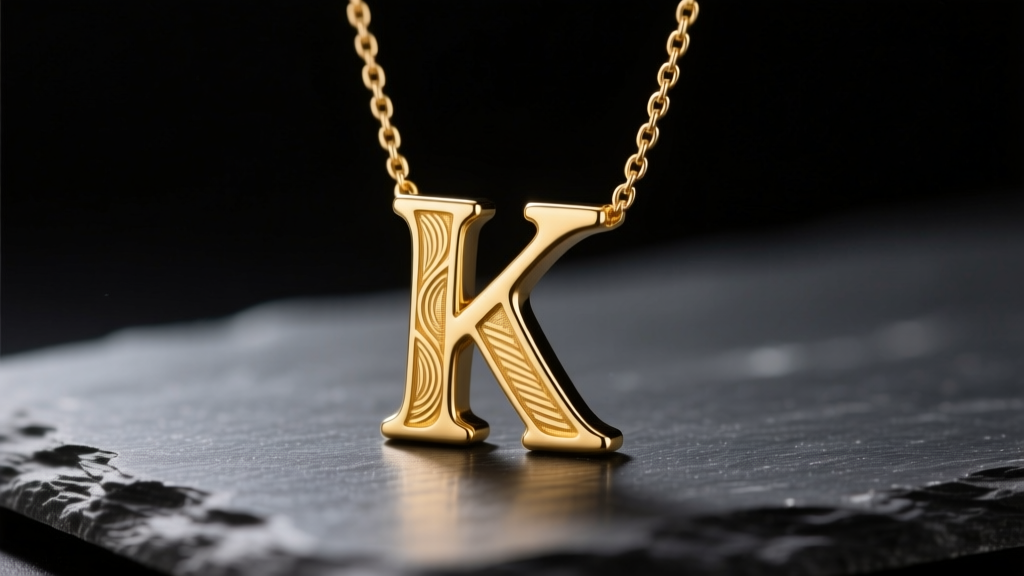
When it comes to personalized jewelry, the letter K presents a unique set of maintenance challenges. Unlike the smooth, continuous curves of an 'O', 'S', or 'C', the letter K features a sharp, inward-pointing vertex where the vertical stem meets the two diagonal arms. This acute angle acts as a microscopic trap for sebum, dead skin cells, foundation, and dry shampoo residue. Over time, this buildup not only dulls the metal but can also degrade the structural integrity of delicate prongs if your initial K necklace features pave diamonds or gemstone inlays.
Furthermore, the diagonal lines of the K are highly susceptible to micro-scratches if cleaned with abrasive materials. To maintain the brilliant finish and structural longevity of your piece, you must adopt a cleaning regimen tailored to both the specific metal alloy and the geometric complexities of the letter itself.
Identifying Your Metal: A Care Matrix
Before applying any cleaning solution, you must accurately identify the metal composition of your necklace. The Jewelers of America emphasizes that using the wrong chemical agent can cause irreversible damage, such as stripping gold plating or accelerating silver tarnish. Review the matrix below to determine your metal type and its specific vulnerabilities.
| Metal Type | Composition | Tarnish Risk | Safe Cleaning Agents | Agents to Avoid |
|---|---|---|---|---|
| 14k Solid Gold | 58.5% Gold, 41.5% Alloy | Low | Mild dish soap, distilled water | Bleach, chlorine, toothpaste |
| Sterling Silver (925) | 92.5% Silver, 7.5% Copper | High | Silver polish, baking soda bath | Rubber bands, sulfur, salt |
| Gold Vermeil | 2.5μm Gold over 925 Silver | Medium | Microfiber cloth, mild soap | Ultrasonic cleaners, abrasive paste |
| Platinum | 95% Platinum, 5% Ruthenium | Very Low | Jewelry cleaning solution | None generally, but avoid harsh impacts |
Step-by-Step Deep Cleaning Routine
For solid gold, platinum, and sterling silver initial K necklaces (without porous gemstones like opals or pearls), a thorough wet cleaning is recommended every 4 to 6 weeks. This process safely lifts the cosmetic buildup trapped in the K's sharp inner corners.
1. The Soak
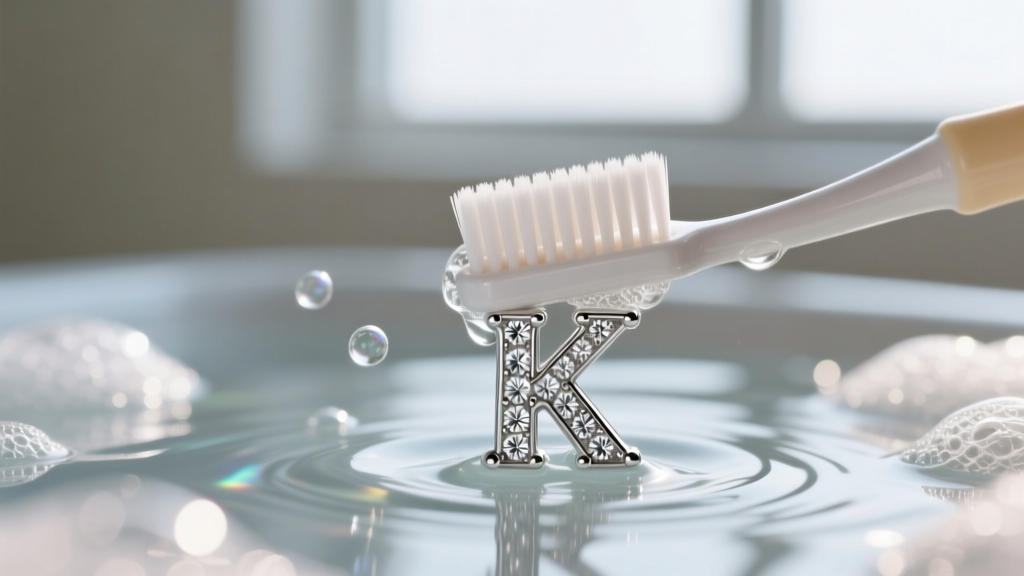
Fill a small glass bowl with warm distilled water and add three drops of phosphate-free, mild dish soap (such as Dawn or Castile soap). Avoid using tap water, as the trace minerals and chlorine can leave water spots or react with silver alloys. Submerge your necklace and let it soak for exactly 15 minutes. This softens the hardened sebum in the vertex of the K without requiring aggressive scrubbing.
2. The Vertex Brush
Remove the necklace from the solution. Using a brand-new, extra-soft baby toothbrush or a #4 natural-hair artist brush, gently agitate the inner corners of the letter K. Brush in a circular motion along the vertical stem, and use the tip of the brush to carefully sweep the acute angles where the diagonal arms meet the stem. If your necklace features pave diamonds, the Gemological Institute of America (GIA) notes that removing the oily film from the pavilion (the bottom of the diamond) is crucial for restoring its light return and sparkle.
3. The Rinse and Dry
Rinse the necklace under a gentle stream of lukewarm distilled water. Ensure the drain is securely plugged. To dry, lay the piece flat on a lint-free microfiber cloth. Do not rub the metal aggressively; instead, pat it dry. For the tight crevices of the K, use a can of compressed air (held at least six inches away) to blow out trapped moisture. Leaving water in the crevices can lead to localized oxidation, especially on sterling silver.
Pave Diamonds and Gemstone Inlays: What to Avoid
Many modern initial K necklaces feature intricate pave diamond settings or enamel inlays. These require specialized care to prevent catastrophic failure.
The Ultrasonic Danger: Ultrasonic cleaners operate at high frequencies, typically around 40,000 Hz. While excellent for cleaning solid metal, these microscopic vibrations can easily shake loose the micro-prongs or shared-prongs used in pave settings. Furthermore, if your initial K features enamel work, the acoustic cavitation can cause the enamel to fracture or separate from the metal base.
- Avoid Toothpaste and Baking Soda on Gold: Baking soda has a Mohs hardness of 2.5, which is identical to pure gold. Scrubbing a gold initial K pendant with baking soda will result in a network of micro-scratches, permanently dulling the mirror finish.
- Protect Gold Vermeil: By FTC standards, vermeil must have a gold layer of at least 2.5 microns. Aggressive polishing cloths or chemical dips will strip this layer, exposing the sterling silver core to rapid tarnishing.
- Chemical Hazards: Chlorine (found in pools and household cleaners) reacts with the copper and zinc alloys in 14k gold, causing a phenomenon known as 'stress corrosion cracking,' which can cause the delicate arms of the letter K to snap under minimal pressure.
Chain Maintenance and Slider Ring Care
The pendant is only half the equation; the chain requires equal attention. Initial necklaces are frequently paired with adjustable cable chains featuring a silicone or metal slider ring (often called a macramé or bolo clasp). Over time, the slider mechanism accumulates lint and skin oils, causing it to grip the chain too tightly or fail to hold the necklace at the desired length.
To clean the slider ring, take a wooden toothpick and gently trace the interior gap where the chain feeds through. The wood is soft enough not to scratch the metal housing but rigid enough to dislodge compacted debris. If the slider uses an internal silicone stopper, avoid applying any oils or lotions to the chain near the clasp, as oils degrade the silicone, causing it to swell and eventually tear.
Proper Storage to Prevent Tarnish and Tangling
How you store your initial K necklace when it is not being worn dictates how often you will need to clean it. The sharp points of the letter K make it highly prone to catching on the links of other chains, leading to severe tangling and potential link distortion.
- Isolate the Piece: Store the necklace in an individual, airtight polyethylene zip-lock bag. Squeeze out all excess air before sealing to minimize the oxygen available for oxidation.
- Utilize Anti-Tarnish Strips: For sterling silver pieces, place a 3M anti-tarnish strip inside the bag. These strips absorb airborne sulfur compounds, which are the primary catalyst for silver sulfide (black tarnish) formation.
- Secure the Clasp: Always fasten the lobster clasp through the end ring before storing. This prevents the chain from threading through itself and creating 'bird's nest' tangles.
When to See a Professional Jeweler
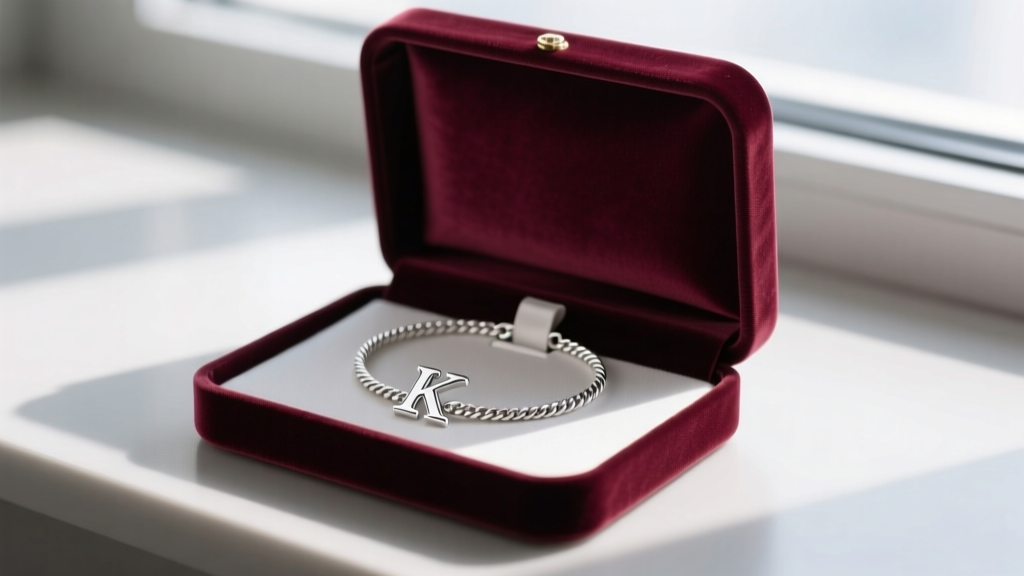
While home maintenance is highly effective for surface cleaning, it cannot replace professional structural inspections. If your initial K necklace features diamonds, you should have a jeweler inspect the prongs under a 10x loupe every 12 months. The diagonal arms of the K are frequent impact zones against clothing and desks; this repetitive kinetic shock can slowly lift prongs away from the gemstone girdle. Additionally, if your white gold K pendant begins to look yellowish, it is time for a professional rhodium replating, a process that restores the bright, silvery-white finish and adds a protective barrier against everyday wear.


